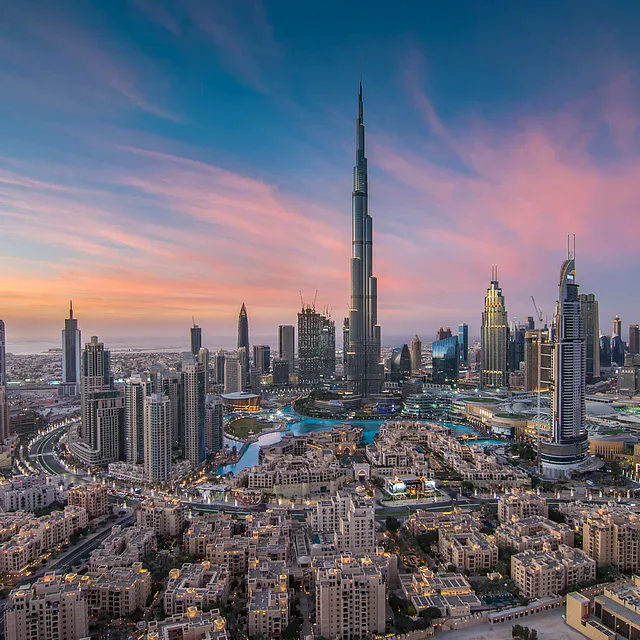
Dubai’s residential property market is showing signs of cooling momentum, but underlying data points to sustained long-term strength — particularly in the prime segment, where price growth continues to outpace the broader market.
The ValuStrat Price Index (VPI) stood at 224.9 in April 2026, reflecting a monthly decline of 1.9% after a sharper 5.9% drop in March. However, annual growth remained positive at 5.3%, underscoring the resilience of capital values despite short-term adjustments.
According to findings from eXp Realty Dubai, while Dubai’s wider residential market recorded an average quarterly growth rate of 2.2% between Q1 2025 and Q1 2026, the prime segment outperformed with 2.7% growth, highlighting stronger demand among high-net-worth buyers.
The divergence is particularly visible across asset classes. Villa values — typically associated with prime and upscale communities — remain the main driver of growth. ValuStrat data shows villa capital values rose 8.3% year-on-year, even as they slipped 1.7% month-on-month, outperforming apartments, which saw marginal annual growth of just 0.5% alongside a steeper 2.2% monthly decline.
On a price basis, villas are now valued at an index level of 301.5 compared to 171.6 for apartments, indicating a widening performance gap between the two segments.
Demand dynamics also reflect this split. Older freehold villa communities are now priced about 196% above post-pandemic levels and 80% higher than the 2014 peak, while apartments, though still 72% above post-pandemic levels, remain 6% below their previous peak.
Transaction trends further illustrate changing buyer preferences. Off-plan properties dominated activity, accounting for nearly 79% of all residential sales, with 10,272 transactions recorded, despite a 13.9% annual decline. In contrast, ready home sales fell sharply by 43.8% year-on-year to 2,661 transactions, indicating a significant shift toward new developments.
At the ultra-prime end, demand remains firm. The market recorded 16 transactions above Dh30 million, including four deals exceeding Dh50 million, concentrated in areas such as Palm Jumeirah, Dubai Hills Estate, and DIFC — underscoring continued appetite for high-value assets.
Geographically, performance remains uneven. Villa markets in Jumeirah Islands, The Meadows and Emirates Hills delivered some of the strongest annual gains at 24.5%, 14.9% and 14.6% respectively. Meanwhile, in the apartment segment, areas such as Dubai Silicon Oasis and Remraam recorded double-digit growth of 12.4%, contrasting with declines in prime locations such as Burj Khalifa, where values fell 10.4% year-on-year.
“What continues to stand out about Dubai’s property market is the consistency of long-term demand… particularly within the prime residential sector. The emirate is increasingly seen as one of the world’s most established and desirable residential destinations.” — Dounia Fadi, Managing Director, eXp Realty Dubai
While short-term price corrections and slower sales activity signal a cooling phase, the data indicates that Dubai’s residential market remains underpinned by strong fundamentals — led by prime real estate, international demand, and a continued tilt toward higher-value investment assets.
The resilience in the prime segment aligns with Dubai’s evolving investor profile, as the emirate increasingly attracts long-term buyers rather than short-term speculators. Recent market analysis also showed homeowners retaining properties for periods comparable to London and New York, further cementing Dubai’s status as a mature global real estate destination.
Leave a Reply