Author: Estattor.com

  • Dubai Unifies Real Estate and Residency Services Under Single System

    Dubai Unifies Real Estate and Residency Services Under Single System

    Dubai has taken a significant step toward simplifying government processes by bringing real estate and residency services under one unified platform. The partnership between GDRFA Dubai and Dubai Land Department aims to eliminate bureaucratic delays and create a seamless experience for those investing in or owning property in the emirate.

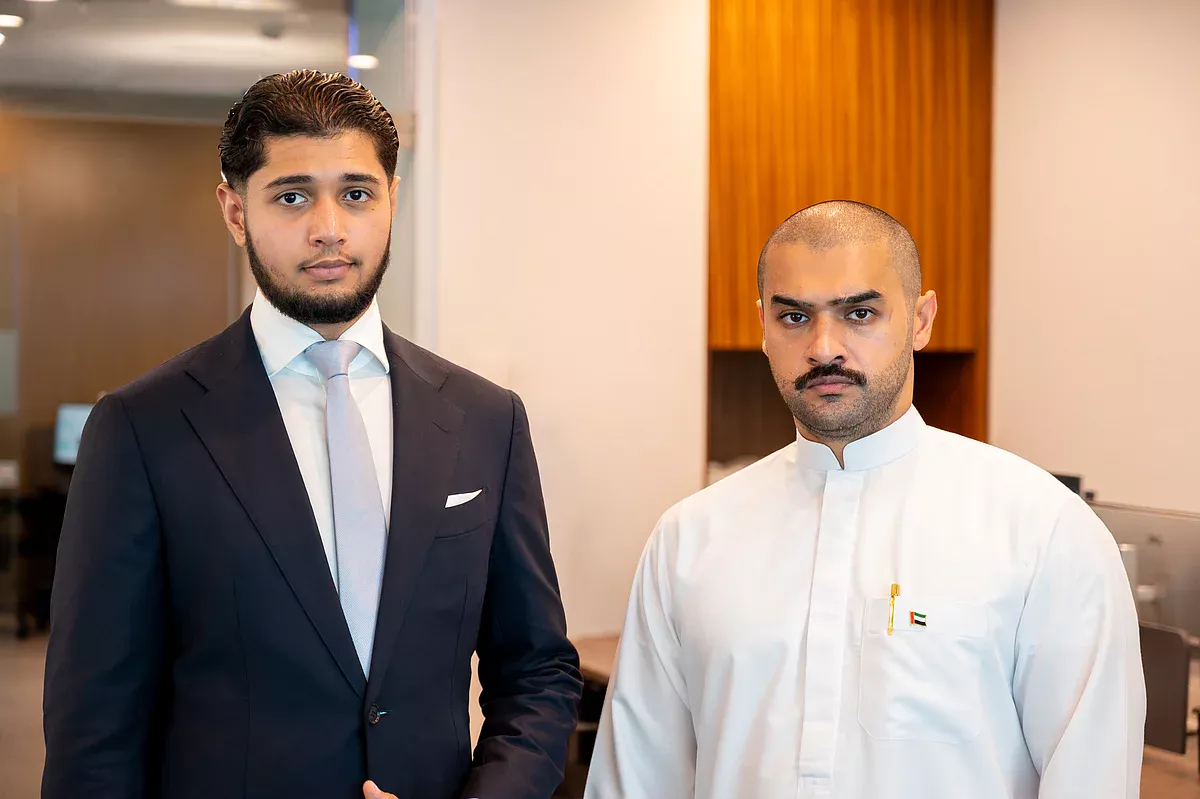
    The agreement was signed by Lieutenant General Mohammed Ahmed Al Marri, Director General of GDRFA Dubai, and Omar Hamad Bu Shehab, Director General of Dubai Land Department, marking a shift toward integrated service delivery.

    Three Key Services Under One Roof

    Under the new framework, three major residency programmes—Golden Residency, Retiree Residency, and Property Residency—will be integrated into GDRFA Dubai’s system. Applicants will no longer need to navigate multiple government entities to complete their requests. Instead, they will access a single channel that handles the entire process from application to approval.

    Officials confirmed that the integration will reduce waiting times, improve coordination between departments, and enable faster decision-making. Enhanced data sharing between the two entities is expected to create a more reliable and transparent process, particularly as demand in Dubai’s real estate sector continues to grow.

    “This agreement reflects GDRFA Dubai’s focus on placing customers at the centre of services while improving quality of life,” said Lieutenant General Mohammed Ahmed Al Marri.

    He also acknowledged the Dubai Land Department’s role in adopting digital tools and automating services, which made this collaboration possible.

    Strengthening Investor Confidence

    The initiative is designed to boost trust in Dubai’s property market and make the city more attractive for long-term investors. By linking residency options directly with real estate ownership, authorities aim to offer greater stability and value to those choosing to live and work in Dubai.

    Bu Shehab described the agreement as a key step toward closer cooperation between government bodies. “It will improve efficiency and raise service standards across the real estate sector,” he said.

    The partnership aligns with Dubai’s efforts to maintain investor confidence amid regional challenges and supports the broader goals of Dubai Economic Agenda D33, which aims to position the emirate among the world’s top three cities by economic output.

    Part of a Digital Government Push

    The move is part of a wider government strategy to connect services digitally and improve accessibility. As Dubai’s real estate sector experiences sustained activity—with transaction volumes rebounding strongly in recent months—authorities are working to ensure that administrative infrastructure keeps pace with market demand.

    The unified system is expected to attract more investment, strengthen market stability, and improve the everyday experience for residents. It reflects Dubai’s ongoing commitment to creating a flexible, responsive government framework that supports economic growth and enhances quality of life.

    By eliminating redundant steps and centralizing critical services, the emirate continues to position itself as a global hub for living, working, and doing business—one that responds quickly to the evolving needs of a diverse, international population.

  • Al Habtoor Group Launches Dh5 Billion Commercial Tower in Dubai

    Al Habtoor Group Launches Dh5 Billion Commercial Tower in Dubai

    Al Habtoor Group has unveiled plans for a new commercial tower at Al Habtoor City on Sheikh Zayed Road, with an estimated investment value of Dh5 billion ($1.36 billion). The announcement, made on April 9, 2026, represents the first in a series of developments the group will launch across Dubai and Abu Dhabi.

    “Our decision to move forward with this investment reflects our deep confidence in the UAE, and in Dubai in particular,” said Khalaf Ahmad Al Habtoor, Founding Chairman of Al Habtoor Group.

    “We are fortunate to live and invest in a country that enjoys security, stability, and a strong, resilient economy. These are the foundations that guide our investment decisions. The UAE continues to provide an environment where businesses can grow, investments can flourish, and people can live with confidence and peace of mind.”

    The development comes as Dubai continues to demonstrate strong economic performance, supported by visionary leadership, advanced infrastructure, and a business environment ranked among the most competitive globally. Recent data shows property transactions rebounding significantly following seasonal holidays, reflecting sustained market momentum.

    Al Habtoor Group’s latest investment reflects its ongoing commitment to contributing to the emirate’s economic development and strengthening Dubai’s position as a global hub for business and investment. The conglomerate has played a key role in Dubai’s growth for more than five decades, delivering landmark developments across multiple sectors.

    The announcement aligns with broader trends in Dubai’s commercial property market, where prices have risen substantially despite regional challenges, demonstrating investor confidence in the emirate’s long-term prospects.

    This new investment continues Al Habtoor Group’s legacy, reinforcing the company’s belief in the UAE’s long-term future and its commitment to investing in projects that contribute to the nation’s continued success. The tower will add to the existing Al Habtoor City development, one of Sheikh Zayed Road’s prominent mixed-use destinations.

  • UAE Real Estate Records AED6 Billion Yas Island Sale in March 2026

    UAE Real Estate Records AED6 Billion Yas Island Sale in March 2026

    The UAE’s property market continued to strengthen its position as a premier global real estate destination throughout March 2026, driven by record-breaking demand, rapid project launches, and sustained investor confidence across all major emirates.

    Abu Dhabi led the performance surge with the Yas Island project achieving AED6 billion ($1.63 billion) in sales, with all units selling out within 72 hours of launch. The exceptional sales velocity reflects the continued appetite for premium residential developments in the capital.

    Dubai’s market maintained robust activity, with AED10 billion in transactions completed within a single 10-day period. The emirate also recorded the third-highest residential deal in its history, with a luxury apartment transaction valued at AED422 million ($114.9 million), underscoring continued demand at the ultra-high-end segment.

    Sharjah’s property sector experienced remarkable growth during Ramadan, with transactions surging 72% to reach AED4.6 billion, demonstrating the emirate’s growing appeal among investors and end-users alike.

    The accelerating pace of developments and the growth in transactions across all three emirates illustrate the durability of the UAE property market and its international status as a dependable long-term investment location. Industry observers note that the consistent volume of fresh development launches and ongoing construction activity throughout March 2026 reflects both developer confidence and sustained buyer demand.

    Market trends observed during the period include record-breaking demand across residential segments, strong investor confidence despite regional uncertainties, and rapid project launches meeting immediate market absorption. The performance across specific regions highlights the diversification of investment flows beyond Dubai, with Abu Dhabi and Sharjah capturing significant market share.

    The sustained momentum in the UAE’s property sector aligns with broader economic fundamentals, including population growth, infrastructure development, and the country’s position as a safe haven for international capital. The off-plan segment continues to drive activity, supported by competitive pricing and flexible payment plans offered by developers.

    As the market enters the second quarter of 2026, the strong performance in March sets a positive trajectory for continued growth, with several major project launches anticipated across all emirates in the coming months.

  • Dubai Property Transactions Rebound 49% After Eid Al Fitr

    Dubai’s property market demonstrated remarkable resilience last week, with transaction volumes climbing sharply as activity resumed after the Eid Al Fitr holiday period. According to Dubai Land Department data, total ex-land transactions reached Dh8.66 billion ($2.36 billion) for the week ending March 29, 2026, up from Dh5.82 billion in the shortened working week prior.

    The sharp recovery indicates that the previous week’s moderated performance was a temporary calendar-driven lull rather than a structural cooling of investor appetite. The data reinforces a broader trend throughout 2026: a market heavily weighted toward primary off-plan sales and apartment-led volume.

    Off-Plan Segment Drives Market Activity

    The off-plan segment continues to serve as the market’s primary engine, generating Dh6.74 billion and accounting for 77.8% of total weekly value. Within this category, apartments remained the preferred asset class, contributing Dh5.46 billion, or 81% of off-plan value.

    Villas followed with a more modest share of 11.3% (Dh763.2 million), while commercial assets represented 7.3% of the off-plan segment.

    In contrast, the secondary or ready market recorded Dh1.92 billion in transactions. While smaller in total volume, the ready segment remains the cornerstone of the city’s established residential hubs, led by Business Bay and Jumeirah Village Circle.

    Cash Dominates Off-Plan, Mortgages Support Ready Market

    The funding structure of the market remains split along traditional lines. The off-plan sector continues to be primarily cash-driven, with 97.9% of transactions conducted as direct sales. Mortgages accounted for a marginal 1.3% of off-plan activity, as buyers typically opt for developer-led payment plans over traditional bank financing for uncompleted projects.

    The secondary market shows higher reliance on the banking sector, with mortgages accounting for 38.3% of transactions (Dh734.8 million). This distinction underscores the differing profiles: the primary market remains a magnet for global capital and investors seeking capital appreciation, while the ready market serves as the gateway for end-users and residents tapping into local liquidity.

    Geographic Highlights and Trophy Deals

    Investor interest remains concentrated in high-liquidity master-planned districts and emerging waterfront developments. Jumeirah Second emerged as the week’s value leader in the off-plan segment, recording Dh591.4 million in deals. This was bolstered by the week’s standout transaction: an off-plan apartment sale worth Dh356.2 million.

    Other top-performing primary locations included Al Yelayiss 1 (Dh566.1 million) and Madinat Al Mataar (Dh555.4 million).

    In the secondary market, Business Bay maintained its status as the most liquid district, followed by Jumeirah Village Circle and the Burj Khalifa area. The highest-value resale was an apartment in Business Bay which cleared at Dh34.1 million, while the top ready villa deal was recorded in Jumeirah Park for Dh11.5 million.

    Market Outlook

    The swift return to high-volume trading following the holiday period highlights the robust buy-and-hold sentiment currently pervading the UAE’s real estate sector. With off-plan developments continuing to absorb the lion’s share of liquidity, the market appears well-positioned to maintain its momentum through the second quarter of 2026.

    As Dubai continues to expand its urban footprint toward the south and through major coastal redevelopments, these high-velocity corridors are expected to remain the focus of both regional and international portfolios. The data suggests that investor confidence remains strong despite ongoing geopolitical uncertainty in the region.

  • Kappa Acca Launches Ritz-Carlton Residences at Business Bay with AED 30M Starting Price

    Kappa Acca Launches Ritz-Carlton Residences at Business Bay with AED 30M Starting Price

    The 18-floor waterfront development along the Dubai Water Canal features one to six-bedroom residences managed by The Ritz-Carlton brand, introducing a new standard of branded luxury living in one of Dubai’s most central business districts.

    Construction officially began on January 14, 2026, with the project operating on a 10/55/35 payment plan: 10% down payment at launch, 55% during construction in four installments, and 35% on handover in mid-2027.

    Unit configurations and pricing:

    • One to three-bedroom apartments: pricing to be confirmed
    • Four-bedroom residences: 5,629 to 6,583 sq ft, starting from AED 30 million
    • Six-bedroom penthouses: 12,680 to 12,853 sq ft, priced from AED 60 million to AED 65 million

    Each residence is delivered fully furnished with natural oak flooring, marble surfaces, floor-to-ceiling windows, and expansive private decks featuring exclusive plunge pools overlooking Downtown Dubai and the Dubai Water Canal.

    “The Ritz-Carlton Residences at Business Bay represents the pinnacle of luxury residential living, seamlessly blending legendary service with unparalleled sophistication,” according to project materials.

    The development offers 24/7 concierge services, housekeeping, valet parking, a state-of-the-art fitness center, spa and wellness facilities, a resort-style swimming pool, and on-site fine dining managed by The Ritz-Carlton hospitality team.

    Business Bay’s strategic location provides direct access to Sheikh Zayed Road and Al Khail Road, with Downtown Dubai and Burj Khalifa within walking distance. Dubai International Airport is a 20-minute drive, while Dubai Marina is 15 minutes away via Sheikh Zayed Road.

    Transaction data shows sustained demand for branded residences in the tower, with recent sales including a two-bedroom apartment for AED 12.3 million in March 2025, a three-bedroom for AED 12.2 million in November 2024, and a four-bedroom for AED 27.2 million in August 2024.

    Kappa Acca Launches Ritz-Carlton Residences at Business Bay from AED 30M

    The project is offered as freehold property, allowing full ownership rights for both local and international buyers. A 4% government registration fee applies to all transactions.

    Kappa Acca Real Estate Development owns the project, with The Ritz-Carlton providing management and hospitality services. The developer has positioned the tower as a long-term investment targeting high-net-worth buyers seeking turnkey luxury residences in Dubai’s central business corridor.

    The launch adds to ongoing momentum in Dubai’s off-plan apartment market, which recorded AED 17.5 billion in sales in March 2026. Business Bay continues to attract significant development activity, with commercial property prices rising 28% year-on-year in early 2026 despite regional challenges.

  • Qatar Rental Market Records 35,917 Contracts in Q4 2025

    Qatar Rental Market Records 35,917 Contracts in Q4 2025

    The Public Authority for Real Estate Regulatory Affairs (Aqarat) confirmed on April 2, 2026, that Qatar’s rental market achieved sustained expansion across all four quarters of 2025, with each period surpassing the corresponding quarter in 2024.

    The third quarter of 2025 registered the most significant year-on-year growth at approximately 12.6%, while the fourth quarter climbed by nearly 6.9% to reach a record 35,917 contracts, Aqarat stated in a post on its X platform.

    The authority attributed the broad-based recovery to increased activity and consistent demand, noting that the volume of rental agreements finalized in 2025 exceeded 2024 figures throughout every quarter.

    Aqarat observed that this comprehensive growth within the rental industry strengthens Qatar’s status as a premier location for residence and investment, illustrating growing trust in the national real estate regulatory and legislative systems.

    The sustained performance in Qatar’s rental sector reflects broader momentum across the GCC, where residential markets continue to benefit from economic diversification and infrastructure investment. Earlier data showed that Qatar’s property sales reached $740.5 million in February, with transaction values climbing 56% month-on-month as Doha Municipality led regional activity.

    The record contract volumes come as Qatar advances long-term development plans and regulatory frameworks designed to support both local and international investors in the residential sector.

    With all four quarters of 2025 outperforming the previous year, the rental market’s trajectory signals sustained confidence in Qatar’s real estate infrastructure and its appeal as a destination for long-term residency and capital deployment.

  • Dammam Emerges as Top Choice for Saudi Homebuyers in 2025

    Dammam Emerges as Top Choice for Saudi Homebuyers in 2025

    Saudi Arabia’s housing market is experiencing a notable geographic shift, with Dammam capturing increasing buyer attention as affordability pressures reshape demand across the Kingdom’s three major cities.

    According to Cavendish Maxwell’s 2025 KSA Residential Real Estate performance report released on April 2, 2026, Dammam recorded a close to 30% increase in sales values to SAR10.7 billion, supported by more accessible pricing and steady economic activity in the Eastern Province.

    “Dammam, where property is more affordable compared to other cities, was the standout performer and is poised for sustained growth supported by competitive pricing and robust economic activity in the region,” said Siraj Ahmed, Director and Head of Strategy and Consulting at Cavendish Maxwell.

    The performance contrasts sharply with Riyadh, where residential transaction volumes fell 31% year-on-year despite the capital maintaining its position as the largest market by value with SAR96.2 billion in sales across 56,600 transactions. Average transaction values in Riyadh reached SAR1.7 million, reflecting higher property prices and elevated financing costs that have reduced purchasing power.

    Jeddah delivered its strongest performance in years, recording 30,500 residential transactions with total sales of SAR36.6 billion. The average deal size stood at SAR1.2 million, reflecting steady end-user demand.

    Recent policy interventions are expected to influence market dynamics through 2026 and beyond. A five-year rent freeze introduced in 2025 and adjustments to the White Land Tax aim to encourage development and improve affordability, particularly in Riyadh where supply constraints have been most acute.

    “We expect a recalibration of the market as new supply, the 5-year rent freeze and White Land Tax reforms make property more competitively priced and lead to a recovery in market activity,” Ahmed noted.

    New residential supply continues to enter the market, though delivery timelines remain fluid. Riyadh added 13,000 units in 2025, bringing total inventory to 1.93 million, with tens of thousands more planned through 2027. Jeddah’s pipeline is also expanding, while Dammam is set to add new stock over the same period.

    The expansion in supply is further supported by the recent rise in White Land Tax, which encourages landowners to develop empty plots and accelerate delivery timelines. “The full impact of this reform will likely materialise through this year and beyond, with the gap between demand and supply gradually narrowing, in turn easing price pressure and enhancing affordability,” Ahmed said.

    A new foreign ownership law introduced earlier in 2026 is expected to draw a broader investor base into the market. The framework allows non-Saudi buyers to acquire property in designated zones, marking a shift from earlier restrictions and opening the sector to additional capital.

    Oil price swings and geopolitical developments remain key variables, though underlying demand drivers continue to hold. “External factors including oil market volatility and geopolitical tensions of course warrant close monitoring, but Saudi’s residential market remains well positioned, supported by strong demographic drivers, ongoing infrastructure investment and a continued commitment to Vision 2030,” Ahmed said.

    The diverging performance across Saudi Arabia’s major cities mirrors patterns seen in neighboring markets, where off-plan sales momentum and buyer preferences for affordability continue to shape transaction activity across the Gulf region.

  • Dubai Commercial Property Prices Jump 28% Despite Regional Conflict

    Dubai Commercial Property Prices Jump 28% Despite Regional Conflict

    Dubai’s commercial property prices climbed 28% year-on-year during the period from February 28 to March 19, 2026, according to data released by Property Finder on April 2, 2026, demonstrating resilience in the emirate’s commercial real estate segment despite the start of regional conflict.

    Several communities recorded exceptional growth in per-square-meter prices, with Dubai Investment Park Second witnessing a 323% increase compared to the same period last year, while Al Safouh saw prices rise by 286%.

    Cherif Sleiman, Chief Revenue Officer at Property Finder, attributed the price growth to transactions concentrating at higher values.

    The primary segment continues to show relative strength compared to the overall market, with transactions up to 1.9% year-on-year across the same period (Feb 28 – March 19).

    Total real estate transactions between February 28 and March 19 stood at 8,549 compared to 10,404 in the same period last year, amounting to Dh28 billion ($7.62 billion) compared to Dh32.7 billion ($8.9 billion) the previous year. However, the commercial segment saw a 44.2% decline in transaction volumes year-on-year during this period.

    In the off-plan segment, primary transactions increased by 1.9% year-on-year despite lower overall volumes, with year-on-year transaction values up 15.9% during the same period. Prices in this segment saw a temporary adjustment of 5.2% compared to the previous two weeks.

    “Importantly, year-on-year transaction values from the same period are up 15.9%, despite lower volumes, indicating demand for premium properties. This points to buyers continuing to transact, but at higher-values, which indicates sustained market confidence,” Sleiman explained.

    The commercial segment’s performance aligns with broader market dynamics. Off-plan apartment sales climbed 12.9% in March 2026, while the market continues to demonstrate what industry leaders describe as structural resilience amid geopolitical uncertainty.

    Dubai’s commercial real estate sector recorded an impressive 77.9% growth in sales value and 35.1% increase in transaction volume in 2025, with office sales more than doubling to Dh131.1 billion, the strongest performance in more than a decade according to Cavendish Maxwell.

    Property Finder noted that buyer inquiries have remained fairly stable in recent weeks, with only a slight dip as purchasers adopt a more measured approach rather than withdrawing from the market entirely. The data suggests that confidence in Dubai’s commercial property fundamentals remains intact, with investors continuing to commit capital at premium pricing levels despite the regional security situation.

  • Dubai Off-Plan Apartment Sales Rise 12.9% to $4.77 Billion in March

    Dubai Off-Plan Apartment Sales Rise 12.9% to $4.77 Billion in March

    Dubai’s real estate market demonstrated continued resilience in March 2026, with off-plan residential apartment sales reaching AED17.5 billion ($4.77 billion), up from AED15.5 billion in the same month last year, according to an analysis of Dubai Land Department (DLD) data released April 1, 2026.

    Transaction volumes increased 2.3% year-on-year to 7,983 off-plan residential apartment deals, compared to 7,801 transactions in March 2025, reflecting sustained investor confidence in Dubai’s under-construction residential segment.

    Dubai Islands Leads Off-Plan Sales

    Al Masdar Al Aqaari’s latest report revealed that Dubai Islands emerged as the top-performing area by sales value, generating AED1.3 billion from 402 transactions during March. Madinat Al Mataar, near Al Maktoum International Airport, ranked second with AED1.2 billion across 809 off-plan residential apartment transactions while also leading in transaction volume.

    Jumeirah Second secured third place with AED1.1 billion in total sales, driven by just nine high-value transactions within the Dubai Peninsula master development, including Aman Residences Dubai and Peninsula Dubai Residences – Tower 2.

    By transaction volume, Madinat Al Mataar led with 809 deals, followed by Dubai Land Residence Complex with 651 transactions worth AED618.9 million, and Jumeirah Village Circle (JVC), which recorded 570 transactions totaling AED660.6 million.

    Luxury Segment Posts Record Transactions

    Dubai’s luxury real estate segment recorded several landmark deals in March, with Aman Residences Dubai completing the third most expensive off-plan apartment sale in Dubai’s history. The transaction, valued at AED422 million, involved a 31,201-square-foot off-plan residential apartment sold at AED13,525 per square foot. The project also recorded another high-value deal, with a similar-sized unit selling for AED356.2 million at AED11,417 per square foot.

    The highest price per square foot during the month was recorded at South Square, Madinat Al Mataar, where a 1,230-square-foot off-plan residential apartment sold for AED19.9 million, equating to AED16,180 per square foot.

    The second-highest rate was at Aman Residences Dubai, where a 3,824-square-foot off-plan residential apartment sold for more than AED55.6 million at AED14,545 per square foot.

    Market Context

    The strong March performance comes as Dubai’s property market shows resilience amid ongoing regional tensions. Industry analysts note that the off-plan segment continues to attract both local and international investors, with move-in-ready properties and under-construction units both seeing strong demand.

    The data reinforces Dubai’s position as a leading real estate investment destination, with developers continuing to launch new projects and buyers maintaining confidence in the emirate’s long-term growth trajectory. As S&P Global Ratings recently noted, strong developer fundamentals and substantial revenue backlogs continue to support market stability.

  • Hotel Apartments Dominate Dubai’s Furnished Property Market

    Hotel Apartments Dominate Dubai’s Furnished Property Market

    More than a quarter of all homes currently on the market in Dubai come fully furnished, with hotel apartments leading the shift as the emirate attracts a globally mobile workforce seeking immediate convenience and flexibility.

    New research from eXp Realty Dubai reveals that nearly nine out of ten hotel apartments are move-in ready, offering everything from furniture and kitchenware to housekeeping and building services — a sharp contrast to penthouses and standard apartments, where only about a third are furnished.

    Dounia Fadi, Managing Director of eXp Realty Dubai, said:

    Buying a furnished property can be particularly appealing for some buyers, as it allows them to move straight into a home without the additional cost and effort of furnishing it themselves.

    For thousands of people relocating to Dubai each year, hotel apartments solve a practical problem: instead of spending weeks shopping for furniture, arranging deliveries or coordinating utilities, residents can walk into a home that is already set up for daily life.

    This convenience is proving especially attractive among young professionals, consultants and executives who relocate frequently or want flexibility in tenure. Larger homes such as villas and townhouses rarely fall into the furnished category, reflecting that families settling long-term usually prefer to personalize their living spaces.

    Demand for furnished apartments remains resilient even as Dubai’s rental market matures. Faisal Durrani, partner and head of research for MENA at Knight Frank, said:

    Furnished rentals continue to outperform in prime locations, particularly where flexibility and immediacy are valued.

    For tenants, the benefits extend beyond furniture. Hotel apartments often include maintenance, security and amenities, allowing residents to focus on work and life rather than home management — a trade-off many find worthwhile in a fast-paced city.

    The trend reflects broader shifts in Dubai’s population dynamics. As the emirate continues to grow and diversify, fully furnished hotel apartments are no longer just a stopgap for visitors but a practical, popular way for people to live, work and settle into the city on their own terms.

    The shift comes as Dubai’s property market maintains strong momentum with sustained international interest, while the sector adapts to evolving resident preferences and lifestyle patterns shaped by increased global mobility.