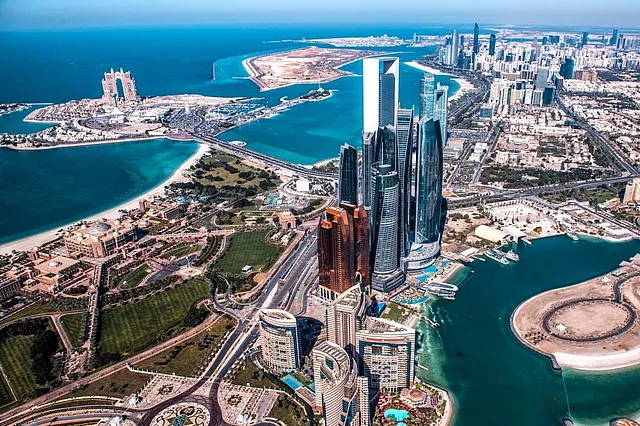
The Abu Dhabi Projects and Infrastructure Centre (ADPIC) is overseeing one of the largest government development programs in the UAE, with a portfolio spanning housing, transportation, healthcare, education, tourism, and community infrastructure across the emirate.
The extensive pipeline reflects Abu Dhabi’s long-term strategy to diversify its economy beyond oil, improve quality of life for residents, and strengthen its position as a global hub for business, tourism, and innovation.
ADPIC coordinates the planning, delivery, and oversight of major public infrastructure projects, ensuring alignment with the UAE’s broader economic and urban development goals.
Dh55 Billion PPP Programme for 2026–2027
Reflecting the scale of future expansion, Abu Dhabi has announced a Dh55 billion Public-Private Partnership (PPP) programme to finance 24 new infrastructure projects during 2026 and 2027, making it one of the largest initiatives of its kind in the Gulf region.
The projects are distributed across several key sectors:
- Transport and Roads: Approximately Dh35 billion has been allocated to develop 11 transportation and road projects, including the construction and expansion of more than 300 kilometres of roads, bridges, tunnels, and major intersections.
- Water and Flood Protection: Five projects worth Dh11 billion will develop dams, water storage facilities, stormwater drainage systems, and flood protection infrastructure.
- Social Infrastructure: Approximately Dh9 billion has been allocated for the construction and development of schools, universities, hospitals, sports facilities, and modern community amenities.
The initiatives align with Abu Dhabi’s broader infrastructure strategy, which S&P Global Ratings recently described as a major shift from the emirate’s traditional utility-focused model into transport, social infrastructure, and core public assets. You can read more about the Dh55 billion PPP pipeline announced earlier this month.
Forbes Middle East Building the Future Summit 2026
The announcement coincides with the second edition of the Forbes Middle East Building the Future Summit 2026, which kicks off in Abu Dhabi on June 23, 2026, under the patronage of the UAE Ministry of Energy and Infrastructure.
The two-day summit is expected to bring together approximately 3,000 policymakers, business executives, and industry experts to examine the future of sustainable urban development across the Middle East and North Africa.
Participants will discuss strategies for building more sustainable and resilient cities, integrating digital technologies into urban planning, and attracting investment into next-generation infrastructure projects as countries across the region pursue ambitious economic diversification and net-zero goals.
Sharif Al Olama, Undersecretary for Energy and Petroleum Affairs at the Ministry of Energy and Infrastructure, said:
The future of energy and infrastructure will be shaped by the integration of sustainability, innovation, and advanced technologies. The UAE continues to adopt a forward-looking approach that combines clean energy, digital transformation, and resilient infrastructure to support economic growth and enhance quality of life.
Khuloud Al Omian, CEO and Editor-in-Chief of Forbes Middle East, said:
The second edition of the Building the Future Summit comes at a time when the region is witnessing an unprecedented acceleration in urban and infrastructure development, driven by technological transformation, sustainable growth requirements, and the increasing need for more resilient and future-ready development models.
Smart and Sustainable Infrastructure
Abu Dhabi’s future vision extends beyond capital expenditure and focuses on developing a comprehensive ecosystem powered by advanced technologies, artificial intelligence, and digital governance in project and infrastructure management.
The emirate has introduced a unified infrastructure governance framework involving 14 government entities, aimed at accelerating approvals, reducing project delivery timelines, and improving coordination among stakeholders.
The framework is expected to lower operating costs, improve government spending efficiency, and accelerate the delivery of strategic projects that support economic and urban growth across the emirate.
Supporting Population and Economic Growth
These significant investments coincide with rapid growth in Abu Dhabi’s industrial, tourism, real estate, logistics, and advanced technology sectors, creating increased demand for infrastructure capable of accommodating future population growth, business expansion, and foreign direct investment.
Economists believe that continued investment in infrastructure projects remains one of the key drivers of the emirate’s GDP growth and further enhances Abu Dhabi’s attractiveness to global investors, particularly through innovative financing models based on public-private partnerships.
The emirate’s population is projected to reach six million by 2040, underscoring the need for large-scale infrastructure development to support sustained demographic and economic expansion.
With more than Dh200 billion in ongoing projects and a newly launched Dh55 billion programme for future developments, Abu Dhabi appears poised to enter a new phase of urban and economic expansion, supported by modern infrastructure that will serve as the foundation for growth and development over the coming decades.
Leave a Reply