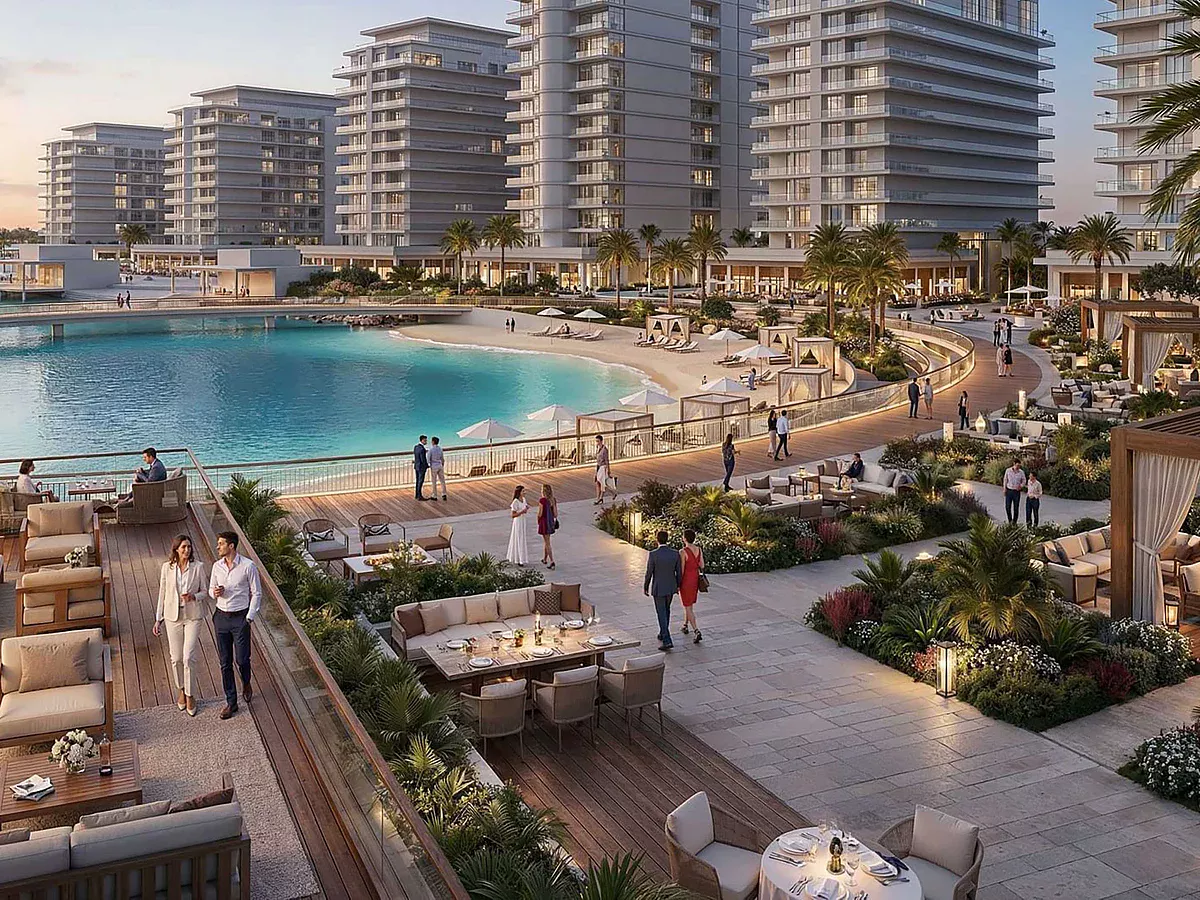
Tag: Abu Dhabi development

  • Abu Dhabi Unveils Dh200 Billion Infrastructure Portfolio with 600+ Projects

    Abu Dhabi Unveils Dh200 Billion Infrastructure Portfolio with 600+ Projects

    The Abu Dhabi Projects and Infrastructure Centre (ADPIC) is overseeing one of the largest government development programs in the UAE, with a portfolio spanning housing, transportation, healthcare, education, tourism, and community infrastructure across the emirate.

    The extensive pipeline reflects Abu Dhabi’s long-term strategy to diversify its economy beyond oil, improve quality of life for residents, and strengthen its position as a global hub for business, tourism, and innovation.

    ADPIC coordinates the planning, delivery, and oversight of major public infrastructure projects, ensuring alignment with the UAE’s broader economic and urban development goals.

    Dh55 Billion PPP Programme for 2026–2027

    Reflecting the scale of future expansion, Abu Dhabi has announced a Dh55 billion Public-Private Partnership (PPP) programme to finance 24 new infrastructure projects during 2026 and 2027, making it one of the largest initiatives of its kind in the Gulf region.

    The projects are distributed across several key sectors:

    • Transport and Roads: Approximately Dh35 billion has been allocated to develop 11 transportation and road projects, including the construction and expansion of more than 300 kilometres of roads, bridges, tunnels, and major intersections.
    • Water and Flood Protection: Five projects worth Dh11 billion will develop dams, water storage facilities, stormwater drainage systems, and flood protection infrastructure.
    • Social Infrastructure: Approximately Dh9 billion has been allocated for the construction and development of schools, universities, hospitals, sports facilities, and modern community amenities.

    The initiatives align with Abu Dhabi’s broader infrastructure strategy, which S&P Global Ratings recently described as a major shift from the emirate’s traditional utility-focused model into transport, social infrastructure, and core public assets. You can read more about the Dh55 billion PPP pipeline announced earlier this month.

    Forbes Middle East Building the Future Summit 2026

    The announcement coincides with the second edition of the Forbes Middle East Building the Future Summit 2026, which kicks off in Abu Dhabi on June 23, 2026, under the patronage of the UAE Ministry of Energy and Infrastructure.

    The two-day summit is expected to bring together approximately 3,000 policymakers, business executives, and industry experts to examine the future of sustainable urban development across the Middle East and North Africa.

    Participants will discuss strategies for building more sustainable and resilient cities, integrating digital technologies into urban planning, and attracting investment into next-generation infrastructure projects as countries across the region pursue ambitious economic diversification and net-zero goals.

    Sharif Al Olama, Undersecretary for Energy and Petroleum Affairs at the Ministry of Energy and Infrastructure, said:

    The future of energy and infrastructure will be shaped by the integration of sustainability, innovation, and advanced technologies. The UAE continues to adopt a forward-looking approach that combines clean energy, digital transformation, and resilient infrastructure to support economic growth and enhance quality of life.

    Khuloud Al Omian, CEO and Editor-in-Chief of Forbes Middle East, said:

    The second edition of the Building the Future Summit comes at a time when the region is witnessing an unprecedented acceleration in urban and infrastructure development, driven by technological transformation, sustainable growth requirements, and the increasing need for more resilient and future-ready development models.

    Smart and Sustainable Infrastructure

    Abu Dhabi’s future vision extends beyond capital expenditure and focuses on developing a comprehensive ecosystem powered by advanced technologies, artificial intelligence, and digital governance in project and infrastructure management.

    The emirate has introduced a unified infrastructure governance framework involving 14 government entities, aimed at accelerating approvals, reducing project delivery timelines, and improving coordination among stakeholders.

    The framework is expected to lower operating costs, improve government spending efficiency, and accelerate the delivery of strategic projects that support economic and urban growth across the emirate.

    Supporting Population and Economic Growth

    These significant investments coincide with rapid growth in Abu Dhabi’s industrial, tourism, real estate, logistics, and advanced technology sectors, creating increased demand for infrastructure capable of accommodating future population growth, business expansion, and foreign direct investment.

    Economists believe that continued investment in infrastructure projects remains one of the key drivers of the emirate’s GDP growth and further enhances Abu Dhabi’s attractiveness to global investors, particularly through innovative financing models based on public-private partnerships.

    The emirate’s population is projected to reach six million by 2040, underscoring the need for large-scale infrastructure development to support sustained demographic and economic expansion.

    With more than Dh200 billion in ongoing projects and a newly launched Dh55 billion programme for future developments, Abu Dhabi appears poised to enter a new phase of urban and economic expansion, supported by modern infrastructure that will serve as the foundation for growth and development over the coming decades.

  • Sheikh Khaled Inaugurates $201 Million Al Samha Housing Project in Abu Dhabi

    Sheikh Khaled Inaugurates $201 Million Al Samha Housing Project in Abu Dhabi

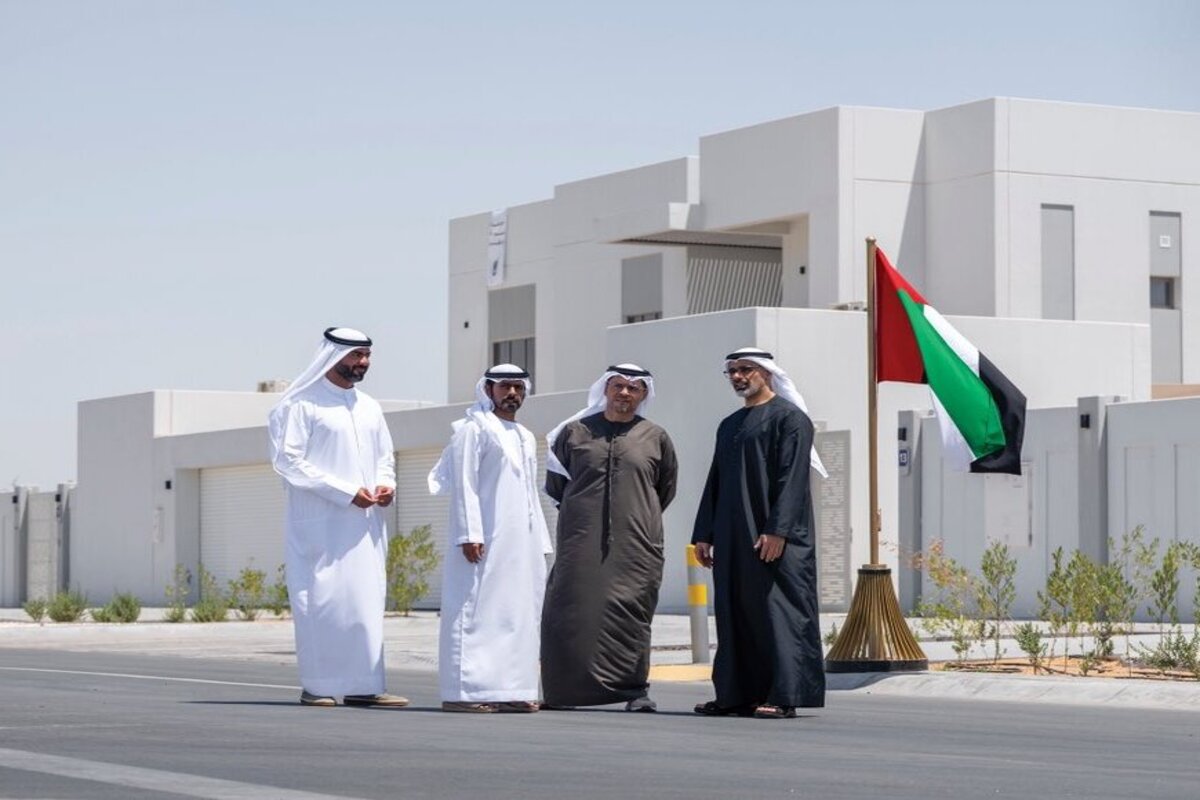
    Abu Dhabi has unveiled another milestone in its mission to deliver sustainable, fully serviced residential communities that enhance quality of life for Emirati families. The Al Samha Housing Project, inaugurated by His Highness Sheikh Khaled bin Mohamed bin Zayed Al Nahyan, Crown Prince of Abu Dhabi and Chairman of the Abu Dhabi Executive Council, represents a comprehensive approach to urban planning that goes beyond housing to create integrated neighborhoods.

    During the visit, His Highness was briefed on the project’s design specifications and key features, including its comprehensive infrastructure and public service facilities. The development covers 50 hectares and includes 242 villas, each built on a 1,080-square-meter plot with a total built-up area of 505 square meters.

    The project incorporates 33 public parks and green spaces, a mosque spanning 1,228 square meters with capacity for 644 worshippers, two commercial complexes containing 38 retail outlets, and a 3-kilometer cycling track. The development was delivered by the Abu Dhabi Housing Authority (ADHA) in partnership with the Abu Dhabi Projects and Infrastructure Centre (ADPIC), in line with the highest quality standards and international best practices.

    “The project reflects a commitment to providing world-class housing options aligned with the leadership’s vision for stable and well-served communities,” stated Mohamed Ali Al Shorafa, Chairman of the Department of Municipalities and Transport and Chairman of ADHA.

    Officials highlighted that the Al Samha Housing Project reflects the leadership’s commitment to developing fully integrated and sustainable residential communities that support family wellbeing, prosperity and a high quality of life. Abu Dhabi’s housing approach focuses on building comprehensive communities that integrate housing, services and modern infrastructure to enhance social wellbeing and empower Emirati families.

    The project is part of the Emirati Neighbourhood Initiative led by ADHA, which aims to deliver modern housing within well-planned communities that promote social stability and support urban development across the emirate. This initiative aligns with Abu Dhabi’s sustained housing support, which has exceeded AED5.76 billion in 2026.

    Hamad Hareb Al Muhairi, Director-General of ADHA, noted that the project marks an important milestone in meeting citizens’ housing needs, with careful planning to ensure it aligns with Emirati family requirements in terms of space, design and community facilities.

    The Al Samha development demonstrates Abu Dhabi’s long-term commitment to creating liveable, sustainable urban environments as the emirate’s population heads toward six million by 2040. The project contributes to the broader vision of transforming Abu Dhabi into a destination that balances strategic growth with quality of life, reinforcing the emirate’s position as a regional leader in planned urban development.

  • Abu Dhabi Unveils Dh55 Billion PPP Pipeline for 24 Infrastructure Projects

    Abu Dhabi Unveils Dh55 Billion PPP Pipeline for 24 Infrastructure Projects

    S&P Global Ratings described the programme as one of the largest planned expansions of private-sector participation in infrastructure delivery in the Gulf, noting that the strategic shift is more significant than the headline value itself.

    The pipeline, announced in May 2026, spans roads, flood-control systems, educational facilities, healthcare assets, and sports infrastructure—all sectors where private capital has played a limited role in the emirate until now.

    “We think the launch marks a pivot in Abu Dhabi’s long-established infrastructure financing model, and forms part of a wider strategy to mobilize private, institutional, and sovereign capital alongside public resources,” S&P said in its report.

    Beyond Power and Water

    Abu Dhabi has used PPP structures for more than two decades, primarily through independent power and water projects procured by Emirates Water and Electricity Company. Those projects helped mobilise approximately $28 billion of investment, with average leverage of about 74%, supported by long-term contracts and strong government-linked counterparties.

    The new programme extends that model into a wider set of assets. Abu Dhabi has already built a smaller track record in social infrastructure through Zayed City Schools, Khalifa University student accommodation, and the LED street-lighting programme.

    The move could allow Abu Dhabi to accelerate infrastructure delivery while reducing the need for direct public spending during the construction phase. Under design, build, finance, and operate structures, a large part of the capital requirement is handled by private sponsors and lenders, while the public sector makes long-term payments linked to performance.

    Why It Matters

    S&P said the model gives Abu Dhabi more flexibility in how it allocates capital, while helping transfer selected construction, design, and operating risks to private-sector parties. The agency noted that this can also reduce the impact of cost overruns and delays on the public sector, since those risks are typically borne by contractors and project companies under PPP arrangements.

    The PPP pipeline comes as Abu Dhabi develops other channels for infrastructure investment, including a planned $30 billion partnership involving L’IMAD, ADNOC, BlackRock’s Global Infrastructure Partners, and Temasak.

    S&P said the participation of global investors reflects continued interest in Abu Dhabi’s infrastructure assets, even as regional geopolitical tensions remain elevated. Investor confidence is supported by Abu Dhabi’s credit strength, established procurement record, government-backed counterparties, and the UAE dirham’s peg to the US dollar, which reduces foreign-exchange risk for dollar-based investors.

    Implementation Challenges Ahead

    S&P identified scaling up existing procurement practices as the biggest challenge facing the programme.

    “The key challenge will lie in successfully scaling up the established procurement practices, risk-allocation principles, and investor confidence across a much larger infrastructure program.”

    The next phase will depend on project-specific procurement and financing structures, with investors expected to focus closely on how risks are allocated across transport, core infrastructure, and social infrastructure projects.

    The simultaneous procurement of projects across multiple sectors will also test the capacity of contractors, advisers, lenders, and public-sector counterparties. S&P said delays would not necessarily weaken investor appetite, but they could affect the order in which projects are brought to market, procurement timelines, and the pace of capital deployment.

    Funding Structure and Timeline

    Bank financing is expected to remain the main source of funding during construction, particularly in the early stages. S&P said some social infrastructure and lower-operational-risk assets may be able to access capital markets earlier than utility projects, which could gradually broaden the funding base over time.

    The agency said the most likely outcome is a gradual expansion of Abu Dhabi’s infrastructure investor base, with infrastructure funds, sovereign investors, and institutional debt investors participating alongside traditional project finance lenders as the market develops.

    Phased tendering and effective sequencing will be important in keeping procurement competitive and maintaining investor confidence across the programme, according to S&P.

    The launch reflects a broader regional shift, as the UAE continues to attract long-term capital into infrastructure and real estate. Recent moves include Aldar’s partnership with DMT to deliver integrated communities spanning more than 20 million square meters, and the expansion of housing support programmes across the emirate.

  • Aldar and DMT Partner to Develop 20 Million Sqm in Abu Dhabi

    Aldar and the Department of Municipalities and Transport (DMT) have formalized a major public-private partnership to deliver integrated communities spanning more than 20 million square meters across five strategic locations in Abu Dhabi, marking one of the emirate’s most ambitious urban development initiatives.

    The agreement was signed on May 12, 2026, during the Abu Dhabi Infrastructure Summit (ADIS) 2026, with His Excellency Suhail Mohamed Al Mazrouei, Minister of Energy and Infrastructure, His Excellency Mohammed Ali Al Shorafa, Chairman of DMT, and His Excellency Mohamed Khalifa Al Mubarak, Chairman of Aldar, in attendance.

    His Excellency Abdulla Mohamed Al Blooshi, Director General of the Urban Planning and Permits Centre at DMT, and Talal Al Dhiyebi, Group Chief Executive Officer of Aldar, executed the partnership documents.

    Strategic Locations and Community Design

    The new communities will be developed at Muwaylih, Mussafah, Al Zahiya, and Al Faya, combining residential, retail, educational, and lifestyle offerings within walkable neighborhoods featuring green public spaces and connectivity to Abu Dhabi’s transport networks.

    The collaboration directly supports the emirate’s urban development and housing priorities, including the expansion of the Value Housing Program, a DMT-led initiative increasing access to high-quality, affordable rental housing in Abu Dhabi.

    “This strategic partnership marks an important step in shaping Abu Dhabi’s next phase of urban growth. As the emirate continues to attract residents, businesses and investment, there is a growing need for thoughtfully planned destinations that expand housing choice across multiple market segments while enhancing quality of life,” said Talal Al Dhiyebi, Group Chief Executive Officer of Aldar.

    Al Dhiyebi emphasized that the scale and breadth of these projects reflect Aldar’s strong conviction in the long-term fundamentals of Abu Dhabi’s real estate market and continued confidence in the emirate’s economic growth trajectory.

    Value Housing Program Expansion

    The partnership marks a significant expansion of the Value Housing Program, building on a recently announced commitment to develop two integrated communities in Mohamed Bin Zayed City and Baniyas that will deliver 9,000 residential units to Abu Dhabi’s rental market.

    These communities are designed to offer walkable neighborhoods, green public spaces, schools, retail and gathering places, connected to the wider city and built around the lifestyle needs of residents. Strategically located along major road networks, each destination will offer seamless connectivity across Abu Dhabi while fostering a strong sense of place and belonging.

    “This partnership with Aldar represents a new model for Abu Dhabi’s urban development, one that brings together strategic master planning, private-sector execution capability and government oversight to deliver transformational growth,” said His Excellency Abdulla Mohamed Al Blooshi, Director General of the Urban Planning and Permits Centre at DMT.

    Al Mihsinah Island Activation

    In a landmark announcement, Aldar and DMT revealed plans to activate Al Mihsinah Island for the first time, creating a waterfront community that combines natural coastal surroundings with thoughtfully planned residential neighborhoods and lifestyle amenities.

    The development will offer a living experience that blends wellness, tranquility and connectivity within a waterfront setting, representing a new benchmark for coastal community development in the capital.

    New Model for Urban Development

    The agreement represents a new model for urban development in the emirate, aligning housing accessibility, community building and long-term economic growth within a single, coordinated framework. DMT contributes land while Aldar serves as master developer, combining public-sector land stewardship with private-sector development expertise.

    The partnership is a direct expression of Abu Dhabi’s urban development strategy, placing integrated community planning, housing accessibility and long-term liveability at its core. Aldar will draw on its extensive expertise in delivering iconic destinations such as Saadiyat Island, Yas Island and Al Raha Beach.

    The announcement comes as Abu Dhabi’s residential market continues to demonstrate strong momentum, with transaction volumes remaining elevated and investor confidence sustained by the emirate’s robust economic fundamentals and strategic infrastructure investments.

  • Abu Dhabi Approves 75 Million Sqm of Development in 2025

    Abu Dhabi Approves 75 Million Sqm of Development in 2025

    The Department of Municipalities and Transport (DMT) announced on March 12, 2026, that it approved nearly 75 million square meters of gross floor area for development across Abu Dhabi in 2025, representing a 137% year-on-year increase that signals the emirate’s rapid urban expansion.

    The scale of this expansion is equivalent to the entire developed capacity of Yas Island being built out seven times over, according to DMT officials.

    “This milestone reflects Abu Dhabi’s growing momentum as a world destination for investment and development. Through forward-looking approaches and streamlined regulatory processes, we are enabling diverse mixed-use districts that strengthen economic diversification, attract international talent and enhance quality of life across the emirate,” said His Excellency Eng Abdulla Mohamed Al Blooshi, Director General of the Urban Planning & Permits Centre at DMT.

    Nearly 190,000 Residential Units Approved

    Housing initiatives represented the largest share of development approvals, with nearly 190,000 residential units planned across new and existing neighborhoods. These include more than 158,000 market units and approximately 30,000 homes dedicated to UAE Nationals, supported by an extensive network of community amenities, including schools, healthcare facilities, community majlis and retail destinations.

    Industry and technology sectors also emerged as major drivers of activity, with new approved projects spanning industrial zones, data centers and advanced manufacturing facilities expected to support the emirate’s digital economy, logistics sector and technology-driven industries.

    In the hospitality and tourism sector, projects delivering nearly 5,000 new hotel keys were added across multiple destinations, alongside new waterfront attractions, beaches and cultural experiences that reinforce Abu Dhabi’s tourism appeal.

    Approval Cycle Reduced by 60 Days

    To facilitate this unprecedented scale of development, DMT reduced the approval cycle for master developers by 60 days, accelerating the delivery of major projects across the emirate while maintaining rigorous compliance standards.

    “The reduction in evaluation timelines demonstrates our commitment to enabling rapid and high-quality construction across Abu Dhabi. By balancing efficiency with strong regulatory oversight, we are ensuring that the emirate’s urban landscape evolves to meet market demand while maintaining the highest standards,” said Mansour Saleh Al Harbi, Acting Executive Director for Activation and Development Control Sector at DMT.

    The surge in planning approvals has been supported by the launch of BINAA, the region’s first AI-driven permits platform. Since its introduction in June 2025, the platform has shortened the average time required to issue a residential villa building permit by 57% and decreased resubmissions by 53% by automating complex technical reviews.

    In total, over 11,000 building permits were issued in 2025, representing a 15% increase compared with the previous year. DMT also conducted upskilling workshops for more than 7,000 consultants and contractors to support their adaptation to evolving regulatory and market requirements.

    The development surge comes as Abu Dhabi leads UAE real estate growth and as expatriate residents drive 62% of home sales in the emirate. DMT will continue to expand BINAA’s capabilities while promoting the adoption of digital and AI-enabled submissions to further streamline processes and strengthen Abu Dhabi’s global competitiveness.