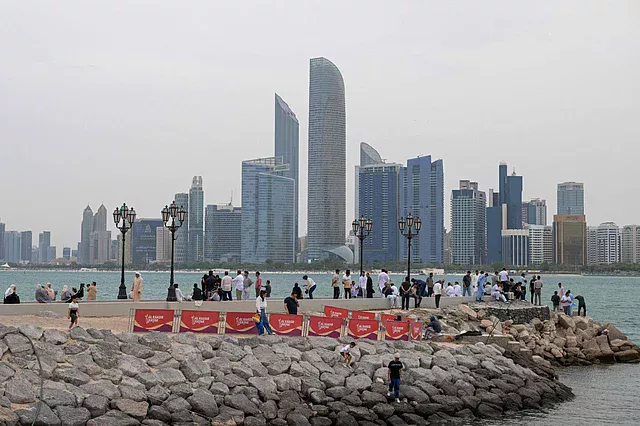
S&P Global Ratings described the programme as one of the largest planned expansions of private-sector participation in infrastructure delivery in the Gulf, noting that the strategic shift is more significant than the headline value itself.
The pipeline, announced in May 2026, spans roads, flood-control systems, educational facilities, healthcare assets, and sports infrastructure—all sectors where private capital has played a limited role in the emirate until now.
“We think the launch marks a pivot in Abu Dhabi’s long-established infrastructure financing model, and forms part of a wider strategy to mobilize private, institutional, and sovereign capital alongside public resources,” S&P said in its report.
Beyond Power and Water
Abu Dhabi has used PPP structures for more than two decades, primarily through independent power and water projects procured by Emirates Water and Electricity Company. Those projects helped mobilise approximately $28 billion of investment, with average leverage of about 74%, supported by long-term contracts and strong government-linked counterparties.
The new programme extends that model into a wider set of assets. Abu Dhabi has already built a smaller track record in social infrastructure through Zayed City Schools, Khalifa University student accommodation, and the LED street-lighting programme.
The move could allow Abu Dhabi to accelerate infrastructure delivery while reducing the need for direct public spending during the construction phase. Under design, build, finance, and operate structures, a large part of the capital requirement is handled by private sponsors and lenders, while the public sector makes long-term payments linked to performance.
Why It Matters
S&P said the model gives Abu Dhabi more flexibility in how it allocates capital, while helping transfer selected construction, design, and operating risks to private-sector parties. The agency noted that this can also reduce the impact of cost overruns and delays on the public sector, since those risks are typically borne by contractors and project companies under PPP arrangements.
The PPP pipeline comes as Abu Dhabi develops other channels for infrastructure investment, including a planned $30 billion partnership involving L’IMAD, ADNOC, BlackRock’s Global Infrastructure Partners, and Temasak.
S&P said the participation of global investors reflects continued interest in Abu Dhabi’s infrastructure assets, even as regional geopolitical tensions remain elevated. Investor confidence is supported by Abu Dhabi’s credit strength, established procurement record, government-backed counterparties, and the UAE dirham’s peg to the US dollar, which reduces foreign-exchange risk for dollar-based investors.
Implementation Challenges Ahead
S&P identified scaling up existing procurement practices as the biggest challenge facing the programme.
“The key challenge will lie in successfully scaling up the established procurement practices, risk-allocation principles, and investor confidence across a much larger infrastructure program.”
The next phase will depend on project-specific procurement and financing structures, with investors expected to focus closely on how risks are allocated across transport, core infrastructure, and social infrastructure projects.
The simultaneous procurement of projects across multiple sectors will also test the capacity of contractors, advisers, lenders, and public-sector counterparties. S&P said delays would not necessarily weaken investor appetite, but they could affect the order in which projects are brought to market, procurement timelines, and the pace of capital deployment.
Funding Structure and Timeline
Bank financing is expected to remain the main source of funding during construction, particularly in the early stages. S&P said some social infrastructure and lower-operational-risk assets may be able to access capital markets earlier than utility projects, which could gradually broaden the funding base over time.
The agency said the most likely outcome is a gradual expansion of Abu Dhabi’s infrastructure investor base, with infrastructure funds, sovereign investors, and institutional debt investors participating alongside traditional project finance lenders as the market develops.
Phased tendering and effective sequencing will be important in keeping procurement competitive and maintaining investor confidence across the programme, according to S&P.
The launch reflects a broader regional shift, as the UAE continues to attract long-term capital into infrastructure and real estate. Recent moves include Aldar’s partnership with DMT to deliver integrated communities spanning more than 20 million square meters, and the expansion of housing support programmes across the emirate.
Leave a Reply