Tag: UAE property market

  • Dubai Real Estate Launches Hit Record $75 Billion in First Half of 2026

    Dubai Real Estate Launches Hit Record $75 Billion in First Half of 2026

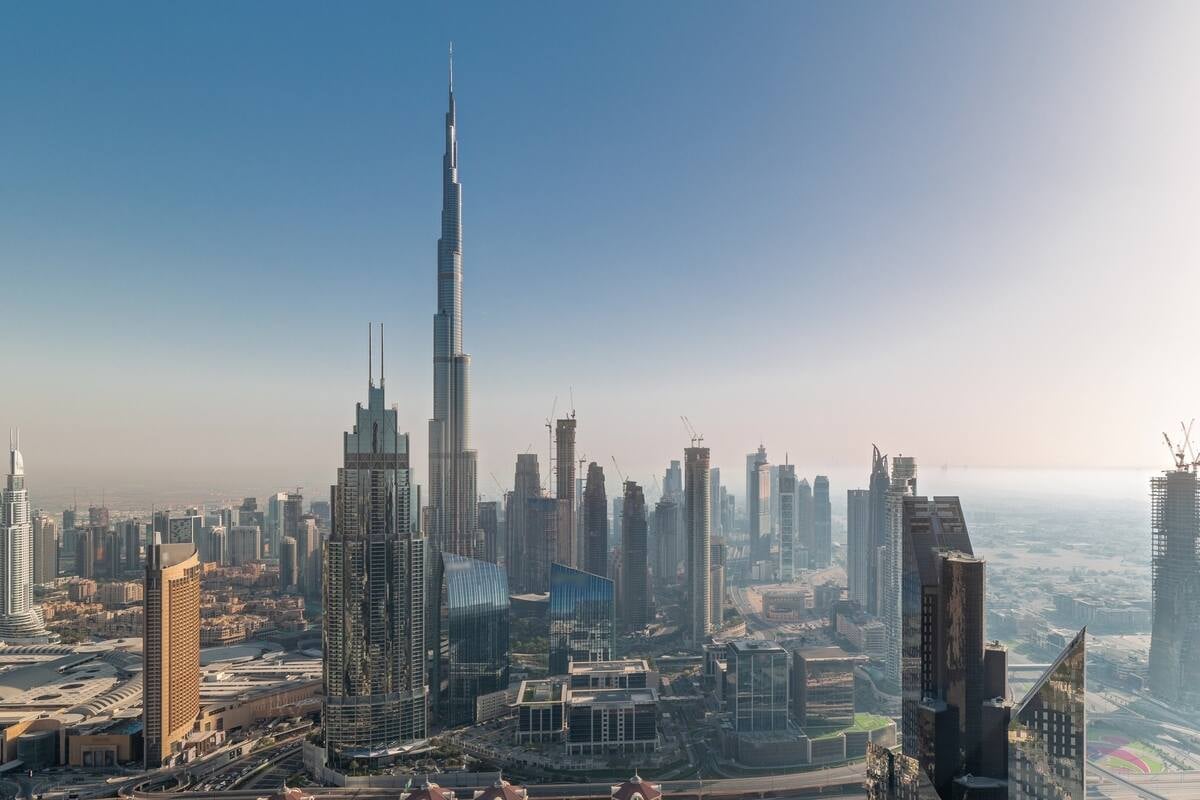
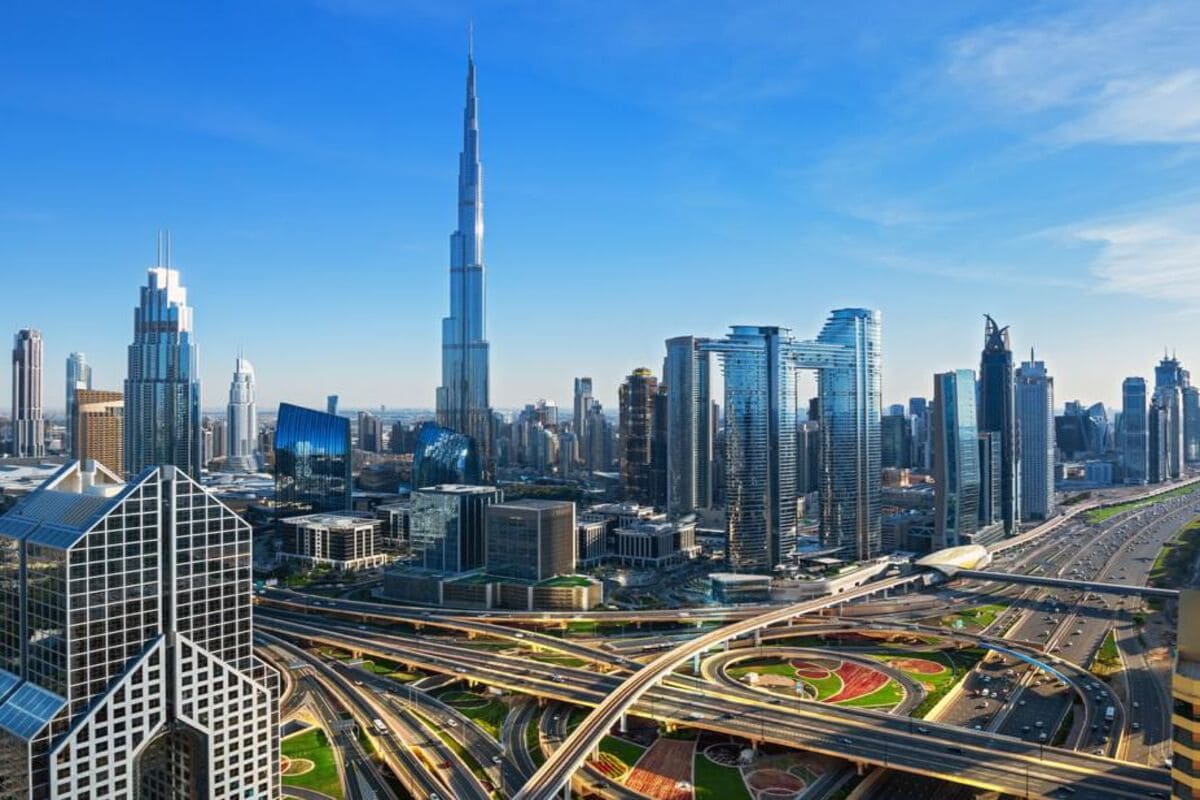
    The value of new real estate projects in Dubai has exceeded AED275 billion ($74.88 billion) since the beginning of 2026, reflecting continued exceptional momentum in the sector and reinforcing the emirate’s entry into the largest half-year cycle of new real estate project launches in its history.

    A recent report by W Capital Real Estate Brokerage stated that the total value of new and announced real estate projects in the first half of this year exceeded AED275 billion. This includes 250 new real estate projects launched and registered with the Dubai Land Department by the end of May, valued at nearly AED75 billion, as well as the mega-project announced by Emaar Properties in June, valued at up to AED200 billion.

    The projects launched during the first five months of the year comprise approximately 59,400 residential units and 10,800 villas, reflecting the continued focus on the residential sector as the primary driver of real estate growth in Dubai, supported by strong demand from local and international buyers and investors.

    Historical comparisons indicate that Dubai witnessed the launch of 648 new real estate projects by 258 developers in 2025, encompassing over 167,000 residential units with an estimated value of approximately AED463 billion. This compares to 145,000 units valued at AED360.1 billion in 2024, representing a 15.2 percent increase in the number of units and a 28.4 percent increase in the total project value.

    Apartments continued to dominate the new supply last year, accounting for approximately 88.8 percent of all units offered. Meanwhile, villas and townhouses saw significant growth in total value, driven by increased demand for integrated residential communities and low-density projects.

    Confidence remains strong among developers and investors

    In a statement, Al Zarooni, W Capital CEO, said that the figures recorded in the first half of the year reflect strong confidence in Dubai’s real estate sector among both developers and investors. He emphasized that the emirate has successfully established itself as one of the most active and attractive global real estate markets.

    “The fact that the value of new and announced projects has reached nearly AED300 billion in less than six months is an exceptional indicator reflecting the strength of genuine demand for real estate in Dubai, rather than mere development activity driven by expectations,” said Al Zarooni.

    He also noted that Dubai’s real estate market has become more mature and better able to absorb new projects compared to previous years, thanks to the development of the regulatory environment, enhanced transparency and an advanced legislative framework that protects the rights of both investors and developers.

    Dubai on track to post new record high

    Al Zarooni explained that the current pace of launches puts Dubai on track to record one of its biggest years in history in terms of the value of new real estate projects. He predicted that the value of projects launched this year will surpass last year’s levels if the pace of major project announcements continues into the second half of 2026.

    He emphasized that current indicators reflect Dubai’s transformation into a global hub for attracting real estate capital, at a time when many international markets are experiencing a slowdown or a state of anticipation. He noted that the emirate continues to benefit from its position as a safe destination for investment, living and working, which is directly reflected in the strength of demand and the continued launch of new projects.

    The surge in project launches comes alongside other market developments, including Dubai’s Flexi Rents initiative introduced in June 2026 to ease financial pressure on tenants, and follows projections that Dubai’s real estate market will attract over AED1 trillion ($272.3 billion) in new projects over the next five years.

    “What we are witnessing today is not just cyclical growth, but a new phase of real estate development based on sustainable demand and long-term growth. This gives the market strong momentum and promising opportunities for developers and investors in the coming years,” Al Zarooni concluded.

  • Sharjah Records Dh3.1 Billion in Property Transactions in May 2026

    Sharjah Records Dh3.1 Billion in Property Transactions in May 2026

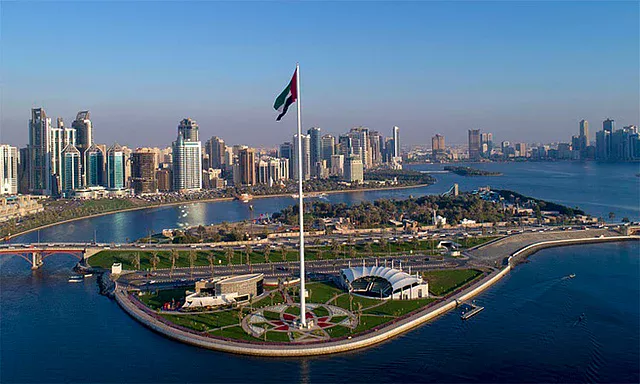
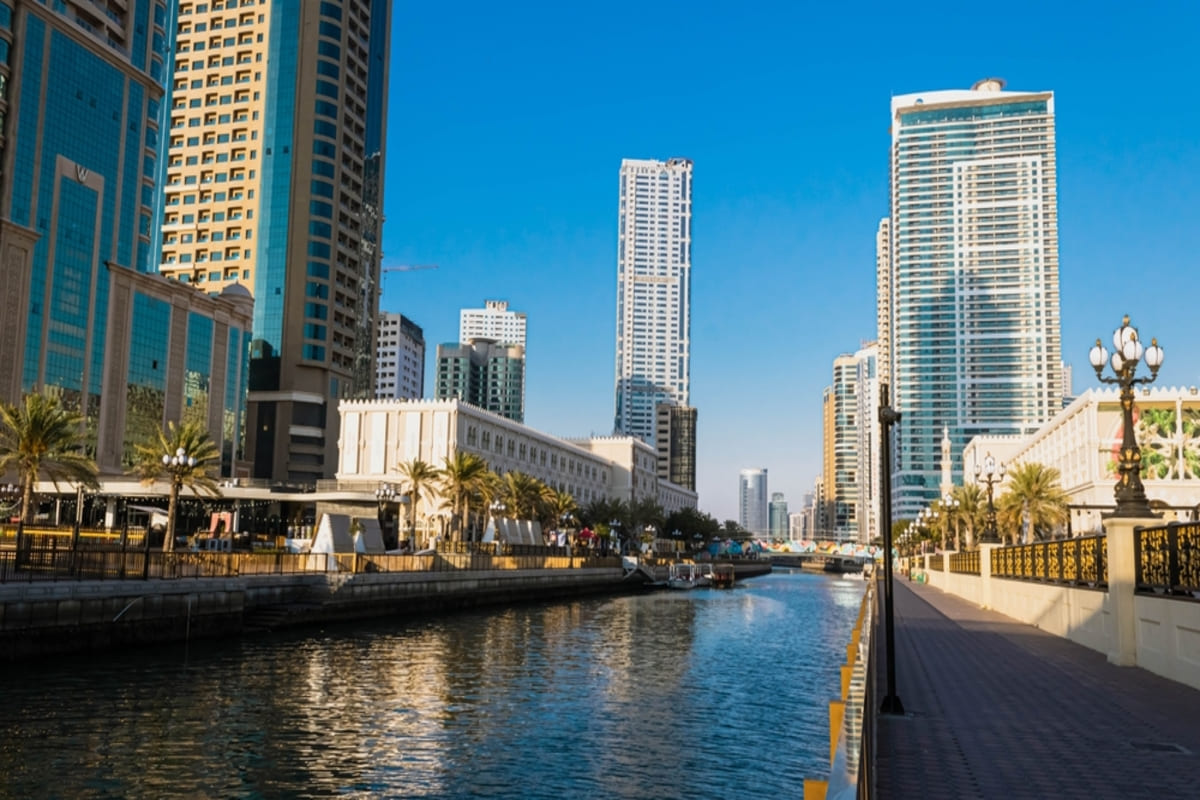
    Sharjah’s real estate market continues to deliver robust performance driven by sustainability-focused development and visionary leadership. During May 2026, the sector recorded 7,119 transactions valued at Dh3.1 billion, while the total area of properties traded through sales transactions reached approximately 9.5 million square feet.

    This performance reflects the direct result of the visionary leadership of Sheikh Dr Sultan bin Muhammad Al Qasimi, Supreme Council Member and Ruler of Sharjah, who has established the foundations of a secure and stable investment environment, an advanced legislative framework, and world-class infrastructure positioning the emirate as a trusted destination for global investors.

    Among the most prominent examples of Sharjah’s sustainability-driven approach are landmark collaborations between Alef Group and BEEAH, including Khalid Bin Sultan City and Linar, where urban development, environmental management and innovation converge to deliver future-ready communities.

    Khaled Al Huraimel, Group Chief Executive Officer and Vice Chairman of BEEAH, told Emirates News Agency that real estate decision-making is undergoing a transformation. “The focus is no longer limited to location or financial returns alone. It now extends to a property’s sustainability performance, energy efficiency, living comfort and ability to adapt to future changes,” he said.

    “This trend aligns with the UAE’s vision to achieve climate neutrality by 2050. The scale of real estate activity in Sharjah, which recorded Dh44.3 billion in transactions, reflects growing confidence in carefully planned, future-ready developments.”

    Khalid Bin Sultan City represents a transformative approach to sustainable urban development in the region. Sustainability was embedded as a core principle from the earliest planning stages, designed as an integrated, climate-smart urban ecosystem drawing on BEEAH’s expertise in environmental management, energy and technology.

    The city features an integrated masterplan designed by Zaha Hadid Architects, centered on walkable neighbourhoods, interconnected public spaces and facilities that strengthen social cohesion. The integration of climate-neutrality-ready infrastructure and smart systems attracts investors seeking stable assets with sustainable returns as well as families looking for long-term quality of life.

    Al Huraimel noted that Khalid Bin Sultan City is being delivered through a phased development plan, with the first handovers scheduled for 2029. The first phase will include a collection of townhouses and villas within one of the city’s first residential neighbourhoods near Khor Fakkan Road.

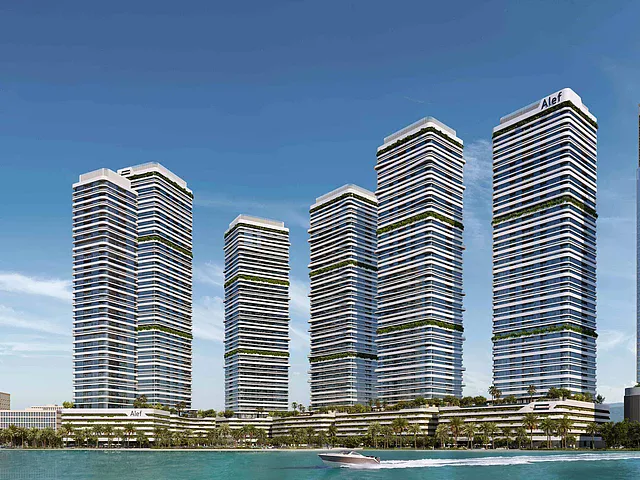
    Raed Kajoor Al Nuaimi, Chief Executive Officer of Alef Group, said the company had moved forward decisively with the launch of Linar. “We remain confident in the resilience of Sharjah’s real estate market and its ability to overcome regional and global challenges while delivering projects that keep pace with the sector’s evolution,” he stated.

    The launch of Linar in Al Mamzar reflects strategic shifts in Sharjah’s real estate sector, where demand increasingly focuses on securing a fully integrated lifestyle that includes quality design, health and wellness facilities, community spaces, and accessibility. The project highlights the growing appeal of waterfront developments, which have become among the most sought-after and highest-value real estate assets.

    The strategic memorandum of understanding signed between Alef Group and BEEAH supports sustainable and climate-positive urban development in Sharjah through the exchange of expertise and knowledge. Alef Group contributes its real estate development expertise to support BEEAH’s projects, while benefiting from BEEAH’s comprehensive environmental management ecosystem to achieve sustainability objectives across all developments.

    Sharjah’s real estate momentum aligns with broader regional trends, as the emirate recorded record Dh65.6 billion in property sales during 2025, positioning it alongside Dubai’s projected Dh1 trillion pipeline as a key driver of UAE real estate growth through 2030.

  • Dubai Real Estate to Attract $272 Billion Over Next Five Years

    Dubai Real Estate to Attract $272 Billion Over Next Five Years

    W Capital Real Estate has projected that the total value of new projects launched or developed in Dubai will surpass AED1 trillion ($272.3 billion) over the next five years, reflecting sustained momentum across the emirate’s property sector.

    The outlook is underpinned by strong population growth, continued inflows of foreign investment, and a steady pipeline of mega-project announcements from leading developers, reinforcing Dubai’s position as one of the world’s most dynamic property investment hubs.

    New Phase of Urban and Investment Expansion

    Walid Al Zarooni, CEO of W Capital Real Estate, affirmed that Emaar’s AED200 billion development announcement clearly indicates that the market is moving toward a new phase of urban and investment expansion, reinforcing expectations of continued mega-project launches in the future.

    Al Zarooni said that the company’s estimates are based on projects announced by major real estate developers, project launch rates over the past years, and development plans linked to Dubai’s economic agenda and the emirate’s D33 population and urban growth targets, which support continued demand for various types of real estate assets.

    He noted that Dubai’s real estate market is witnessing a qualitative shift in the nature of projects offered. It is no longer limited to traditional residential complexes but now includes integrated cities, mixed-use projects, business centers, and community projects that rely on the latest sustainability concepts and smart infrastructure, reflecting the evolving needs of both investors and residents.

    Population Growth and Infrastructure Drive Demand

    The rapid population growth, along with Dubai’s ability to attract global talent, entrepreneurs, and investors, is a key driver of real estate demand across residential, commercial, and hospitality segments. This trend is giving developers greater clarity and confidence to expand and pursue long-term project development.

    Al Zarooni further highlighted that Dubai’s advanced regulatory framework, modern infrastructure, economic stability, and overall resilience have strengthened its status as one of the world’s most attractive real estate destinations, allowing it to continue drawing capital and long-term investment despite broader global economic and geopolitical uncertainty.

    Dubai is well-positioned to maintain its leadership in regional real estate growth, noting that the wave of recently announced mega-projects underscores strong confidence from both developers and investors in the emirate’s long-term outlook.

    He also pointed out that ongoing large-scale infrastructure developments, including enhancements to transport and service networks, are expected to further boost the real estate sector. These initiatives are set to unlock new urban districts and generate a wider range of investment opportunities in the years ahead.

    Al Zarooni concluded that these developments mark the start of a new phase of urban expansion, with expected projects set to exceed AED1 trillion in total value over the next five years.

    The projection comes as Dubai continues to demonstrate market resilience, with neighboring Sharjah recording strong property performance and Abu Dhabi approving major developments across the UAE.

  • Sharjah Property Sales Hit Record Dh65.6 Billion in 2025

    Sharjah Property Sales Hit Record Dh65.6 Billion in 2025

    Sharjah’s property market is experiencing unprecedented growth, with transaction values reaching a historic Dh65.6 billion in 2025 as the emirate positions itself as a compelling alternative to Dubai’s more expensive real estate landscape.

    The momentum carried into 2026, with first-quarter transaction values surging 41 percent year-on-year to Dh18.5 billion, according to a new report by Cavendish Maxwell released on June 11, 2026. Nearly 9,980 properties changed hands during Q1 2026, up 23 percent from the same period in 2025.

    “Sharjah is entering a new phase of economic ambition,” said Ali Siddiqui, research manager at Cavendish Maxwell. “Foreign direct investment reached Dh7.7 billion last year, with the first half alone recording a 361 percent surge to Dh5.5 billion. GDP grew 4.4 percent, business licences climbed nearly 9 percent to more than 77,500, and annual real estate transactions reached a record Dh65.6 billion.”

    The emirate’s transformation accelerated following the introduction of freehold ownership reforms in 2022, which opened the market to international investors. Buyers from nearly 130 nationalities acquired property in Sharjah during 2025, reflecting growing diversity in the investor base.

    33,700 Homes in the Pipeline

    Around 33,700 residential units are scheduled for delivery by 2030, including 24,800 apartments and 9,900 villas and townhouses. The pipeline represents one of the most significant residential expansion programmes in Sharjah’s history, with major projects being developed by Arada, Alef Group, BEEAH Group, Shurooq, and Eagle Hills.

    Approximately 2,600 residential units were delivered during 2025, while another 1,100 apartments entered the market during the first quarter of 2026.

    Affordability Drives Demand

    Residential rents in Sharjah are typically between 20 percent and 30 percent lower than in Dubai, reinforcing demand among both end-users and investors. Many professionals working in Dubai are relocating to Sharjah in search of larger homes and lower housing costs while maintaining access to employment opportunities in the neighbouring emirate.

    The expatriate population, which accounts for more than 85 percent of Sharjah’s residents, continues to support residential demand. UAE nationals remain the largest buyer group, but foreign investors are increasingly attracted by the emirate’s affordability and integrated master-planned communities.

    Infrastructure Investment Strengthens Appeal

    The Dh40 billion Etihad Rail network is expected to enhance connectivity between Sharjah and other emirates, creating new demand drivers for residential and mixed-use developments. Meanwhile, the widening of Emirates Road (E611) is projected to reduce peak-hour travel times to Dubai by up to 45 percent.

    A Dh2.4 billion expansion of Sharjah International Airport aims to raise annual passenger capacity to 20 million by 2027. The airport handled 19.5 million passengers in 2025, an increase of 14 percent year-on-year. Hotel guest arrivals climbed 22 percent to 2.1 million, while hospitality revenues rose 20 percent to Dh780 million, with occupancy reaching 78 percent.

    With Sharjah’s population projected to increase from 1.98 million today to around 2.1 million by 2030, housing demand is expected to remain robust. While the substantial new supply will test absorption capacity, analysts believe the emirate’s combination of affordability, infrastructure investment, and regulatory reforms will sustain strong real estate growth through the remainder of the decade.

    Sharjah’s performance mirrors broader trends across the UAE property sector, where property prices in select Dubai communities have more than doubled in recent years. Meanwhile, Sharjah’s commercial property market also posted robust momentum in Q1 2026, with Grade A office occupancy reaching 85 percent.

  • UAE Tops Global Property Investment Rankings, Surpassing U.S. and U.K.

    UAE Tops Global Property Investment Rankings, Surpassing U.S. and U.K.

    A comprehensive global survey commissioned by Arada and conducted by U.S.-based Penta Group has positioned the UAE as the top choice for international property investors, outranking traditional Western markets including France (28%) and Spain (27%).

    The index reveals that familiarity with UAE real estate opportunities stands at 51%, matching levels seen in the U.K. and trailing the U.S. by only two percentage points—a significant indicator of the market’s maturation on the global stage.

    Regional and European Demand Drives Interest

    The UAE’s appeal is particularly pronounced among investors from neighboring markets. The survey found that 91% of Indian investors, 92% of Egyptian investors, and 85% of Saudi investors cited the country as a top-three destination.

    Among European investors, the UAE emerged as the top choice outside their home country for French investors (63%), German investors (60%), and Swiss investors (57%).

    “These findings confirm that despite recent headwinds international investors recognise the UAE’s structural advantages in regulatory maturity, track record of performance, and stable economic fundamentals,” said Ahmed Alkhoshaibi, Group CEO of Arada.

    Returns and Stability Drive Investment Decisions

    Strong potential returns emerged as the primary investment driver globally, cited by 38% of respondents. Australian (57%), Spanish (56%), and British (41%) investors all ranked return potential as their primary consideration.

    For risk-averse investors, safety and stability proved decisive, particularly among Chinese (65%) and German (58%) investors. The UAE’s regulatory framework, political stability, and transparent property laws have established it as one of the world’s most trusted environments for property investment.

    Ease of purchase and ownership was cited by 34% of respondents overall, rising to 57% among Saudi investors and 41% among Egyptian investors—reflecting the UAE’s reputation as a low-barrier, investor-friendly market.

    Infrastructure Investment Reinforces Market Position

    The survey’s release coincides with announcements of record infrastructure investments across the UAE, including the AED34 billion Dubai Metro Gold Line, the world’s first commercial air taxi network, and the AED6 billion Fourth Federal Corridor designed to enhance connectivity between emirates.

    Alkhoshaibi emphasized the nation’s adaptive capacity: “Continued adaptation has been key to the UAE’s rise as a global investment destination – whether it’s the pandemic or the financial crisis, this country has demonstrated time and again that it adjusts fast and better than anywhere else in the world.”

    The findings arrive as Dubai’s property market demonstrates resilience, with off-plan properties continuing to dominate sales activity. Recent data shows off-plan sales accounting for 76% of residential transactions in April 2026, while Abu Dhabi recorded 6.4% price growth in Q1 2026.

    The UAE’s property sector has proven its ability to maintain momentum despite geopolitical uncertainty, positioning the nation as a long-term investment destination rather than a speculative market. With investor confidence backed by robust infrastructure development and regulatory clarity, the Emirates continues to reshape the global real estate investment landscape.

  • Abu Dhabi Freezes Rents on All Residential and Commercial Properties

    Abu Dhabi Freezes Rents on All Residential and Commercial Properties

    Abu Dhabi has imposed a comprehensive rent freeze across its property market, extending to residential, commercial and industrial sectors as authorities prioritize market stability and tenant protection.

    According to ADREC, all tenancy contract renewals will be processed at 0 percent increase for the duration of the measure. Any new tenancy contract on a previously rented unit will be offered at the same rental value as the preceding contract, effectively capping prices at current levels.

    The decision is designed to maintain rental price stability across Abu Dhabi while ensuring greater transparency and predictability for tenants, according to the regulator.

    The rent freeze is designed to maintain rental price stability across Abu Dhabi while ensuring greater transparency and predictability for tenants.

    The freeze comes as the emirate experiences significant rent appreciation across multiple asset classes. According to JLL’s latest Real Estate Market Dynamics report, Abu Dhabi’s prime office rents surged 11.7 percent year-on-year, while Grade A and Grade B office spaces recorded increases of 5.1 percent and 4.2 percent, respectively.

    In the industrial segment, Abu Dhabi achieved 18.2 percent growth with rents averaging AED486 per square meter in Q1 2026, reflecting sustained occupier demand and constrained supply.

    The capital’s residential market has also demonstrated strong momentum. According to recent data, Abu Dhabi property prices jumped 6.4% in the first quarter of 2026, with the ValuStrat Price Index climbing to 148 points.

    The freeze represents a significant policy intervention in a market that has seen rapid appreciation driven by population growth, economic diversification and infrastructure development. It follows similar measures in neighboring Dubai, where authorities have historically employed rental caps tied to market indices.

    No end date for the temporary measure has been announced. ADREC stated the freeze will remain in effect “until further notice,” leaving landlords and tenants uncertain about the timeline for a return to market-driven pricing.

    The decision may prompt developers and investors to reassess project timelines and yield expectations, particularly in segments where rental income forms a core component of investment returns. Meanwhile, tenants across the emirate are expected to benefit from immediate cost certainty as UAE office rents surge in prime locations.

  • UAE Property Market Launches 59 Projects Worth Dh118.3 Billion Since Conflict Began

    UAE Property Market Launches 59 Projects Worth Dh118.3 Billion Since Conflict Began

    Based on the latest data from Property Monitor, Matt Gregory, senior director of strategy at Bayut and dubizzle, confirmed the 59 projects represented more than 12,000 units across the UAE launched after the conflict escalated.

    “This continued launch activity reflects sustained developer confidence and the market’s ability to progress despite short-term uncertainty. The total estimated gross sales value (GSV) of all those units launched is Dh118.3 billion,” Gregory said.

    The regional military conflict involving the US, Israel and Iran escalated on February 28, 2026. Following the US-Israel attacks, Iran targeted the UAE and other Gulf countries with missiles and drones.

    The property sector, which was already undergoing a correction phase after a strong five-year rally, came under pressure due to the conflict. However, the market demonstrated resilience and has been recovering since the ceasefire.

    Market Recovery and Engagement Metrics

    According to Bayut and dubizzle Property data, active users rebounded to 85% of the 2026 baseline by day 58 of the conflict, while unique buyers returned to 87%. The recovery was even more pronounced across platform engagement metrics, with impressions reaching 92% of the 2026 baseline, views reaching 89%, and high-intent enquiries recovering to 80%.

    “Periods of uncertainty often reveal the true strength of a market. What we are seeing across our platforms is a measured and confident return of activity, supported by serious buyers, committed agents and increasingly data-led decision-making. The UAE real estate market continues to demonstrate maturity, with users actively engaging with trusted tools such as TruEstimate and Dubai Transactions to understand value, compare opportunities and make better-informed choices. This is exactly the kind of behaviour that supports long-term market stability,” Matt Gregory said.

    Dubai’s Strong Property Interest

    Dubai continued to witness strong property interest across both ready and off-plan segments. In ready sales, communities such as Jumeirah Village Circle, Business Bay, Downtown Dubai, Dubai Marina and Arjan were among the most searched apartment areas. For villas, Damac Hills 2, Dubai Hills Estate, Arabian Ranches 3, Arabian Ranches and Dubai South led buyer interest.

    For off-plan demand, areas such as Majan, Jumeirah Village Circle, Dubai South, Jumeirah Village Triangle and Business Bay stood out for apartments. Villa demand was led by The Oasis by Emaar, The Valley by Emaar, Damac Lagoons, Dubai South and Mohammed Bin Rashid City.

    Rather than seeing stress in specific communities, Bayut and dubizzle data indicated that established residential areas continued to attract strong interest, particularly those with proven lifestyle appeal, mature infrastructure and sustained end-user demand, Gregory said.

    Rental Market Remains Robust

    Data also showed that rental demand remained concentrated in established and emerging family and lifestyle communities. Jumeirah Village Circle, Arjan, Business Bay, Dubai Marina and Meydan ranked among the most popular apartment rental areas. For villas, Damac Hills 2, Dubai South, Mirdif, Arabian Ranches 3 and The Valley by Emaar were among the most searched rental communities.

    The latest findings point to a market that is not only recovering, but doing so with greater reliance on data, transparency and qualified engagement, nearly two months after the onset of the recent regional uncertainty. The data reinforces the underlying resilience of the UAE’s real estate market as new policy measures and infrastructure projects continue to support buyer confidence.

  • Sharjah Commercial Property Market Posts Strong Q1 2026 Performance

    Sharjah Commercial Property Market Posts Strong Q1 2026 Performance

    Sharjah’s commercial real estate sector recorded strong gains during the first quarter of 2026, driven by rising demand for quality office space, sustained industrial activity, and growing investor confidence, according to global real estate advisor Savills.

    The emirate is evolving from a cost-driven alternative into a more mature, demand-led commercial market, steered by improving infrastructure, expanding logistics connectivity, and a growing supply of higher-quality developments.

    Premium Office Space Commands New Pricing Power

    Occupancy across prime Grade A office buildings has reached approximately 85 percent, with these assets now achieving rental premiums of three to four times over older Grade C stock. Prime office rents in Sharjah remain 50 to 60 percent lower than comparable Dubai locations, yet the gap is narrowing as quality improves.

    Savills forecasts prime office rental growth of between 5 to 10 percent across 2026, supported by constrained near-term Grade A supply.

    Ongoing cost pressures in Dubai have led to spillover demand into Sharjah. However, businesses are increasingly looking toward the emirate for its operational efficiency and connectivity in addition to its affordability.

    “The commercial market of Sharjah is entering a new phase of maturity defined by the quality of its offer rather than simple cost arbitrage. Occupiers across both the office and industrial sectors are making deliberate, long-term commitments to the emirate, drawn by improving specifications, strategic connectivity, and a competitive cost base,” said Shane Breen, Head of Sharjah & Northern Emirates at Savills Middle East.

    Industrial Sector Benefits from Supply Chain Shifts

    The industrial and logistics sector in Sharjah continues to benefit from broader structural shifts across global supply chains as businesses prioritize resilience and decentralized logistics networks. Demand remains concentrated in key hubs such as Al Sajaa and along the E611 corridor, driven by third-party logistics operators, distributors, and light manufacturing occupiers.

    Industrial transaction values increased by 89 percent year-on-year to AED9.2 billion, reflecting rising investor confidence and strengthening land values. Emirates Industrial City recorded the strongest annual land value growth, doubling in value, followed by Al Qasimia City at 87.5 percent and Al Sajaa at 43.8 percent.

    Meanwhile, the industrial rental market in Sharjah recorded average rental growth of 61 percent year-on-year, with Emirates Industrial City and Al Sajaa among the strongest-performing locations.

    Strategic Cost Advantage Underpins Long-Term Appeal

    Looking ahead, Savills expects the commercial property market of Sharjah to maintain positive momentum through 2026. The emirate’s 30 to 50 percent cost advantage compared to Dubai and Abu Dhabi is expected to continue supporting long-term occupier and investor appeal.

    The performance aligns with broader momentum across the UAE’s real estate sector. Dubai’s property sector demonstrated exceptional resilience in Q1 2026, while Abu Dhabi property prices jumped 6.4% during the same period, underscoring sustained investor confidence across the region.

  • Dubai Property Transactions Above Dh10 Million Surge Post-Ceasefire

    Dubai Property Transactions Above Dh10 Million Surge Post-Ceasefire

    Dubai developers confirmed on May 12, 2026, that the emirate’s property market remains on solid footing despite recent geopolitical tensions, with buyer confidence gradually returning and major projects progressing as scheduled.

    Transaction value typically outperforms April by 10 to 30 percent, with residential contributing over 80 per cent of the total market value, according to Property Finder.

    Cherif Sleiman, chief revenue officer of Property Finder, noted that Dubai’s property market in May will “be building from a softer starting point than the summers of 2023 or 2024, given where March landed.”

    June typically pulls back 8 to 12 per cent below May, July recovers, and August through September builds gradually. That pattern has held consistently since 2021, the real estate platform noted.

    High-Value Transactions Return

    “At Springfield Properties, we observed a sharp slowdown in transaction volumes through March, driven by sudden uncertainty. However, from early April — particularly post-ceasefire — we have seen a decisive pickup in activity,” Farooq Syed, CEO of Springfield Properties, said.

    He confirmed that from mid-April onwards, right after the proposed ceasefire deal between Iran and the US, the development has seen a resurgence in high-value activity, with transactions exceeding Dh10 million.

    After the temporary resurgence of attacks on the UAE, Syed said that the underlying fundamentals which support the real estate sector remained intact, though naturally, buyers were cautious.

    The surge in ultra-luxury transactions aligns with broader market trends. Dubai recorded over Dh180 billion in Q1 2026, with ultra-luxury deals valued above Dh10 million surging 62.6% year-on-year to 2,148 transactions.

    Construction Progress Continues

    Dugasta Properties, a real estate developer in Dubai, is among many developers carrying on with project deliveries, including its upcoming Al Haseen Residence 6 project.

    The development’s construction progress, project delivery, and developer pipelines continue to move forward “with confidence across the market,” according to Tauseef Khan, Founder and Chairman at Dugasta Properties.

    “The recent regional developments and heightened security concerns have naturally captured global attention and prompted a more cautious sentiment across international markets. Buyers and investors usually take more time to calculate their next steps in times of unpredictability, which lead to a more measured pace of activity in the short term.”

    Khan told Khaleej Times that Dubai’s property market continues to outperform expectations, with particularly strong momentum around ready-to-move-in homes and income-generating assets.

    Dubai-based Grovy Developers confirmed last month that its residential project, RIVO by Grovy, was progressing on schedule. The 133-unit residential landmark is situated in Dubai Land Residential Complex, with studios starting at Dh690,000. The developer confirmed the project is ready to advance into the next construction phase in line with its Q4 2027 handover commitment.

    Market Outlook

    Looking ahead, Syed expects this renewed momentum to translate into higher conversion levels through May, especially as previously cautious buyers continue to re-engage.

    “Dubai has consistently demonstrated its ability to rebound quickly once uncertainty subsides, and the pace of recovery we are seeing suggests this cycle will follow a similar trajectory — with momentum building rather than resetting.”

    The market’s resilience is further supported by structural reforms. Dubai eliminated the Dh750,000 minimum property value for residency visas on April 30, 2026, opening the market to a broader pool of investors and first-time buyers.

    Meanwhile, the $9 billion Gold Line Metro expansion and sustained off-plan demand continue to support market stability, with off-plan properties reaching 76% of all April transactions.

  • Emaar Properties Records Dh22.4 Billion in Q1 2026 Sales

    Emaar Properties Records Dh22.4 Billion in Q1 2026 Sales

    Dubai’s leading real estate developer demonstrated robust performance in Q1 2026, with total revenue reaching Dh12.4 billion—a 23% jump compared to the same period in 2025. The growth was supported by strong contributions from both UAE and international operations.

    Emaar’s subsidiary, Emaar Development, recorded property sales of Dh20.1 billion during the quarter, representing a 22% increase year-on-year. The company’s net profit climbed to just under Dh3.5 billion, a 36% surge from Q1 2025.

    As of March 31, 2026, Emaar’s revenue backlog stood at approximately Dh163.4 billion, reflecting a 29% annual increase and providing strong revenue visibility for the coming years. Emaar Development’s backlog reached Dh134.6 billion, up 35% from the prior year.

    “Our performance in the first quarter of 2026 reflects the strength and resilience of the UAE economy, which continues to provide a stable foundation despite broader regional volatility,” said Mohamed Alabbar, founder of Emaar.

    Alabbar emphasized that recent geopolitical developments have reinforced the UAE’s position as a market defined by safety, institutional continuity, and long-term vision. “The UAE’s stability is the result of decades of wise leadership, sustained investment in world-class infrastructure, and a clear, business-friendly policy environment,” he added.

    Despite regional tensions affecting the quarter’s final weeks, Emaar Development maintained construction schedules across all ongoing projects. The company launched 10 new residential projects across its master-planned communities in response to evolving market demand.

    The developer recently distributed a dividend equivalent to 100% of its share capital to shareholders, amounting to Dh8.9 billion—marking the second consecutive year of such a payout.

    Emaar’s Q1 performance aligns with broader market trends showing Dubai’s property sector resilience, as the emirate’s real estate market continues to attract sustained investor interest. The company’s strong backlog and project pipeline position it well to capitalize on Dubai’s robust Q1 market activity, which saw total transactions exceed Dh180 billion across the emirate.