Tag: UAE property market

  • UAE Property Demand Holds Firm Despite Regional Uncertainty

    UAE Property Demand Holds Firm Despite Regional Uncertainty

    The UAE’s residential property market continues to demonstrate resilience amid regional geopolitical uncertainty, with underlying demand remaining intact as buyers adopt a more cautious and selective approach rather than withdrawing entirely.

    According to Savills Middle East’s latest investor sentiment survey, conducted among investors, end users, landlords, tenants and prospective residents, nearly 45% of respondents intend to purchase property in the next 12 months, while a further 32% remain undecided. The data points to decision-making delays rather than a fundamental loss of demand.

    “The data clearly shows that demand remains intact,” said Andrew Cummings, head of residential agency at Savills Middle East. “What we are seeing is a shift in behaviour rather than a drop in interest. Buyers are taking more time, becoming more selective and focusing on fundamentals such as location, quality and long-term value.”

    After several years of strong post-pandemic growth, the residential market is now moving into what Savills describes as a more balanced and mature phase. Transaction activity remains high by historical standards, supported by population growth, capital inflows and a strong development pipeline, but momentum has moderated in recent months as buyers take a more cautious approach.

    Importantly, the slowdown is not being driven by distress selling. More than 60% of existing property owners surveyed said they plan to hold or expand their portfolios over the next six months, with only around 4% considering selling. This lack of selling pressure has helped support prices across several segments, even as transaction volumes soften.

    “The absence of widespread selling pressure reflects continued confidence among existing property owners. As a result, the market is moving towards a more balanced and sustainable phase rather than experiencing any structural correction.”

    Pricing expectations, however, have moderated. More than 80% of respondents expect prices to either remain stable or soften over the next year, contributing to longer transaction timelines and increased negotiation, particularly in the apartment segment where supply is perceived to be higher. Savills noted that this has created a gap between buyer expectations and seller pricing, resulting in slower deal-making rather than outright price declines.

    Buyer preferences are also shifting notably. Around 60% of respondents expressed a preference for ready properties, compared with about 23% favouring off-plan homes, reflecting a growing emphasis on certainty around delivery, pricing and immediate usability.

    External factors are playing an increasingly important role in shaping sentiment. Regional and geopolitical uncertainty emerged as the single biggest barrier to market entry, outweighing traditional concerns such as pricing or financing. Even so, Savills said the survey showed little evidence of knee-jerk seller reactions.

    Looking ahead, the firm expects the market to continue adjusting in the near term, with softer transaction volumes and more deliberate deal-making. While secondary apartments may face greater pressure, villas and prime residential assets are expected to remain relatively resilient, supported by the UAE’s long-term fundamentals and population growth.

    The findings align with recent market data showing sustained activity across the emirate. Dubai’s property market has demonstrated resilience with little evidence of distressed deals, while April 2026 sales reached Dh48 billion across nearly 14,000 transactions despite early signs of price moderation.

  • Abu Dhabi Home Sales Rebound in April with 3,200 Transactions

    Abu Dhabi Home Sales Rebound in April with 3,200 Transactions

    Residential property activity in Abu Dhabi demonstrated resilience through March and April, with transaction volumes and values in April returning to levels seen earlier in the year, according to new market insights released by the Abu Dhabi Real Estate Centre (Adrec).

    Data covering the past eight weeks shows that residential unit sales softened slightly in March before gathering pace again in April. Around 2,600 residential transactions were recorded in March, compared with approximately 2,700 in January and 3,100 in February. April saw more than 3,200 residential unit sales, surpassing transaction volumes from the first two months of the year.

    In value terms, April marked a strong month, with residential sales exceeding Dh13 billion, reflecting sustained buyer interest despite broader price stability across the market.

    Adrec noted that ready unit sales provide the clearest indication of near-term demand, as they reflect immediate purchasing decisions rather than forward commitments typically associated with off-plan transactions. Over the eight-week period, ready sales broadly tracked recent historical averages, with March recording 482 transactions worth around Dh1.2 billion. In April, ready sales recovered to 529 units with transaction values returning to around Dh1.6 billion, in line with earlier norms.

    Off-plan development activity remained steady over the period, with several major projects launched across the emirate. These included Modon’s Tara Park, Ohana Development’s Manchester City Yas Residences, Aldar’s Yas Park Place and Sobha City Abu Dhabi, underscoring continued confidence among developers and a steady pipeline of new supply entering the market. The Tara Park sell-out on Reem Island generated approximately AED2 billion in sales.

    On pricing, listing data suggested limited downward pressure. Roughly 90 per cent of residential listings recorded no change or posted price increases. Where reductions were made, they were generally modest, with between 85 per cent and 90 per cent of adjusted listings seeing decreases of less than 10 per cent, pointing to contained and selective repricing rather than broad-based declines.

    The rental market continued to expand, with the total number of active leased residential units rising steadily on a week-by-week basis throughout 2026. Adrec noted that while growth has moderated in line with trends seen over the past two to three years, high occupancy levels continue to underpin leasing activity across the emirate.

    The emirate’s performance follows the second-strongest quarter on record in Q1 2026, when transaction volumes in Abu Dhabi City exceeded 7,200 deals, just below the all-time peak of 7,600 recorded in Q4 2025.

    Adrec said the latest data release is part of its ongoing efforts to improve transparency and provide market participants with clearer insight into evolving real estate trends in Abu Dhabi, with transaction indicators and performance data available through its official platform.

  • Modon’s Tara Park Sells Out with AED2 Billion in Sales

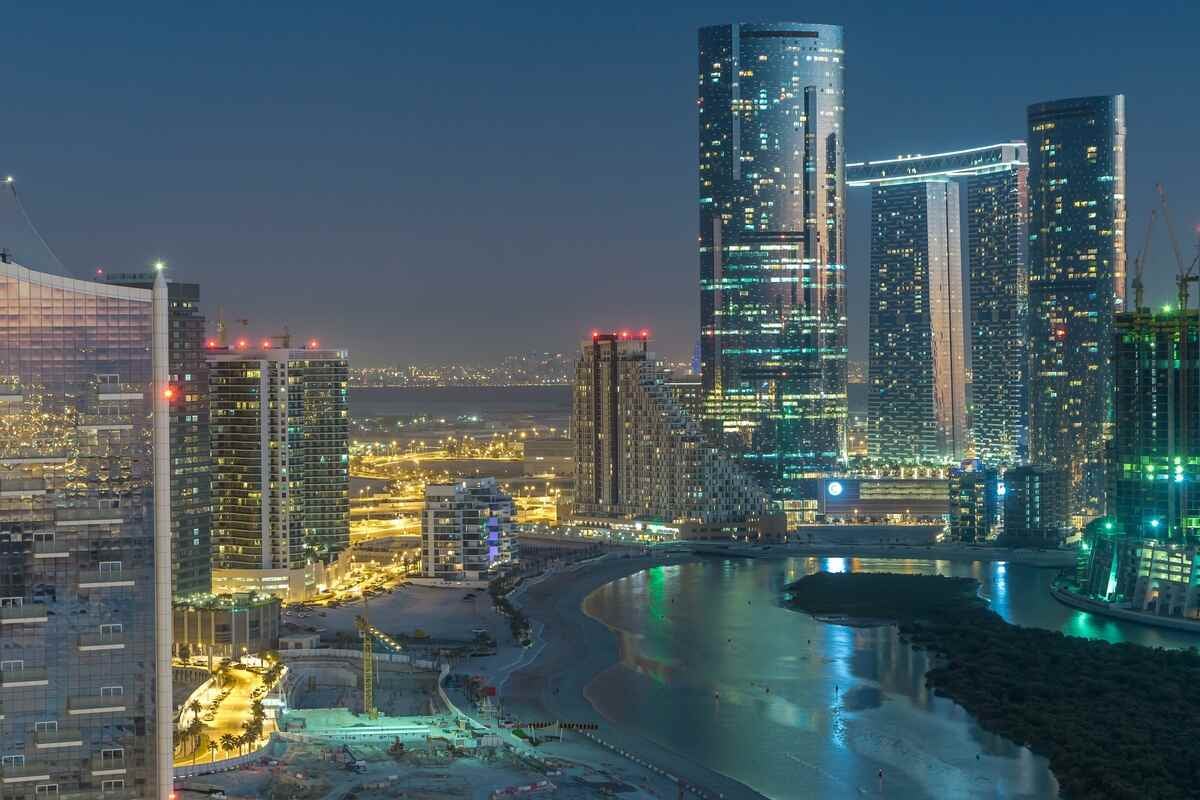
    Modon has completed the sell-out of Tara Park on Reem Island, marking a significant milestone as the 834-apartment development generated approximately AED2 billion in sales. The achievement reflects sustained investor confidence in Abu Dhabi’s property sector as the emirate solidifies its position as a global safe-haven investment destination.

    “Tara Park further validates Modon’s disciplined, market-driven approach, connecting a prime location and thoughtful placemaking to generate sustainable urban growth and long-term value. We continue to see strong demand across the market, which speaks to the confidence that local and international buyers continue to place in Abu Dhabi, particularly for projects where clear attention to quality of life supports future investment potential,” said Bill O’Regan, Group CEO of Modon Holding.

    International Buyers Drive 60% of Demand

    The development attracted significant international interest, with approximately 60% of buyers originating from overseas markets. Russia, the United Kingdom, and India represented the leading sources of demand, demonstrating the project’s broad global appeal.

    Notably, 85% of buyers were first-time investors with Modon, underscoring both the strength of the development’s positioning and its success in expanding the developer’s international investor base.

    “The sell-out Tara Park sends a clear signal. Buyers are not hesitating. Buyers are making considered, long-term decisions. Tara Park was designed with clear buyer priorities and needs in mind, and the market response has validated that approach entirely,” said Ibrahim Al Maghribi, CEO of Modon Real Estate.

    Premium Location with Integrated Amenities

    Tara Park comprises six residential towers offering one-, two-, and three-bedroom apartments. The towers are connected by an active podium that provides residents with access to a wide range of amenities and direct connectivity to Reem Mall.

    The development’s strategic location offers proximity to Fay Park, Sorbonne University Abu Dhabi, and Repton School, alongside easy access to Abu Dhabi Global Market (ADGM), The Galleria Mall, and the wider city center.

    The sell-out coincides with record-breaking performance across Abu Dhabi’s residential market, which delivered its second-strongest quarter on record in Q1 2026. Transaction volumes in Abu Dhabi City exceeded 7,200 deals, just below the all-time peak of 7,600 recorded in Q4 2025, according to Savills’ latest Market in Minutes report.

    As ultra-high-net-worth individuals continue to increase across the UAE, developments like Tara Park demonstrate sustained appetite for quality residential projects in prime locations. The capital’s momentum reflects broader confidence in the UAE’s economic resilience and long-term growth trajectory.

  • UFC Legend Khabib Nurmagomedov Enters UAE Real Estate Market

    UFC Legend Khabib Nurmagomedov Enters UAE Real Estate Market

    The partnership debuts with LuzOra Residences, a premium development designed as a hybrid hotel and residential concept that combines the flexibility of home ownership with the convenience of hotel-style living. The project caters to both investors and end users, with 70% of units allocated to investors and 30% to end users, reflecting Dubai’s growing appetite for high-yield, lifestyle-oriented real estate assets.

    Faruh Kurbanov, Founder of DIA Holding, said the partnership is rooted in shared values of discipline, consistency, and performance. He noted that Nurmagomedov’s undefeated sporting career mirrors the company’s commitment to precision and timely delivery, making him a natural fit as DIA expands its presence in the UAE.

    The move into real estate aligns with my long-term vision in business. This partnership goes beyond construction to creating meaningful living environments that support communities and future growth.

    The collaboration signals Nurmagomedov’s continued involvement in DIA Holding’s future pipeline, with plans for additional developments, including a branded project expected within the next year. The agreement represents a long-term strategic commitment rather than a single-project partnership.

    Dubai Islands, where LuzOra Residences is located, has emerged as one of the emirate’s most dynamic waterfront destinations. The area continues to attract international investors and developers as part of Dubai’s broader vision to expand its residential and hospitality offerings along strategic coastal locations.

    The retired mixed martial arts champion, who concluded his professional career with an unblemished 29-0 record, has increasingly focused on business ventures since leaving the octagon. His entry into Dubai’s off-plan market comes as the sector continues to demonstrate resilience, with the hybrid hotel-residential model gaining traction among investors seeking flexible, service-oriented properties.

    The $70 million investment reflects confidence in Dubai’s real estate fundamentals, which have maintained momentum despite regional challenges. The emirate’s property sector recorded robust transaction volumes in recent months, with lifestyle-driven projects attracting both regional and international capital.

    Industry observers note that celebrity-backed developments have gained prominence in Dubai’s competitive real estate landscape, with high-profile partnerships often serving as key differentiators in project marketing and sales velocity. Nurmagomedov’s global recognition and dedicated following across multiple markets could enhance the project’s appeal to international buyers.

    The timing of the launch coincides with renewed interest in hotel apartment concepts, which now dominate Dubai’s furnished property segment as professionals and investors prioritize move-in-ready convenience and potential rental yields.

  • UAE Real Estate Records AED6 Billion Yas Island Sale in March 2026

    UAE Real Estate Records AED6 Billion Yas Island Sale in March 2026

    The UAE’s property market continued to strengthen its position as a premier global real estate destination throughout March 2026, driven by record-breaking demand, rapid project launches, and sustained investor confidence across all major emirates.

    Abu Dhabi led the performance surge with the Yas Island project achieving AED6 billion ($1.63 billion) in sales, with all units selling out within 72 hours of launch. The exceptional sales velocity reflects the continued appetite for premium residential developments in the capital.

    Dubai’s market maintained robust activity, with AED10 billion in transactions completed within a single 10-day period. The emirate also recorded the third-highest residential deal in its history, with a luxury apartment transaction valued at AED422 million ($114.9 million), underscoring continued demand at the ultra-high-end segment.

    Sharjah’s property sector experienced remarkable growth during Ramadan, with transactions surging 72% to reach AED4.6 billion, demonstrating the emirate’s growing appeal among investors and end-users alike.

    The accelerating pace of developments and the growth in transactions across all three emirates illustrate the durability of the UAE property market and its international status as a dependable long-term investment location. Industry observers note that the consistent volume of fresh development launches and ongoing construction activity throughout March 2026 reflects both developer confidence and sustained buyer demand.

    Market trends observed during the period include record-breaking demand across residential segments, strong investor confidence despite regional uncertainties, and rapid project launches meeting immediate market absorption. The performance across specific regions highlights the diversification of investment flows beyond Dubai, with Abu Dhabi and Sharjah capturing significant market share.

    The sustained momentum in the UAE’s property sector aligns with broader economic fundamentals, including population growth, infrastructure development, and the country’s position as a safe haven for international capital. The off-plan segment continues to drive activity, supported by competitive pricing and flexible payment plans offered by developers.

    As the market enters the second quarter of 2026, the strong performance in March sets a positive trajectory for continued growth, with several major project launches anticipated across all emirates in the coming months.

  • Dubai Commercial Property Prices Jump 28% Despite Regional Conflict

    Dubai Commercial Property Prices Jump 28% Despite Regional Conflict

    Dubai’s commercial property prices climbed 28% year-on-year during the period from February 28 to March 19, 2026, according to data released by Property Finder on April 2, 2026, demonstrating resilience in the emirate’s commercial real estate segment despite the start of regional conflict.

    Several communities recorded exceptional growth in per-square-meter prices, with Dubai Investment Park Second witnessing a 323% increase compared to the same period last year, while Al Safouh saw prices rise by 286%.

    Cherif Sleiman, Chief Revenue Officer at Property Finder, attributed the price growth to transactions concentrating at higher values.

    The primary segment continues to show relative strength compared to the overall market, with transactions up to 1.9% year-on-year across the same period (Feb 28 – March 19).

    Total real estate transactions between February 28 and March 19 stood at 8,549 compared to 10,404 in the same period last year, amounting to Dh28 billion ($7.62 billion) compared to Dh32.7 billion ($8.9 billion) the previous year. However, the commercial segment saw a 44.2% decline in transaction volumes year-on-year during this period.

    In the off-plan segment, primary transactions increased by 1.9% year-on-year despite lower overall volumes, with year-on-year transaction values up 15.9% during the same period. Prices in this segment saw a temporary adjustment of 5.2% compared to the previous two weeks.

    “Importantly, year-on-year transaction values from the same period are up 15.9%, despite lower volumes, indicating demand for premium properties. This points to buyers continuing to transact, but at higher-values, which indicates sustained market confidence,” Sleiman explained.

    The commercial segment’s performance aligns with broader market dynamics. Off-plan apartment sales climbed 12.9% in March 2026, while the market continues to demonstrate what industry leaders describe as structural resilience amid geopolitical uncertainty.

    Dubai’s commercial real estate sector recorded an impressive 77.9% growth in sales value and 35.1% increase in transaction volume in 2025, with office sales more than doubling to Dh131.1 billion, the strongest performance in more than a decade according to Cavendish Maxwell.

    Property Finder noted that buyer inquiries have remained fairly stable in recent weeks, with only a slight dip as purchasers adopt a more measured approach rather than withdrawing from the market entirely. The data suggests that confidence in Dubai’s commercial property fundamentals remains intact, with investors continuing to commit capital at premium pricing levels despite the regional security situation.

  • Sharjah Property Market Hits Dh2.3 Billion in First Half of March

    Sharjah Property Market Hits Dh2.3 Billion in First Half of March

    Abdulaziz Rashid Al Saleh, Director of the Sharjah Real Estate Registration Department, confirmed on March 17, 2026, that the emirate’s property market recorded Dh2.3 billion ($626.3 million) in total transactions across 3,556 deals during the first half of March.

    Al Saleh emphasized that the figures demonstrate the robustness and resilience of Sharjah’s real estate sector, driven by rising interest from capital allocators. He noted that the department continues to deliver services through digital platforms and an extensive network of branches across the emirate.

    “The data demonstrates the robustness and steadfastness of the property sector in Sharjah, propelled by rising interest from capital allocators,” Al Saleh stated.

    The director attributed the sustained market activity to the consistent legal framework established by the emirate under the strategic vision of His Highness Sheikh Dr. Sultan bin Mohammed Al Qasimi, Supreme Council Member and Ruler of Sharjah, and the oversight of His Highness Sheikh Sultan bin Mohammed bin Sultan Al Qasimi, Crown Prince and Deputy Ruler of Sharjah.

    Sharjah’s real estate performance in early March reflects broader momentum across the UAE property sector. While Dubai recorded Dh3.8 billion in transactions on a single day earlier this week, neighboring emirates continue to demonstrate sustained investor confidence despite regional dynamics.

    The emirate’s property market has consistently posted strong growth over recent quarters, with institutional and retail investors maintaining active participation in both off-plan and secondary market segments. The Sharjah Real Estate Registration Department has facilitated this activity through ongoing digitalization of registration processes and enhanced service accessibility.

    Market analysts note that Sharjah’s relative affordability compared to Dubai, combined with expanding infrastructure and strengthened regulatory frameworks across the UAE, continues to support sustained transaction volumes as investors seek diversified exposure within the Gulf’s property markets.

  • Abu Dhabi Approves 75 Million Sqm of Development in 2025

    Abu Dhabi Approves 75 Million Sqm of Development in 2025

    The Department of Municipalities and Transport (DMT) announced on March 12, 2026, that it approved nearly 75 million square meters of gross floor area for development across Abu Dhabi in 2025, representing a 137% year-on-year increase that signals the emirate’s rapid urban expansion.

    The scale of this expansion is equivalent to the entire developed capacity of Yas Island being built out seven times over, according to DMT officials.

    “This milestone reflects Abu Dhabi’s growing momentum as a world destination for investment and development. Through forward-looking approaches and streamlined regulatory processes, we are enabling diverse mixed-use districts that strengthen economic diversification, attract international talent and enhance quality of life across the emirate,” said His Excellency Eng Abdulla Mohamed Al Blooshi, Director General of the Urban Planning & Permits Centre at DMT.

    Nearly 190,000 Residential Units Approved

    Housing initiatives represented the largest share of development approvals, with nearly 190,000 residential units planned across new and existing neighborhoods. These include more than 158,000 market units and approximately 30,000 homes dedicated to UAE Nationals, supported by an extensive network of community amenities, including schools, healthcare facilities, community majlis and retail destinations.

    Industry and technology sectors also emerged as major drivers of activity, with new approved projects spanning industrial zones, data centers and advanced manufacturing facilities expected to support the emirate’s digital economy, logistics sector and technology-driven industries.

    In the hospitality and tourism sector, projects delivering nearly 5,000 new hotel keys were added across multiple destinations, alongside new waterfront attractions, beaches and cultural experiences that reinforce Abu Dhabi’s tourism appeal.

    Approval Cycle Reduced by 60 Days

    To facilitate this unprecedented scale of development, DMT reduced the approval cycle for master developers by 60 days, accelerating the delivery of major projects across the emirate while maintaining rigorous compliance standards.

    “The reduction in evaluation timelines demonstrates our commitment to enabling rapid and high-quality construction across Abu Dhabi. By balancing efficiency with strong regulatory oversight, we are ensuring that the emirate’s urban landscape evolves to meet market demand while maintaining the highest standards,” said Mansour Saleh Al Harbi, Acting Executive Director for Activation and Development Control Sector at DMT.

    The surge in planning approvals has been supported by the launch of BINAA, the region’s first AI-driven permits platform. Since its introduction in June 2025, the platform has shortened the average time required to issue a residential villa building permit by 57% and decreased resubmissions by 53% by automating complex technical reviews.

    In total, over 11,000 building permits were issued in 2025, representing a 15% increase compared with the previous year. DMT also conducted upskilling workshops for more than 7,000 consultants and contractors to support their adaptation to evolving regulatory and market requirements.

    The development surge comes as Abu Dhabi leads UAE real estate growth and as expatriate residents drive 62% of home sales in the emirate. DMT will continue to expand BINAA’s capabilities while promoting the adoption of digital and AI-enabled submissions to further streamline processes and strengthen Abu Dhabi’s global competitiveness.

  • Abu Dhabi Residential Market Enters 2026 with Strong Fundamentals

    The market is expected to remain resilient throughout 2026, with sales prices and rental rates likely to record further increases in the near term, although the pace of growth will vary across communities as new supply gradually enters the market.

    Record-Breaking 2025 Performance

    In 2025, Abu Dhabi’s residential real estate market delivered a record-breaking performance, with total transaction volumes reaching approximately 22,400 deals—up 55% year-on-year—while total sales value climbed to AED73.2 billion. This performance was driven by robust end-user demand, sustained investor activity, and a wave of new project launches that kept the off-plan segment at the center of market activity.

    Apartments dominated the market, accounting for 66.1% of transactions, while villas and townhouses also recorded strong growth, supported by demand from families and high-net-worth individuals seeking larger living spaces.

    Off-Plan Segment Leads Market Activity

    The off-plan segment continued to lead market activity, accounting for 71% of total transactions, supported by flexible payment plans, competitive developer incentives, and strategic launches across key districts. Meanwhile, ready market activity also remained resilient, supported by population growth, rising rental costs, and a growing shift among tenants toward homeownership.

    On the supply side, residential stock continued to expand steadily, with approximately 7,400 units completed in 2025, bringing total supply to around 315,000 units. While approximately 15,900 units are projected for completion in 2026, recent handover trends suggest actual deliveries are likely to be lower, in the range of 6,500-9,000 units. This measured pace of supply delivery is expected to support pricing momentum and help prevent near-term market imbalances.

    Sustained Price Growth Across All Segments

    Apartment sales prices in Abu Dhabi continued their upward trajectory in 2025, rising 15.1% year-on-year, accelerating from the 10.9% growth recorded in 2024. This strong price performance was driven by a broadening buyer base, as owner-occupiers sought affordable homeownership amid rising rental costs and investors were attracted by strong rental yields and capital appreciation potential.

    Villa sales prices grew 12.2% year-on-year in 2025, slightly accelerating from 11.6% in 2024, driven by a combination of end-user and investor demand. This trend has been shaped largely by the post-pandemic shift in lifestyle priorities, with buyers increasingly seeking larger living spaces, community-focused environments, and access to outdoor areas.

    Rental growth also remained robust, with apartment rents rising 12.5% and villa rents increasing 5.5%. Elevated rental levels have further reinforced sales demand, as tenants increasingly viewed homeownership as a more cost-effective long-term option.

    Structural Demand Drivers Remain in Place

    Looking forward, transaction activity is expected to remain elevated in 2026, with the off-plan segment continuing to lead the market. Several structural factors are expected to support robust housing demand beyond 2026, including population growth, continued talent inflows, business-friendly visa policies, and expanding employment across various sectors.

    Long-term residency initiatives, including the Golden Visa program, are also expected to broaden the buyer base by attracting high-net-worth individuals and professionals seeking stable, long-term ties to the emirate.

    Taking these factors into account, Abu Dhabi’s residential market is expected to enter 2026 from a position of strength. Supply discipline, strong investor confidence, and a supportive macroeconomic backdrop support market resilience and help mitigate external shocks. While potential risks should continue to be monitored, the likelihood of a broad market correction remains relatively low, supporting the outlook for sustainable growth throughout the year.

    The Abu Dhabi market’s performance mirrors broader trends across the UAE, where expatriates now drive 62% of home sales and the UAE real estate sector concluded 2025 with exceptional growth led by Abu Dhabi’s record-breaking performance.

  • Dubai Real Estate Defies Regional Tensions with $100M Deals

    Dubai Real Estate Defies Regional Tensions with $100M Deals

    The UAE property market is operating normally despite heightened geopolitical tensions, with real estate activity continuing across the country and developers maintaining scheduled project launches.

    A $100 million-plus property transaction was recorded in Dubai this week, demonstrating sustained investor appetite even as some international buyers pause purchase decisions to monitor regional developments.

    Broker Ben Crompton confirmed that transactions already underway are progressing as planned.

    Buyers who already signed MOUs are proceeding as normal, and some deals are still being negotiated. Most buyers are in a ‘wait-and-see’ mode as you can imagine.

    He noted that property prices typically decline only during periods of forced selling triggered by widespread job losses or sharp interest rate increases—conditions that have not materialized in the UAE.

    International Investors Monitor Closely

    International investors, who represent a significant share of UAE property buyers, are watching the situation more closely than long-term residents, according to market participants.

    A second broker, speaking anonymously, said a major project scheduled to launch next week is proceeding as planned.

    They are not postponing launches because of the current situation.

    The broker emphasized that Abu Dhabi’s market is anchored by families with deep roots in the emirate.

    A large proportion of residents here are families who have been in the UAE for many years. They consider this their home and they are planning long-term—with schools, jobs and their families here—so they still want to buy property.

    However, some foreign buyers from the UK, US, and Germany have become more cautious, the broker noted.

    Opportunity for Strategic Investors

    Market professionals indicated that short-term uncertainty can create opportunities for cash investors. When sellers exit quickly and reduce prices, those units tend to be acquired rapidly by investors with available liquidity.

    The broker cited examples of properties valued at Dh1.3 million being negotiated at Dh1 million for quick transactions, with investors planning to hold until market conditions stabilize.

    Real estate is a slow and stable market. It doesn’t react like the stock market where prices can suddenly fall by 10 per cent in a day. For significant price changes to happen, a large number of people would need to move in the same direction. Right now, the majority still believe in the UAE and its government, so the market remains stable.

    Developers Emphasize Continuity

    On March 6, 2026, Emaar Properties confirmed normal operations across all assets. Earlier, Aldar Properties stated that all its residential communities, retail destinations, commercial offices, hotels, schools, and development sites continue to operate without interruption.

    Aldar highlighted its strong financial position with more than Dh30 billion in available liquidity, including Dh14.2 billion in free cash and Dh16.4 billion in undrawn bank facilities.

    Developers have not adjusted launch pricing, but some are offering more flexible payment plans—such as 35-65 or 40-60 structures instead of 50-50—to reduce upfront costs and maintain investor confidence.

    Economic Fundamentals Remain Robust

    Crompton emphasized that broader economic conditions supporting the property market remain strong.

    The economic fundamentals are very strong. Capital hates uncertainty more than anything. The sooner there is long-term clarity, the sooner investors will feel comfortable committing again.

    The UAE real estate sector has been supported by strong population growth, international investment, and economic expansion. Dubai’s population has surpassed four million, driving unprecedented housing demand as the emirate’s property market recorded nearly Dh900 billion in transactions during 2025.

    Industry professionals point to continued long-term demand across key residential hubs including Reem Island, Yas Island, and Saadiyat Island, where new infrastructure and lifestyle developments are expected to support property values over time.

    The broker concluded:

    There is still strong belief in the long-term prospects of the market. Real estate in the UAE has historically moved upward over the long term, even if there are short-term fluctuations.