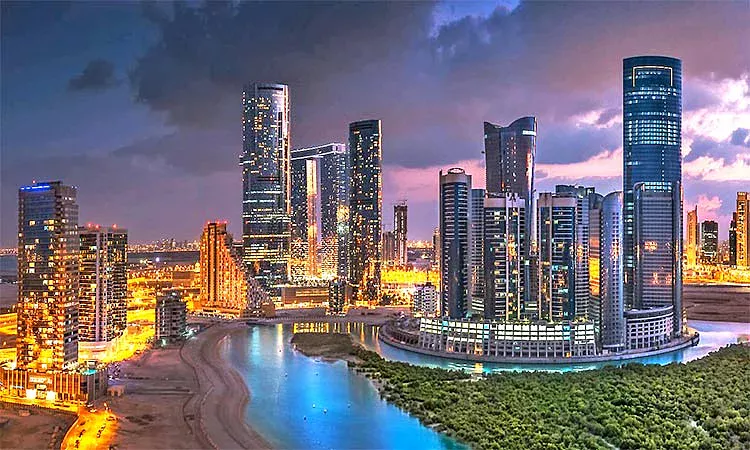
Tag: Emaar Properties

  • Dubai Real Estate Launches Hit Record $75 Billion in First Half of 2026

    Dubai Real Estate Launches Hit Record $75 Billion in First Half of 2026

    The value of new real estate projects in Dubai has exceeded AED275 billion ($74.88 billion) since the beginning of 2026, reflecting continued exceptional momentum in the sector and reinforcing the emirate’s entry into the largest half-year cycle of new real estate project launches in its history.

    A recent report by W Capital Real Estate Brokerage stated that the total value of new and announced real estate projects in the first half of this year exceeded AED275 billion. This includes 250 new real estate projects launched and registered with the Dubai Land Department by the end of May, valued at nearly AED75 billion, as well as the mega-project announced by Emaar Properties in June, valued at up to AED200 billion.

    The projects launched during the first five months of the year comprise approximately 59,400 residential units and 10,800 villas, reflecting the continued focus on the residential sector as the primary driver of real estate growth in Dubai, supported by strong demand from local and international buyers and investors.

    Historical comparisons indicate that Dubai witnessed the launch of 648 new real estate projects by 258 developers in 2025, encompassing over 167,000 residential units with an estimated value of approximately AED463 billion. This compares to 145,000 units valued at AED360.1 billion in 2024, representing a 15.2 percent increase in the number of units and a 28.4 percent increase in the total project value.

    Apartments continued to dominate the new supply last year, accounting for approximately 88.8 percent of all units offered. Meanwhile, villas and townhouses saw significant growth in total value, driven by increased demand for integrated residential communities and low-density projects.

    Confidence remains strong among developers and investors

    In a statement, Al Zarooni, W Capital CEO, said that the figures recorded in the first half of the year reflect strong confidence in Dubai’s real estate sector among both developers and investors. He emphasized that the emirate has successfully established itself as one of the most active and attractive global real estate markets.

    “The fact that the value of new and announced projects has reached nearly AED300 billion in less than six months is an exceptional indicator reflecting the strength of genuine demand for real estate in Dubai, rather than mere development activity driven by expectations,” said Al Zarooni.

    He also noted that Dubai’s real estate market has become more mature and better able to absorb new projects compared to previous years, thanks to the development of the regulatory environment, enhanced transparency and an advanced legislative framework that protects the rights of both investors and developers.

    Dubai on track to post new record high

    Al Zarooni explained that the current pace of launches puts Dubai on track to record one of its biggest years in history in terms of the value of new real estate projects. He predicted that the value of projects launched this year will surpass last year’s levels if the pace of major project announcements continues into the second half of 2026.

    He emphasized that current indicators reflect Dubai’s transformation into a global hub for attracting real estate capital, at a time when many international markets are experiencing a slowdown or a state of anticipation. He noted that the emirate continues to benefit from its position as a safe destination for investment, living and working, which is directly reflected in the strength of demand and the continued launch of new projects.

    The surge in project launches comes alongside other market developments, including Dubai’s Flexi Rents initiative introduced in June 2026 to ease financial pressure on tenants, and follows projections that Dubai’s real estate market will attract over AED1 trillion ($272.3 billion) in new projects over the next five years.

    “What we are witnessing today is not just cyclical growth, but a new phase of real estate development based on sustainable demand and long-term growth. This gives the market strong momentum and promising opportunities for developers and investors in the coming years,” Al Zarooni concluded.

  • Dubai Real Estate to Attract $272 Billion Over Next Five Years

    Dubai Real Estate to Attract $272 Billion Over Next Five Years

    W Capital Real Estate has projected that the total value of new projects launched or developed in Dubai will surpass AED1 trillion ($272.3 billion) over the next five years, reflecting sustained momentum across the emirate’s property sector.

    The outlook is underpinned by strong population growth, continued inflows of foreign investment, and a steady pipeline of mega-project announcements from leading developers, reinforcing Dubai’s position as one of the world’s most dynamic property investment hubs.

    New Phase of Urban and Investment Expansion

    Walid Al Zarooni, CEO of W Capital Real Estate, affirmed that Emaar’s AED200 billion development announcement clearly indicates that the market is moving toward a new phase of urban and investment expansion, reinforcing expectations of continued mega-project launches in the future.

    Al Zarooni said that the company’s estimates are based on projects announced by major real estate developers, project launch rates over the past years, and development plans linked to Dubai’s economic agenda and the emirate’s D33 population and urban growth targets, which support continued demand for various types of real estate assets.

    He noted that Dubai’s real estate market is witnessing a qualitative shift in the nature of projects offered. It is no longer limited to traditional residential complexes but now includes integrated cities, mixed-use projects, business centers, and community projects that rely on the latest sustainability concepts and smart infrastructure, reflecting the evolving needs of both investors and residents.

    Population Growth and Infrastructure Drive Demand

    The rapid population growth, along with Dubai’s ability to attract global talent, entrepreneurs, and investors, is a key driver of real estate demand across residential, commercial, and hospitality segments. This trend is giving developers greater clarity and confidence to expand and pursue long-term project development.

    Al Zarooni further highlighted that Dubai’s advanced regulatory framework, modern infrastructure, economic stability, and overall resilience have strengthened its status as one of the world’s most attractive real estate destinations, allowing it to continue drawing capital and long-term investment despite broader global economic and geopolitical uncertainty.

    Dubai is well-positioned to maintain its leadership in regional real estate growth, noting that the wave of recently announced mega-projects underscores strong confidence from both developers and investors in the emirate’s long-term outlook.

    He also pointed out that ongoing large-scale infrastructure developments, including enhancements to transport and service networks, are expected to further boost the real estate sector. These initiatives are set to unlock new urban districts and generate a wider range of investment opportunities in the years ahead.

    Al Zarooni concluded that these developments mark the start of a new phase of urban expansion, with expected projects set to exceed AED1 trillion in total value over the next five years.

    The projection comes as Dubai continues to demonstrate market resilience, with neighboring Sharjah recording strong property performance and Abu Dhabi approving major developments across the UAE.

  • Emaar to Unveil Dh200 Billion Dubai Masterplan for 150,000 Residents

    Emaar to Unveil Dh200 Billion Dubai Masterplan for 150,000 Residents

    The project will feature a total built-up area exceeding 4.5 million square metres, incorporating a comprehensive mix of residential towers, villas, mansions, offices, retail, hospitality, cultural spaces and civic amenities.

    The company has not yet disclosed the name or precise location of the development, but confirmed the full unveiling is imminent.

    A City Within the City

    The project is being described as a self-sustaining urban district, combining homes, workplaces, schools, healthcare, mosques, retail and cultural venues within a walkable community.

    Emaar said the development will be structured around the principles of the 20-minute city, with proposed metro connectivity, smart mobility infrastructure, EV-friendly pathways, cycling routes and app-integrated community services.

    The masterplan will include landmark residential towers with views oriented towards Burj Khalifa, Burj Al Arab and Palm Jumeirah, alongside an exclusive gated villa enclave with five and six-bedroom residences and mansions.

    At the centre of the district, a high street and grand boulevard will bring together shops, restaurants, cafes and cultural experiences, giving the development a retail and lifestyle spine similar to the integrated communities that have shaped Dubai’s real estate market over the past two decades.

    Villas, Towers and Green Space

    The new district will combine high-density urban living with resort-style residential pockets, including private gardens, water features, parks, community lagoons, lakes, shaded promenades and dedicated cycling paths.

    A central district park is planned as one of the main public spaces, with sports courts, event lawns, splash parks, beach areas and outdoor wellness zones.

    The masterplan will be divided into five character zones: a Business Hub, an Urban District, a Young Families Cluster, a Family Living Zone and an exclusive villa enclave.

    We have always believed that the greatest cities are not built, they are dreamed. What we are about to reveal is our most extraordinary dream yet: a place where the finest architecture, the most immersive landscapes and the most advanced thinking about how people live come together in one magnificent vision.

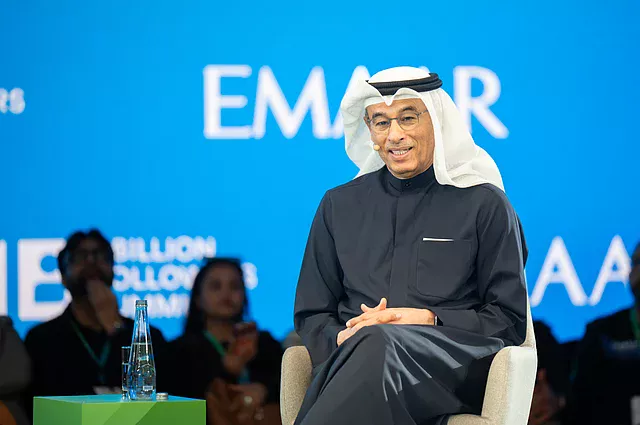
    Mohamed Alabbar, Founder of Emaar Properties, emphasized the project’s scale and ambition.

    “This development reflects our deep confidence in the future of the UAE and our belief in the visionary leadership that continues to create an environment where ambition, innovation and bold ideas can thrive,” he added.

    The announcement follows Emaar’s record Dh22.4 billion in Q1 sales, demonstrating sustained investor appetite for the developer’s projects. Dubai Holding recently became Emaar’s largest shareholder with a 29.73% stake, reinforcing institutional confidence in the company’s long-term strategy.

    The project reflects broader momentum in Dubai’s property sector, where transactions climbed 31% year-on-year in Q1 2026 despite regional challenges.

  • Dubai Property Market Shifts to Long-Term Investment Destination

    Dubai Property Market Shifts to Long-Term Investment Destination

    The average time for a renter in the UAE to become a homeowner has dropped to just 4.8 years, highlighting a growing shift toward long-term residency and ownership rather than short-term property trading, according to Nagham Hassan, market analyst at eToro, a trading and investing platform.

    The trend reflects changing buyer behaviour across the UAE property market. In 2025, data showed that the investor base expanded to more than 193,000 active participants, with resident investors accounting for over half of total investments by value — a trend analysts say reflects increasing market maturity and stronger long-term confidence in the UAE economy.

    Dubai has also launched the First Time Home Buyer Programme to support individuals seeking to purchase their first home in the emirate by offering a range of exclusive benefits that make it easier to enter the property ownership market.

    Industry experts noted that strong demand, fast-moving launches and limited supply in key communities are encouraging buyers to make quicker long-term purchasing decisions rather than waiting on the sidelines.

    Dubai recorded Dh252 billion in real estate transactions during the first quarter of 2026, up 31 per cent year-on-year, following a record-breaking Dh917 billion in transactions during 2025. Meanwhile, property prices rose 9.81 per cent last year, moderating from the double-digit gains seen in previous years.

    Despite heightened regional tensions earlier this year, Dubai’s property sector showed resilience. February transactions reached Dh84 billion before slowing to Dh56 billion in March as buyers briefly paused amid geopolitical uncertainty. However, sales rebounded 23 per cent in April to Dh69 billion, signalling renewed confidence in the market.

    The resilience has also extended to listed real estate developers, although share prices have lagged behind physical market performance.

    Emaar Properties entered 2026 with a revenue backlog of Dh163.4 billion, up 29 per cent year-on-year, while Aldar Properties reported a 12 per cent increase in revenue and a 22 per cent rise in EBITDA, alongside total liquidity of Dh38.2 billion.

    A resolution in the regional conflict would act as a catalyst, unlocking the pent-up demand that has already proven itself in the physical market and accelerating the repricing of both stocks toward their fundamental value.

    Analysts say the sector’s long-term outlook remains supported by escrow-protected sales structures, recurring income streams and strong project pipelines, making major UAE developers relatively insulated from short-term market volatility.

    The structural shift toward homeownership is further reinforced by Dubai homeowners now holding properties for periods comparable to mature markets like London and New York, reflecting the emirate’s maturation as a global residential hub.

  • Dubai Holding Becomes Emaar Properties’ Largest Shareholder with 29.73% Stake

    Dubai Holding Becomes Emaar Properties’ Largest Shareholder with 29.73% Stake

    The transaction reinforces a long-standing strategic partnership between Dubai Holding and Emaar Properties, one of the Middle East’s largest real estate developers with a diversified portfolio spanning residential, commercial, hospitality and retail assets across multiple continents.

    “The transaction builds on a long-standing strategic partnership and reflects our disciplined approach to capital allocation and long-term value creation,” Dubai Holding stated in an announcement on Tuesday.

    Emaar Properties is listed on the Dubai Financial Market and maintains a well-established footprint across the Middle East, North Africa, Asia and Europe, supported by a robust development pipeline and high-quality recurring income-generating assets.

    Strategic confidence in Dubai’s property sector

    The acquisition represents a strategic investment reflecting Dubai Holding’s confidence in Emaar’s market position, asset quality and long-term growth prospects, as well as in the enduring fundamentals of Dubai’s economy and real estate sector.

    Dubai Holding is a diversified global investment company with investments in more than 30 countries and an extensive portfolio of over AED500 billion worth of assets across key sectors, including real estate, hospitality, entertainment, retail, media and investments.

    The transaction also strengthens the strategic partnership between the two entities, building on multiple existing partnerships and continued collaboration across key joint ventures.

    The move comes as Emaar Properties recorded Dh22.4 billion in property sales during Q1 2026, marking a 16% year-on-year increase driven by sustained demand across both established and newly launched projects in the UAE.

    The consolidation of ownership reflects broader confidence in Dubai’s property market, which has demonstrated exceptional resilience in 2026 despite regional challenges. The emirate’s real estate sector rebounded quickly following recent geopolitical tensions, with digital platform activity recovering to 99% of normal levels within 51 days.

    Dubai Holding’s increased stake in Emaar underscores the strategic importance of the developer to the emirate’s long-term economic vision and the continued attractiveness of Dubai’s property sector to major institutional investors.

  • Emaar Properties Records Dh22.4 Billion in Q1 2026 Sales

    Emaar Properties Records Dh22.4 Billion in Q1 2026 Sales

    Dubai’s leading real estate developer demonstrated robust performance in Q1 2026, with total revenue reaching Dh12.4 billion—a 23% jump compared to the same period in 2025. The growth was supported by strong contributions from both UAE and international operations.

    Emaar’s subsidiary, Emaar Development, recorded property sales of Dh20.1 billion during the quarter, representing a 22% increase year-on-year. The company’s net profit climbed to just under Dh3.5 billion, a 36% surge from Q1 2025.

    As of March 31, 2026, Emaar’s revenue backlog stood at approximately Dh163.4 billion, reflecting a 29% annual increase and providing strong revenue visibility for the coming years. Emaar Development’s backlog reached Dh134.6 billion, up 35% from the prior year.

    “Our performance in the first quarter of 2026 reflects the strength and resilience of the UAE economy, which continues to provide a stable foundation despite broader regional volatility,” said Mohamed Alabbar, founder of Emaar.

    Alabbar emphasized that recent geopolitical developments have reinforced the UAE’s position as a market defined by safety, institutional continuity, and long-term vision. “The UAE’s stability is the result of decades of wise leadership, sustained investment in world-class infrastructure, and a clear, business-friendly policy environment,” he added.

    Despite regional tensions affecting the quarter’s final weeks, Emaar Development maintained construction schedules across all ongoing projects. The company launched 10 new residential projects across its master-planned communities in response to evolving market demand.

    The developer recently distributed a dividend equivalent to 100% of its share capital to shareholders, amounting to Dh8.9 billion—marking the second consecutive year of such a payout.

    Emaar’s Q1 performance aligns with broader market trends showing Dubai’s property sector resilience, as the emirate’s real estate market continues to attract sustained investor interest. The company’s strong backlog and project pipeline position it well to capitalize on Dubai’s robust Q1 market activity, which saw total transactions exceed Dh180 billion across the emirate.

  • Dubai Property Market Has Nothing to Fear, Says Emaar Founder

    Dubai Property Market Has Nothing to Fear, Says Emaar Founder

    The UAE’s real estate sector continues to demonstrate exceptional confidence amid geopolitical uncertainty, according to one of its most prominent figures. Mohamed Alabbar, CEO and founder of Emaar Properties, one of the world’s largest real estate developers, expressed absolute certainty that Dubai’s property market will weather both regional tensions and the wave of new supply expected in 2026 and 2027.

    “We are not here for the short run. We are here for a long, long time to do business,” Alabbar said in a recent interview with CNBC. He characterized the incoming supply as a natural feature of a market built on decade-long ambitions rather than short-term speculation. While acknowledging that a brief cooling-off period is possible, he dismissed concerns about structural problems ahead.

    Market Sentiment Remains Firm

    To illustrate current confidence levels, Alabbar shared a telling anecdote from his personal property search. Currently looking for a seafront apartment for his own use, he noted that after two days of viewing, not a single seller was willing to negotiate on price.

    “Nobody wants to budge. Nobody wants to give a discount. That’s a true situation.”

    The observation serves as a quiet but powerful signal of where sentiment stands on the ground, reflecting sustained demand despite external pressures.

    Structural Resilience Built on Prudent Lending

    Alabbar highlighted a fundamental characteristic that distinguishes Dubai from other global property markets: its real estate sector is not built on bank borrowing. Lending to buyers remains tightly restricted, insulating the market from credit-driven collapses seen elsewhere during financial crises.

    “Our real estate business is not built on bank borrowing. Bank borrowing is very restricted in this market,” he explained, adding that while consumer confidence may experience temporary dips, the UAE’s policy environment has a proven track record of restoring it quickly.

    This assessment aligns with recent market performance. Dubai real estate continues processing deals exceeding $100 million, with developers reporting uninterrupted operations despite some buyers adopting a cautious stance.

    Long-Term Capital Recognizes Stability

    On the broader question of geopolitical uncertainty and Dubai’s reputation as a refuge for global wealth, Alabbar expressed unwavering confidence. He argued that investors who study the trajectory of UAE policy over years and decades will consistently find the same qualities: consistency, sustainability, wisdom, and stability.

    “A country like this, with all these principles and stable leadership and the safety, it has shown that it can deliver,” he stated.

    Alabbar reserved particular admiration for the UAE’s leadership and its capacity for long-range strategic planning. While acknowledging he is not versed in military affairs, he said he was genuinely moved by the country’s demonstrated capabilities during recent tensions.

    “People with true capital understand this, they appreciate this, and they will double down on investing.”

    The sentiment echoes statements made earlier this week, when Alabbar noted that recent attacks have ultimately reinforced confidence in the country’s stability, pointing to decades of consistent policy and institutional strength.

    Market Context and Performance

    Alabbar’s confidence comes as Dubai’s property sector maintains strong fundamentals. The emirate’s real estate market recorded 874 transactions worth AED2.46 billion on March 2, 2026, demonstrating sustained investor confidence as economic fundamentals continue to outweigh short-term geopolitical sentiment.

    The debt-free structure of Dubai’s real estate market, combined with prudent lending restrictions and long-term government planning, positions the emirate to absorb new supply without the leverage-driven volatility that has characterized property cycles in other global cities. As regional tensions persist, Dubai’s market continues to attract capital seeking stability, transparency, and proven governance frameworks.

  • Alabbar: UAE Proves Safety Credentials Amid Regional Tensions

    Alabbar: UAE Proves Safety Credentials Amid Regional Tensions

    Speaking in a CNBC interview that aired on Friday, Alabbar said the UAE’s ability to intercept incoming threats has underscored its reputation as a global safe haven.

    The past days have proven that we are really a safe country.

    The developer emphasized that the UAE’s long-term policy consistency and stability have been built over decades and cannot easily be undermined.

    “If you were to look and study the trajectory of UAE policies, you will see consistency, you will see sustainability, you will see wisdom, you will see stability — all for one purpose: to create an incredible life for the people who live here,” he said. “You don’t build this over one year, two years: it took us over 40 years for the leadership to establish this.”

    Alabbar added that recent developments are unlikely to weaken investor confidence in the UAE, noting that Dubai’s property market continues to attract strong interest.

    “Success does not happen by luck,” he said. “Because of years of great policies, stability, competence and fairness that exist in this country, that really have pushed tremendous belief in this country and what the future holds.”

    Alabbar also dismissed concerns about a major correction in Dubai’s property market, despite regional tensions. “I know my business well. I know the banking system. I know the business environment,” he said. “I have no concerns.”

    He pushed back against predictions made by global ratings agency Fitch in 2025 about a 15% property price correction, calling the forecast “very unrealistic” based on his analysis of business data.

    High Interception Rate Demonstrates Defense Capability

    Alabbar’s comments come as figures released by the UAE Ministry of Defence on March 5 show that the country’s air defence systems have intercepted the vast majority of missiles and drones launched toward the UAE since the escalation began.

    According to the ministry:

    • 1,072 drones were detected, with 1,001 intercepted
    • 196 ballistic missiles were detected, with 181 intercepted
    • Eight cruise missiles were detected, with all eight intercepted

    A total of 71 drones impacted on land, while two ballistic missiles struck inside the country and 13 fell into the sea, according to the ministry’s latest update. The figures highlight the scale of the attacks but also the effectiveness of the UAE’s layered air defence systems.

    Meanwhile, the intensity of strikes across the region appears to be declining. Iranian ballistic missile launches were down 90% from the first day of fighting, while drone attacks have fallen 83%, according to reporting by The Wall Street Journal on Friday.

    Institutional Strength Reinforces Investor Confidence

    Analysts say the UAE’s response to the crisis may ultimately reinforce investor confidence. Simon Wolfe, co-founder and managing partner of Marlow Global, said the country’s institutions and communications have remained strong despite the scale of the attacks.

    “In the short term, there is a physical reality here that optimism cannot shortcut. Airports, ports and energy infrastructure will take weeks to come back online, and the disruption to trade flows and aviation connectivity is real and immediate,” Wolfe told Gulf Business this week.

    However, Wolfe said the UAE’s response demonstrates the strategic qualities that attracted global investors to the country in the first place.

    “Look at what the UAE has actually done in the face of an extraordinary assault: its institutions have held, its government has communicated with clarity, and it has called for negotiated resolution within days of being targeted,” he said. “And perhaps most importantly, the air defences have, in large part, held. This demonstrates exactly the kind of strategic maturity that made it attractive to global capital in the first place.”

    The UAE real estate sector has demonstrated operational resilience in early March 2026, with Dubai recording sustained transaction activity despite heightened regional tensions.

  • Alabbar: Dubai Property Market Remains Strong Despite Regional Tensions

    Alabbar: Dubai Property Market Remains Strong Despite Regional Tensions

    Dubai’s real estate sector remains fundamentally strong as global capital continues to flow into the emirate, according to Mohamed Alabbar, who told CNBC that the UAE’s long-term development strategy and stable leadership have created an environment that withstands external pressures.

    “It’s the global business hub, and its success, its limelight, its reflection of what life should be and what success should be, what prosperity should be, what positive you should be is this place,” Alabbar said, adding that attempts to undermine that success will ultimately fail.

    Fundamentals Built Over Four Decades

    Alabbar acknowledged that social media speculation can amplify fears during periods of geopolitical tension but emphasized that the UAE’s track record demonstrates consistency and wisdom. “If you were to look and study the trajectory of UAE policies, you will see consistency, you will see sustainability, you will see wisdom, you will see stability,” he stated.

    According to the Emaar founder, the country’s leadership has spent more than 40 years building systems designed to deliver prosperity for residents and investors. Recent events have only reinforced confidence in the nation’s safety and infrastructure, he noted.

    “I promise you what happened will only strengthen what this country is all about.”

    Capital Flows Accelerate, Not Reverse

    Addressing concerns that capital moved to the UAE during global crises could now begin to leave, Alabbar pointed to recent market performance as evidence of sustained confidence. “If you were to look at the past two years, just look at our business, the real estate business alone, we had an increase of almost 70% in 2023, we had 40% in 2024, we have another 40% in 2025,” he said.

    The developer said sophisticated investors recognize the strength of the UAE’s fundamentals and are likely to deepen their commitments rather than pull back. Dubai’s real estate market recorded AED2.46 billion in transactions on March 2, 2026, demonstrating sustained activity levels.

    “Smart capital understands that a country like this, with all these principles and stable leadership and the safety that it has shown that it can deliver,” Alabbar said. “People with true capital understand this and they appreciate this and they will double down on investing anyway.”

    No Signs of Market Weakness

    Alabbar said current demand shows no indication of softening. He recounted his own recent experience searching for an apartment in Dubai: “Myself, I’m looking for one building, one apartment overlooking the sea that I didn’t buy in, and the past two days I’ve been looking and it seemed like nobody want to budge. Nobody want to give a discount.”

    That reflects a market where sellers remain confident and demand stays firm. While consumer confidence may soften temporarily during periods of uncertainty, the country’s policies tend to restore confidence quickly, he added.

    Correction Forecasts ‘Unrealistic’

    Some analysts have warned that Dubai’s property market could face a correction as new supply enters the market, with Fitch Ratings recently suggesting prices could decline by up to 15%. Alabbar dismissed that scenario as unlikely.

    “I know my business well. I know the banking, I know the business environment, because I operate in multi industries,” he said. “The banking system is so strict, amazing discipline. Government policies are just getting better and better. I have no concerns.”

    Asked directly whether a 15% correction was realistic, Alabbar was unequivocal: “In my opinion, the way I do, the way I look at my business and listen, I look at so much data, I think it’s very unrealistic.”

    Recent high-value transactions support his assessment. Dubai recorded a Dh422 million apartment sale at Aman Residences on March 5, 2026, marking the third most expensive apartment transaction in the emirate’s history.

    New Supply Could Stabilize Growth

    Dubai is preparing for a wave of new property supply expected in 2026 and 2027. Alabbar said additional inventory could benefit the market by preventing prices from rising too quickly and maintaining the city’s competitiveness.

    “I said this a year ago. The supply that’s coming in in 2026 and 2027 will be good for the market,” he stated. “We are not here for the short run. We are here for a long time to do business.”

    The developer said he prefers a market where property prices rise gradually—around 5% to 6% annually—rather than experiencing sharp spikes that could undermine long-term stability. “Jacking up prices too high doesn’t benefit anybody,” he said.

    Real estate costs play a significant role in inflation, contributing approximately 50% to 52% of overall price increases, Alabbar noted. Maintaining balanced growth helps both investors and residents. “We don’t also want investors and people who come here for their jobs to really feel that the city is too expensive,” he added.

    Long-Term Stability Over Short-Term Gains

    Alabbar said the goal for Dubai’s property sector should be stability rather than aggressive price increases. Developers are already generating strong returns at current price levels, and maintaining balanced growth will help sustain Dubai’s appeal as a global destination.

    “Developers are making enough money with these prices. We should not shoot too high,” he said. “I want stability. I want long term.”

    A modest adjustment driven by new supply could help ease pressure on housing costs without undermining the broader market, he concluded. Emaar recently confirmed that UAE property sales reached Dh17.2 billion in the first two months of 2026, marking a 118% increase year-on-year.

  • Emaar Confirms Normal Operations as Sales Double in Early 2026

    Emaar Confirms Normal Operations as Sales Double in Early 2026

    Dubai’s largest property developer assured investors and residents that comprehensive business continuity planning and coordination with relevant authorities ensure uninterrupted operations across all its assets.

    The statement, posted on the Dubai Financial Market where Emaar is listed, comes as the company reported exceptional momentum entering 2026 following record-breaking 2025 results.

    “With diversified income streams, strong liquidity, and disciplined cost management, Emaar remains well-positioned to sustain growth and contribute to the continued strength and resilience of Dubai’s capital markets,” the company stated.

    Record 2025 Performance Sets Foundation

    Emaar achieved its highest-ever property sales of AED80.4 billion ($21.9 billion) in 2025, alongside record revenue of AED49.6 billion and net profit before tax of AED25.7 billion. The company’s revenue backlog reached AED155 billion as of December 31, 2025, providing strong visibility over future earnings and cash flows.

    Recurring income streams across malls, hospitality, leisure, entertainment and commercial leasing accounted for 32% of total EBITDA, reflecting the strength of Emaar’s diversified and resilient operating model.

    “Emaar’s performance reflects the strength of Dubai’s economic vision and the confidence investors place in its stability and long-term prospects,” said Mohamed Alabbar, Founder of Emaar. “The city continues to demonstrate resilience, supported by effective leadership, sound regulation and a dynamic business environment.”

    Strong 2026 Start Signals Sustained Demand

    The developer’s UAE property sales reached AED17.2 billion in the first two months of 2026, compared to AED7.9 billion during the same period in 2025, representing a 118% year-on-year increase. This performance aligns with broader market trends showing sustained transaction volumes across Dubai’s property sector.

    Supported by strong cash generation and consistent performance, Emaar’s Board of Directors recommended maintaining dividends at 100% of share capital for 2025, reinforcing the company’s commitment to delivering sustainable value to shareholders.

    Strategic Position for Long-Term Growth

    Emaar’s strong balance sheet includes a substantial land bank of approximately 618 million square feet, positioning the company to navigate evolving regional developments while maintaining disciplined expansion. The developer emphasized that Dubai’s clear regulatory environment, diversified economy and proactive governance continue to reinforce investor confidence.

    The company’s performance comes as Dubai’s real estate market transitions toward more structured capital allocation, with major developers expanding their portfolios to meet growing demand driven by population growth exceeding four million residents.

    Emaar’s operational continuity and financial strength underscore the resilience of Dubai’s real estate sector, which recorded nearly Dh900 billion in transactions during 2025, reinforcing the emirate’s position as a leading global property investment destination.