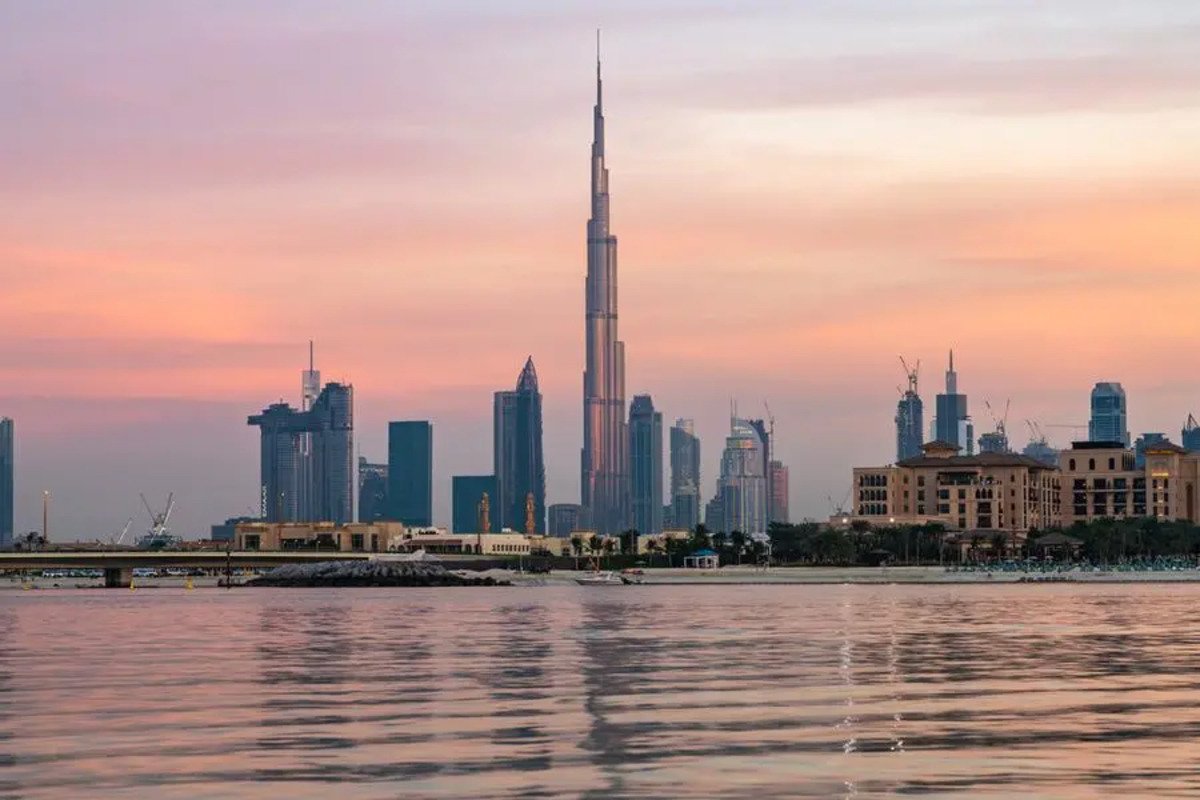
Strategic capital now drives approximately 40 percent of Dubai’s real estate market, according to a new report by VVS Estate, marking a fundamental shift from the momentum-based trading that characterized the 2014 cycle. This evolution reflects deeper regulatory oversight, improved transparency, and increasingly disciplined capital participation.
“While property cycles are often described in terms of volatility and momentum, Dubai’s current evolution is structural in nature, shaped by regulatory depth, improved transparency and increasingly disciplined capital participation,” said Valentina Rusu, Founder of VVS Estate.
High-Value Transactions Signal Long-Term Investment Behavior
The proportion of residential transactions priced above Dh5 million has risen to 9 percent, reflecting sustained appetite for higher-value residential assets, according to Savills Middle East’s Dubai Residential Market Report 2025. Growth at the top end of the market typically indicates strategic capital deployment rather than short-term speculative activity.
Off-plan transactions, widely viewed as a proxy for strategic capital allocation, account for over 60 percent of total residential transaction value, equivalent to approximately Dh223 billion, according to JLL data. Taken together with Savills’ pricing analysis, the figures point to a market increasingly shaped by deliberate allocation decisions.
Property Finder insights show that premium and branded residences now represent a growing share of overall transactions. With a higher proportion of deals occurring above Dh2,500 per square foot, citywide averages have naturally moved higher.
“This is not inflation. It reflects a segmentation shift. Comparing today’s market directly with 2014 without adjusting for product mix oversimplifies the analysis,” Rusu explained.
Prices Surpass 2014 Peak Amid Structural Improvements
Dubai reached its previous market peak in September 2014. A decade later, prices have not only recovered but surpassed those levels. According to the Dynamic Price Index published by Property Monitor, average apartment prices reached approximately Dh1,484 per square foot in early 2025, more than 20 percent above the 2014 high, before exceeding Dh1,600 per square foot by mid-2025.
However, VVS Estate emphasizes that price recovery alone does not define market quality. “In 2014, growth was largely momentum-driven,” Rusu said. “Today, performance is supported by regulatory reinforcement, escrow discipline, standardized registration and improved execution transparency. The difference is structural.”
Regulatory Frameworks Reduce Execution Risk
One of the most consequential changes since the previous cycle has been the strengthening of regulatory frameworks under the oversight of the Dubai Land Department. Contract registration now operates within defined timelines through centralized systems, while escrow accounts follow milestone-based release mechanisms aligned with construction progress.
“This regulatory depth has materially reshaped Dubai’s risk profile and increased its appeal to institutional and long-horizon capital,” Rusu noted.
Investor behavior increasingly reflects disciplined capital allocation, with buyers focusing on net yields after service charges, resale comparables, supply-pipeline concentration, and developer delivery consistency. “Speculative markets depend on entry enthusiasm,” Rusu said. “Structured markets depend on exit depth.”
The most significant change underway is behavioral rather than price-driven. Participation is shifting from excitement-led entry to allocation-driven decision-making, where capital is deployed strategically rather than reactively. Investors are increasingly viewing Dubai as a structured capital environment, defined by regulatory clarity, liquidity depth, and global positioning.
The emirate’s property market continues to demonstrate strong fundamentals, with transactions nearing Dh900 billion as the population exceeded four million residents. Across the UAE, real estate growth remains robust, supported by infrastructure investment and economic diversification.
Leave a Reply