Tag: Dubai real estate

  • ADIB and DAMAC Launch Home Financing Plan with 85% Loan-to-Value

    Abu Dhabi Islamic Bank (ADIB) and UAE real estate developer DAMAC Properties have unveiled a landmark financing solution designed to lower the barriers to homeownership for individuals and families across the Emirates.

    The comprehensive plan provides DAMAC customers with financing of up to 85 percent of the property value on handover, along with subvention equivalent to finance profit charges for up to six months. The offering also waives property valuation fees and includes complimentary property takaful (Shariah-compliant insurance), significantly reducing upfront costs for buyers.

    “True leadership is about anticipating the needs of the people you serve to meet aspiration with opportunity,” said Amira Sajwani, Managing Director of DAMAC Properties. “Through our collaboration with ADIB, we are making homeownership simpler and more affordable to individuals and families. In a world of rapid change, the dream of owning a home should be a constant, so we will continue to build pathways to stability and prosperity to support families in finding a place to call their own.”

    The partnership reflects a shared vision to enhance the homeownership experience and provide flexible financing solutions that support the sustainable growth of the UAE’s real estate sector. It also underscores both parties’ commitment to expanding homeownership opportunities and supporting the long-term stability of residents.

    Amit Malhotra, Global Head of Retail at Abu Dhabi Islamic Bank, described the partnership as “a clear demonstration of ADIB’s commitment to revolutionizing the customer experience as part of its vision for 2035.” He noted that by combining strategic collaborations with leading solutions, such as the bank’s new digital onboarding journey launched in February that reduced home finance application times from days to minutes, ADIB is making its vision of becoming the world’s most innovative Islamic bank a reality.

    The initiative arrives as the UAE removes minimum property value thresholds for residency visas, further opening the market to a broader pool of investors and first-time buyers. Recent data shows that property buyers continue to show strong intent despite expectations of price corrections, with 68% of active seekers planning to purchase within six months.

    The collaboration positions both institutions at the forefront of efforts to support residential ownership in line with the advanced position the UAE real estate market has achieved. By combining high loan-to-value ratios with reduced fees and insurance coverage, the plan addresses key financial obstacles that have traditionally hindered homeownership for many residents.

  • Dubai Property Buyers Show Strong Intent Despite Price Correction Expectations

    Dubai’s property market is witnessing a paradox of strategic confidence: buyers are not retreating as prices soften — they are positioning themselves to act. Property Finder’s March-April 2026 Market Pulse survey of 4,735 respondents shows that 68% of active property seekers intend to purchase within the next six months, even as expectations of price corrections reach their highest level this year.

    The findings reflect a market where demand remains robust, but buyers have become acutely aware of shifting valuations. Buying intent held steady across both months — 68% in March and 67% in April — continuing a pattern of sustained engagement across every Market Pulse edition to date. This consistency underscores long-term confidence in the emirate’s real estate fundamentals, even during periods of price recalibration.

    The more striking shift lies in price expectations. In January-February 2026, sentiment was almost evenly split: 36% expected prices to decrease, 35% anticipated increases, and 29% saw stability ahead. By March-April, that uncertainty had crystallized into a clear consensus. In March, 73% of respondents expected prices to decrease, with only 16% expecting an increase and 11% expecting stability. In April, 70% anticipated a decline, 17% an increase, and 12% stability.

    “Around two thirds of people planning to buy is not a number you see in a market that has lost confidence,” said Cherif Sleiman, Chief Revenue Officer at Property Finder. “What our findings tell us is that Dubai’s property market continues to command genuine, forward-looking conviction. Buyers are not on the fence, they are actively tracking conditions, waiting for the right moment, and ready to move.”

    The alignment between buyer expectations and observed market behavior suggests heightened market literacy among investors. The shift in sentiment coincides with measured pricing adjustments tracked across multiple platforms, indicating that prospective buyers are monitoring data closely and preparing to capitalize on improved affordability.

    This proactive outlook positions the broader sector for a robust period of deal-making as expectations align with real-world price corrections. Rather than signaling retreat, the data reveals a market where purchase demand is holding strong, supported by buyers who see price moderation not as a deterrent, but as an entry point. The trend reflects sustained belief in Dubai’s property infrastructure and long-term appeal, particularly as the emirate continues to attract global capital despite regional geopolitical uncertainty.

    As Dubai’s real estate market enters the summer period, the combination of strategic buyer intent and disciplined price expectations suggests a sector transitioning from peak momentum to calibrated growth — a development that may ultimately reinforce the market’s resilience and maturity as a global investment destination.

  • Dubai South and Majid Al Futtaim Launch Dh62 Billion Mixed-Use Community

    Dubai South and Majid Al Futtaim Launch Dh62 Billion Mixed-Use Community

    The new development will be located near Al Maktoum International Airport in Dubai South, featuring a diverse range of residential, retail, and lifestyle units across 22 million square feet. The project will be anchored by a large shopping mall, marking one of the most significant partnerships in Dubai’s evolving urban landscape.

    A growing number of developers are concentrating on the Dubai South area in anticipation of Al Maktoum International Airport’s opening, which will become the world’s largest airport upon completion.

    “Dubai continues to demonstrate the resilience and strength of its economy through strategic developments that reinforce its position as a global destination for investment, business, and quality living,” said Nabil Al Kindi, Group CEO of Dubai South.

    Ahmed Galal Ismail, CEO of Majid Al Futtaim Holding, emphasized the development underscores the company’s long-term confidence in Dubai’s growth trajectory and its commitment to creating destinations that deliver lasting economic value.

    “Dubai South is emerging as the next major chapter in the city’s development. Dubai continues to set a global benchmark for resilience and ambition, and our collaboration with Dubai South is a strategic investment in the emirate’s future, helping to build its next economic hub through an integrated destination that brings together retail, entertainment, hospitality, and residential experiences within one of Dubai’s fastest-growing urban hubs.”

    Dubai South represents one of Dubai’s largest master-planned urban developments, spanning 145 square kilometres and centred around Al Maktoum International Airport. The strategic location positions the new community within a rapidly expanding economic zone designed to support Dubai’s long-term growth ambitions.

    With owned assets valued at $20 billion, Majid Al Futtaim holds the highest credit rating (BBB) among privately held companies in the region. The company operates 29 shopping malls, including the flagship Mall of the Emirates, Mall of Egypt, and Mall of Oman, as well as the iconic City Centre destinations.

    The announcement comes as Dubai’s property market recorded over Dh180 billion in transactions during the first quarter of 2026, reflecting sustained momentum across multiple sectors. The partnership between Dubai South and Majid Al Futtaim signals continued developer confidence in the emirate’s real estate landscape, particularly in strategically positioned master-planned communities.

    The Dh62 billion investment adds to a series of major announcements that have characterized Dubai’s property sector in recent months, with developers launching projects across the emirate despite regional geopolitical challenges. The scale of the development underscores the strategic importance of Dubai South as a future economic hub, particularly as infrastructure projects such as the $9 billion Gold Line Metro expansion enhance connectivity across the emirate.

  • UAE Property Market Launches 59 Projects Worth Dh118.3 Billion Since Conflict Began

    UAE Property Market Launches 59 Projects Worth Dh118.3 Billion Since Conflict Began

    Based on the latest data from Property Monitor, Matt Gregory, senior director of strategy at Bayut and dubizzle, confirmed the 59 projects represented more than 12,000 units across the UAE launched after the conflict escalated.

    “This continued launch activity reflects sustained developer confidence and the market’s ability to progress despite short-term uncertainty. The total estimated gross sales value (GSV) of all those units launched is Dh118.3 billion,” Gregory said.

    The regional military conflict involving the US, Israel and Iran escalated on February 28, 2026. Following the US-Israel attacks, Iran targeted the UAE and other Gulf countries with missiles and drones.

    The property sector, which was already undergoing a correction phase after a strong five-year rally, came under pressure due to the conflict. However, the market demonstrated resilience and has been recovering since the ceasefire.

    Market Recovery and Engagement Metrics

    According to Bayut and dubizzle Property data, active users rebounded to 85% of the 2026 baseline by day 58 of the conflict, while unique buyers returned to 87%. The recovery was even more pronounced across platform engagement metrics, with impressions reaching 92% of the 2026 baseline, views reaching 89%, and high-intent enquiries recovering to 80%.

    “Periods of uncertainty often reveal the true strength of a market. What we are seeing across our platforms is a measured and confident return of activity, supported by serious buyers, committed agents and increasingly data-led decision-making. The UAE real estate market continues to demonstrate maturity, with users actively engaging with trusted tools such as TruEstimate and Dubai Transactions to understand value, compare opportunities and make better-informed choices. This is exactly the kind of behaviour that supports long-term market stability,” Matt Gregory said.

    Dubai’s Strong Property Interest

    Dubai continued to witness strong property interest across both ready and off-plan segments. In ready sales, communities such as Jumeirah Village Circle, Business Bay, Downtown Dubai, Dubai Marina and Arjan were among the most searched apartment areas. For villas, Damac Hills 2, Dubai Hills Estate, Arabian Ranches 3, Arabian Ranches and Dubai South led buyer interest.

    For off-plan demand, areas such as Majan, Jumeirah Village Circle, Dubai South, Jumeirah Village Triangle and Business Bay stood out for apartments. Villa demand was led by The Oasis by Emaar, The Valley by Emaar, Damac Lagoons, Dubai South and Mohammed Bin Rashid City.

    Rather than seeing stress in specific communities, Bayut and dubizzle data indicated that established residential areas continued to attract strong interest, particularly those with proven lifestyle appeal, mature infrastructure and sustained end-user demand, Gregory said.

    Rental Market Remains Robust

    Data also showed that rental demand remained concentrated in established and emerging family and lifestyle communities. Jumeirah Village Circle, Arjan, Business Bay, Dubai Marina and Meydan ranked among the most popular apartment rental areas. For villas, Damac Hills 2, Dubai South, Mirdif, Arabian Ranches 3 and The Valley by Emaar were among the most searched rental communities.

    The latest findings point to a market that is not only recovering, but doing so with greater reliance on data, transparency and qualified engagement, nearly two months after the onset of the recent regional uncertainty. The data reinforces the underlying resilience of the UAE’s real estate market as new policy measures and infrastructure projects continue to support buyer confidence.

  • UAE’s First Fully Digital Property Auction Closes City Walk Unit in 7 Days

    UAE’s First Fully Digital Property Auction Closes City Walk Unit in 7 Days

    The digital auction platform enabled the sale of a 1,753-square-foot luxury residence in one of Dubai’s most sought-after lifestyle destinations, demonstrating a faster and more transparent alternative to traditional property sales channels.

    The apartment was listed with no reserve price and an opening bid of Dh500,000, attracting strong interest from a global pool of investors who participated in live competitive bidding until the final moment. Throughout the process, participants tracked bid movements transparently through Boli.ae’s proprietary platform, ensuring full visibility and market-driven pricing.

    “The success of this City Walk auction confirms that speed and transparency are now essential standards for real estate investors,” said Imran Agha, CEO of Boli.ae. “We are demonstrating that a technology-first approach can remove friction, eliminate uncertainty, and enable real-time global participation in Dubai’s property market.”

    The platform integrates AI-supported pricing insights and rigorous bidder verification to create a secure auction environment. It reduces transaction timelines from weeks to days while providing publicly visible bid tracking to ensure fair and market-aligned pricing.

    Agha explained that the platform redefines how property value is discovered. “When serious buyers compete within a time-bound digital environment, pricing becomes more accurate and reflective of true market demand. This removes prolonged negotiations and replaces them with clarity and efficiency,” he said.

    Global Model Adapted to Dubai

    Auction-based property sales are widely established in markets including the United Kingdom, Australia, and parts of Asia, where they deliver fair market value within compressed timeframes. Boli.ae has adapted this model to Dubai’s regulatory frameworks and investor behavior, offering homeowners and investors a more predictable, data-driven exit and acquisition strategy.

    Since launch, the Boli.ae mobile application has recorded more than 500 downloads across iOS and Android platforms and maintains a 4.8 rating, reflecting strong early adoption and positive user feedback.

    Structured Benefits Across Stakeholders

    The platform offers distinct advantages for all participants in the real estate ecosystem:

    • Buyers access verified listings with complete pricing transparency and live auctions with zero buyer commissions
    • Sellers skip time-consuming viewings and delays, enabling faster sales through verified, ready-to-bid buyers
    • Brokers benefit from a scalable model allowing property listings without fees, faster closures, and expanded pipelines

    The successful auction arrives as Dubai’s property market demonstrates sustained resilience with buyers prioritizing value and transparency. Recent data shows Dh48 billion in sales across nearly 14,000 transactions in April 2026, underscoring continued investor demand.

    The platform positions itself as a next-generation marketplace designed to deliver secure, transparent, and globally accessible real estate transactions in the UAE, offering an alternative channel as Dubai continues to attract international property investment.

  • Aldar Acquires Dubai Studio City Development for $299.5 Million

    Aldar Acquires Dubai Studio City Development for $299.5 Million

    The transaction marks Aldar’s latest residential-for-rent community in Dubai, reinforcing the developer’s long-term strategy to build a high-quality recurring income portfolio and scale its presence across the emirate.

    Set for completion in 2028, the development will include six mid-rise buildings comprising 312 residential units, alongside a community mall featuring retail, recreational, and F&B concepts. A 16,000 square meter park will provide activity areas, a jogging track, and a playground within the community.

    “Dubai is a priority growth market for Aldar, and this acquisition reflects our belief in the city’s residential market and the central role that institutionally owned, professionally managed rental housing plays in meeting the needs of a growing population,” said Jassem Saleh Busaibe, Chief Executive Officer of Aldar Investment.

    Located in Dubai Studio City, the development benefits from established infrastructure, direct connectivity to Al Qudra Road and Hessa Street, and proximity to key employment and lifestyle hubs including Motor City and Dubai Sports City. The area offers easy access to Dubai Autodrome, Dubai International Cricket Stadium, Dubai Butterfly Garden, and a network of schools and community facilities.

    Busaibe emphasized that Dubai Studio City’s established infrastructure, vibrant community, and strong connectivity make it an excellent location for high-quality, professionally managed living environments.

    “This transaction is the latest step in a deliberate and broadening strategy to build a diversified portfolio of income-generating assets in Dubai, one that we expect to continue growing as the city attracts increasing global interest and talent,” he said.

    The acquisition builds on Aldar’s growing presence in Dubai across multiple asset classes. Aldar Investment’s recurring income portfolio in the emirate now spans residential, commercial, logistics, and mixed-use assets, including a mixed-use joint venture with Expo City Dubai, a landmark commercial tower in DIFC, a Grade A office tower on Sheikh Zayed Road, and logistics assets in National Industries Park and Dubai South.

    On the development side, Aldar’s joint venture with Dubai Holding has delivered strong momentum, with three master-planned residential communities already launched and an expanded pipeline of over 2.3 million square meters of new gross floor area supporting Dubai’s 2040 Urban Masterplan.

    The acquisition comes as Dubai’s property market demonstrates resilience in May 2026, with transactions exceeding Dh10 million surging following the proposed ceasefire between Iran and the US. The emirate’s rental market recorded Dh32.2 billion in contracts during the first quarter of 2026, signaling sustained market stability.

  • Dubai Holding Becomes Emaar Properties’ Largest Shareholder with 29.73% Stake

    Dubai Holding Becomes Emaar Properties’ Largest Shareholder with 29.73% Stake

    The transaction reinforces a long-standing strategic partnership between Dubai Holding and Emaar Properties, one of the Middle East’s largest real estate developers with a diversified portfolio spanning residential, commercial, hospitality and retail assets across multiple continents.

    “The transaction builds on a long-standing strategic partnership and reflects our disciplined approach to capital allocation and long-term value creation,” Dubai Holding stated in an announcement on Tuesday.

    Emaar Properties is listed on the Dubai Financial Market and maintains a well-established footprint across the Middle East, North Africa, Asia and Europe, supported by a robust development pipeline and high-quality recurring income-generating assets.

    Strategic confidence in Dubai’s property sector

    The acquisition represents a strategic investment reflecting Dubai Holding’s confidence in Emaar’s market position, asset quality and long-term growth prospects, as well as in the enduring fundamentals of Dubai’s economy and real estate sector.

    Dubai Holding is a diversified global investment company with investments in more than 30 countries and an extensive portfolio of over AED500 billion worth of assets across key sectors, including real estate, hospitality, entertainment, retail, media and investments.

    The transaction also strengthens the strategic partnership between the two entities, building on multiple existing partnerships and continued collaboration across key joint ventures.

    The move comes as Emaar Properties recorded Dh22.4 billion in property sales during Q1 2026, marking a 16% year-on-year increase driven by sustained demand across both established and newly launched projects in the UAE.

    The consolidation of ownership reflects broader confidence in Dubai’s property market, which has demonstrated exceptional resilience in 2026 despite regional challenges. The emirate’s real estate sector rebounded quickly following recent geopolitical tensions, with digital platform activity recovering to 99% of normal levels within 51 days.

    Dubai Holding’s increased stake in Emaar underscores the strategic importance of the developer to the emirate’s long-term economic vision and the continued attractiveness of Dubai’s property sector to major institutional investors.

  • Emaar Properties Records Dh22.4 Billion in Q1 2026 Sales

    Emaar Properties Records Dh22.4 Billion in Q1 2026 Sales

    Dubai’s leading real estate developer demonstrated robust performance in Q1 2026, with total revenue reaching Dh12.4 billion—a 23% jump compared to the same period in 2025. The growth was supported by strong contributions from both UAE and international operations.

    Emaar’s subsidiary, Emaar Development, recorded property sales of Dh20.1 billion during the quarter, representing a 22% increase year-on-year. The company’s net profit climbed to just under Dh3.5 billion, a 36% surge from Q1 2025.

    As of March 31, 2026, Emaar’s revenue backlog stood at approximately Dh163.4 billion, reflecting a 29% annual increase and providing strong revenue visibility for the coming years. Emaar Development’s backlog reached Dh134.6 billion, up 35% from the prior year.

    “Our performance in the first quarter of 2026 reflects the strength and resilience of the UAE economy, which continues to provide a stable foundation despite broader regional volatility,” said Mohamed Alabbar, founder of Emaar.

    Alabbar emphasized that recent geopolitical developments have reinforced the UAE’s position as a market defined by safety, institutional continuity, and long-term vision. “The UAE’s stability is the result of decades of wise leadership, sustained investment in world-class infrastructure, and a clear, business-friendly policy environment,” he added.

    Despite regional tensions affecting the quarter’s final weeks, Emaar Development maintained construction schedules across all ongoing projects. The company launched 10 new residential projects across its master-planned communities in response to evolving market demand.

    The developer recently distributed a dividend equivalent to 100% of its share capital to shareholders, amounting to Dh8.9 billion—marking the second consecutive year of such a payout.

    Emaar’s Q1 performance aligns with broader market trends showing Dubai’s property sector resilience, as the emirate’s real estate market continues to attract sustained investor interest. The company’s strong backlog and project pipeline position it well to capitalize on Dubai’s robust Q1 market activity, which saw total transactions exceed Dh180 billion across the emirate.

  • Dubai Property Market Rebounds to 99% Activity in 51 Days

    Dubai Property Market Rebounds to 99% Activity in 51 Days

    Dubai’s real estate market has delivered a historic start to 2026, with first-quarter transactions reaching AED252 billion ($68.6 billion), marking a 31% increase compared to the same period last year, according to Dubai Land Department data released on May 11, 2026.

    The sector demonstrated remarkable recovery speed following regional geopolitical events, with total active users across digital property platforms returning to 99% of baseline levels in just 51 days, according to data from Bayut and dubizzle.

    International Demand Remains Stable

    The distribution of traffic between domestic and international property seekers showed no significant shift during the recovery period, reinforcing Dubai’s position as a stable global investment destination. The United Kingdom, Germany, and India continue to lead international markets actively pursuing opportunities in the emirate.

    India and Germany demonstrated particular resilience, recording smaller traffic decreases than other major markets during regional uncertainty in early 2026. This sustained international interest, combined with robust local participation within the UAE, propelled total engagement back to near-complete recovery within less than two months.

    “The property market in Dubai is increasingly guided by knowledgeable participants who give priority to data rather than impulse. The current observation is a rational market that has recently finished its most successful quarter on record,” said Fibha Ahmed, Vice President of Property Sales at Bayut and dubizzle.

    Ahmed noted that the steady demand split between local and international parties demonstrates that global investors are utilizing digital transparency to manage short-term volatility, supported by a professionalized workforce and real-time transaction data.

    Service Quality Reaches New Standards

    Beyond transaction volume, service quality has achieved new benchmarks, with 82% of property seekers describing agent performance as “Strong” throughout the recovery period, according to platform data.

    Villas Drive Market Momentum

    Demand for both off-plan developments and premium ready properties continues to fuel market growth. Established communities like Dubai Hills Estate saw viewing activity for ready apartments surge to 123% of normal levels.

    Emerging locations including Mohammed Bin Rashid City and Dubai South recorded healthy recoveries, with views reaching 92% and 63% of baseline levels respectively. Villa communities designed for end-users became the city’s recovery engine, with DAMAC Lagoons recording a 186% surge in viewing activity.

    The combination of record-breaking Q1 growth and rapid post-tension recovery underscores Dubai’s institutional-grade market stability and its status as a critical destination for high-value global capital. The emirate’s recent visa policy changes and infrastructure investments continue to support sustained investor confidence across all property segments.

  • Dubai Property Market Stabilizes on New Visa Rules, Metro Expansion

    Dubai Property Market Stabilizes on New Visa Rules, Metro Expansion

    Government policy reforms, resilient investor appetite, and strong off-plan demand are helping Dubai’s real estate sector weather geopolitical uncertainty, according to industry experts and new market data presented during a recent Betterhomes webinar on May 10, 2026.

    The emirate’s property market remains fundamentally strong nearly 10 weeks into regional conflict, though rental corrections and softer secondary market activity suggest the sector is entering a more balanced phase after years of rapid growth.

    Total property transactions in April edged up nearly 2% month-on-month, underscoring continued market resilience even as investors globally remain cautious amid geopolitical risks. Off-plan sales dominated the market, accounting for 76% of all transactions in April, up 7% from March.

    Three Key Policy Drivers

    The webinar highlighted three major policy developments expected to support medium- and long-term market growth.

    One significant measure was the removal of the Dh750,000 minimum threshold previously required for investor visa eligibility. This effectively widens residency-linked property investment access to a broader pool of buyers and could stimulate demand in affordable and mid-market housing segments, which are increasingly attracting both end-users and overseas investors.

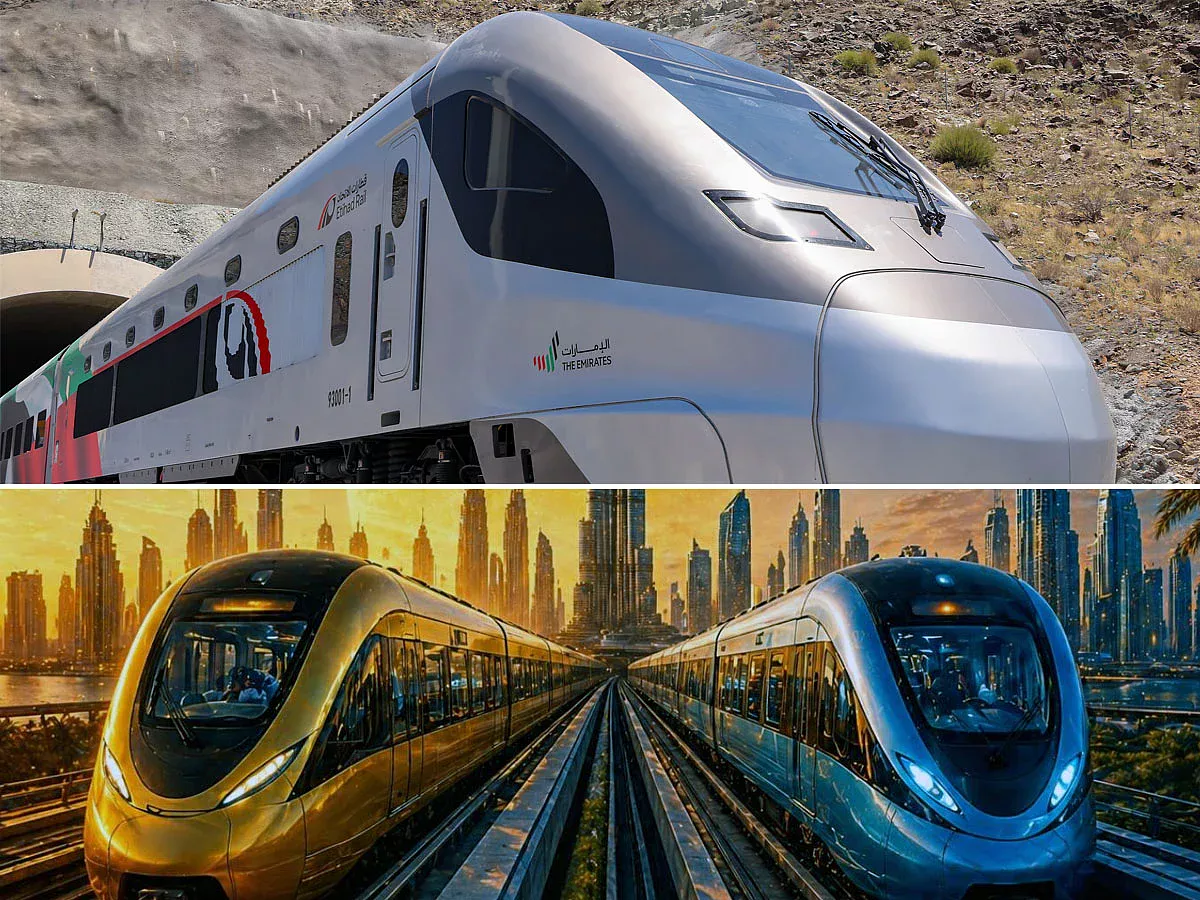
    Another key driver is Dubai’s proposed Gold Line Metro expansion project, a $9 billion transport corridor expected to connect 15 districts by 2032. Analysts noted that major transport infrastructure announcements in Dubai historically triggered property price appreciation of 8 to 11% in surrounding communities, citing earlier metro-linked gains in areas such as Jumeirah Village Circle, Business Bay, and Dubai Marina.

    The webinar also referenced the UAE’s recent decision to leave OPEC, describing the move as potentially giving the country greater flexibility in shaping its long-term economic and energy strategies. Broader economic diversification efforts, including expansion in tourism, financial services, logistics, and technology sectors, continue to reinforce Dubai’s attractiveness to global investors.

    Rental Market Shows Moderation

    In the leasing market, tenant enquiries surged nearly 40% in April, reflecting sustained demand for rental accommodation amid continued population growth and business expansion.

    However, rental prices have begun to moderate after two years of steep increases. Approximately 70% of rental listings recorded price reductions averaging just under 10%, according to Betterhomes. Property analysts say the correction could improve affordability for middle-income residents and help stabilize the market after rapid rental inflation in recent years.

    Dubai’s market is moving from an overheated phase into a healthier period of consolidation.

    Analysts noted during the webinar that demand fundamentals remain intact despite geopolitical headwinds.

    Secondary Market Activity Softens

    While activity in the secondary market has softened, listing volumes have not risen sharply, showing property owners are not engaging in panic selling despite heightened regional uncertainty. This aligns with recent investor sentiment data showing buyers are delaying decisions rather than exiting the market.

    Industry analysts note that Dubai’s property market has remained among the world’s strongest-performing real estate sectors over the past three years, driven by robust foreign investment inflows, liberal residency policies, low taxes, and sustained demand from high-net-worth individuals relocating to the UAE.

    According to data from the Dubai Land Department, Dubai recorded property transactions worth more than Dh760 billion in 2025, the highest annual total on record, with the number of deals crossing 226,000 for the first time.

    Dubai vs. London Investment Appeal

    The discussion compared Dubai’s investment appeal with London, arguing that rising taxes, tighter landlord regulations, and higher entry costs in the UK have reduced London’s relative attractiveness for international property investors. By contrast, Dubai continues to benefit from tax efficiency, high rental yields, flexible visa regimes, and comparatively lower acquisition costs.

    Property experts cautioned off-plan buyers against walking away from purchases due to market uncertainty, stressing that sale and purchase agreements remain legally binding and buyers should carefully review long-stop completion clauses before making decisions.

    Despite softer price momentum and geopolitical concerns, analysts broadly agree that Dubai’s property sector remains underpinned by strong economic fundamentals, infrastructure investment, and sustained foreign capital inflows — factors expected to support long-term market stability and growth.