Tag: Dubai property prices

  • Dubai Property Buyers Show Strong Intent Despite Price Correction Expectations

    Dubai’s property market is witnessing a paradox of strategic confidence: buyers are not retreating as prices soften — they are positioning themselves to act. Property Finder’s March-April 2026 Market Pulse survey of 4,735 respondents shows that 68% of active property seekers intend to purchase within the next six months, even as expectations of price corrections reach their highest level this year.

    The findings reflect a market where demand remains robust, but buyers have become acutely aware of shifting valuations. Buying intent held steady across both months — 68% in March and 67% in April — continuing a pattern of sustained engagement across every Market Pulse edition to date. This consistency underscores long-term confidence in the emirate’s real estate fundamentals, even during periods of price recalibration.

    The more striking shift lies in price expectations. In January-February 2026, sentiment was almost evenly split: 36% expected prices to decrease, 35% anticipated increases, and 29% saw stability ahead. By March-April, that uncertainty had crystallized into a clear consensus. In March, 73% of respondents expected prices to decrease, with only 16% expecting an increase and 11% expecting stability. In April, 70% anticipated a decline, 17% an increase, and 12% stability.

    “Around two thirds of people planning to buy is not a number you see in a market that has lost confidence,” said Cherif Sleiman, Chief Revenue Officer at Property Finder. “What our findings tell us is that Dubai’s property market continues to command genuine, forward-looking conviction. Buyers are not on the fence, they are actively tracking conditions, waiting for the right moment, and ready to move.”

    The alignment between buyer expectations and observed market behavior suggests heightened market literacy among investors. The shift in sentiment coincides with measured pricing adjustments tracked across multiple platforms, indicating that prospective buyers are monitoring data closely and preparing to capitalize on improved affordability.

    This proactive outlook positions the broader sector for a robust period of deal-making as expectations align with real-world price corrections. Rather than signaling retreat, the data reveals a market where purchase demand is holding strong, supported by buyers who see price moderation not as a deterrent, but as an entry point. The trend reflects sustained belief in Dubai’s property infrastructure and long-term appeal, particularly as the emirate continues to attract global capital despite regional geopolitical uncertainty.

    As Dubai’s real estate market enters the summer period, the combination of strategic buyer intent and disciplined price expectations suggests a sector transitioning from peak momentum to calibrated growth — a development that may ultimately reinforce the market’s resilience and maturity as a global investment destination.

  • Dubai Real Estate Records Dh48 Billion in April Sales

    Dubai Real Estate Records Dh48 Billion in April Sales

    Transaction volumes rose 3.5% month-on-month, while overall deal value climbed 10.7%, pointing to continued strength in higher-value segments, according to data from fäm Properties released on May 4, 2026.

    The performance comes at a time of heightened geopolitical tensions and global economic uncertainty, yet Dubai continues to attract strong capital inflows, supported by its reputation as a safe, transparent and well-regulated investment hub.

    Primary market dominates activity

    The primary market remained the clear driver of activity, with 10,563 transactions worth Dh35.8 billion, compared with 3,414 resale deals valued at Dh12.2 billion, according to DXBinteract. The continued strength of off-plan sales reflects investor appetite for new projects and expectations of future capital appreciation.

    “April’s performance reflects the market’s underlying strength, with steady demand across both residential and commercial segments,” said Firas Al Msaddi, noting that the emirate continues to benefit from its global positioning as a stable destination for investors.

    Apartments led the market with 11,377 transactions worth Dh24.1 billion, up 6.5% month-on-month, while plot sales surged 34.7% to Dh6.6 billion, indicating strong interest in land development opportunities. Commercial real estate also posted robust gains, with 561 transactions worth Dh4 billion, rising sharply both year-on-year and from March, signalling renewed business activity.

    Regional hotspots and luxury deals

    Dubai South retained its position as the top-performing area for the second consecutive month, recording 1,171 transactions worth Dh2.7 billion, followed by Jebel Ali First and Al Barsha South Fourth. Dubai Islands emerged as a high-value hotspot, generating Dh2.8 billion in sales, reflecting rising demand for premium waterfront developments.

    Luxury transactions continued to capture attention, with the most expensive apartment selling for Dh171 million at Aman Residences in Jumeirah. Other high-end deals included Dh122 million at Baccarat Residences in Downtown Dubai and Dh118 million at Marsa Dubai, while the top villa sale reached Dh76 million at Eden Hills.

    The bulk of transactions remained concentrated in the mid-market segment, with properties priced between Dh1 million and Dh2 million accounting for 34.7% of sales. Units below Dh1 million made up 23.3%, highlighting continued demand from first-time buyers and investors targeting rental yields, while properties above Dh5 million accounted for nearly 12%.

    Signs of price moderation emerge

    Average property prices rose 16.1% year-on-year to Dh1,840 per square foot, although recent indicators suggest the pace of appreciation is beginning to ease after a multi-year rally.

    Data from ValuStrat indicates that its residential capital values index declined 3.8% in the first quarter of 2026 to 229.2 points, marking the first quarterly contraction since 2020. Market experts say the dip reflects a natural adjustment following sharp gains over the past three years rather than a downturn, as increased supply and shifting investor preferences begin to temper price growth.

    “The moderation in prices is a healthy development and points to a more sustainable growth trajectory. Transaction volumes remain strong, liquidity is robust, and the fundamentals underpinning demand — from population growth to foreign investment — are firmly intact,” a Dubai-based analyst said.

    With Dubai’s population having crossed the four million mark and new project launches continuing across emerging districts, the outlook for the sector remains broadly positive. Industry stakeholders expect the market to maintain steady momentum through 2026, supported by strategic initiatives such as the Dubai Economic Agenda D33 and the emirate’s expanding role as a global hub for business and investment.

    The April performance follows a strong first quarter, during which the emirate recorded over Dh180 billion in property transactions, reinforcing its position as one of the world’s most resilient real estate markets.

  • Alabbar: Dubai Property Market Remains Strong Despite Regional Tensions

    Alabbar: Dubai Property Market Remains Strong Despite Regional Tensions

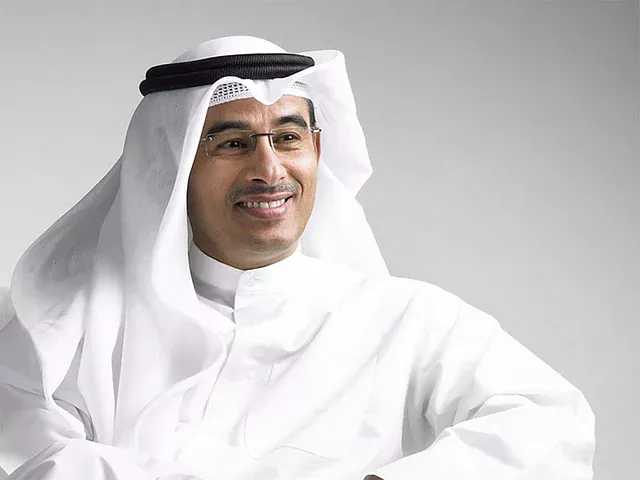
    Dubai’s real estate sector remains fundamentally strong as global capital continues to flow into the emirate, according to Mohamed Alabbar, who told CNBC that the UAE’s long-term development strategy and stable leadership have created an environment that withstands external pressures.

    “It’s the global business hub, and its success, its limelight, its reflection of what life should be and what success should be, what prosperity should be, what positive you should be is this place,” Alabbar said, adding that attempts to undermine that success will ultimately fail.

    Fundamentals Built Over Four Decades

    Alabbar acknowledged that social media speculation can amplify fears during periods of geopolitical tension but emphasized that the UAE’s track record demonstrates consistency and wisdom. “If you were to look and study the trajectory of UAE policies, you will see consistency, you will see sustainability, you will see wisdom, you will see stability,” he stated.

    According to the Emaar founder, the country’s leadership has spent more than 40 years building systems designed to deliver prosperity for residents and investors. Recent events have only reinforced confidence in the nation’s safety and infrastructure, he noted.

    “I promise you what happened will only strengthen what this country is all about.”

    Capital Flows Accelerate, Not Reverse

    Addressing concerns that capital moved to the UAE during global crises could now begin to leave, Alabbar pointed to recent market performance as evidence of sustained confidence. “If you were to look at the past two years, just look at our business, the real estate business alone, we had an increase of almost 70% in 2023, we had 40% in 2024, we have another 40% in 2025,” he said.

    The developer said sophisticated investors recognize the strength of the UAE’s fundamentals and are likely to deepen their commitments rather than pull back. Dubai’s real estate market recorded AED2.46 billion in transactions on March 2, 2026, demonstrating sustained activity levels.

    “Smart capital understands that a country like this, with all these principles and stable leadership and the safety that it has shown that it can deliver,” Alabbar said. “People with true capital understand this and they appreciate this and they will double down on investing anyway.”

    No Signs of Market Weakness

    Alabbar said current demand shows no indication of softening. He recounted his own recent experience searching for an apartment in Dubai: “Myself, I’m looking for one building, one apartment overlooking the sea that I didn’t buy in, and the past two days I’ve been looking and it seemed like nobody want to budge. Nobody want to give a discount.”

    That reflects a market where sellers remain confident and demand stays firm. While consumer confidence may soften temporarily during periods of uncertainty, the country’s policies tend to restore confidence quickly, he added.

    Correction Forecasts ‘Unrealistic’

    Some analysts have warned that Dubai’s property market could face a correction as new supply enters the market, with Fitch Ratings recently suggesting prices could decline by up to 15%. Alabbar dismissed that scenario as unlikely.

    “I know my business well. I know the banking, I know the business environment, because I operate in multi industries,” he said. “The banking system is so strict, amazing discipline. Government policies are just getting better and better. I have no concerns.”

    Asked directly whether a 15% correction was realistic, Alabbar was unequivocal: “In my opinion, the way I do, the way I look at my business and listen, I look at so much data, I think it’s very unrealistic.”

    Recent high-value transactions support his assessment. Dubai recorded a Dh422 million apartment sale at Aman Residences on March 5, 2026, marking the third most expensive apartment transaction in the emirate’s history.

    New Supply Could Stabilize Growth

    Dubai is preparing for a wave of new property supply expected in 2026 and 2027. Alabbar said additional inventory could benefit the market by preventing prices from rising too quickly and maintaining the city’s competitiveness.

    “I said this a year ago. The supply that’s coming in in 2026 and 2027 will be good for the market,” he stated. “We are not here for the short run. We are here for a long time to do business.”

    The developer said he prefers a market where property prices rise gradually—around 5% to 6% annually—rather than experiencing sharp spikes that could undermine long-term stability. “Jacking up prices too high doesn’t benefit anybody,” he said.

    Real estate costs play a significant role in inflation, contributing approximately 50% to 52% of overall price increases, Alabbar noted. Maintaining balanced growth helps both investors and residents. “We don’t also want investors and people who come here for their jobs to really feel that the city is too expensive,” he added.

    Long-Term Stability Over Short-Term Gains

    Alabbar said the goal for Dubai’s property sector should be stability rather than aggressive price increases. Developers are already generating strong returns at current price levels, and maintaining balanced growth will help sustain Dubai’s appeal as a global destination.

    “Developers are making enough money with these prices. We should not shoot too high,” he said. “I want stability. I want long term.”

    A modest adjustment driven by new supply could help ease pressure on housing costs without undermining the broader market, he concluded. Emaar recently confirmed that UAE property sales reached Dh17.2 billion in the first two months of 2026, marking a 118% increase year-on-year.
  • Dubai Real Estate Shifts from Speculation to Structured Capital Allocation

    Dubai Real Estate Shifts from Speculation to Structured Capital Allocation

    Strategic capital now drives approximately 40 percent of Dubai’s real estate market, according to a new report by VVS Estate, marking a fundamental shift from the momentum-based trading that characterized the 2014 cycle. This evolution reflects deeper regulatory oversight, improved transparency, and increasingly disciplined capital participation.

    “While property cycles are often described in terms of volatility and momentum, Dubai’s current evolution is structural in nature, shaped by regulatory depth, improved transparency and increasingly disciplined capital participation,” said Valentina Rusu, Founder of VVS Estate.

    High-Value Transactions Signal Long-Term Investment Behavior

    The proportion of residential transactions priced above Dh5 million has risen to 9 percent, reflecting sustained appetite for higher-value residential assets, according to Savills Middle East’s Dubai Residential Market Report 2025. Growth at the top end of the market typically indicates strategic capital deployment rather than short-term speculative activity.

    Off-plan transactions, widely viewed as a proxy for strategic capital allocation, account for over 60 percent of total residential transaction value, equivalent to approximately Dh223 billion, according to JLL data. Taken together with Savills’ pricing analysis, the figures point to a market increasingly shaped by deliberate allocation decisions.

    Property Finder insights show that premium and branded residences now represent a growing share of overall transactions. With a higher proportion of deals occurring above Dh2,500 per square foot, citywide averages have naturally moved higher.

    “This is not inflation. It reflects a segmentation shift. Comparing today’s market directly with 2014 without adjusting for product mix oversimplifies the analysis,” Rusu explained.

    Prices Surpass 2014 Peak Amid Structural Improvements

    Dubai reached its previous market peak in September 2014. A decade later, prices have not only recovered but surpassed those levels. According to the Dynamic Price Index published by Property Monitor, average apartment prices reached approximately Dh1,484 per square foot in early 2025, more than 20 percent above the 2014 high, before exceeding Dh1,600 per square foot by mid-2025.

    However, VVS Estate emphasizes that price recovery alone does not define market quality. “In 2014, growth was largely momentum-driven,” Rusu said. “Today, performance is supported by regulatory reinforcement, escrow discipline, standardized registration and improved execution transparency. The difference is structural.”

    Regulatory Frameworks Reduce Execution Risk

    One of the most consequential changes since the previous cycle has been the strengthening of regulatory frameworks under the oversight of the Dubai Land Department. Contract registration now operates within defined timelines through centralized systems, while escrow accounts follow milestone-based release mechanisms aligned with construction progress.

    “This regulatory depth has materially reshaped Dubai’s risk profile and increased its appeal to institutional and long-horizon capital,” Rusu noted.

    Investor behavior increasingly reflects disciplined capital allocation, with buyers focusing on net yields after service charges, resale comparables, supply-pipeline concentration, and developer delivery consistency. “Speculative markets depend on entry enthusiasm,” Rusu said. “Structured markets depend on exit depth.”

    The most significant change underway is behavioral rather than price-driven. Participation is shifting from excitement-led entry to allocation-driven decision-making, where capital is deployed strategically rather than reactively. Investors are increasingly viewing Dubai as a structured capital environment, defined by regulatory clarity, liquidity depth, and global positioning.

    The emirate’s property market continues to demonstrate strong fundamentals, with transactions nearing Dh900 billion as the population exceeded four million residents. Across the UAE, real estate growth remains robust, supported by infrastructure investment and economic diversification.