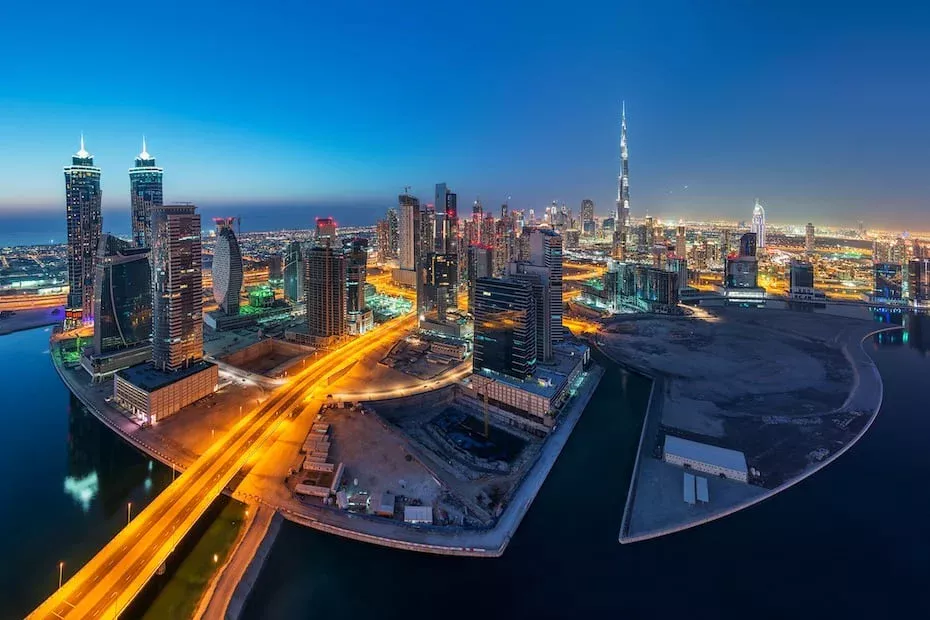
The start of the conflict on February 28 has left a visible mark on Dubai’s real estate market, according to data tracked by The Real Estate Report. After entering the year with strong momentum, the market saw transaction volumes and values drop sharply in the first full week following the escalation.
In Week 9 (February 23–March 1), the market recorded Dh20.72 billion across 5,473 transactions. By Week 10 (March 2–8), those figures fell to Dh10.37 billion across 3,038 transactions—a 49.9% decline in value and 44.5% fewer deals week-on-week.
Looking at weekdays only to avoid weekend lulls, the five business days before the conflict saw Dh20.41 billion in activity, while the five days after saw Dh10.16 billion. Essentially, the market’s run-rate cut in half almost immediately.
Off-Plan Still Leads Despite Slowdown
One of the most significant findings is that the structure of the market remained stable. Despite geopolitical uncertainty, off-plan properties continued to dominate. In Week 9, off-plan made up 62.4% of built-property value. In Week 10, that share actually grew slightly to 66.2%.
This suggests that investors have not abandoned long-term plays. Off-plan flats remain the core driver, making up about 78% of all off-plan value in Week 10. The ready market followed a similar pattern, remaining largely apartment-led.
Luxury Segment Shows Resilience
While overall sales cooled, the luxury end of the market demonstrated continued strength. On March 4, 2026, a single apartment at Aman Residences in Jumeirah 2 transacted for Dh422 million, marking the third most expensive apartment sale in Dubai’s history.
Deals like this serve as a reminder that high-ticket liquidity has not disappeared. The top end of the market tends to operate on its own logic, even during periods of caution.
Mortgages Remain Meaningful
Mortgage registrations also eased but stayed meaningful, representing about 19% of the total market value in Week 10. These registrations remain heavily concentrated in the ready-property segment, where financing is most common.
Market Context and Outlook
It is important to keep the broader context in mind. Dubai entered this period from a position of extreme strength. Total market value in 2025 reached Dh841.7 billion, up from Dh665.4 billion in 2024. January 2026 alone nearly doubled the previous year’s performance.
“The current data reflects a ‘risk-off’ environment where buyers are exercising caution,” said Ali Shahin, founder of The Real Estate Report.
Activity continues to cluster in familiar hubs including Dubai Marina, Palm Jumeirah, Burj Khalifa, and Business Bay. These areas remain core to investor interest despite the temporary slowdown.
Industry observers note that while the run-rate is lower for now, the fundamental interest in Dubai real estate remains intact. The market has slowed, but it has not broken. The structural preference for off-plan and the occasional massive luxury transaction suggest that underlying demand persists.
Dubai’s property sector has weathered previous periods of uncertainty, and authorities continue to reinforce confidence in the emirate’s long-term stability. As the region navigates ongoing tensions, market participants are watching closely for signs of normalization in transaction activity.
Leave a Reply