Author: Estattor.com

  • Emaar Confirms Normal Operations as Sales Double in Early 2026

    Emaar Confirms Normal Operations as Sales Double in Early 2026

    Emaar Properties issued a statement to the Dubai Financial Market on Wednesday confirming business continuity across its entire portfolio as the master developer recorded exceptional sales growth in early 2026.

    “All Emaar communities, malls, hospitality assets, and development projects continue to operate normally, supported by comprehensive business continuity planning and close coordination with relevant authorities,” the company stated.

    The announcement comes as regional military conflict involving the US, Israel, and Iran has affected the Gulf since Saturday, with Iran targeting the region with missiles and drones.

    Mohamed Alabbar, founder of Emaar, emphasized Dubai’s stability:

    “The city continues to demonstrate resilience, supported by effective leadership, sound regulation, and a dynamic business environment. Our focus remains on disciplined execution, operational excellence, and delivering sustainable value for our shareholders and customers.”

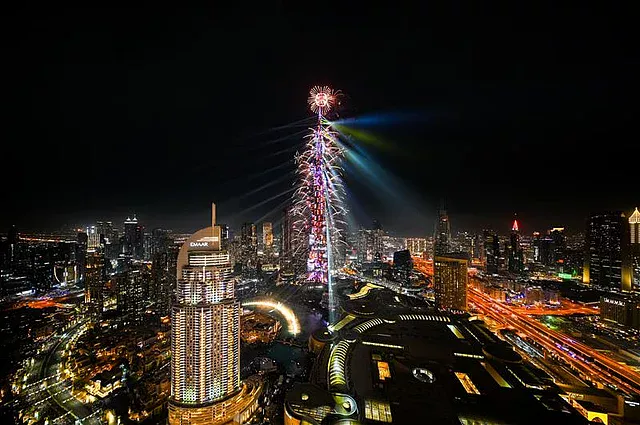
    Emaar owns and operates landmark assets including Dubai Mall, Burj Khalifa, Dubai Hills Estate, and Dubai Creek Harbour.

    Record Sales Momentum Continues

    The UAE’s largest developer reported Dh17.2 billion in property sales during January and February 2026, compared to Dh7.9 billion in the same period of 2025—representing a 118% year-on-year increase.

    This performance follows Emaar’s record-breaking 2025 results, which included property sales of Dh80.4 billion, revenue of Dh49.6 billion, and net profit before tax of Dh25.7 billion—the strongest results in company history.

    The company’s revenue backlog stood at Dh155 billion as of December 31, 2025. Recurring income streams from malls, hospitality, leisure, entertainment, and commercial leasing accounted for 32% of total EBITDA.

    “Emaar’s performance reflects the strength of Dubai’s economic vision and the confidence investors place in its stability and long-term prospects,” Alabbar added.

    Market Context

    Emaar’s performance aligns with broader momentum across Dubai’s property sector, which recorded Dh60.60 billion in transactions during February 2026—an 18.14% increase year-on-year.

    The developer reaffirmed its commitment to disciplined growth: “With diversified income streams, strong liquidity, and disciplined cost management, Emaar remains well-positioned to sustain growth and contribute to the continued strength and resilience of Dubai’s capital markets.”

    The statement underscores investor confidence in Dubai’s regulatory framework and economic stability, even as geopolitical developments affect the wider region.
  • Wasl Group Plans to Double Affordable Housing Portfolio by 2031

    Wasl Group Plans to Double Affordable Housing Portfolio by 2031

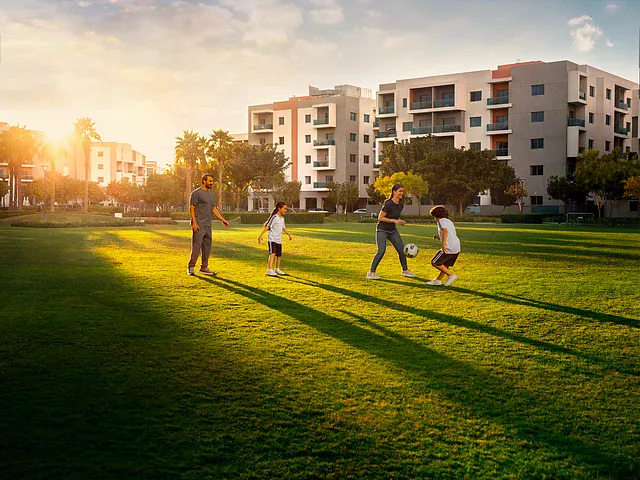
    Wasl Group currently manages one of Dubai’s largest affordable housing portfolios, comprising approximately 45,000 residential units across the emirate. These communities accommodate nearly 180,000 residents, over 90% of whom are families, positioning Wasl as a central player in supporting stable, community-driven living.

    The expansion plan follows a Memorandum of Understanding signed in May 2025 with the Roads and Transport Authority and Dubai Municipality. The coordinated effort will span a total planned area of 1.46 million square metres, with delivery phased over multiple stages to ensure infrastructure readiness and long-term community viability.

    Wasl’s current developments include Wasl Village in Al Qusais, which comprises about 6,200 residential units ranging from studios to three-bedroom apartments, and Wasl Green Park, offering around 2,527 units set within landscaped surroundings. Both projects exemplify the integration of affordability with quality urban living standards.

    The initiative directly supports the Dubai 2040 Urban Master Plan, which calls for a balanced housing ecosystem encompassing luxury, mid-income, and affordable segments. In August 2025, Dubai’s population crossed 4 million, with nearly 567 new residents settling in the emirate daily.

    The programme additionally advances the Dubai Economic Agenda D33, supporting workforce stability and economic productivity by diversifying housing supply amid the city’s rapidly growing population. With property market momentum continuing into 2026, the focus on affordable housing addresses a critical segment of market demand.

    Wasl’s developments are designed around connectivity, community infrastructure, greenery, and access to premium amenities, reflecting a commitment that quality living should be accessible across all income levels. The phased delivery approach aims to ensure infrastructure readiness and sustainable community development as the emirate’s residential market evolves.

  • Dubai Real Estate Sales Surge 18% to $16.5 Billion in February 2026

    Dubai Real Estate Sales Surge 18% to $16.5 Billion in February 2026

    Dubai’s real estate sector maintained exceptional momentum through February 2026, with transaction values climbing 18.14% year-on-year despite evolving market dynamics across property segments. According to Dubai Land Department data, total sales reached 16,959 deals generating AED60.60 billion ($16.5 billion), representing a 5% increase in volume compared to February 2025.

    Off-plan properties dominated market activity, accounting for 10,526 transactions or approximately 62% of total sales, while ready properties recorded 6,437 deals representing 38% of the market.

    Apartments Drive Residential Growth

    The apartment segment emerged as the primary growth driver, with transactions rising from 11,385 sales worth AED21.7 billion in February 2025 to 12,820 deals totaling AED26.6 billion in February 2026. The villa market experienced a sharp contraction, with transactions declining from 3,966 deals valued at AED19.7 billion to just 1,563 sales worth AED6.4 billion year-on-year.

    Commercial property demonstrated exceptional performance, with transactions surging from 443 sales valued at AED1.2 billion to 717 deals totaling AED9.54 billion—a near eight-fold increase in value.

    “Hitting over AED60 billion in sales volume solidifies Dubai’s position as one of the globe’s most resilient and desirable real estate hubs. This surge is driven by a balanced blend of end-user demand and enduring investor confidence,” said Tara Khan, Sales Director of Kelt and Co Realty.

    Khan noted that the market has reached a mature phase with steady price growth, strategically managed supply, and buyer involvement across both emerging and established communities.

    Transaction Activity Concentrated in Key Districts

    By volume, Jumeirah Village Circle led with 1,146 transactions, reaffirming its status as one of Dubai’s most active residential hubs. Al Yelayiss 1 followed with 916 deals, Madinat Al Mataar recorded 828 transactions, while Dubai Land Residence Complex registered 750 sales and Business Bay closed the top five with 733 deals.

    In value terms, Al Yelayiss 1 dominated with AED5.38 billion in sales, followed by Al Yelayiss 5 at AED2.41 billion and Me’Aisem Second at AED2.27 billion. Business Bay generated AED2.21 billion, while Palm Jumeirah reached AED1.89 billion, driven by continued demand for ultra-prime waterfront properties.

    Ultra-Luxury Transactions Define Upper Tier

    Among apartments, The Alba Residences by Omniyat topped the list with a AED225.97 million sale, followed by Peninsula Dubai Residences – Tower 2 at AED210 million. Solara Tower Dubai recorded a transaction worth AED113.66 million, while Passo by Beyond achieved AED98 million and Como Residences closed at AED63.5 million.

    In the villa segment, EOME at Palm Jumeirah led with a sale valued at AED115 million. Zaya Zuha Island at The World Islands featured multiple transactions at AED68.58 million, while Amali Island at The World Islands recorded a sale of AED68.4 million.

    The February performance follows Dubai’s landmark 2025, when the emirate’s population exceeded four million residents as property transactions approached Dh900 billion. The market has transitioned toward structured capital allocation, with strategic capital now accounting for approximately 40% of transactions.

    Market fundamentals remain supported by expanding business activity and tight inventory, particularly in the office sector where limited Grade A supply continues to drive investment activity across commercial segments.

  • DMCC Unveils 600-Metre Tower for Uptown District Phase 3

    DMCC Unveils 600-Metre Tower for Uptown District Phase 3

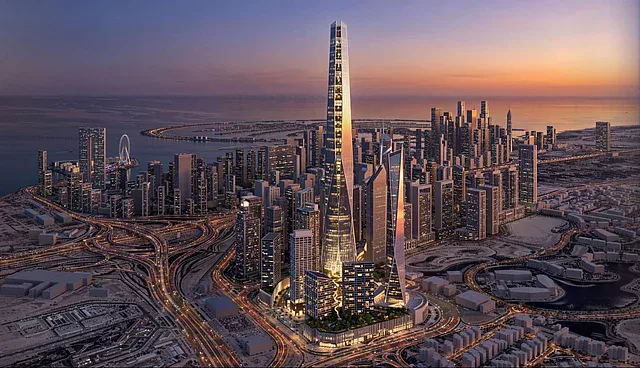
    The proposed megatall tower represents the latest expansion of DMCC’s strategic development in Dubai’s southern corridor, aligning with the emirate’s broader infrastructure transformation centered on Al Maktoum International Airport.

    Phase 1 of the Uptown District delivered the 340-metre Uptown Tower and central plaza. Phase 2, comprising two Grade A office towers and two residential towers, is under construction with completion scheduled for late 2027 and early 2028.

    Strategic positioning around future aviation hub

    Ahmed Bin Sulayem, Executive Chairman and Chief Executive Officer of DMCC, emphasized that the development responds to tangible market demand rather than speculative construction.

    “We build to meet the clear, growing requirements of a global trade community that is outgrowing its current footprint. The decision to develop the world’s largest airport in the southern corridor has broadened Dubai’s economic centre of gravity. Uptown District is the strategic anchor of this corridor.”

    The reference to structured capital allocation aligns with broader market trends as institutional investors prioritize strategic positioning over short-term gains.

    According to DMCC, approximately 50% of the tower’s space will be allocated to Grade A offices designed for multinational companies consolidating regional operations. The development will also include a luxury hotel operated by an international hospitality brand and high-end residential units.

    Smart infrastructure and connectivity

    The tower will incorporate smart-building systems and sustainability features, with direct integration to the Dubai Metro via a climate-controlled link bridge. Road infrastructure upgrades, including flyover access to Sheikh Zayed Road, are planned to support increased traffic capacity.

    DMCC stated the project targets continued demand from high-net-worth individuals relocating to Dubai, a trend reflected in recent market data showing sustained buyer interest across premium segments.

    The tower will feature a public viewing deck intended to attract visitors and serve as a vertical landmark for the district.

    Financial backing and market context

    DMCC confirmed that several major banks have expressed interest in partnering on the development, though specific financial details and timelines were not disclosed.

    Bin Sulayem described the development as part of creating “a sophisticated ecosystem where commerce and lifestyle are inextricably linked,” positioning the megatall tower as the district’s vertical anchor.

    The announcement comes as Dubai’s commercial property sector recorded Dh17.1 billion in sales during early 2026, with limited Grade A office supply in core business districts driving investors and corporates to secure prime space amid occupancy rates exceeding 95%.

    The planned expansion of Al Maktoum International Airport, set to accommodate 260 million passengers and 12 million tonnes of cargo annually, is reshaping development patterns across Dubai’s southern districts and reinforcing the strategic value of projects like Uptown District.

  • Dubai Real Estate Shifts from Speculation to Structured Capital Allocation

    Dubai Real Estate Shifts from Speculation to Structured Capital Allocation

    Strategic capital now drives approximately 40 percent of Dubai’s real estate market, according to a new report by VVS Estate, marking a fundamental shift from the momentum-based trading that characterized the 2014 cycle. This evolution reflects deeper regulatory oversight, improved transparency, and increasingly disciplined capital participation.

    “While property cycles are often described in terms of volatility and momentum, Dubai’s current evolution is structural in nature, shaped by regulatory depth, improved transparency and increasingly disciplined capital participation,” said Valentina Rusu, Founder of VVS Estate.

    High-Value Transactions Signal Long-Term Investment Behavior

    The proportion of residential transactions priced above Dh5 million has risen to 9 percent, reflecting sustained appetite for higher-value residential assets, according to Savills Middle East’s Dubai Residential Market Report 2025. Growth at the top end of the market typically indicates strategic capital deployment rather than short-term speculative activity.

    Off-plan transactions, widely viewed as a proxy for strategic capital allocation, account for over 60 percent of total residential transaction value, equivalent to approximately Dh223 billion, according to JLL data. Taken together with Savills’ pricing analysis, the figures point to a market increasingly shaped by deliberate allocation decisions.

    Property Finder insights show that premium and branded residences now represent a growing share of overall transactions. With a higher proportion of deals occurring above Dh2,500 per square foot, citywide averages have naturally moved higher.

    “This is not inflation. It reflects a segmentation shift. Comparing today’s market directly with 2014 without adjusting for product mix oversimplifies the analysis,” Rusu explained.

    Prices Surpass 2014 Peak Amid Structural Improvements

    Dubai reached its previous market peak in September 2014. A decade later, prices have not only recovered but surpassed those levels. According to the Dynamic Price Index published by Property Monitor, average apartment prices reached approximately Dh1,484 per square foot in early 2025, more than 20 percent above the 2014 high, before exceeding Dh1,600 per square foot by mid-2025.

    However, VVS Estate emphasizes that price recovery alone does not define market quality. “In 2014, growth was largely momentum-driven,” Rusu said. “Today, performance is supported by regulatory reinforcement, escrow discipline, standardized registration and improved execution transparency. The difference is structural.”

    Regulatory Frameworks Reduce Execution Risk

    One of the most consequential changes since the previous cycle has been the strengthening of regulatory frameworks under the oversight of the Dubai Land Department. Contract registration now operates within defined timelines through centralized systems, while escrow accounts follow milestone-based release mechanisms aligned with construction progress.

    “This regulatory depth has materially reshaped Dubai’s risk profile and increased its appeal to institutional and long-horizon capital,” Rusu noted.

    Investor behavior increasingly reflects disciplined capital allocation, with buyers focusing on net yields after service charges, resale comparables, supply-pipeline concentration, and developer delivery consistency. “Speculative markets depend on entry enthusiasm,” Rusu said. “Structured markets depend on exit depth.”

    The most significant change underway is behavioral rather than price-driven. Participation is shifting from excitement-led entry to allocation-driven decision-making, where capital is deployed strategically rather than reactively. Investors are increasingly viewing Dubai as a structured capital environment, defined by regulatory clarity, liquidity depth, and global positioning.

    The emirate’s property market continues to demonstrate strong fundamentals, with transactions nearing Dh900 billion as the population exceeded four million residents. Across the UAE, real estate growth remains robust, supported by infrastructure investment and economic diversification.

  • Sharjah Property Deals Hit Record Dh9.3 Billion in January 2026

    Sharjah Property Deals Hit Record Dh9.3 Billion in January 2026

    Sharjah recorded 10,333 property transactions in January 2026, with total trading area reaching approximately 23.8 million square feet, reflecting continued rapid growth and solidified confidence in the emirate’s real estate market at the outset of the year.

    The emirate’s real estate landscape continues to evolve, demonstrating increasing market maturity and diversification of its investor base. Government policies, progressive legislation, and strategic urban planning initiatives have reinforced Sharjah’s position as a premier long-term investment destination. Large-scale development projects and infrastructure expansion have further stimulated both local and international capital inflows.

    A total of 4,868 sales transactions took place across 129 areas distributed throughout the cities and regions of Sharjah, encompassing residential, commercial, industrial, and agricultural land. By property type, 2,101 transactions involved units in towers, 1,672 transactions were for land, and 1,095 transactions for built-in land.

    Al-Khan area recorded the highest real estate transaction for built-in land, valued at Dh90 million, while Al-Tay West area recorded the highest mortgage transaction for land valued at Dh240 million.

    Within Sharjah City, 4,061 sales transactions were recorded in January. Muwaileh Commercial led with 787 transactions, followed by Al-Khan with 442, Al-Mamzar with 334, and Al-Hamriyah West with 293 transactions.

    In terms of trading value, Muwaileh Commercial topped the list with Dh1.1 billion, followed by Al-Khan with Dh718 million, Al-Hamriyah West with Dh714.6 million, and Rawdat Al-Sidr with Dh567.5 million.

    In the Central Region, a total of 753 sales transactions were recorded, with the majority concentrated in Al-Belaida area, which recorded 433 transactions and the highest trading volume valued at Dh649.8 million.

    In the Eastern Region, 54 sales transactions took place, with Hay Al-Gharb area leading with 11 deals and accounting for the highest share of trading volume at Dh24.9 million.

    Sharjah’s performance mirrors broader UAE real estate market strength across emirates. The emirate’s strategic positioning and investment-friendly policies continue to attract both regional and international buyers seeking value-driven property opportunities amid ongoing residential expansion across the UAE.

  • UAE Real Estate Records Strong 2025 Growth as Abu Dhabi Leads

    UAE Real Estate Records Strong 2025 Growth as Abu Dhabi Leads

    The year marked a defining period characterized by strong transactional activity, sustained developer confidence and policy-backed market growth. While all emirates recorded positive performance, Abu Dhabi emerged as a clear standout, supported by record sales volumes, rising end-user participation and growing international investor interest.

    Abu Dhabi Delivers Record Performance

    Abu Dhabi delivered one of its strongest residential real estate market performances on record in 2025, with transactions exceeding 21,000 units. Off-plan sales accounted for a growing share of activity, with 15,000 transactions, while completed unit sales reached nearly 6,000.

    The emirate added 7,000 residential units in 2025, complemented by record-breaking launch volumes that signal renewed developer confidence. Construction activity was further supported by the recommencement of several previously on-hold projects, particularly within established communities such as Al Reem Island.

    The year saw the highest concentration of branded and lifestyle-led development launches to date, many reaching sell-out status shortly after release. Separately, Abu Dhabi’s housing authority announced approximately 40,000 housing units and residential plots for UAE nationals.

    Leasing activity remained firmly positive, with high occupancy levels maintained across the Investment Zones. Prime and high-end apartments increased by 10 to 25 percent, depending on the community, while mid-quality apartments saw growth of 7 to 35 percent. The villa segment recorded average increases of 5 to 10 percent overall, with prime communities outperforming at 10 to 15 percent.

    The office market recorded its strongest performance in over a decade, driven by limited availability of premium space, corporate expansion and rising demand for flexible, high-quality workplaces. Several Grade A assets approached full occupancy, including Aldar’s Quartz Tower.

    Dubai Records Historic Completion Volumes

    Dubai remained a global focal point for real estate activity, recording the highest volume of residential completions in its history during 2025. The emirate delivered approximately 37,950 apartments and 9,700 villas, representing the highest residential delivery volume on record.

    The off-plan segment continued to underpin sales activity, supported by a steady flow of new launches and increasingly flexible payment structures. Well-positioned and competitively priced projects continued to perform strongly.

    In the rental market, growth moderated as affordability considerations became more prominent. The introduction of the Smart Rental Index in early 2025 played a pivotal role in guiding renewal negotiations, enhancing transparency and supporting a gradual stabilization of rental growth.

    The Dubai office sector continued its growth phase, characterized by substantial increases in demand, rising occupancy levels and rental rates, particularly for Grade A and well-located assets. Commercial supply was limited in 2025, with less than 280,000 square feet of office space delivered. However, new supply is expected to pick up significantly in 2026 with approximately 1.7 million square feet anticipated for handover.

    Northern Emirates Gain Momentum

    Across the Northern Emirates, 2025 saw accelerating development momentum and rising investor interest. A growing pipeline of residential, hospitality and mixed-use projects reflects improving confidence in the region’s long-term prospects, supported by government initiatives, infrastructure investment and tourism growth.

    Sharjah and Ras Al Khaimah continued to anchor activity, while Ajman recorded improving traction among both end-users and investors, supported by competitive pricing and improving project quality.

    Residential supply across the Northern Emirates is expected to become increasingly visible in 2026, as a growing number of developments transition into active handover phases. Approximately 12,900 residential units are forecast for completion, with delivery activity primarily concentrated in Sharjah, followed by RAK and Ajman.

    Policy Initiatives Support Market Growth

    Several major policy initiatives underpinned real estate market confidence throughout 2025. These include the continued implementation of formal rental index frameworks in Abu Dhabi, Dubai and Sharjah, the launch of Dubai’s First-Time Home Buyer Program in July 2025, ongoing housing initiatives in Abu Dhabi, continued regulatory reforms, digitalization of transactions and confirmation that Etihad Passenger Rail services are scheduled to commence operations in 2026.

    With 7,000 units scheduled for completion in Abu Dhabi and sustained delivery across Dubai and the Northern Emirates, the UAE real estate market is positioned for continued growth supported by disciplined development, policy frameworks and strong fundamentals.

  • Abu Dhabi Expats Drive 62% of Home Sales as Ownership Trend Accelerates

    Abu Dhabi Expats Drive 62% of Home Sales as Ownership Trend Accelerates

    New data released by the Abu Dhabi Real Estate Centre confirms that resident expatriates and non-resident foreign buyers dominated the capital’s residential market in 2025, collectively representing 62% of all unit sales and reshaping demand patterns across the emirate.

    The report found that nearly 69% of growth in residential unit sales between 2022 and 2025 was driven specifically by resident foreign buyers—expatriates who live and work in Abu Dhabi and are increasingly choosing ownership over long-term renting.

    Overall real estate transaction values reached Dh142 billion in 2025, up 44% year-on-year, with residential sales rising 67% to Dh76 billion. Foreign direct investment into real estate stood at Dh8.2 billion, with buyers from more than 100 nationalities participating.

    Ben Crompton, founding partner at Crompton Real Estate Agents, said the figures reflect a fundamental shift in Abu Dhabi’s buyer base and its growing appeal to international capital.

    “Abu Dhabi’s real estate market has historically had a smaller investor base and opened later to expatriate buyers. But that narrative is now rapidly evolving, with international capital flowing into the market in unprecedented numbers,” Crompton said.

    He noted that the trend raises a broader question about how Abu Dhabi is now being viewed globally. “Is Abu Dhabi becoming a genuine global property investment destination—not just a local one?”

    For years, the emirate was seen as a more conservative and measured market, with expatriate ownership initially limited to designated investment zones from the mid-2000s. That perception has changed visibly in recent years.

    “International attention is no longer just regional,” Crompton said. “Buyers from established investor markets such as the UK, China, India, Russia and across Europe are now actively looking at Abu Dhabi.”

    Cultural and Lifestyle Appeal

    One of the strongest drivers behind the shift has been the emirate’s expanding cultural, entertainment and lifestyle offering. Projects such as Louvre Abu Dhabi, teamLab Phenomena Abu Dhabi and the upcoming Guggenheim Abu Dhabi have helped reposition the city internationally, while major leisure and entertainment developments have broadened its appeal beyond the Gulf.

    “These projects generate brand recognition far beyond the region,” Crompton said. “They make Abu Dhabi more recognisable as a place to live, visit and invest, and collectively signal that the city has developed strong global cultural and lifestyle pull.”

    Regulatory Reforms Build Confidence

    Legal and regulatory reforms have also played a key role in building confidence among foreign buyers, Crompton added.

    “Property investment carries risks if it’s not properly regulated,” he said. “Abu Dhabi has addressed this by imposing stricter requirements on developers, brokers and valuers, and enforcing escrow protections tied to construction milestones.”

    He highlighted the expansion of the Abu Dhabi Global Market to cover prime areas such as Reem and Maryah Islands as a particularly important step. Operating under English common law with its own courts, ADGM offers a legal framework that many international buyers already understand and trust.

    Developer Outreach Widens Buyer Pool

    Developer outreach has further widened the buyer pool. Crompton noted that early phases of some residential communities were once dominated by buyers from within the UAE, while more recent launches have attracted a far more international audience.

    “Launch statistics from flagship projects like Fahid Island show that roughly two-thirds of buyers came from overseas,” he said, describing it as “a dramatic shift.” He added that developers such as Aldar Properties have expanded international roadshows and broker networks across Asia, Europe and North America, significantly increasing global awareness of Abu Dhabi’s market.

    The change in buyer behaviour is already being felt on the ground. Crompton said resident expatriates are increasingly viewing ownership as a long-term lifestyle and financial decision, while non-resident investors are being drawn to Abu Dhabi’s narrative of stability, culture and quality of life.

    “Not long ago, selling a unit could be a challenge, with buyers highly price-sensitive and cautious. Today, capital appears to be moving more freely, and investors from around the world are participating with confidence,” Crompton said.

    “So, are buyers increasing from outside the emirate? The data says unequivocally yes—and at a pace that is reshaping the market’s identity and potential.”

  • UAE Short-Term Rental Market Among World’s Fastest Growing

    UAE Short-Term Rental Market Among World’s Fastest Growing

    The UAE’s short-term rental sector is experiencing unprecedented expansion, driven by pro-investment policies, streamlined licensing frameworks, and surging tourist arrivals, according to Anna Skigin, founder and CEO of Frank Porter.

    “We see this momentum daily, with both international investors and returning guests choosing apartments over traditional hotel stays,” Skigin said.

    Frank Porter, which manages over 650 properties across the UAE, primarily in Dubai, identified strong demand in established areas including Dubai Marina, Downtown Dubai, Business Bay, and Palm Jumeirah. Emerging lifestyle districts such as Dubai Design District also show significant future potential.

    Performance Metrics Signal Market Strength

    The firm analyzed two key indicators highlighting the UAE’s robust short-term rental performance: Average Daily Rate (ADR), measuring the average nightly guest payment, and Revenue Per Available Room (RevPAR), assessing overall revenue performance.

    Rising ADR reflects sustained demand and increased confidence in accommodation quality, while higher RevPAR indicates properties achieve stronger pricing alongside high booking levels.

    “The upward movement in both ADR and RevPAR demonstrates a market that is expanding in both value and performance,” Skigin explained. “Operators are successfully increasing returns while sustaining strong demand.”

    UAE cities are outperforming global markets due to rapid growth in licensed short-term rental units, high occupancy rates, rising visitor numbers, and sustained real estate investment flows. The synergy between the private sector and UAE government has created an environment where “the sector can expand sustainably,” Skigin noted.

    This growth aligns with broader market trends, as Dubai’s rental market stabilizes following years of rapid appreciation.

    Design and Guest Expectations Evolve

    Frank Porter’s in-house design team reported growing demand for aesthetically pleasing hotel-inspired interiors. Guests increasingly seek high-speed Wi-Fi for work-from-home functionality, outdoor living spaces, and Instagram-worthy design details.

    Short-term rentals must deliver a home-like atmosphere while appearing upgraded to compete effectively, the firm emphasized.

    “Professional management is key. Performance increasingly depends on dynamic pricing, hotel-grade housekeeping, guest communication speed, high-quality listing content and strict regulatory compliance—all of which we manage day-to-day for our clients.”

    Complementing Traditional Hospitality

    While short-term rentals gain popularity, Skigin emphasized they complement rather than replace hotels.

    “Hotels continue to dominate corporate and event-driven stays, while short-term rentals capture families, couples, long-stay professionals, remote workers and group travellers,” she said.

    The short-term rental boom reflects broader dynamics in the UAE property sector, where population growth exceeds four million and rental contracts reached Dh126 billion in 2025, demonstrating sustained accommodation demand across all segments.

  • Dubai Prime Office Shortage Drives 82% Commercial Sales Surge

    Dubai Prime Office Shortage Drives 82% Commercial Sales Surge

    Dubai’s commercial real estate market is experiencing exceptional momentum in 2026, driven by acute shortages of premium office space in central business districts. Fresh data from Engel & Völkers Middle East reveals that commercial sales reached Dh17.1 billion across 1,446 transactions, representing an 82% value increase and 23.7% volume growth compared to the previous year.

    The office segment has emerged as the standout performer, with transaction volumes surging 133% year-on-year and total sales values jumping 296%. This unprecedented activity reflects intense competition for limited Grade A inventory in prime locations including DIFC, Downtown Dubai, and Business Bay.

    “Dubai’s office market is experiencing one of its tightest supply environments in recent history, driven by strong business formation, relocation of multinational firms and continued expansion in financial and technology sectors,” said Taimur Khan, head of research for MENA at CBRE.

    According to Cavendish Maxwell, Dubai’s office sales more than doubled to Dh13.1 billion in 2025, marking the strongest performance in over a decade with transaction volumes rising 53% to approximately 4,600 deals.

    Property consultancy CBRE has highlighted that occupancy levels in prime office buildings across central locations have exceeded 95%, pushing rents upward and prompting firms to secure space well ahead of completion. Limited new completions over the next two years are expected to keep vacancy rates low and support continued rental and capital value growth in prime assets.

    The supply constraint has accelerated activity in the off-plan commercial segment, with primary market transactions accounting for 41.3% of total commercial deals in the latest period, signaling growing appetite among investors and end-users to secure future office inventory before completion.

    Jayakrishnan Bhaskar, CEO of Ozon Marketing Management, emphasized that the office segment has been the standout performer, with investors and corporates increasingly committing earlier in the development cycle to secure space amid tightening availability.

    Meanwhile, Dubai’s residential sector continues to perform strongly, though entering a more mature growth phase. The emirate recorded 15,981 residential sales transactions, up 20.8% year-on-year, with total sales value climbing to Dh55.9 billion, a 55.3% increase highlighting a shift toward higher-value purchases and premium locations.

    Dubai saw more than 1,000 residential transactions above Dh10 million in January alone, one of the strongest monthly performances on record. Demand has been supported by established luxury addresses such as Palm Jumeirah and Nad Al Sheba, as well as emerging high-end communities including Palm Jebel Ali, The Oasis, and Jumeirah Golf Estates 2.

    Average gross rental yields across apartments and villas have strengthened to approximately 6.9%, reinforcing Dubai’s appeal for income-focused investors. However, while residential prices continue to rise, the pace of growth is moderating compared with sharp increases seen between 2023 and 2025.

    V.S. Bijukumar, a Dubai-based property consultant, noted that the evolving residential landscape reflects a maturing market characterized by longer holding periods and a growing preference for buy-to-stay and yield-focused strategies rather than short-term speculative activity.

    “In commercial real estate, the acceleration in office transactions and values reflects tightening Grade A availability, driving a strategic shift towards the off-plan market as corporates and investors seek to secure long-term positioning. These dynamics reinforce Dubai’s status as a market defined by depth, liquidity and resilience,” said Daniel Hadi, chief executive of Engel & Völkers Middle East.

    Industry experts indicate that Dubai’s economic expansion, population growth exceeding 4 million, and rising inflow of global companies and high-net-worth individuals continue to underpin demand across real estate segments. The emirate’s positioning as a regional headquarters hub for multinational corporations and a magnet for entrepreneurs and investors is expected to sustain pressure on prime office supply in the near term.