Tag: UAE real estate

  • Futura EDGE Launches Oak Yard Residences in Dubai’s JVC

    Futura EDGE has made its entry into the UAE real estate market with a 19-floor, 190-unit residential development in Jumeirah Village Circle, bringing institutional standards refined across European markets to one of Dubai’s most active residential communities.

    The company, which has delivered over 3 million square metres of residential and commercial real estate across the UK, Germany, Spain, and Eastern Europe since 2009, entered the project as both investor and main managing partner through a strategic investment in Yard Development, a local developer.

    Oak Yard Residences is scheduled for completion in the fourth quarter of 2026 in JVC District 10. The development features what the company describes as the largest gymnasium in JVC, along with an outdoor yoga area, Finnish and infrared saunas, a swimming pool, BBQ facilities, and over 1,000 square metres of outdoor space.

    Inside, a NextGen Workhub targets Dubai’s remote working community, while a biophilic kids’ zone and photocatalytic air purification system set indoor air quality standards ahead of typical market offerings. Every unit includes a private terrace and premium Italian and German interior finishes.

    The development also offers built-in rental management services designed to provide investors with a hands-off ownership experience.

    Futura EDGE has already begun construction on its second UAE project, located on Dubai Islands, with a public launch planned for May 2026. The move from JVC to one of Dubai’s emerging waterfront destinations signals the company’s escalating ambition in the emirate.

    The entry comes as Dubai’s property market rebounds with transaction volumes rising sharply in March 2026, while major residential allocations continue across the emirate.

    For Futura EDGE, the UAE expansion represents a calculated extension of a development philosophy built on fewer projects, higher standards, and longer-term thinking—a model the company has applied across multiple European markets over the past 17 years.

    Interested investors can contact the developer at 800663 9273 or via email at [email protected].

  • Abu Dhabi Approves $1.15 Billion Housing Package for Citizens

    Abu Dhabi Approves $1.15 Billion Housing Package for Citizens

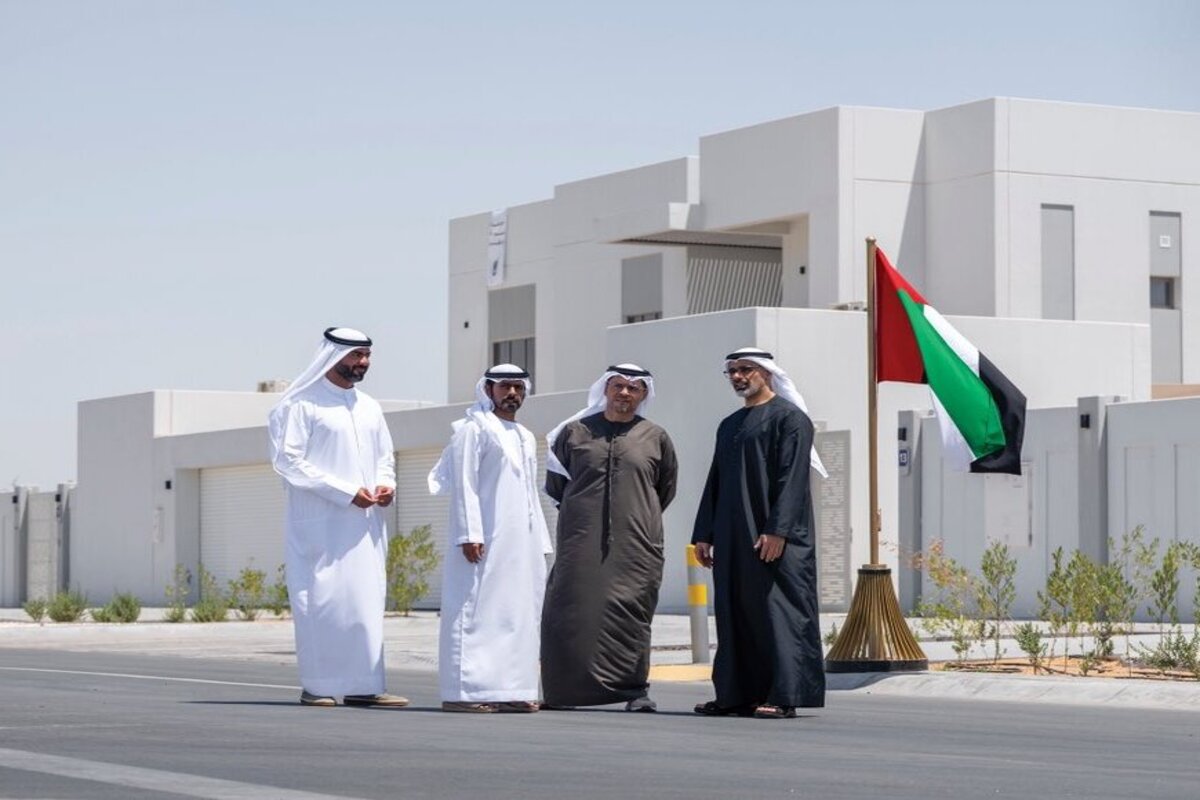
    The housing package, approved under the directives of Sheikh Mohamed bin Zayed Al Nahyan, President of the UAE, includes housing loans amounting to AED2.1 billion for 1,415 citizens, ready-built housing grants valued at AED1.82 billion for 914 citizens, residential land grants worth AED144 million for 185 citizens, and exemptions from housing loan repayments totalling AED142 million for 138 senior citizens, limited-income retirees, and heirs of deceased citizens.

    Abu Dhabi’s disbursement of the first housing package of 2026 comes ahead of Eid Al Fitr and reflects the leadership’s ongoing commitment to enhancing Emirati families’ wellbeing and ensuring their social stability and happiness in an environment that meets their aspirations and needs.

    “We extend our sincere gratitude and appreciation to His Highness Sheikh Mohamed bin Zayed Al Nahyan, President of the UAE, and to His Highness Sheikh Khaled bin Mohamed bin Zayed Al Nahyan, Crown Prince of Abu Dhabi and Chairman of the Abu Dhabi Executive Council, for their continued generous directives, care and commitment to providing citizens with the highest standards of living,” said Mohamed Ali Al Shorafa, Chairman of the Board of Directors of Abu Dhabi Housing Authority.

    Al Shorafa added that the leadership’s directives to disburse this housing benefits package reflect their commitment to meeting citizens’ aspirations and housing needs, enhancing their quality of life and ensuring stability and well-being for Emirati families.

    This package brings the total housing benefits delivered to citizens in Abu Dhabi since the establishment of the Abu Dhabi Housing Authority to more than 132,000, exceeding AED181 billion.

    Hamad Hareb Al Muhairi, Director-General of Abu Dhabi Housing Authority, noted that the new housing benefits package embodies the leadership’s ongoing dedication to ensuring dignified living standards and family stability for Emirati citizens, while serving comprehensive development objectives and underscoring the importance of suitable housing as a cornerstone of a cohesive and prosperous society.

    Al Muhairi further stated that Abu Dhabi Housing Authority continuously works to enhance and develop its programs and services, facilitating citizens’ access to suitable housing, in line with the leadership’s directives and ambitious vision for a prosperous future for citizens.

    The announcement comes as regional authorities continue to prioritize citizen welfare through housing initiatives. Earlier on March 18, Dubai allocated 4,631 residential plots valued at Dh5.3 billion for Emirati citizens across multiple communities. Abu Dhabi’s housing sector has also demonstrated strong momentum, with 75 million square meters of development approved in 2025, marking a 137% year-on-year increase.

  • Dubai Property Transactions Reach Dh3.8 Billion on Monday

    Dubai Property Transactions Reach Dh3.8 Billion on Monday

    Dubai’s real estate market processed transactions worth Dh3.8 billion at the start of the week through 1,194 deals, according to data released by the Dubai Land Department on March 16, 2026.

    Sales accounted for the largest share, reaching Dh2.93 billion through 930 transactions. Among the most prominent deals were properties in Al Yalyis 5 valued at Dh515.6 million, followed by Palm Jebel Ali with transactions worth Dh387 million, and Dubai Land Residence Complex totalling Dh187 million.

    Mortgage transactions reached Dh718.3 million across 243 deals. The largest mortgage was recorded in Dubai South (Dubai Aviation City) at Dh214.4 million, followed by Dubai Studio City at Dh82 million, and Meydan One with mortgages worth Dh81 million.

    Property gifts also contributed to the overall activity, totalling Dh164 million across 21 transactions. The most notable gifts were registered in Mohammed Bin Rashid City – District One valued at Dh43.5 million, Business Bay at Dh34.3 million, and Jumeirah Islands worth Dh28 million.

    The figures reflect continued momentum in Dubai’s property sector, with strong investor interest across a range of residential and mixed-use developments. The single-day volume underscores the market’s resilience as transaction activity remains robust across multiple segments.

    The data arrives as Dubai’s property market staged a sharp recovery in the second week of March 2026, with transaction volumes rising significantly despite continued selling pressure in real estate equities on the Dubai Financial Market.

    Industry observers note that the emirate’s real estate sector continues to attract diverse capital flows, supported by structural advantages and a diversified buyer base. Recent weeks have also seen major development announcements that signal long-term confidence in the market’s trajectory.

    The sustained transaction volumes demonstrate that Dubai’s property market maintains its appeal to both end-users and investors, with activity spread across established communities and emerging districts alike.

  • BEYOND Developments Unveils 8 Million Sq Ft Masterplan at Dubai Maritime City

    BEYOND Developments Unveils 8 Million Sq Ft Masterplan at Dubai Maritime City

    BEYOND Developments announced the details of its flagship masterplan at Dubai Maritime City, a fully integrated urban ecosystem spanning 8 million square feet that combines waterfront living with nature-focused design across two distinct precincts.

    The masterplan, positioned along one of Dubai’s most strategic coastal corridors, represents a large-scale approach to urban placemaking that integrates residential towers, hospitality destinations, retail experiences, educational facilities, healthcare services, and lifestyle amenities within a single cohesive framework.

    Two Districts with Distinct Identities

    The development is structured around two complementary environments: The Bay and The Forest. The Bay district delivers more than two kilometers of continuous waterfront promenades and cycleways connecting residences, hospitality venues, and curated food and beverage experiences along the shoreline, with a focus on absolute oceanfront living and sea-facing residential units.

    The Forest introduces what the developer describes as the region’s first forest district by the sea, anchored by a 65,000 square meter central forest that functions as living infrastructure designed to shape microclimate, movement patterns, and daily wellbeing through shaded trails, wellness spaces, and nature-led public realms.

    Residences within The Forest precinct are oriented toward greenery and privacy while maintaining visual connections to both the sea and Dubai’s skyline, with a significant portion of the masterplan dedicated to landscaped open spaces.

    Infrastructure and Connectivity

    The masterplan incorporates a network of signal-free access points, internal flyovers, and viaduct connections designed to enable efficient movement into and out of the district, while internal circulation relies on shaded boulevards, pedestrian bridges, and interconnected promenades that prioritize pedestrian mobility alongside uninterrupted vehicular traffic flow.

    The wider Dubai Maritime City district provides supporting infrastructure including schools, nurseries, healthcare facilities, wellness-focused hospitality, mosques, and community services, allowing the masterplan to integrate seamlessly into an established urban framework.

    Global Investment Appeal

    The masterplan has attracted buyers and residents from Europe, North America, Asia, Australia, Russia, and the wider MENA region, reflecting its positioning as a destination for international capital, long-term residency, and cross-border real estate investment.

    BEYOND has unveiled eight projects within the district to date, including SARIA, ORISE, SENSIA, THE MURAL, SOULEVER, 31 ABOVE (a commercial tower), TALEA, and KANYON within The Forest precinct, with additional announcements planned for 2026 as the district continues to evolve.

    Market Context

    The announcement comes as Dubai’s property market staged a sharp recovery in the second week of March 2026, with transaction volumes rising 58% despite regional tensions, while industry leaders cite structural advantages and a diversified buyer base as key factors supporting continued capital inflows into the emirate’s real estate sector.

    The masterplan aligns with Dubai’s broader urban strategy focused on wellbeing, connectivity, and sustainable economic growth, positioning the district as a long-term investment destination built to support multi-generational residency and capital appreciation within the emirate’s evolving coastal landscape.

  • Azizi Developments Launches Dh75 Billion Hospitality Expansion with 151 Hotels

    Azizi Developments Launches Dh75 Billion Hospitality Expansion with 151 Hotels

    The luxury property will rise within the Azizi Riviera community in Mohammed Bin Rashid City, representing the first project in a broader pipeline designed to support the emirate’s tourism ambitions.

    The programme, delivered through Azizi’s dedicated hospitality arm, includes 100 four-star hotels, 50 five-star hotels, and one seven-star property. More than 90% of the portfolio will be located in Dubai.

    Once completed, the developments are expected to add approximately 60,000 room keys to Dubai’s hospitality inventory while generating over 75,000 jobs across the sector. Several hotel projects are already progressing through design, development, and construction stages, with Azizi managing the programme through its in-house capabilities.

    “Dubai has consistently proven itself to be one of the world’s most stable, forward-looking and opportunity-rich destinations. The emirate’s leadership has built an environment that inspires confidence among investors and developers, enabling bold projects that contribute to its global standing,” said Mirwais Azizi, Founder and Chairman of Azizi Developments.

    One of the most prominent projects within the portfolio will be a seven-star hotel inside Burj Azizi, the developer’s planned landmark tower on Sheikh Zayed Road. The skyscraper is expected to become the world’s second tallest building once completed, introducing a new luxury hospitality destination in the city.

    Azizi emphasized that the investment reflects confidence in Dubai’s long-term economic trajectory and aligns with the vision of Sheikh Mohammed bin Rashid Al Maktoum. “Our Dh75 billion investment in hospitality reflects our long-term commitment to Dubai and our strong belief in its continued growth as a global tourism hub,” he stated.

    The developer is also planning to launch the Azizi Hospitality Academy, an institution designed to train hospitality professionals and provide internationally recognized programmes for the UAE’s expanding tourism workforce.

    The announcement comes as Dubai’s real estate and tourism sectors continue to demonstrate resilience. The emirate’s brokerage commissions surged 31% in 2025, while new regulatory frameworks, including mandatory building safety standards, aim to ensure sustainable growth across the sector.

  • Abu Dhabi Property Market Records $1.16 Billion Weekly Sales

    Abu Dhabi Property Market Records $1.16 Billion Weekly Sales

    The emirate’s real estate sector maintained strong performance in early March, with a villa in Hidd Al Saadiyat selling for Dh88 million, marking the highest ready property transaction of the week, according to Abu Dhabi Real Estate Centre (Adrec) data released March 10, 2026.

    A duplex at Four Seasons Private Residences on Saadiyat Island fetched Dh68 million, representing the week’s top off-plan sale. Al Reem Island alone recorded 115 transactions valued at Dh189 million, underscoring sustained demand across multiple segments.

    The weekly figures reinforce Abu Dhabi’s growth trajectory following exceptional 2025 performance. Total transaction volumes reached approximately 22,400 deals last year, up 55% year-on-year, while aggregate sales value climbed to Dh73.2 billion.

    “Overall, Abu Dhabi’s residential market enters 2026 from a position of strength, supported by disciplined supply, strong investor confidence, robust demand drivers, and a supportive macroeconomic backdrop,” according to Cavendish Maxwell.

    Apartments dominated 2025 activity, accounting for 66.1% of transactions, while villas and townhouses recorded strong growth driven by families and high-net-worth individuals seeking larger living spaces.

    Residential stock expanded with approximately 7,400 units completed in 2025, bringing total supply to around 315,000 units. While 15,900 units are projected for 2026 completion, actual deliveries are likely to range between 6,500-9,000 units based on recent handover trends.

    Pricing momentum remained robust across both sales and rental markets. Apartment sales prices increased 15.1% year-on-year, while villa prices rose 12.2%. Rental growth showed apartment rates up 12.5% and villa rents climbing 5.5%, with elevated rental levels reinforcing sales demand as tenants increasingly view homeownership as a cost-effective long-term option.

    The market’s resilience mirrors trends across the UAE, where Dubai recorded sustained momentum despite geopolitical headwinds. Abu Dhabi’s strong fundamentals entering 2026 position the emirate for continued growth, with sales prices and rental rates expected to record further increases in the near term, though growth pace will vary across communities as new supply enters the market.

    The market is expected to remain resilient throughout 2026, supported by measured supply delivery that prevents near-term imbalances while maintaining pricing strength across prime communities.

  • CBA Real Estate Surpasses Dh2 Billion in Dubai Property Sales

    CBA Real Estate Surpasses Dh2 Billion in Dubai Property Sales

    The milestone reflects years of consistent deal-making across residential and investment sectors, including apartments, villas, and off-plan developments throughout Dubai.

    Unlike firms pursuing rapid expansion, CBA Real Estate has built its reputation on long-term relationships with investors and a careful, disciplined approach to property selection, according to founder Salman Bin Ali.

    Two billion dirhams in transactions is an important milestone for our company. But it is really the result of hundreds of individual deals where clients made thoughtful, well-informed investment choices.

    The firm has positioned itself as a brokerage that prioritizes long-term value over short-term market trends in Dubai’s fast-moving property environment.

    Patience Over Speed

    Salman Bin Ali emphasized that success in Dubai’s real estate market comes from strategic patience rather than reactive decision-making.

    A lot of investors believe success comes from moving quickly. In reality, the real advantage comes from patience, waiting for opportunities that truly make sense rather than chasing every new project.

    Over the years, the company has advised a diverse range of international clients seeking both lifestyle properties and investment opportunities, with many returning for repeat investments.

    Repeat Business Model

    The firm’s approach has generated strong client retention, with investors expanding their portfolios through CBA Real Estate after initial successful transactions.

    In this industry, relationships matter. When clients see positive results from their first investment, they naturally come back to expand their portfolio.

    The achievement comes as Dubai’s property market continues to demonstrate strength, with the emirate attracting investors globally through its expanding economy, robust infrastructure, and international business connectivity.

    Dubai’s real estate sector has shown sustained momentum throughout early 2026, with foreign investors maintaining active participation despite regional uncertainties.

    Salman Bin Ali outlined the firm’s continued focus on value-driven advisory.

    Dubai remains one of the most exciting property markets in the world. Our focus will continue to be on helping investors make decisions that deliver value not just today, but for many years into the future.

    The Dh2 billion milestone underscores the viability of relationship-based real estate advisory in a market often characterized by high-volume transaction models and aggressive growth strategies.

  • Indian Investors Lead Dubai Property Market Despite Regional Tensions

    Indian Investors Lead Dubai Property Market Despite Regional Tensions

    Indian investors are once again emerging as the dominant force behind Dubai’s booming real estate market, reinforcing the emirate’s status as one of the most attractive overseas property destinations for Indian capital despite rising geopolitical tensions in the Gulf.

    According to a research note by property consultancy Anarock Group, Indian nationals account for roughly 20–22 per cent of all foreign property purchases in Dubai, making them the largest overseas investor group in the market. The scale of Indian participation reflects a combination of financial returns, geographical proximity and long-standing economic ties between India and the UAE.

    Industry estimates suggest Indian investors purchased Dh35 billion to Dh40 billion worth of residential properties annually in recent years, highlighting the scale of capital flowing into the emirate from India.

    Attractive rental yields, strong capital appreciation and the stability of the UAE dirham—which is pegged to the US dollar—continue to make Dubai one of the most compelling global property markets for Indian investors. Residential properties in Dubai typically generate annual rental yields between 6 and 9 per cent, among the highest in major global property markets such as London, New York and Singapore.

    Dubai’s property market entered the current period of geopolitical uncertainty after completing one of the strongest growth cycles in its history. According to Dubai Land Department data analysed by Anarock and other industry consultancies, total real estate transactions reached Dh917 billion ($250 billion) in 2025, the highest value ever recorded in the emirate.

    “Transaction volumes crossing 270,000 deals clearly reflect strong investor participation and deep liquidity in the market. Residential real estate has been the main growth engine, and since 2021 housing prices in Dubai have risen roughly 60–75 per cent, making it one of the strongest housing cycles globally in the post-pandemic period.”
    — Dr Prashant Thakur, Executive Director and Head of Research and Advisory at Anarock Group

    Global property consultancies have also highlighted the exceptional performance of Dubai’s housing market. According to Knight Frank, the emirate recorded more than 500 residential sales worth over $10 million in 2025, underscoring the extraordinary growth of its luxury property segment and the rising influx of wealthy global buyers.

    Indian investors have been particularly active in both luxury and mid-market segments, with demand driven by high rental yields and long-term wealth preservation strategies.

    Indian Developers Expand Footprint

    Beyond individual investors, Indian developers are also expanding their footprint in Dubai’s real estate landscape. According to Anarock, companies with Indian roots now account for around 8–10 per cent of the development pipeline in Dubai.

    Among the most prominent players is Sobha Realty, which developed the luxury Sobha Hartland community in Mohammed Bin Rashid City and continues to expand its portfolio of premium projects. Danube Properties, another developer founded by Indian entrepreneur Rizwan Sajan, has launched more than 20 residential projects in Dubai and remains a major player in the mid-market segment.

    Other Indian groups, including Shapoorji Pallonji Real Estate and Casagrand, have also begun exploring high-end residential developments in the emirate. The growing footprint of Indian developers mirrors the broader expansion of Indian capital into Dubai’s property ecosystem, reinforcing the deep economic linkages between the two economies.

    Geopolitical Tensions and Market Resilience

    The latest geopolitical tensions introduce a psychological factor that could influence investor behaviour in the near term. However, Dubai’s position as a global financial hub continues to provide strong structural support to its real estate sector.

    “The current geopolitical tensions will undoubtedly introduce a degree of caution among investors,” the Anarock report noted. “Transaction volumes may moderate in the near term as buyers assess the evolving risk environment. Yet Dubai’s position as a global financial and lifestyle hub continues to provide strong structural support to its real estate sector.”

    Another potential transmission channel is tourism—a key pillar of Dubai’s economy. The broader Middle East tourism sector is estimated to be worth around $367 billion annually, and prolonged regional instability could dampen travel sentiment across the region. Such a scenario would primarily affect short-term rental apartments, hospitality properties and retail assets located in tourist-heavy districts.

    However, Dubai’s housing demand is not solely dependent on tourism. One of the emirate’s strongest structural supports is its rapidly expanding population. Dubai’s population crossed four million residents in 2025, driven largely by expatriate inflows, according to official statistics.

    The emirate’s property market also benefits from one of the most diversified investor bases globally, with buyers from more than 150 nationalities participating in the market. This diversity reduces reliance on any single investor group, helping the market remain resilient even during periods of geopolitical volatility.

  • Alabbar: Dubai Property Market Remains Strong Despite Regional Tensions

    Alabbar: Dubai Property Market Remains Strong Despite Regional Tensions

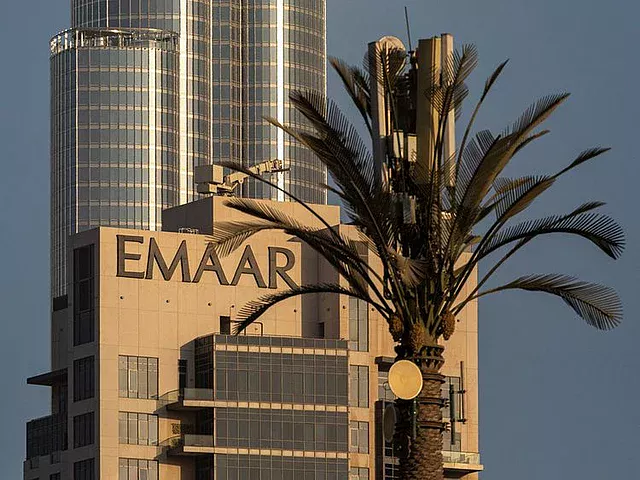
    Dubai’s real estate sector remains fundamentally strong as global capital continues to flow into the emirate, according to Mohamed Alabbar, who told CNBC that the UAE’s long-term development strategy and stable leadership have created an environment that withstands external pressures.

    “It’s the global business hub, and its success, its limelight, its reflection of what life should be and what success should be, what prosperity should be, what positive you should be is this place,” Alabbar said, adding that attempts to undermine that success will ultimately fail.

    Fundamentals Built Over Four Decades

    Alabbar acknowledged that social media speculation can amplify fears during periods of geopolitical tension but emphasized that the UAE’s track record demonstrates consistency and wisdom. “If you were to look and study the trajectory of UAE policies, you will see consistency, you will see sustainability, you will see wisdom, you will see stability,” he stated.

    According to the Emaar founder, the country’s leadership has spent more than 40 years building systems designed to deliver prosperity for residents and investors. Recent events have only reinforced confidence in the nation’s safety and infrastructure, he noted.

    “I promise you what happened will only strengthen what this country is all about.”

    Capital Flows Accelerate, Not Reverse

    Addressing concerns that capital moved to the UAE during global crises could now begin to leave, Alabbar pointed to recent market performance as evidence of sustained confidence. “If you were to look at the past two years, just look at our business, the real estate business alone, we had an increase of almost 70% in 2023, we had 40% in 2024, we have another 40% in 2025,” he said.

    The developer said sophisticated investors recognize the strength of the UAE’s fundamentals and are likely to deepen their commitments rather than pull back. Dubai’s real estate market recorded AED2.46 billion in transactions on March 2, 2026, demonstrating sustained activity levels.

    “Smart capital understands that a country like this, with all these principles and stable leadership and the safety that it has shown that it can deliver,” Alabbar said. “People with true capital understand this and they appreciate this and they will double down on investing anyway.”

    No Signs of Market Weakness

    Alabbar said current demand shows no indication of softening. He recounted his own recent experience searching for an apartment in Dubai: “Myself, I’m looking for one building, one apartment overlooking the sea that I didn’t buy in, and the past two days I’ve been looking and it seemed like nobody want to budge. Nobody want to give a discount.”

    That reflects a market where sellers remain confident and demand stays firm. While consumer confidence may soften temporarily during periods of uncertainty, the country’s policies tend to restore confidence quickly, he added.

    Correction Forecasts ‘Unrealistic’

    Some analysts have warned that Dubai’s property market could face a correction as new supply enters the market, with Fitch Ratings recently suggesting prices could decline by up to 15%. Alabbar dismissed that scenario as unlikely.

    “I know my business well. I know the banking, I know the business environment, because I operate in multi industries,” he said. “The banking system is so strict, amazing discipline. Government policies are just getting better and better. I have no concerns.”

    Asked directly whether a 15% correction was realistic, Alabbar was unequivocal: “In my opinion, the way I do, the way I look at my business and listen, I look at so much data, I think it’s very unrealistic.”

    Recent high-value transactions support his assessment. Dubai recorded a Dh422 million apartment sale at Aman Residences on March 5, 2026, marking the third most expensive apartment transaction in the emirate’s history.

    New Supply Could Stabilize Growth

    Dubai is preparing for a wave of new property supply expected in 2026 and 2027. Alabbar said additional inventory could benefit the market by preventing prices from rising too quickly and maintaining the city’s competitiveness.

    “I said this a year ago. The supply that’s coming in in 2026 and 2027 will be good for the market,” he stated. “We are not here for the short run. We are here for a long time to do business.”

    The developer said he prefers a market where property prices rise gradually—around 5% to 6% annually—rather than experiencing sharp spikes that could undermine long-term stability. “Jacking up prices too high doesn’t benefit anybody,” he said.

    Real estate costs play a significant role in inflation, contributing approximately 50% to 52% of overall price increases, Alabbar noted. Maintaining balanced growth helps both investors and residents. “We don’t also want investors and people who come here for their jobs to really feel that the city is too expensive,” he added.

    Long-Term Stability Over Short-Term Gains

    Alabbar said the goal for Dubai’s property sector should be stability rather than aggressive price increases. Developers are already generating strong returns at current price levels, and maintaining balanced growth will help sustain Dubai’s appeal as a global destination.

    “Developers are making enough money with these prices. We should not shoot too high,” he said. “I want stability. I want long term.”

    A modest adjustment driven by new supply could help ease pressure on housing costs without undermining the broader market, he concluded. Emaar recently confirmed that UAE property sales reached Dh17.2 billion in the first two months of 2026, marking a 118% increase year-on-year.

  • Dubai Records Dh422 Million Apartment Sale Amid Regional Tensions

    Dubai Records Dh422 Million Apartment Sale Amid Regional Tensions

    A luxury apartment spanning 31,201 square feet at Aman Residences Dubai on the Jumeirah Peninsula has been sold for Dh422 million ($115 million), marking one of the most significant property transactions in the emirate’s history amid heightened regional uncertainty.

    The deal, confirmed by fäm Properties, was completed off-plan and valued at Dh13,525 per square foot according to DXBinteract, the data platform developed in partnership with Dubai Land Department.

    Firas Al Msaddi, CEO of fäm Properties, said the transaction reflects fundamental structural strength in Dubai’s real estate sector.

    “The sale of an ultra-luxury unit at this level is particularly relevant in the current circumstances. It underlines the fact that the Dubai real estate market is structurally stronger than it has ever been. Over 70 per cent of transactions are now end-user driven, not speculative. The buyer base is globally diversified,” Al Msaddi stated.

    He emphasized that mortgage activity has doubled in four years and the regulatory environment has matured, with market fundamentals remaining unchanged despite regional events.

    The transaction comes as Dubai’s ultra-prime segment continues to demonstrate resilience. The sale represents the third most expensive apartment ever recorded in the emirate.

    Market analysts point to shifting buyer dynamics supporting the sector’s evolution. End-users transitioning from rental to ownership, continued international capital participation, and expansion of freehold corridors across strategic districts have broadened the participation base.

    Al Msaddi noted that UAE authorities’ commitment to safety and security sends a powerful message to investors globally. “It’s a sale which says so much about the UAE as a whole, and in this case, in particular, about Dubai as one of the world’s leading destinations for wealthy real estate investors,” he added.

    The market’s momentum is supported by disciplined supply pipelines and phased project launches that continue to reinforce pricing stability across key communities. More than 70 per cent of current transactions are driven by end-users rather than speculation, with a globally diversified buyer base providing additional market stability.

    This transaction reinforces Dubai’s position as a safe-haven real estate market, demonstrating that high-value property activity continues despite external pressures, with investors maintaining confidence in the emirate’s long-term prospects and governance framework.