Tag: Dubai real estate

  • Dubai Launches Flexi Rents Initiative for Monthly Rental Payments

    Dubai Launches Flexi Rents Initiative for Monthly Rental Payments

    The initiative focuses on introducing a flexi-rent model that broadens tenants’ options through a variety of payment plans, including monthly, quarterly and semi-annual installments. It is supported by incentives and value-added packages offered by participating entities, helping to enhance rental market stability, improve quality of life and provide housing solutions tailored to the needs of diverse segments of society.

    To support the initiative’s implementation, DLD signed cooperation agreements with Wasl Properties, Deyaar Property Management, Dubai World Real Estate, Modern Real Estate, Dubai Investment Real Estate, SBK Real Estate, Rocky Real Estate, SRG Properties, Harbor Real Estate, Driven Properties and Al Showaib Real Estate.

    The move reflects DLD’s commitment to providing more flexible rental solutions that respond to evolving market needs, further strengthening Dubai’s position as a leading global real estate destination that offers more efficient and sustainable housing models for various segments of society.

    Under the cooperation agreements, the Flexi Rent model will be applied to vacant or eligible rental units in Dubai owned or managed by the participating partners. This will be achieved by offering flexible payment options and providing rental incentives, discounts, or promotional packages for new tenants, in accordance with the partners’ approved policies and in compliance with the laws and regulations in force in the Emirate of Dubai.

    DLD will provide the regulatory and coordination framework necessary for the implementation of the initiative, including supplying partners with relevant guidelines, updates and requirements, supporting technical integration with approved systems and monitoring the initiative’s overall performance in coordination with participating entities.

    The department will also support the visibility of partners’ participation through its official channels, including the Dubai REST app, the department’s website and its various digital platforms, in accordance with approved procedures and regulations.

    Dubai Land Department affirmed that the Flexi Rent initiative is an extension of its ongoing efforts to develop innovative and adaptable real estate solutions that enhance the market’s ability to respond to changing dynamics while meeting the community’s evolving needs. The department noted that providing tenants with a range of payment options contributes to improving quality of life, strengthening the stability of the rental market, and supporting the development of a more sustainable and efficient real estate ecosystem.

    It further emphasized that collaboration with the private sector is a key pillar in accelerating the adoption of new operational models that create tangible value for customers.

    The initiative is closely aligned with the objectives of the Dubai Real Estate Strategy 2033, which aims to enhance the sector’s competitiveness and reinforce Dubai’s position as a leading global destination for investment and living through an advanced real estate ecosystem that places people and their quality of life at the heart of its priorities.

    With the launch of this initiative, DLD continues to advance its vision of building a resilient and sustainable real estate sector founded on innovation and meaningful partnerships, while delivering practical solutions that enhance quality of life and respond to evolving economic and social needs. The initiative represents a further step within the department’s integrated roadmap to develop a more future-ready and competitive real estate ecosystem, supporting the objectives of the Dubai Economic Agenda D33 and reinforcing the emirate’s position as a leading global destination for living, working and investment.

    The flexible payment structure comes as Dubai’s real estate market attracts $272 billion in projected investment over the next five years, driven by rapid population growth and foreign capital inflows. Meanwhile, neighboring Abu Dhabi froze all rent increases in early June to stabilize housing costs amid double-digit growth in some segments.

  • Dubai Launches ‘Flexi Rents’ Initiative for Monthly Rental Payments

    Dubai Launches ‘Flexi Rents’ Initiative for Monthly Rental Payments

    Dubai tenants now have access to significantly more flexible rental payment options following the launch of a new affordability initiative that allows residents to spread housing costs through monthly instalments and other customized payment arrangements.

    The programme, branded as ‘Flexi Rents’, was unveiled by the Dubai Land Department (DLD) on June 23, 2026, and aims to reduce the financial burden of large upfront payments that have long characterized Dubai’s rental market.

    Under the initiative, tenants can choose from a range of payment schedules including monthly, quarterly and semi-annual instalments, depending on the property and participating landlord. In some cases, payment schedules may be extended for up to 12 months, enabling residents to better align rent payments with their monthly income.

    Relief from Upfront Payment Pressure

    Khalid Al Shaibani, Director of Rental Affairs Section at Dubai Land Department, said the initiative reflects Dubai’s commitment to improving housing stability and ensuring residents have access to practical rental solutions.

    “The Affordable Rental Initiative reflects Dubai’s commitment to promoting housing stability and supporting residents through flexible and accessible rental solutions,” Al Shaibani said.

    Traditionally, most Dubai tenants pay rent through one, two, four or six cheques covering significant portions of their annual rent. While this system has functioned for years, it often requires residents to commit substantial amounts of money upfront, creating financial pressure for households managing other living expenses.

    Additional Concessions and Benefits

    Beyond flexible payment schedules, the initiative introduces several concessions designed to ease the cost of renting. Depending on the property owner or management company, tenants may benefit from grace periods, revised payment schedules and promotional offers. Some participating landlords may also waive rental increases or administrative fees typically associated with delayed cheque payments.

    Tenants will be able to make payments through credit cards, debit cards and traditional cheques, offering greater convenience and flexibility. Importantly, the scheme is available not only to new tenants but also to existing residents who can approach participating landlords to explore whether their payment arrangements can be revised under the Flexi Rents framework.

    Twelve Major Property Companies on Board

    To support the rollout, DLD signed cooperation agreements with 12 major real estate companies operating in Dubai. These include Wasl Properties, Deyaar Property Management, Dubai World Real Estate, Modern Real Estate, Dubai Investment Real Estate, SBK Real Estate, Rocky Real Estate, SRG Properties, Harbor Real Estate, Driven Properties and Al Showaib Real Estate, among others.

    Under the agreements, participating companies will apply the Flexi Rents model to eligible vacant and occupied residential units within their portfolios. They will also manage tenancy contracts, process payments and ensure tenants are aware of the flexible options available to them.

    DLD will provide the regulatory and operational framework required for implementation, including technical support, system integration and oversight. The department will also promote participating properties through its official channels, including the Dubai REST application and other digital platforms.

    Market Context and Strategic Alignment

    The launch comes as Dubai’s property market continues its rapid expansion, fuelled by population growth, strong economic activity and sustained demand for housing across multiple income segments.

    According to DLD data, nearly 1.2 million tenancy contracts, including both new leases and renewals, were registered in Dubai last year, highlighting the scale and importance of the emirate’s rental sector.

    The initiative aligns with the Dubai Real Estate Sector Strategy 2033, which seeks to enhance the competitiveness of the property market through innovation, sustainability and customer-focused services. It also supports the goals of the Dubai Economic Agenda D33, which aims to strengthen Dubai’s position among the world’s leading cities for business, investment and quality of life.

    Similar initiatives are emerging across the UAE. Abu Dhabi recently implemented a rent freeze to stabilize housing costs amid growing demand, while efforts to improve affordability have gained momentum across the region.

    Expansion and Future Initiatives

    While the initial phase covers 12 participating companies, officials expect the programme to expand gradually across Dubai’s real estate market. Al Shaibani indicated that Flexi Rents is only the first of several initiatives aimed at improving housing affordability and customer experience.

    “This is only the beginning. More initiatives supporting the same objective of making Dubai the best city to live, work and enjoy will be announced in the coming months,” he said.

    DLD will monitor the pilot phase through key performance indicators including the number of units enrolled, tenancy contracts signed under the Flexi Rents model, occupancy rates, tenant payment compliance and customer feedback.

    For thousands of tenants facing rising housing costs, the ability to pay rent monthly rather than in large lump sums could offer welcome relief while reinforcing Dubai’s efforts to create a more inclusive and resident-friendly housing market.

  • Dubai Real Estate to Attract $272 Billion Over Next Five Years

    Dubai Real Estate to Attract $272 Billion Over Next Five Years

    W Capital Real Estate has projected that the total value of new projects launched or developed in Dubai will surpass AED1 trillion ($272.3 billion) over the next five years, reflecting sustained momentum across the emirate’s property sector.

    The outlook is underpinned by strong population growth, continued inflows of foreign investment, and a steady pipeline of mega-project announcements from leading developers, reinforcing Dubai’s position as one of the world’s most dynamic property investment hubs.

    New Phase of Urban and Investment Expansion

    Walid Al Zarooni, CEO of W Capital Real Estate, affirmed that Emaar’s AED200 billion development announcement clearly indicates that the market is moving toward a new phase of urban and investment expansion, reinforcing expectations of continued mega-project launches in the future.

    Al Zarooni said that the company’s estimates are based on projects announced by major real estate developers, project launch rates over the past years, and development plans linked to Dubai’s economic agenda and the emirate’s D33 population and urban growth targets, which support continued demand for various types of real estate assets.

    He noted that Dubai’s real estate market is witnessing a qualitative shift in the nature of projects offered. It is no longer limited to traditional residential complexes but now includes integrated cities, mixed-use projects, business centers, and community projects that rely on the latest sustainability concepts and smart infrastructure, reflecting the evolving needs of both investors and residents.

    Population Growth and Infrastructure Drive Demand

    The rapid population growth, along with Dubai’s ability to attract global talent, entrepreneurs, and investors, is a key driver of real estate demand across residential, commercial, and hospitality segments. This trend is giving developers greater clarity and confidence to expand and pursue long-term project development.

    Al Zarooni further highlighted that Dubai’s advanced regulatory framework, modern infrastructure, economic stability, and overall resilience have strengthened its status as one of the world’s most attractive real estate destinations, allowing it to continue drawing capital and long-term investment despite broader global economic and geopolitical uncertainty.

    Dubai is well-positioned to maintain its leadership in regional real estate growth, noting that the wave of recently announced mega-projects underscores strong confidence from both developers and investors in the emirate’s long-term outlook.

    He also pointed out that ongoing large-scale infrastructure developments, including enhancements to transport and service networks, are expected to further boost the real estate sector. These initiatives are set to unlock new urban districts and generate a wider range of investment opportunities in the years ahead.

    Al Zarooni concluded that these developments mark the start of a new phase of urban expansion, with expected projects set to exceed AED1 trillion in total value over the next five years.

    The projection comes as Dubai continues to demonstrate market resilience, with neighboring Sharjah recording strong property performance and Abu Dhabi approving major developments across the UAE.

  • Six Dubai Communities See Property Prices Double in Five Years

    Six Dubai Communities See Property Prices Double in Five Years

    New analysis from Bayut reveals that buyers who entered Dubai’s property market during the post-Covid recovery have witnessed extraordinary returns, with advertised sale prices climbing by as much as 153% in the emirate’s most sought-after communities over a five-year period.

    The UAE property portal compared average advertised prices per square foot in May 2021 with April 2026 using its proprietary Price Index, showing that prices across key Dubai communities have risen by between 41% and 153%.

    Jumeirah Islands topped the growth chart, with advertised prices surging from Dh1,523 per square foot in May 2021 to Dh3,844 in April 2026—a remarkable 153% increase. Jumeirah Golf Estates followed with 119% growth, while Jumeirah Lake Towers recorded a 115% rise over the same period.

    Villa Communities Drive Market Gains

    Established family-oriented communities demonstrated some of the strongest price appreciation, underlining how end-user demand has underpinned long-term value across Dubai’s residential landscape.

    The Meadows recorded a 110% increase, while The Springs rose by 109%. Jumeirah Park climbed 106%, with advertised prices moving from Dh1,076 to Dh2,214 per square foot. Arabian Ranches posted a 95% increase, reinforcing the appeal of mature villa communities among families and long-term buyers.

    Dubai South registered a 92% rise, pointing to continued demand in infrastructure-led locations, while Dubai Hills Estate climbed 87%. Jumeirah Village Circle rose 84%, with advertised prices increasing from Dh827 to Dh1,521 per square foot.

    “Looking back at May 2021, the market was still recovering from the impact of Covid-19, and many buyers were understandably cautious. However, those who entered the market at that time have seen significant gains across several of Dubai’s most established and emerging communities,” said Fibha Ahmed, VP of Sales at Bayut.

    Ahmed added that the current environment differs from 2021, but the underlying lesson remains relevant: “uncertainty can create opportunity for buyers who are guided by data, long-term fundamentals and a clear understanding of market value.”

    Premium Districts Attract Capital

    High-demand lifestyle and waterfront locations also recorded substantial gains during the review period.

    Palm Jumeirah saw advertised prices rise by 83%, from Dh2,452 to Dh4,471 per square foot. Business Bay increased by 78%, while Dubai Marina rose by 67% and Downtown Dubai climbed 64%.

    The findings emerge as Dubai’s market increasingly evolves into a long-term investment destination, with resident investors now accounting for over half of total property investments by value.

    Luxury Off-Plan Market Remains Robust

    The latest data also points to continued strength at the upper end of the market. Dubai developers recorded Dh4.96 billion in off-plan sales for homes priced above Dh5 million in May 2026, according to market analysis from Keturah based on DXBinteract data.

    Villa buyers accounted for Dh2.51 billion across 184 transactions, while apartment sales reached Dh2.45 billion from 207 deals. That translates to 391 luxury off-plan homes sold during the month—an average of 12 homes worth more than Dh5 million changing hands every day, with an average deal value of Dh12.7 million per property.

    The strongest villa activity came in the Dh10 million to Dh20 million bracket, where 60 transactions generated Dh834.2 million in developer off-plan sales. Another 23 villa deals worth Dh746.3 million were recorded in the Dh20 million to Dh50 million range.

    Apartment sales concentrated in the Dh5 million to Dh10 million bracket, which accounted for 158 of the 207 transactions recorded during the month.

    Bayut noted the findings come at a time when regional uncertainty has prompted some buyers to adopt a more cautious approach. However, previous periods of hesitation have also created opportunities for buyers who relied on pricing data and assessed fundamentals before momentum returned.

    “Dubai’s property market has repeatedly shown its ability to recover, recalibrate and move forward with strength,” Ahmed noted. “What matters in moments like these is not reacting emotionally, but using the right information to identify where genuine value exists.”

    The combined data shows a market that has delivered strong five-year gains across established communities while continuing to attract large-ticket off-plan investment, with Dubai’s long-term appeal remaining tied to prime supply, infrastructure growth, and sustained investor confidence.

  • Emaar to Unveil Dh200 Billion Dubai Masterplan for 150,000 Residents

    Emaar to Unveil Dh200 Billion Dubai Masterplan for 150,000 Residents

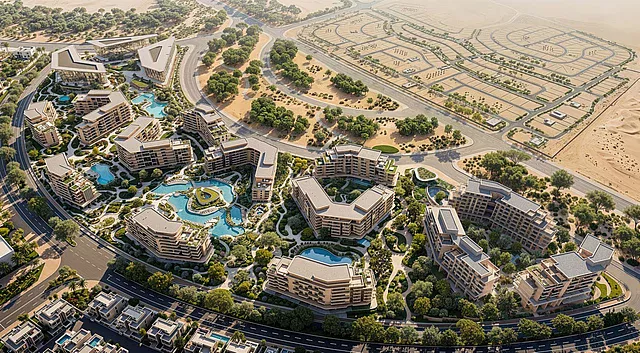
    The project will feature a total built-up area exceeding 4.5 million square metres, incorporating a comprehensive mix of residential towers, villas, mansions, offices, retail, hospitality, cultural spaces and civic amenities.

    The company has not yet disclosed the name or precise location of the development, but confirmed the full unveiling is imminent.

    A City Within the City

    The project is being described as a self-sustaining urban district, combining homes, workplaces, schools, healthcare, mosques, retail and cultural venues within a walkable community.

    Emaar said the development will be structured around the principles of the 20-minute city, with proposed metro connectivity, smart mobility infrastructure, EV-friendly pathways, cycling routes and app-integrated community services.

    The masterplan will include landmark residential towers with views oriented towards Burj Khalifa, Burj Al Arab and Palm Jumeirah, alongside an exclusive gated villa enclave with five and six-bedroom residences and mansions.

    At the centre of the district, a high street and grand boulevard will bring together shops, restaurants, cafes and cultural experiences, giving the development a retail and lifestyle spine similar to the integrated communities that have shaped Dubai’s real estate market over the past two decades.

    Villas, Towers and Green Space

    The new district will combine high-density urban living with resort-style residential pockets, including private gardens, water features, parks, community lagoons, lakes, shaded promenades and dedicated cycling paths.

    A central district park is planned as one of the main public spaces, with sports courts, event lawns, splash parks, beach areas and outdoor wellness zones.

    The masterplan will be divided into five character zones: a Business Hub, an Urban District, a Young Families Cluster, a Family Living Zone and an exclusive villa enclave.

    We have always believed that the greatest cities are not built, they are dreamed. What we are about to reveal is our most extraordinary dream yet: a place where the finest architecture, the most immersive landscapes and the most advanced thinking about how people live come together in one magnificent vision.

    Mohamed Alabbar, Founder of Emaar Properties, emphasized the project’s scale and ambition.

    “This development reflects our deep confidence in the future of the UAE and our belief in the visionary leadership that continues to create an environment where ambition, innovation and bold ideas can thrive,” he added.

    The announcement follows Emaar’s record Dh22.4 billion in Q1 sales, demonstrating sustained investor appetite for the developer’s projects. Dubai Holding recently became Emaar’s largest shareholder with a 29.73% stake, reinforcing institutional confidence in the company’s long-term strategy.

    The project reflects broader momentum in Dubai’s property sector, where transactions climbed 31% year-on-year in Q1 2026 despite regional challenges.

  • BEYOND Developments Unveils Dh4 Billion The Yards Masterplan in City of Arabia

    BEYOND Developments Unveils Dh4 Billion The Yards Masterplan in City of Arabia

    BEYOND Developments has introduced its first inland masterplan in Dubai, positioning the developer in one of the emirate’s most strategically located growth corridors. The Yards represents a significant expansion beyond the company’s existing waterfront portfolio.

    The 2.3 million square foot development will deliver 1,560 residential units ranging from one- to three-bedroom apartments. The Mediterranean-inspired design centers on a one-kilometre green spine, with 70 per cent of the total area dedicated to open landscape.

    Adil Taqi, CEO of BEYOND Developments, described the project as a long-term strategic investment.

    “The Yards is a Dh4 billion commitment to a district where scale, connectivity, and a genuine scarcity of quality supply are converging to create one of the most compelling long-term investment cases in Dubai,” Taqi said. “At BEYOND, we anticipate demand rather than follow it, and every masterplan we bring to market is an expression of that conviction.”

    The development benefits from proximity to Dubai’s expanding metro network and offers direct connectivity to Dubai International Airport within 25 minutes and Al Maktoum International Airport within 38 minutes. The location places The Yards within an area expected to see sustained demand as infrastructure investment advances.

    Arancia Yards, the masterplan’s inaugural residential cluster, features 272 residences across three low-rise buildings. The cluster is organized around a 4,200 square metre landscaped sunken garden, with 3,000 square metres of rooftop terraces and more than 2,000 square metres of retail and F&B space at ground level.

    Ramzi Rahal, chief development officer, emphasized the project’s design philosophy. “Arancia is the first expression of The Yards vision, introducing a low-rise, nature-led community designed around wellbeing, connectivity, and everyday quality of life,” he stated.

    The launch reflects continued confidence in Dubai’s growth trajectory, supported by demographic expansion and infrastructure investment. The project adds to BEYOND’s portfolio, which already includes developments on Palm Jumeirah, Dubai Islands, Dubai Maritime City, and Ras Al Khaimah.

    City of Arabia’s positioning as a growth corridor aligns with broader market dynamics. The area is benefiting from improved connectivity and infrastructure development, factors that have historically preceded property value appreciation in Dubai’s emerging districts.

    The Yards marks BEYOND’s strategic diversification into inland Dubai, complementing the developer’s established waterfront presence. The focus on low-rise, landscape-integrated design addresses a segment of the market where premium supply remains limited, as Dubai’s market increasingly attracts long-term investors.

    With 56% of global investors planning increased UAE exposure, developers continue to introduce ambitious projects across multiple segments. The Yards’ emphasis on connectivity and open space positions it to capture demand from both end-users and investors seeking alternatives to high-density corridors.

  • Dubai First-Time Home Buyers Get More Perks Under Expanded Programme

    Dubai First-Time Home Buyers Get More Perks Under Expanded Programme

    The programme, jointly launched by the Dubai Land Department (DLD) and Dubai Department of Economy and Tourism (DET) in July 2025, has already generated more than Dh5 billion in residential transactions and helped over 3,200 residents purchase their first homes. Nearly 45,000 residents have registered in less than a year.

    The latest expansion adds nine new developers: Arada, Dubai World Trade Centre, IRTH Group, Manam, Qube Development, Reportage Properties, SAMANA Developers, Sky View Real Estate and 4Direction Developments. This broadens the range of available homes across different communities, budgets and property types.

    Who Can Apply?

    The programme is open to UAE residents of any nationality who are aged 18 or above, do not own a freehold residential property in Dubai, and are purchasing a property worth up to Dh5 million. Applications can be submitted through the Dubai Land Department website or the Dubai REST app.

    Eligible applicants receive a QR code that unlocks programme benefits with participating developers and banks.

    Key Benefits for First-Time Buyers

    Registered buyers now enjoy advantages generally not available to repeat purchasers:

    • Priority access to new launches: Early access to selected projects before units are released to the wider market
    • Preferential pricing: Exclusive prices on selected units reserved for programme participants
    • Better mortgage terms: Five partner banks offer tailored products with preferential interest rates, reduced fees and faster approvals
    • Lower upfront costs: Interest-free instalment plans on Dubai Land Department registration fees through eligible credit cards
    • Flexible payment plans: Customized payment structures for off-plan purchases, spreading costs over longer periods

    How to Register

    The process remains straightforward:

    1. Register through the DLD website or Dubai REST app
    2. Verify eligibility using Emirates ID and residency details
    3. Receive a First-Time Home Buyer QR code
    4. Use the QR code when engaging with participating developers and banks
    5. Compare eligible properties, financing options and payment plans
    6. Complete mortgage approval and property purchase

    For residents weighing up rising rents against buying a home, the programme offers a clear pathway to ownership. With residential sales through the scheme now exceeding Dh5 billion and developer participation expanding, first-time buyers in Dubai have more options than ever before.

    The initiative aligns with the UAE’s broader effort to encourage long-term residency and homeownership, building on recent measures including expanded VAT refund eligibility for UAE nationals and a sustained focus on investor-friendly regulations.

  • UAE Tops Global Property Investment Rankings, Surpassing U.S. and U.K.

    UAE Tops Global Property Investment Rankings, Surpassing U.S. and U.K.

    A comprehensive global survey commissioned by Arada and conducted by U.S.-based Penta Group has positioned the UAE as the top choice for international property investors, outranking traditional Western markets including France (28%) and Spain (27%).

    The index reveals that familiarity with UAE real estate opportunities stands at 51%, matching levels seen in the U.K. and trailing the U.S. by only two percentage points—a significant indicator of the market’s maturation on the global stage.

    Regional and European Demand Drives Interest

    The UAE’s appeal is particularly pronounced among investors from neighboring markets. The survey found that 91% of Indian investors, 92% of Egyptian investors, and 85% of Saudi investors cited the country as a top-three destination.

    Among European investors, the UAE emerged as the top choice outside their home country for French investors (63%), German investors (60%), and Swiss investors (57%).

    “These findings confirm that despite recent headwinds international investors recognise the UAE’s structural advantages in regulatory maturity, track record of performance, and stable economic fundamentals,” said Ahmed Alkhoshaibi, Group CEO of Arada.

    Returns and Stability Drive Investment Decisions

    Strong potential returns emerged as the primary investment driver globally, cited by 38% of respondents. Australian (57%), Spanish (56%), and British (41%) investors all ranked return potential as their primary consideration.

    For risk-averse investors, safety and stability proved decisive, particularly among Chinese (65%) and German (58%) investors. The UAE’s regulatory framework, political stability, and transparent property laws have established it as one of the world’s most trusted environments for property investment.

    Ease of purchase and ownership was cited by 34% of respondents overall, rising to 57% among Saudi investors and 41% among Egyptian investors—reflecting the UAE’s reputation as a low-barrier, investor-friendly market.

    Infrastructure Investment Reinforces Market Position

    The survey’s release coincides with announcements of record infrastructure investments across the UAE, including the AED34 billion Dubai Metro Gold Line, the world’s first commercial air taxi network, and the AED6 billion Fourth Federal Corridor designed to enhance connectivity between emirates.

    Alkhoshaibi emphasized the nation’s adaptive capacity: “Continued adaptation has been key to the UAE’s rise as a global investment destination – whether it’s the pandemic or the financial crisis, this country has demonstrated time and again that it adjusts fast and better than anywhere else in the world.”

    The findings arrive as Dubai’s property market demonstrates resilience, with off-plan properties continuing to dominate sales activity. Recent data shows off-plan sales accounting for 76% of residential transactions in April 2026, while Abu Dhabi recorded 6.4% price growth in Q1 2026.

    The UAE’s property sector has proven its ability to maintain momentum despite geopolitical uncertainty, positioning the nation as a long-term investment destination rather than a speculative market. With investor confidence backed by robust infrastructure development and regulatory clarity, the Emirates continues to reshape the global real estate investment landscape.

  • ADIB and DAMAC Launch Home Financing Plan with 85% Loan-to-Value

    Abu Dhabi Islamic Bank (ADIB) and UAE real estate developer DAMAC Properties have unveiled a landmark financing solution designed to lower the barriers to homeownership for individuals and families across the Emirates.

    The comprehensive plan provides DAMAC customers with financing of up to 85 percent of the property value on handover, along with subvention equivalent to finance profit charges for up to six months. The offering also waives property valuation fees and includes complimentary property takaful (Shariah-compliant insurance), significantly reducing upfront costs for buyers.

    “True leadership is about anticipating the needs of the people you serve to meet aspiration with opportunity,” said Amira Sajwani, Managing Director of DAMAC Properties. “Through our collaboration with ADIB, we are making homeownership simpler and more affordable to individuals and families. In a world of rapid change, the dream of owning a home should be a constant, so we will continue to build pathways to stability and prosperity to support families in finding a place to call their own.”

    The partnership reflects a shared vision to enhance the homeownership experience and provide flexible financing solutions that support the sustainable growth of the UAE’s real estate sector. It also underscores both parties’ commitment to expanding homeownership opportunities and supporting the long-term stability of residents.

    Amit Malhotra, Global Head of Retail at Abu Dhabi Islamic Bank, described the partnership as “a clear demonstration of ADIB’s commitment to revolutionizing the customer experience as part of its vision for 2035.” He noted that by combining strategic collaborations with leading solutions, such as the bank’s new digital onboarding journey launched in February that reduced home finance application times from days to minutes, ADIB is making its vision of becoming the world’s most innovative Islamic bank a reality.

    The initiative arrives as the UAE removes minimum property value thresholds for residency visas, further opening the market to a broader pool of investors and first-time buyers. Recent data shows that property buyers continue to show strong intent despite expectations of price corrections, with 68% of active seekers planning to purchase within six months.

    The collaboration positions both institutions at the forefront of efforts to support residential ownership in line with the advanced position the UAE real estate market has achieved. By combining high loan-to-value ratios with reduced fees and insurance coverage, the plan addresses key financial obstacles that have traditionally hindered homeownership for many residents.

  • Dubai Property Buyers Show Strong Intent Despite Price Correction Expectations

    Dubai’s property market is witnessing a paradox of strategic confidence: buyers are not retreating as prices soften — they are positioning themselves to act. Property Finder’s March-April 2026 Market Pulse survey of 4,735 respondents shows that 68% of active property seekers intend to purchase within the next six months, even as expectations of price corrections reach their highest level this year.

    The findings reflect a market where demand remains robust, but buyers have become acutely aware of shifting valuations. Buying intent held steady across both months — 68% in March and 67% in April — continuing a pattern of sustained engagement across every Market Pulse edition to date. This consistency underscores long-term confidence in the emirate’s real estate fundamentals, even during periods of price recalibration.

    The more striking shift lies in price expectations. In January-February 2026, sentiment was almost evenly split: 36% expected prices to decrease, 35% anticipated increases, and 29% saw stability ahead. By March-April, that uncertainty had crystallized into a clear consensus. In March, 73% of respondents expected prices to decrease, with only 16% expecting an increase and 11% expecting stability. In April, 70% anticipated a decline, 17% an increase, and 12% stability.

    “Around two thirds of people planning to buy is not a number you see in a market that has lost confidence,” said Cherif Sleiman, Chief Revenue Officer at Property Finder. “What our findings tell us is that Dubai’s property market continues to command genuine, forward-looking conviction. Buyers are not on the fence, they are actively tracking conditions, waiting for the right moment, and ready to move.”

    The alignment between buyer expectations and observed market behavior suggests heightened market literacy among investors. The shift in sentiment coincides with measured pricing adjustments tracked across multiple platforms, indicating that prospective buyers are monitoring data closely and preparing to capitalize on improved affordability.

    This proactive outlook positions the broader sector for a robust period of deal-making as expectations align with real-world price corrections. Rather than signaling retreat, the data reveals a market where purchase demand is holding strong, supported by buyers who see price moderation not as a deterrent, but as an entry point. The trend reflects sustained belief in Dubai’s property infrastructure and long-term appeal, particularly as the emirate continues to attract global capital despite regional geopolitical uncertainty.

    As Dubai’s real estate market enters the summer period, the combination of strategic buyer intent and disciplined price expectations suggests a sector transitioning from peak momentum to calibrated growth — a development that may ultimately reinforce the market’s resilience and maturity as a global investment destination.