Tag: Dubai real estate

  • Dubai Property Market Pauses Amid Regional Tensions, Off-Plan Demand Holds

    Dubai Property Market Pauses Amid Regional Tensions, Off-Plan Demand Holds

    The start of the conflict on February 28 has left a visible mark on Dubai’s real estate market, according to data tracked by The Real Estate Report. After entering the year with strong momentum, the market saw transaction volumes and values drop sharply in the first full week following the escalation.

    In Week 9 (February 23–March 1), the market recorded Dh20.72 billion across 5,473 transactions. By Week 10 (March 2–8), those figures fell to Dh10.37 billion across 3,038 transactions—a 49.9% decline in value and 44.5% fewer deals week-on-week.

    Looking at weekdays only to avoid weekend lulls, the five business days before the conflict saw Dh20.41 billion in activity, while the five days after saw Dh10.16 billion. Essentially, the market’s run-rate cut in half almost immediately.

    Off-Plan Still Leads Despite Slowdown

    One of the most significant findings is that the structure of the market remained stable. Despite geopolitical uncertainty, off-plan properties continued to dominate. In Week 9, off-plan made up 62.4% of built-property value. In Week 10, that share actually grew slightly to 66.2%.

    This suggests that investors have not abandoned long-term plays. Off-plan flats remain the core driver, making up about 78% of all off-plan value in Week 10. The ready market followed a similar pattern, remaining largely apartment-led.

    Luxury Segment Shows Resilience

    While overall sales cooled, the luxury end of the market demonstrated continued strength. On March 4, 2026, a single apartment at Aman Residences in Jumeirah 2 transacted for Dh422 million, marking the third most expensive apartment sale in Dubai’s history.

    Deals like this serve as a reminder that high-ticket liquidity has not disappeared. The top end of the market tends to operate on its own logic, even during periods of caution.

    Mortgages Remain Meaningful

    Mortgage registrations also eased but stayed meaningful, representing about 19% of the total market value in Week 10. These registrations remain heavily concentrated in the ready-property segment, where financing is most common.

    Market Context and Outlook

    It is important to keep the broader context in mind. Dubai entered this period from a position of extreme strength. Total market value in 2025 reached Dh841.7 billion, up from Dh665.4 billion in 2024. January 2026 alone nearly doubled the previous year’s performance.

    “The current data reflects a ‘risk-off’ environment where buyers are exercising caution,” said Ali Shahin, founder of The Real Estate Report.

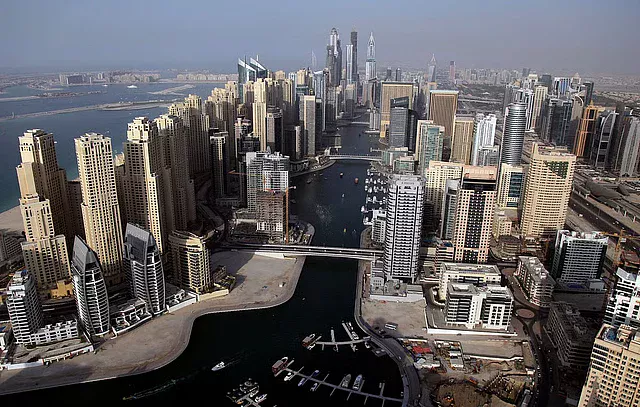
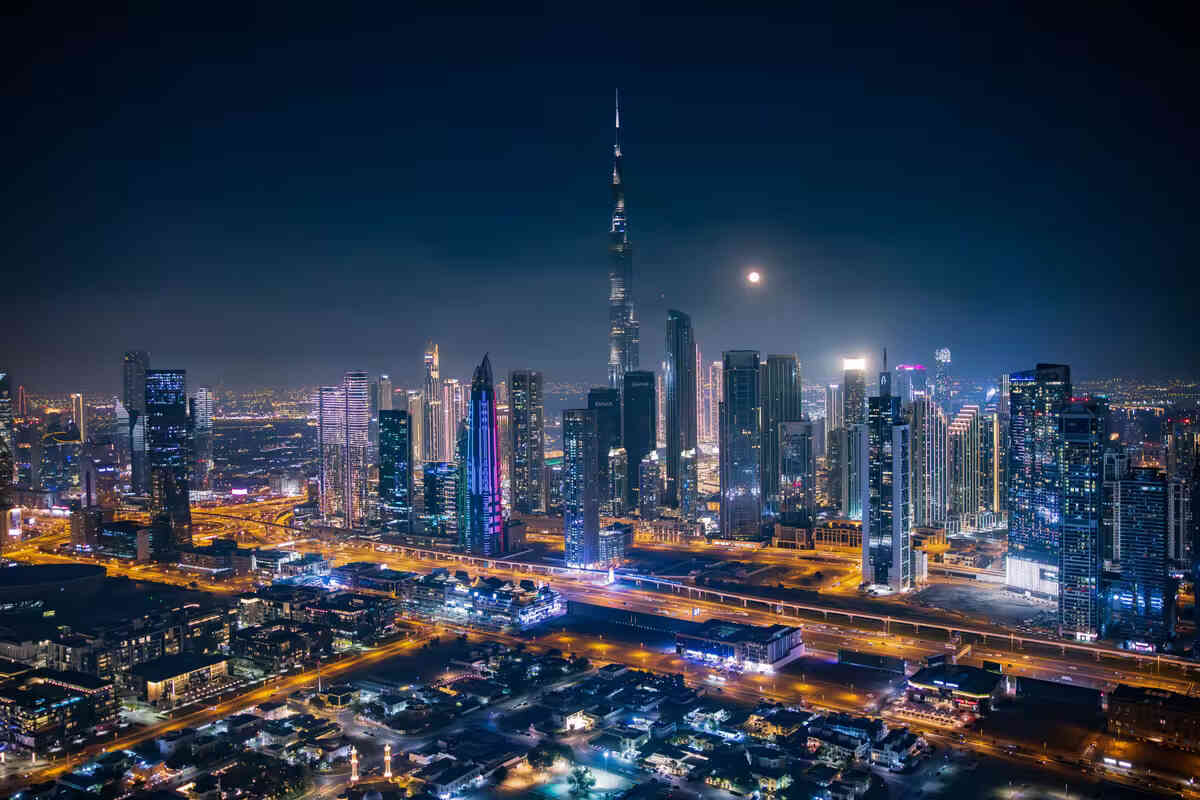
    Activity continues to cluster in familiar hubs including Dubai Marina, Palm Jumeirah, Burj Khalifa, and Business Bay. These areas remain core to investor interest despite the temporary slowdown.

    Industry observers note that while the run-rate is lower for now, the fundamental interest in Dubai real estate remains intact. The market has slowed, but it has not broken. The structural preference for off-plan and the occasional massive luxury transaction suggest that underlying demand persists.

    Dubai’s property sector has weathered previous periods of uncertainty, and authorities continue to reinforce confidence in the emirate’s long-term stability. As the region navigates ongoing tensions, market participants are watching closely for signs of normalization in transaction activity.

  • Dubai Landlords Offer Flexible Payment Plans Amid Regional Tensions

    Dubai Landlords Offer Flexible Payment Plans Amid Regional Tensions

    Dubai landlords are adapting to evolving market conditions by introducing more flexible payment terms for tenants, with properties previously marketed on one or two cheques now being offered with additional payment options to help secure occupancy.

    The shift comes as the emirate’s rental market maintains steady activity despite regional uncertainty, with real estate firm Betterhomes recording more than 1,200 tenant inquiries over the eight days preceding March 13, 2026.

    Market Remains Functional

    “We understand that many people are looking for reassurance right now,” said Rupert Simmonds, Director of Leasing at Betterhomes. “What our data shows is that Dubai’s leasing market is still functioning.”

    “Tenants continue to search for, renew, and move homes, which shows how the leasing market is able to withstand regional uncertainty.”

    Recent leasing data indicates that tenant enquiry levels continue to exceed the number of new rental listings entering the market, demonstrating sustained demand despite a 45% drop in enquiries from typical levels following the escalation of regional tensions on February 28, 2026.

    Supply Wave on the Horizon

    The increased flexibility from landlords is driven in part by a sustained increase in residential supply expected between 2026 and 2028. According to property consultancy Colliers, Dubai recorded the highest volume of residential completions in its history in 2025.

    The scale of the development pipeline could influence rental and pricing dynamics in the coming years, with performance expected to vary by asset quality, location and pricing, Colliers noted.

    “The market has become more measured, but it hasn’t stopped,” Simmonds said. “In the current environment, accurate pricing, flexibility and strong local insight are making the biggest difference.”

    Context of Growth

    Before regional tensions escalated dramatically in late February, Dubai’s property boom had reached a record Dh916 billion amid growing population and improved borrowing conditions. Engagement levels across digital platforms have remained consistent, suggesting that many potential tenants continue to monitor the market actively.

    The trend toward greater flexibility in Dubai’s rental sector aligns with broader regulatory changes, including new shared housing regulations that introduce mandatory permits and occupancy standards.

    As more projects come online, well-positioned and competitively priced properties are likely to perform strongly, while others may rely more on incentives and flexible payment structures to maintain occupancy, according to market analysts.

  • Dubai World Islands Villa Sells for Dh220 Million

    Dubai World Islands Villa Sells for Dh220 Million

    Dubai’s property market recorded a significant transaction on Thursday with the sale of a luxury villa on the World Islands for Dh220 million, highlighting strong momentum in the emirate’s ultra-prime real estate sector.

    According to data from the Dubai REST application, operated by the Dubai Land Department, the villa spans approximately 58,080 square feet, equivalent to about 5,395 square metres. The transaction reflects an average price of Dh3,787 per square foot.

    The property is located on Amali Island, one of the high-end residential projects within the World Islands development, which continues to attract growing interest from international investors and wealthy buyers seeking exclusive waterfront properties in Dubai.

    Dubai’s luxury real estate market recorded unprecedented activity during 2025, supported by rising demand from high-net-worth individuals from around the world who continue to choose the emirate for its attractive investment climate, favourable regulatory framework and competitive tax environment.

    Data show that Dubai recorded 6,668 luxury property transactions last year with a combined value of about Dh143.8 billion. This compares with 4,735 deals worth Dh99.3 billion in 2024, representing a 41% increase in the number of transactions and a 45% rise in total value.

    The Dh220 million villa sale comes as the emirate continues to process high-value transactions across multiple segments. Earlier this month, Dubai recorded a Dh422 million apartment sale at Aman Residences, marking the third most expensive apartment transaction in the emirate’s history.

    The World Islands transaction reflects broader market confidence despite regional tensions, with the emirate’s fundamentals—including stable leadership, long-term planning, and a regulated investment environment—continuing to support investor sentiment in the ultra-prime segment.

    The continued demand for exclusive waterfront properties on developments such as the World Islands underscores Dubai’s position as a leading destination for global wealth, with the emirate’s luxury market showing resilience and sustained momentum into 2026.

  • Dubai Brokerage Commissions Surge 31% to $3.7 Billion in 2025

    Dubai Brokerage Commissions Surge 31% to $3.7 Billion in 2025

    The emirate’s brokerage industry has evolved from a transactional service into a major economic driver, supported by stringent regulatory frameworks and a growing base of professionally licensed agents operating across residential, commercial, and investment property segments.

    Dubai Land Department figures show broker-led transactions climbed 54% to 96,440 deals in 2025, demonstrating the sector’s central role in maintaining market efficiency as property values and transaction volumes continued their upward trajectory.

    Women Drive 83% Commission Growth

    Women brokers emerged as a major force within the sector, completing 28,909 transactions—a 49% increase—and earning AED2.98 billion in commissions, reflecting 83% growth year-on-year.

    By year-end 2025, women accounted for 11,371 of the 32,294 registered brokers in Dubai, underscoring the sector’s capacity to attract diverse talent within a competitive and equitable professional environment.

    The performance demonstrates the impact of inclusive licensing frameworks and professional development initiatives aimed at expanding participation across demographic segments.

    Broker Numbers Expand 38%

    The influx of new real estate brokers rose to 13,083 in 2025, representing a 38% increase from the previous year as the profession gained appeal amid sustained market momentum and attractive commission structures.

    Registered brokerage offices reached 9,785, operating under regulatory standards designed to balance market expansion with service quality and consumer protection.

    The emirate’s property market recorded AED60.60 billion in transactions during February 2026 alone, maintaining the momentum that has driven brokerage sector growth.

    Emirati Broker Development Programme

    Dubai Land Department has prioritized national talent development through initiatives including the Dubai Real Estate Brokers Programme and the Real Estate Brokers Incubator Programme, developed in partnership with Dubai Silicon Oasis and academic institutions.

    These programs support Emirati brokers in transitioning from individual practitioners to owners of integrated brokerage firms aligned with international best practices, with participants now managing transactions worth billions of dirhams.

    The structured approach reflects broader efforts to enhance local participation in the sector while maintaining professional standards that have contributed to market resilience amid regional challenges.

    Regulatory Framework Strengthens Market

    The sector’s expansion has occurred within a regulatory environment that mandates structured licensing requirements, ensuring professionalism and market discipline as transaction values increase.

    This framework has enhanced service quality and transaction efficiency, contributing to Dubai’s position as a transparent and professionally managed real estate market attracting international capital.

    The 2025 performance builds on long-term growth trends, with strategic capital now accounting for approximately 40% of transactions as the market transitions from speculation-led dynamics to structured capital allocation.

  • Palm Jumeirah Off-Plan Apartment Sells for Dh92.5 Million

    Palm Jumeirah Off-Plan Apartment Sells for Dh92.5 Million

    The 11,520-square-foot apartment was sold at an average price exceeding Dh8,020 per square foot, according to data from the Dubai REST application operated by the Dubai Land Department. The property is located within the Armani Beach Residences development, one of Palm Jumeirah’s high-end branded residential projects.

    The transaction comes amid sustained activity across Dubai’s property market, with total real estate transactions reaching approximately Dh2.4 billion by midday trading on Monday, while property sales alone exceeded Dh1.86 billion.

    Dubai’s luxury property segment has experienced exceptional growth in recent years, fuelled by increasing demand from high-net-worth individuals drawn to the emirate’s investor-friendly regulatory framework, favourable tax environment, and global lifestyle appeal.

    The emirate recorded 6,668 luxury property transactions worth a combined Dh143.8 billion in 2025, compared with 4,735 deals valued at Dh99.3 billion in 2024, marking a 41% increase in transaction volume and a 45% rise in total value.

    The Dh92.5 million sale follows another significant transaction earlier this month, when Dubai recorded a Dh422 million apartment sale at Aman Residences, marking the third most expensive apartment transaction in the emirate’s history.

    The ongoing strength in Dubai’s luxury residential market reflects broader trends across the emirate’s real estate sector. February 2026 saw property sales surge 18% to $16.5 billion, with off-plan sales comprising 62% of total activity.

    Palm Jumeirah remains one of Dubai’s most sought-after addresses for ultra-high-net-worth individuals, combining waterfront luxury with proximity to the city’s business districts and lifestyle amenities. The island’s branded residences, including projects by Armani, continue to attract international investors seeking trophy assets in the emirate.

  • Indian Investors Lead Dubai Property Market Despite Regional Tensions

    Indian Investors Lead Dubai Property Market Despite Regional Tensions

    Indian investors are once again emerging as the dominant force behind Dubai’s booming real estate market, reinforcing the emirate’s status as one of the most attractive overseas property destinations for Indian capital despite rising geopolitical tensions in the Gulf.

    According to a research note by property consultancy Anarock Group, Indian nationals account for roughly 20–22 per cent of all foreign property purchases in Dubai, making them the largest overseas investor group in the market. The scale of Indian participation reflects a combination of financial returns, geographical proximity and long-standing economic ties between India and the UAE.

    Industry estimates suggest Indian investors purchased Dh35 billion to Dh40 billion worth of residential properties annually in recent years, highlighting the scale of capital flowing into the emirate from India.

    Attractive rental yields, strong capital appreciation and the stability of the UAE dirham—which is pegged to the US dollar—continue to make Dubai one of the most compelling global property markets for Indian investors. Residential properties in Dubai typically generate annual rental yields between 6 and 9 per cent, among the highest in major global property markets such as London, New York and Singapore.

    Dubai’s property market entered the current period of geopolitical uncertainty after completing one of the strongest growth cycles in its history. According to Dubai Land Department data analysed by Anarock and other industry consultancies, total real estate transactions reached Dh917 billion ($250 billion) in 2025, the highest value ever recorded in the emirate.

    “Transaction volumes crossing 270,000 deals clearly reflect strong investor participation and deep liquidity in the market. Residential real estate has been the main growth engine, and since 2021 housing prices in Dubai have risen roughly 60–75 per cent, making it one of the strongest housing cycles globally in the post-pandemic period.”
    — Dr Prashant Thakur, Executive Director and Head of Research and Advisory at Anarock Group

    Global property consultancies have also highlighted the exceptional performance of Dubai’s housing market. According to Knight Frank, the emirate recorded more than 500 residential sales worth over $10 million in 2025, underscoring the extraordinary growth of its luxury property segment and the rising influx of wealthy global buyers.

    Indian investors have been particularly active in both luxury and mid-market segments, with demand driven by high rental yields and long-term wealth preservation strategies.

    Indian Developers Expand Footprint

    Beyond individual investors, Indian developers are also expanding their footprint in Dubai’s real estate landscape. According to Anarock, companies with Indian roots now account for around 8–10 per cent of the development pipeline in Dubai.

    Among the most prominent players is Sobha Realty, which developed the luxury Sobha Hartland community in Mohammed Bin Rashid City and continues to expand its portfolio of premium projects. Danube Properties, another developer founded by Indian entrepreneur Rizwan Sajan, has launched more than 20 residential projects in Dubai and remains a major player in the mid-market segment.

    Other Indian groups, including Shapoorji Pallonji Real Estate and Casagrand, have also begun exploring high-end residential developments in the emirate. The growing footprint of Indian developers mirrors the broader expansion of Indian capital into Dubai’s property ecosystem, reinforcing the deep economic linkages between the two economies.

    Geopolitical Tensions and Market Resilience

    The latest geopolitical tensions introduce a psychological factor that could influence investor behaviour in the near term. However, Dubai’s position as a global financial hub continues to provide strong structural support to its real estate sector.

    “The current geopolitical tensions will undoubtedly introduce a degree of caution among investors,” the Anarock report noted. “Transaction volumes may moderate in the near term as buyers assess the evolving risk environment. Yet Dubai’s position as a global financial and lifestyle hub continues to provide strong structural support to its real estate sector.”

    Another potential transmission channel is tourism—a key pillar of Dubai’s economy. The broader Middle East tourism sector is estimated to be worth around $367 billion annually, and prolonged regional instability could dampen travel sentiment across the region. Such a scenario would primarily affect short-term rental apartments, hospitality properties and retail assets located in tourist-heavy districts.

    However, Dubai’s housing demand is not solely dependent on tourism. One of the emirate’s strongest structural supports is its rapidly expanding population. Dubai’s population crossed four million residents in 2025, driven largely by expatriate inflows, according to official statistics.

    The emirate’s property market also benefits from one of the most diversified investor bases globally, with buyers from more than 150 nationalities participating in the market. This diversity reduces reliance on any single investor group, helping the market remain resilient even during periods of geopolitical volatility.

  • Dubai Property Market Has Nothing to Fear, Says Emaar Founder

    Dubai Property Market Has Nothing to Fear, Says Emaar Founder

    The UAE’s real estate sector continues to demonstrate exceptional confidence amid geopolitical uncertainty, according to one of its most prominent figures. Mohamed Alabbar, CEO and founder of Emaar Properties, one of the world’s largest real estate developers, expressed absolute certainty that Dubai’s property market will weather both regional tensions and the wave of new supply expected in 2026 and 2027.

    “We are not here for the short run. We are here for a long, long time to do business,” Alabbar said in a recent interview with CNBC. He characterized the incoming supply as a natural feature of a market built on decade-long ambitions rather than short-term speculation. While acknowledging that a brief cooling-off period is possible, he dismissed concerns about structural problems ahead.

    Market Sentiment Remains Firm

    To illustrate current confidence levels, Alabbar shared a telling anecdote from his personal property search. Currently looking for a seafront apartment for his own use, he noted that after two days of viewing, not a single seller was willing to negotiate on price.

    “Nobody wants to budge. Nobody wants to give a discount. That’s a true situation.”

    The observation serves as a quiet but powerful signal of where sentiment stands on the ground, reflecting sustained demand despite external pressures.

    Structural Resilience Built on Prudent Lending

    Alabbar highlighted a fundamental characteristic that distinguishes Dubai from other global property markets: its real estate sector is not built on bank borrowing. Lending to buyers remains tightly restricted, insulating the market from credit-driven collapses seen elsewhere during financial crises.

    “Our real estate business is not built on bank borrowing. Bank borrowing is very restricted in this market,” he explained, adding that while consumer confidence may experience temporary dips, the UAE’s policy environment has a proven track record of restoring it quickly.

    This assessment aligns with recent market performance. Dubai real estate continues processing deals exceeding $100 million, with developers reporting uninterrupted operations despite some buyers adopting a cautious stance.

    Long-Term Capital Recognizes Stability

    On the broader question of geopolitical uncertainty and Dubai’s reputation as a refuge for global wealth, Alabbar expressed unwavering confidence. He argued that investors who study the trajectory of UAE policy over years and decades will consistently find the same qualities: consistency, sustainability, wisdom, and stability.

    “A country like this, with all these principles and stable leadership and the safety, it has shown that it can deliver,” he stated.

    Alabbar reserved particular admiration for the UAE’s leadership and its capacity for long-range strategic planning. While acknowledging he is not versed in military affairs, he said he was genuinely moved by the country’s demonstrated capabilities during recent tensions.

    “People with true capital understand this, they appreciate this, and they will double down on investing.”

    The sentiment echoes statements made earlier this week, when Alabbar noted that recent attacks have ultimately reinforced confidence in the country’s stability, pointing to decades of consistent policy and institutional strength.

    Market Context and Performance

    Alabbar’s confidence comes as Dubai’s property sector maintains strong fundamentals. The emirate’s real estate market recorded 874 transactions worth AED2.46 billion on March 2, 2026, demonstrating sustained investor confidence as economic fundamentals continue to outweigh short-term geopolitical sentiment.

    The debt-free structure of Dubai’s real estate market, combined with prudent lending restrictions and long-term government planning, positions the emirate to absorb new supply without the leverage-driven volatility that has characterized property cycles in other global cities. As regional tensions persist, Dubai’s market continues to attract capital seeking stability, transparency, and proven governance frameworks.

  • Dubai Real Estate Defies Regional Tensions with $100M Deals

    Dubai Real Estate Defies Regional Tensions with $100M Deals

    The UAE property market is operating normally despite heightened geopolitical tensions, with real estate activity continuing across the country and developers maintaining scheduled project launches.

    A $100 million-plus property transaction was recorded in Dubai this week, demonstrating sustained investor appetite even as some international buyers pause purchase decisions to monitor regional developments.

    Broker Ben Crompton confirmed that transactions already underway are progressing as planned.

    Buyers who already signed MOUs are proceeding as normal, and some deals are still being negotiated. Most buyers are in a ‘wait-and-see’ mode as you can imagine.

    He noted that property prices typically decline only during periods of forced selling triggered by widespread job losses or sharp interest rate increases—conditions that have not materialized in the UAE.

    International Investors Monitor Closely

    International investors, who represent a significant share of UAE property buyers, are watching the situation more closely than long-term residents, according to market participants.

    A second broker, speaking anonymously, said a major project scheduled to launch next week is proceeding as planned.

    They are not postponing launches because of the current situation.

    The broker emphasized that Abu Dhabi’s market is anchored by families with deep roots in the emirate.

    A large proportion of residents here are families who have been in the UAE for many years. They consider this their home and they are planning long-term—with schools, jobs and their families here—so they still want to buy property.

    However, some foreign buyers from the UK, US, and Germany have become more cautious, the broker noted.

    Opportunity for Strategic Investors

    Market professionals indicated that short-term uncertainty can create opportunities for cash investors. When sellers exit quickly and reduce prices, those units tend to be acquired rapidly by investors with available liquidity.

    The broker cited examples of properties valued at Dh1.3 million being negotiated at Dh1 million for quick transactions, with investors planning to hold until market conditions stabilize.

    Real estate is a slow and stable market. It doesn’t react like the stock market where prices can suddenly fall by 10 per cent in a day. For significant price changes to happen, a large number of people would need to move in the same direction. Right now, the majority still believe in the UAE and its government, so the market remains stable.

    Developers Emphasize Continuity

    On March 6, 2026, Emaar Properties confirmed normal operations across all assets. Earlier, Aldar Properties stated that all its residential communities, retail destinations, commercial offices, hotels, schools, and development sites continue to operate without interruption.

    Aldar highlighted its strong financial position with more than Dh30 billion in available liquidity, including Dh14.2 billion in free cash and Dh16.4 billion in undrawn bank facilities.

    Developers have not adjusted launch pricing, but some are offering more flexible payment plans—such as 35-65 or 40-60 structures instead of 50-50—to reduce upfront costs and maintain investor confidence.

    Economic Fundamentals Remain Robust

    Crompton emphasized that broader economic conditions supporting the property market remain strong.

    The economic fundamentals are very strong. Capital hates uncertainty more than anything. The sooner there is long-term clarity, the sooner investors will feel comfortable committing again.

    The UAE real estate sector has been supported by strong population growth, international investment, and economic expansion. Dubai’s population has surpassed four million, driving unprecedented housing demand as the emirate’s property market recorded nearly Dh900 billion in transactions during 2025.

    Industry professionals point to continued long-term demand across key residential hubs including Reem Island, Yas Island, and Saadiyat Island, where new infrastructure and lifestyle developments are expected to support property values over time.

    The broker concluded:

    There is still strong belief in the long-term prospects of the market. Real estate in the UAE has historically moved upward over the long term, even if there are short-term fluctuations.

  • Alabbar: UAE Proves Safety Credentials Amid Regional Tensions

    Alabbar: UAE Proves Safety Credentials Amid Regional Tensions

    Speaking in a CNBC interview that aired on Friday, Alabbar said the UAE’s ability to intercept incoming threats has underscored its reputation as a global safe haven.

    The past days have proven that we are really a safe country.

    The developer emphasized that the UAE’s long-term policy consistency and stability have been built over decades and cannot easily be undermined.

    “If you were to look and study the trajectory of UAE policies, you will see consistency, you will see sustainability, you will see wisdom, you will see stability — all for one purpose: to create an incredible life for the people who live here,” he said. “You don’t build this over one year, two years: it took us over 40 years for the leadership to establish this.”

    Alabbar added that recent developments are unlikely to weaken investor confidence in the UAE, noting that Dubai’s property market continues to attract strong interest.

    “Success does not happen by luck,” he said. “Because of years of great policies, stability, competence and fairness that exist in this country, that really have pushed tremendous belief in this country and what the future holds.”

    Alabbar also dismissed concerns about a major correction in Dubai’s property market, despite regional tensions. “I know my business well. I know the banking system. I know the business environment,” he said. “I have no concerns.”

    He pushed back against predictions made by global ratings agency Fitch in 2025 about a 15% property price correction, calling the forecast “very unrealistic” based on his analysis of business data.

    High Interception Rate Demonstrates Defense Capability

    Alabbar’s comments come as figures released by the UAE Ministry of Defence on March 5 show that the country’s air defence systems have intercepted the vast majority of missiles and drones launched toward the UAE since the escalation began.

    According to the ministry:

    • 1,072 drones were detected, with 1,001 intercepted
    • 196 ballistic missiles were detected, with 181 intercepted
    • Eight cruise missiles were detected, with all eight intercepted

    A total of 71 drones impacted on land, while two ballistic missiles struck inside the country and 13 fell into the sea, according to the ministry’s latest update. The figures highlight the scale of the attacks but also the effectiveness of the UAE’s layered air defence systems.

    Meanwhile, the intensity of strikes across the region appears to be declining. Iranian ballistic missile launches were down 90% from the first day of fighting, while drone attacks have fallen 83%, according to reporting by The Wall Street Journal on Friday.

    Institutional Strength Reinforces Investor Confidence

    Analysts say the UAE’s response to the crisis may ultimately reinforce investor confidence. Simon Wolfe, co-founder and managing partner of Marlow Global, said the country’s institutions and communications have remained strong despite the scale of the attacks.

    “In the short term, there is a physical reality here that optimism cannot shortcut. Airports, ports and energy infrastructure will take weeks to come back online, and the disruption to trade flows and aviation connectivity is real and immediate,” Wolfe told Gulf Business this week.

    However, Wolfe said the UAE’s response demonstrates the strategic qualities that attracted global investors to the country in the first place.

    “Look at what the UAE has actually done in the face of an extraordinary assault: its institutions have held, its government has communicated with clarity, and it has called for negotiated resolution within days of being targeted,” he said. “And perhaps most importantly, the air defences have, in large part, held. This demonstrates exactly the kind of strategic maturity that made it attractive to global capital in the first place.”

    The UAE real estate sector has demonstrated operational resilience in early March 2026, with Dubai recording sustained transaction activity despite heightened regional tensions.

  • Dubai Real Estate Maintains Momentum Amid Regional Uncertainty

    Dubai Real Estate Maintains Momentum Amid Regional Uncertainty

    The Dubai Land Department confirmed 874 property transactions valued at AED2.46 billion ($670 million) on March 2, reinforcing the emirate’s reputation as one of the world’s most resilient investment destinations despite periodic regional tensions.

    Market analysts note that regional escalations have historically been short-lived and strategically contained, with limited long-term economic impact. In contrast, the UAE’s framework is built on diversified industries, institutional strength, and long-term planning.

    “Regional tensions may create headlines and short-term sentiment shifts, but the UAE’s long-term economic fundamentals remain extremely solid,” said Loai Al Fakir, CEO of Provident Estate. “Investors understand that the country’s stability, governance and strategic global positioning make it one of the safest places to allocate capital.”

    Al Fakir noted that Dubai has consistently demonstrated resilience through global financial crises, regional conflicts, and the pandemic. “Each time, the market not only recovered quickly but attracted even greater international investment,” he added.

    The March 2 figures highlight continued market liquidity and sustained investor confidence. Across the sector, operations remain fully active, with holiday homes operating at high occupancy levels, hotel bookings staying strong, and property handovers, contract renewals, and secondary market activity continuing consistently across key communities.

    “Experienced investors understand that geopolitical cycles come and go, but the UAE’s economic trajectory remains consistently upward. Dubai offers a rare combination of safety, transparency, strong regulation and tax efficiency.” — Mohamad Jaafari, Operations and Primary Director at Provident Estate

    Dubai’s real estate market is driven by long-term structural factors including sustained population growth—with the emirate’s population now exceeding four million—rising global migration, strong foreign direct investment, and ambitious government development strategies.

    Industry experts note that periods of uncertainty typically follow a familiar pattern: a brief pause in investor decision-making, followed by renewed confidence and increased demand. The slowdown observed over the recent weekend was sentiment-driven rather than indicative of any structural market shift.

    The UAE plays a central role as a global hub for aviation, finance, international trade, tourism, and real estate. With advanced security systems, strong diplomatic positioning, and a globally integrated economy, the country remains insulated from prolonged instability affecting conflict zones.

    The emirate’s property market recorded nearly Dh900 billion in transactions during 2025, reinforcing its position as a leading global real estate investment destination. As international investors continue to prioritize stability and long-term economic growth, the UAE remains positioned as one of the most attractive property markets globally.