Tag: Dubai property market

  • Dubai Beachfront Plots Sell for Dh400 Million in Record Deal

    Dubai Beachfront Plots Sell for Dh400 Million in Record Deal

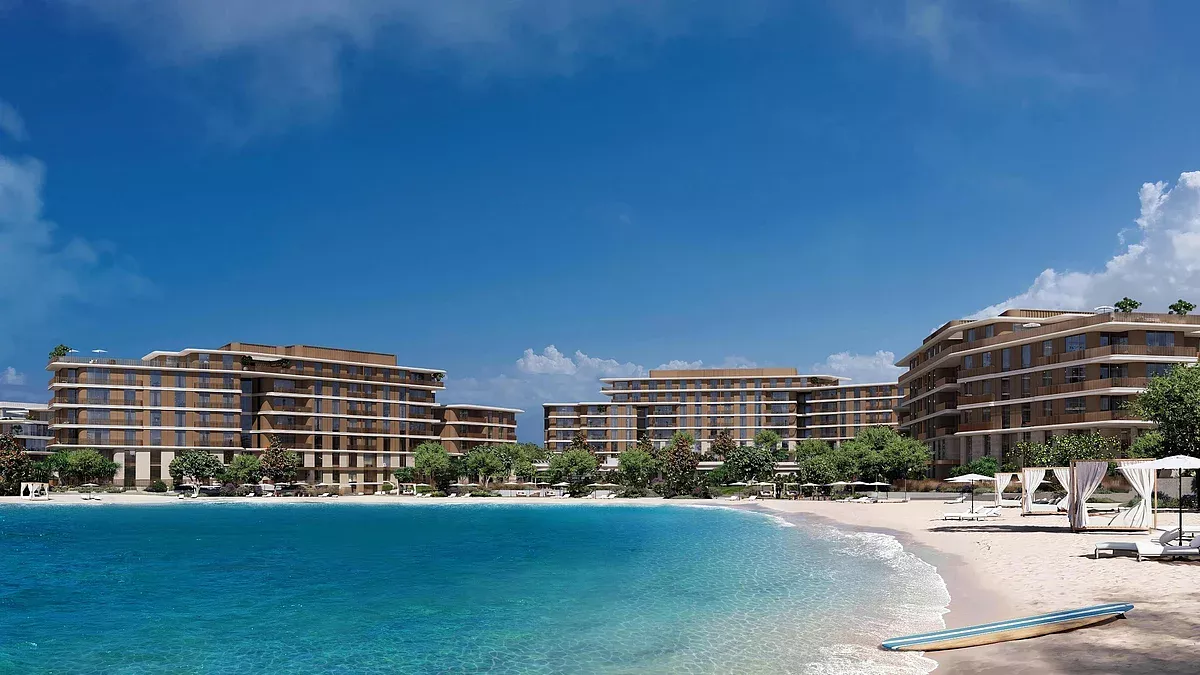
    A landmark Dh400 million beachfront land acquisition in Dubai has set a new benchmark for the emirate’s super-prime residential market, creating one of the last remaining contiguous coastal development sites of this scale along the Arabian Gulf.

    The transaction, completed in March 2026, covers three adjacent freehold plots in Jumeirah Coastline spanning more than 113,000 square feet and 160 metres of private beachfront. Arabian Acres, a Dubai-based luxury real estate brokerage and development advisory firm, structured and completed the acquisition as exclusive broker for both buyer and seller, with registration processed through Dubai Land Department via three coordinated unit transfers.

    The combined site is projected to deliver a gross development value exceeding Dh1 billion, with plans for three ultra-luxury villas offering direct beachfront access and private marina docking—a combination the developer describes as Dubai’s only residential land opportunity merging private beach access with a dedicated residential yacht marina.

    “This was a tightly structured transaction that required all three plots to move together. The window to secure this site was exceptionally narrow, as these were the last adjacent beachfront plots of this scale,” said Issa Atiq, CEO of Arabian Acres.

    According to Dubai Land Department data cited by the company, the three plots have appreciated between 255% and 335% over the past three years, reflecting constrained supply of prime coastal land and sustained demand for ultra-luxury residential assets.

    The deal comes as Dubai’s property market records billions in monthly sales, with high-net-worth buyers seeking long-term value, asset security, and exposure to a regulated freehold market. The transaction follows similar high-value land deals, including a 25% surge in luxury home prices recorded in 2025.

    Strategic acquisition in limited supply market

    The coordinated acquisition was structured to ensure all three plots moved as a single landholding, a requirement that narrowed the transaction window significantly. Atiq noted that once developed, the combination of site, beach, and planned marina access would be exceptionally difficult to replicate.

    “Large-scale land acquisitions of this nature reflect steady institutional and private wealth confidence in the UAE’s regulatory transparency, economic resilience, and long-term growth trajectory,” Atiq added.

    Sustained capital inflows into Dubai’s prime and super-prime real estate segments continue to reinforce the UAE’s position as one of the world’s most stable and resilient investment destinations, particularly as global investors prioritize markets with policy continuity, freehold ownership protections, and long-term economic planning.

    The Jumeirah Coastline deal underscores the scarcity of large-scale coastal development sites in Dubai, where beachfront land with marina capabilities remains in exceptionally limited supply. As the emirate’s property market holds steady despite regional uncertainty, transactions of this magnitude signal enduring investor confidence in Dubai’s ultra-luxury residential sector.

  • Dubai Real Estate Records Dh48 Billion in April Sales

    Dubai Real Estate Records Dh48 Billion in April Sales

    Transaction volumes rose 3.5% month-on-month, while overall deal value climbed 10.7%, pointing to continued strength in higher-value segments, according to data from fäm Properties released on May 4, 2026.

    The performance comes at a time of heightened geopolitical tensions and global economic uncertainty, yet Dubai continues to attract strong capital inflows, supported by its reputation as a safe, transparent and well-regulated investment hub.

    Primary market dominates activity

    The primary market remained the clear driver of activity, with 10,563 transactions worth Dh35.8 billion, compared with 3,414 resale deals valued at Dh12.2 billion, according to DXBinteract. The continued strength of off-plan sales reflects investor appetite for new projects and expectations of future capital appreciation.

    “April’s performance reflects the market’s underlying strength, with steady demand across both residential and commercial segments,” said Firas Al Msaddi, noting that the emirate continues to benefit from its global positioning as a stable destination for investors.

    Apartments led the market with 11,377 transactions worth Dh24.1 billion, up 6.5% month-on-month, while plot sales surged 34.7% to Dh6.6 billion, indicating strong interest in land development opportunities. Commercial real estate also posted robust gains, with 561 transactions worth Dh4 billion, rising sharply both year-on-year and from March, signalling renewed business activity.

    Regional hotspots and luxury deals

    Dubai South retained its position as the top-performing area for the second consecutive month, recording 1,171 transactions worth Dh2.7 billion, followed by Jebel Ali First and Al Barsha South Fourth. Dubai Islands emerged as a high-value hotspot, generating Dh2.8 billion in sales, reflecting rising demand for premium waterfront developments.

    Luxury transactions continued to capture attention, with the most expensive apartment selling for Dh171 million at Aman Residences in Jumeirah. Other high-end deals included Dh122 million at Baccarat Residences in Downtown Dubai and Dh118 million at Marsa Dubai, while the top villa sale reached Dh76 million at Eden Hills.

    The bulk of transactions remained concentrated in the mid-market segment, with properties priced between Dh1 million and Dh2 million accounting for 34.7% of sales. Units below Dh1 million made up 23.3%, highlighting continued demand from first-time buyers and investors targeting rental yields, while properties above Dh5 million accounted for nearly 12%.

    Signs of price moderation emerge

    Average property prices rose 16.1% year-on-year to Dh1,840 per square foot, although recent indicators suggest the pace of appreciation is beginning to ease after a multi-year rally.

    Data from ValuStrat indicates that its residential capital values index declined 3.8% in the first quarter of 2026 to 229.2 points, marking the first quarterly contraction since 2020. Market experts say the dip reflects a natural adjustment following sharp gains over the past three years rather than a downturn, as increased supply and shifting investor preferences begin to temper price growth.

    “The moderation in prices is a healthy development and points to a more sustainable growth trajectory. Transaction volumes remain strong, liquidity is robust, and the fundamentals underpinning demand — from population growth to foreign investment — are firmly intact,” a Dubai-based analyst said.

    With Dubai’s population having crossed the four million mark and new project launches continuing across emerging districts, the outlook for the sector remains broadly positive. Industry stakeholders expect the market to maintain steady momentum through 2026, supported by strategic initiatives such as the Dubai Economic Agenda D33 and the emirate’s expanding role as a global hub for business and investment.

    The April performance follows a strong first quarter, during which the emirate recorded over Dh180 billion in property transactions, reinforcing its position as one of the world’s most resilient real estate markets.

  • Dubai Property Market Holds Steady as Buyers Prioritize Value

    Dubai Property Market Holds Steady as Buyers Prioritize Value

    Despite ongoing regional uncertainty and cautious buyer sentiment, Dubai’s real estate market continues to demonstrate resilience, with little evidence of the distressed deals many had anticipated. Recent data from leading property platforms indicates that while buyer behaviour has become more measured, underlying demand remains robust, with millions of property searches and sustained engagement from serious buyers actively progressing toward transactions.

    Industry experts say the shift reflects a more mature and balanced market rather than the onset of a downturn.

    We’re seeing a clear evolution in how buyers approach decisions. There’s more analysis, more comparison, and more negotiation — but not the kind driven by distress. Buyers want fair value, not fire sales.

    Luke Remington, Managing Director at haus & haus, explained the current market dynamics.

    Across Dubai’s most sought-after villa communities — including Dubai Hills Estate, Palm Jumeirah, and Arabian Ranches — demand continues to outpace supply. These areas, favored by end-users and long-term investors, are experiencing minimal pricing pressure, with sellers holding firm due to strong financial positions.

    On the apartment side, prime locations such as Dubai Marina, Downtown Dubai, and Business Bay remain highly active, particularly for one- and two-bedroom units. While some flexibility has emerged in mid-market segments with increasing inventory, price reductions remain moderate and selective.

    Negotiation has returned, but that’s a sign of a healthy market. Buyers are making offers below asking, but transactions are still closing within 5% to 15% of peak values. That’s typical of a functioning, stable environment — not a distressed one.

    Calum White, CEO and Founder of White & Co., emphasized the market’s stability.

    A key factor underpinning the market’s stability is seller behavior. Unlike previous downturns, there is limited urgency among property owners to liquidate assets. Most sellers are well-capitalized and willing to wait for the right offer, contributing to price support across key segments.

    Many expected uncertainty to trigger a wave of discounted inventory, but that hasn’t materialised. Instead, we’re seeing a more disciplined market where both buyers and sellers are adjusting expectations without panic.

    Fibha Ahmed, Vice President of Property Sales at Bayut, noted the absence of distressed inventory.

    This recalibration is also evident in transaction dynamics. Agents report longer decision cycles, increased property viewings, and more structured negotiations. Buyers are prioritizing quality, location, and developer credibility — particularly in the off-plan segment — over short-term pricing advantages.

    The conversation has shifted from timing the market to understanding value within it. That’s a much healthier foundation for long-term growth.

    Remington added regarding the evolving buyer mindset.

    The market’s resilience aligns with broader trends documented earlier this year. Dubai’s property market recorded over Dh180 billion in Q1 2026, with ultra-luxury deals surging 62.6% year-on-year. Meanwhile, commercial property prices jumped 28% between February and March 2026 despite regional tensions.

    While some buyers continue to wait for a potential dip, current indicators suggest that Dubai’s market is stabilizing rather than softening. Pricing remains supported by consistent demand, limited distress, and a steady inflow of both local and international investors.

    As the market enters this more balanced phase, industry leaders agree that opportunities still exist — but they are driven by informed decision-making rather than market-wide discounts. In this environment, Dubai’s property sector is not retreating — it is refining, offering a clearer alignment between price, value, and buyer expectations.

  • Dubai Removes Minimum Property Value for Residency Visas

    Dubai Removes Minimum Property Value for Residency Visas

    Dubai Land Department eliminated the minimum property value requirement for sole owners on April 30, 2026, removing the Dh750,000 threshold and relaxing conditions for jointly owned properties as the emirate opens its real estate market to a broader pool of investors and first-time buyers.

    The policy shift represents a significant departure from previous restrictions, effectively lowering the barrier to residency at the entry level while other global jurisdictions tighten their requirements.

    Industry Leaders Welcome the Move

    Francis Alfred, Managing Director of Sobha Realty, described the update as a forward-thinking approach that builds on Dubai’s investor-friendly reputation.

    “This latest progressive move by the Dubai Land Department builds on the forward-thinking, investor-friendly approach the emirate has long cultivated. The removal of a minimum property value threshold for homeowners is particularly significant as it opens the door for a wider pool of first-time buyers and investors. Such policies strengthen demand fundamentals and deepen market maturity,”

    Alfred told Khaleej Times.

    Firas Al Msaddi, CEO of fäm Properties, emphasized the strategic timing of the decision. “Dubai has just done what most global property markets won’t – lowering the barrier to residency at the entry level at a moment when other jurisdictions are tightening theirs,” he said.

    Al Msaddi noted that the policy sends a clear message: “Residency in Dubai is no longer reserved for those who can write a seven-figure cheque on day one. You can now plant your stake in this city with capital that matches your stage of life, and grow your position from there.”

    Impact on Market Segments

    Luthfullah K, Director at Casagrand Dubai, said the expanded eligibility will naturally stimulate demand in the entry and mid-market segments, where rental yields and long-term capital growth remain attractive. “Many buyers today are choosing Dubai not just as an investment destination, but also as a residency hub, and this policy further strengthens that appeal,” he added.

    Tauseef Khan, Founder and Chairman at Dugasta Properties, highlighted Dubai’s commitment to accessibility. “This update highlights Dubai’s dedication to making property ownership accessible and investor-friendly. The removal of the minimum property value requirement for sole owners and the introduction of practical conditions for jointly owned assets open the door for a wider range of buyers.”

    Annuj Goel, chairman of Golden Light Group, emphasized the structural change. “What changed today isn’t a number — it’s a barrier. By moving away from a fixed investment threshold and instead focusing on ownership structure, the UAE has made the market far more accessible,” Goel said, noting that the buyer pool widens overnight, especially in the mid-market segment where most genuine end-users sit.

    Broader Market Context

    The policy update comes as Dubai’s property market maintains strong momentum, with sales crossing Dh180 billion in Q1 2026 and luxury home prices jumping 25% in 2025.

    The removal of minimum thresholds aligns with Dubai’s broader strategy to attract global talent and maintain its position as a premier destination for long-term living and investment. Industry experts suggest the measures support a more balanced and resilient real estate ecosystem, driven by genuine ownership rather than short-term speculation.

    The policy strengthens the connection between ownership and residency, reinforcing one of Dubai’s biggest competitive advantages in the global property market.

  • Dubai Real Estate Sales Cross Dh180 Billion in Q1 2026

    Dubai Real Estate Sales Cross Dh180 Billion in Q1 2026

    The emirate’s real estate sector delivered exceptional performance between January and March 2026, with residential sales accounting for Dh143.1 billion across 44,743 transactions—a 22.2% increase compared to the same period last year—while commercial transactions reached Dh37.9 billion from 3,619 deals, according to Engel & Völkers Middle East.

    The standout feature of the quarter was the sharp rise in high-end activity, with 2,148 property transactions valued above Dh10 million representing one of the highest quarterly totals on record. Several landmark deals illustrated investor appetite at the ultra-prime level, including a Dh422 million off-plan residence at Aman Residences, a Dh350 million villa at Jumeirah Asora Bay, and a Dh340 million villa on Jumeirah Bay Island.

    “Dubai’s real estate market continues to demonstrate exceptional depth, particularly at the luxury end, where demand remains highly resilient,” said Daniel Hadi, chief executive of Engel & Völkers Middle East. “What we saw in March was a natural pause linked to evolving regional conditions, but also a transition towards a more mature phase where buyers and investors are increasingly focused on value, quality and long-term fundamentals.”

    Prime demand remained concentrated in established communities such as Palm Jumeirah and Dubai Hills Estate, while master-planned destinations including The Oasis Dubai and Nad Al Sheba gained traction alongside emerging waterfront developments such as Palm Jebel Ali and La Mer.

    The commercial property sector mirrored the broader market’s strength, with office assets emerging as a standout performer. A total of 1,565 office transactions were recorded during the quarter, representing a 74.5% increase year-on-year, while average office prices rose to Dh3,047 per square foot as demand strengthened for Grade A workspaces.

    Business hubs such as Business Bay, Al Sufouh and Dubai Maritime City accounted for a significant share of off-plan office activity, reflecting continued expansion by multinational companies and professional services firms establishing regional headquarters in the emirate.

    Official figures from Dubai Land Department reinforced the strength of the broader trend, showing total real estate transactions reached Dh252 billion in the first quarter of 2026, a 31% increase year-on-year across more than 60,000 deals. Foreign investment alone climbed 26% to Dh148.35 billion, highlighting sustained international confidence despite regional volatility.

    Although the market entered the year with strong momentum, activity became more measured toward the end of the quarter following regional tensions in late February, with some buyers extending decision-making timelines. However, analysts describe this as a temporary adjustment in sentiment rather than a structural slowdown in demand.

    The emirate’s population growth remains a key structural driver of demand, with Dubai’s resident base surpassing four million last year as professionals, entrepreneurs and investors continue relocating under long-term residency programmes and business-friendly policies.

    With rental yields still averaging between 6% and 8% in many communities and total property sales already reaching a record Dh686.8 billion in 2025, the strong start to 2026 suggests Dubai’s real estate sector is entering a more selective and globally institutional phase. The first-quarter performance reflects Dubai’s growing appeal to global high-net-worth individuals seeking secure assets, residency advantages and long-term lifestyle investments.

  • UAE Ultra-Wealthy Population Set to Surge 36% by 2031

    UAE Ultra-Wealthy Population Set to Surge 36% by 2031

    The UAE continues to cement its position as a global magnet for ultra-wealthy individuals, with Knight Frank forecasting a 36% increase in residents holding more than $30 million in assets over the next five years. The growth trajectory places the Emirates among the world’s fastest-expanding markets for high-net-worth individuals, driven by the country’s business-friendly environment and resilient real estate sector.

    Dubai’s luxury property market demonstrated exceptional strength, recording a 25.1% price increase in prime residential properties over the past year and a remarkable 193.9% surge over five years. The emirate secured second place worldwide for prime residential property price growth, reinforcing its appeal to international investors.

    Transaction activity in the ultra-luxury segment has accelerated sharply. Properties valued above $10 million witnessed a dramatic rise from 113 deals in 2021 to 500 transactions in 2025, reflecting sustained appetite for high-end assets despite global economic uncertainties.

    The UAE’s appeal as a business hub and the sustained strength of its real estate sector continue to attract high-net-worth individuals globally.

    The broader Middle East region recorded an average 9.4% increase in prime property prices during 2025, with Dubai’s performance serving as the primary catalyst. The city has emerged as a preferred destination in global wealth migration, often chosen over traditional centres such as New York and London for its stability, connectivity, and favorable business conditions.

    Abu Dhabi has gained momentum as a complementary investment destination, attracting international buyers through its expanding financial ecosystem and cultural institutions including the Louvre Abu Dhabi and the planned Guggenheim Abu Dhabi.

    The sustained influx of ultra-wealthy residents is expected to further stimulate demand across Dubai’s luxury property market, particularly in waterfront developments and prime locations. The trend aligns with broader patterns observed in the UAE’s residential sector, where buyer confidence has remained robust despite regional geopolitical challenges.

    Knight Frank’s forecast underscores the UAE’s transformation into a premier wealth hub, supported by investor-friendly policies, tax advantages, and world-class infrastructure that continue to differentiate the Emirates in an increasingly competitive global landscape.

  • Dubai Property Conversions Triple After Ceasefire Announcement

    Dubai Property Conversions Triple After Ceasefire Announcement

    Dubai’s real estate sector is experiencing a sharp rebound in buyer activity following the ceasefire announcement, with Sobha Realty witnessing customer conversions increase threefold compared to the period before tensions subsided.

    Francis Alfred, managing director of Sobha Realty, told Khaleej Times on April 19, 2026, that the recovery has been immediate and decisive.

    “People who were waiting on the sidelines are beginning to return. International buyers are also coming back,” Alfred said, adding that long-term investors in Dubai remain focused on the emirate’s future prospects rather than short-term geopolitical events.

    The developer, which has delivered 13 master communities in Dubai, is now expanding into Abu Dhabi with its first major project in the capital, bringing the same expertise and customer-focused approach that has defined its operations in Dubai.

    “We have gained deep insights into what customers need and how to deliver high-quality products. We are taking that expertise into Abu Dhabi,” Alfred explained, confirming that the company plans further expansion beyond its debut development in the emirate.

    Quality Over Discounts

    Sobha Realty is maintaining its focus on product quality rather than offering deep discounts to stimulate demand. Alfred emphasized that the company believes in preserving intrinsic value through disciplined pricing.

    “We believe a quality product has intrinsic value. We are not going to discount our projects in a way that reduces that value,” he stated.

    Instead, the developer may offer limited incentives such as support with registration costs while maintaining overall pricing discipline.

    The company’s financial position remains robust, supported by a large land bank, infrastructure assets, and a multi-year revenue backlog from previous sales. Construction funding is largely covered through escrow accounts and customer collections, reducing reliance on additional borrowing.

    “The land is already paid for, and most construction is funded through escrow accounts. We do not foresee any serious requirement for additional funding at this stage,” Alfred confirmed.

    Market Maturity and Resilience

    Alfred noted that the current environment is likely to widen the gap between established developers with proven track records and smaller players with weaker financial foundations. Buyers are increasingly choosing companies with strong reputations and the ability to maintain quality standards.

    “Customers know that trusted developers will deliver the same quality product without compromise,” he said.

    Comparing the current situation with the Covid-19 pandemic, Alfred highlighted that today’s challenges are regional rather than global, meaning the impact on the UAE market should be more contained. He expects the market to return quickly to its previous growth trajectory without experiencing a sharp correction or speculative rally.

    “The UAE property market is now far more mature and resilient. It is not jumping up and down because of short-term events,” Alfred concluded.

    The comments align with broader market trends, as Dubai’s property market staged a sharp recovery in recent weeks despite ongoing volatility in financial markets. The sector recorded Dh32.2 billion in rental contracts during the first quarter of 2026, reflecting sustained stability across residential segments.

  • Dubai Property Transactions Rebound 49% After Eid Al Fitr

    Dubai’s property market demonstrated remarkable resilience last week, with transaction volumes climbing sharply as activity resumed after the Eid Al Fitr holiday period. According to Dubai Land Department data, total ex-land transactions reached Dh8.66 billion ($2.36 billion) for the week ending March 29, 2026, up from Dh5.82 billion in the shortened working week prior.

    The sharp recovery indicates that the previous week’s moderated performance was a temporary calendar-driven lull rather than a structural cooling of investor appetite. The data reinforces a broader trend throughout 2026: a market heavily weighted toward primary off-plan sales and apartment-led volume.

    Off-Plan Segment Drives Market Activity

    The off-plan segment continues to serve as the market’s primary engine, generating Dh6.74 billion and accounting for 77.8% of total weekly value. Within this category, apartments remained the preferred asset class, contributing Dh5.46 billion, or 81% of off-plan value.

    Villas followed with a more modest share of 11.3% (Dh763.2 million), while commercial assets represented 7.3% of the off-plan segment.

    In contrast, the secondary or ready market recorded Dh1.92 billion in transactions. While smaller in total volume, the ready segment remains the cornerstone of the city’s established residential hubs, led by Business Bay and Jumeirah Village Circle.

    Cash Dominates Off-Plan, Mortgages Support Ready Market

    The funding structure of the market remains split along traditional lines. The off-plan sector continues to be primarily cash-driven, with 97.9% of transactions conducted as direct sales. Mortgages accounted for a marginal 1.3% of off-plan activity, as buyers typically opt for developer-led payment plans over traditional bank financing for uncompleted projects.

    The secondary market shows higher reliance on the banking sector, with mortgages accounting for 38.3% of transactions (Dh734.8 million). This distinction underscores the differing profiles: the primary market remains a magnet for global capital and investors seeking capital appreciation, while the ready market serves as the gateway for end-users and residents tapping into local liquidity.

    Geographic Highlights and Trophy Deals

    Investor interest remains concentrated in high-liquidity master-planned districts and emerging waterfront developments. Jumeirah Second emerged as the week’s value leader in the off-plan segment, recording Dh591.4 million in deals. This was bolstered by the week’s standout transaction: an off-plan apartment sale worth Dh356.2 million.

    Other top-performing primary locations included Al Yelayiss 1 (Dh566.1 million) and Madinat Al Mataar (Dh555.4 million).

    In the secondary market, Business Bay maintained its status as the most liquid district, followed by Jumeirah Village Circle and the Burj Khalifa area. The highest-value resale was an apartment in Business Bay which cleared at Dh34.1 million, while the top ready villa deal was recorded in Jumeirah Park for Dh11.5 million.

    Market Outlook

    The swift return to high-volume trading following the holiday period highlights the robust buy-and-hold sentiment currently pervading the UAE’s real estate sector. With off-plan developments continuing to absorb the lion’s share of liquidity, the market appears well-positioned to maintain its momentum through the second quarter of 2026.

    As Dubai continues to expand its urban footprint toward the south and through major coastal redevelopments, these high-velocity corridors are expected to remain the focus of both regional and international portfolios. The data suggests that investor confidence remains strong despite ongoing geopolitical uncertainty in the region.

  • Dubai Off-Plan Apartment Sales Rise 12.9% to $4.77 Billion in March

    Dubai Off-Plan Apartment Sales Rise 12.9% to $4.77 Billion in March

    Dubai’s real estate market demonstrated continued resilience in March 2026, with off-plan residential apartment sales reaching AED17.5 billion ($4.77 billion), up from AED15.5 billion in the same month last year, according to an analysis of Dubai Land Department (DLD) data released April 1, 2026.

    Transaction volumes increased 2.3% year-on-year to 7,983 off-plan residential apartment deals, compared to 7,801 transactions in March 2025, reflecting sustained investor confidence in Dubai’s under-construction residential segment.

    Dubai Islands Leads Off-Plan Sales

    Al Masdar Al Aqaari’s latest report revealed that Dubai Islands emerged as the top-performing area by sales value, generating AED1.3 billion from 402 transactions during March. Madinat Al Mataar, near Al Maktoum International Airport, ranked second with AED1.2 billion across 809 off-plan residential apartment transactions while also leading in transaction volume.

    Jumeirah Second secured third place with AED1.1 billion in total sales, driven by just nine high-value transactions within the Dubai Peninsula master development, including Aman Residences Dubai and Peninsula Dubai Residences – Tower 2.

    By transaction volume, Madinat Al Mataar led with 809 deals, followed by Dubai Land Residence Complex with 651 transactions worth AED618.9 million, and Jumeirah Village Circle (JVC), which recorded 570 transactions totaling AED660.6 million.

    Luxury Segment Posts Record Transactions

    Dubai’s luxury real estate segment recorded several landmark deals in March, with Aman Residences Dubai completing the third most expensive off-plan apartment sale in Dubai’s history. The transaction, valued at AED422 million, involved a 31,201-square-foot off-plan residential apartment sold at AED13,525 per square foot. The project also recorded another high-value deal, with a similar-sized unit selling for AED356.2 million at AED11,417 per square foot.

    The highest price per square foot during the month was recorded at South Square, Madinat Al Mataar, where a 1,230-square-foot off-plan residential apartment sold for AED19.9 million, equating to AED16,180 per square foot.

    The second-highest rate was at Aman Residences Dubai, where a 3,824-square-foot off-plan residential apartment sold for more than AED55.6 million at AED14,545 per square foot.

    Market Context

    The strong March performance comes as Dubai’s property market shows resilience amid ongoing regional tensions. Industry analysts note that the off-plan segment continues to attract both local and international investors, with move-in-ready properties and under-construction units both seeing strong demand.

    The data reinforces Dubai’s position as a leading real estate investment destination, with developers continuing to launch new projects and buyers maintaining confidence in the emirate’s long-term growth trajectory. As S&P Global Ratings recently noted, strong developer fundamentals and substantial revenue backlogs continue to support market stability.

  • S&P Rules Out 2008-Style Crash for Dubai Property Market

    S&P Rules Out 2008-Style Crash for Dubai Property Market

    Dubai’s real estate sector is structurally resilient and will not experience a collapse comparable to the 2008 global financial crisis, according to S&P Global Ratings analysts speaking at a March 26, 2026 webinar.

    The ratings agency highlighted that major developers have entered the current period of regional uncertainty from a position of strength, supported by years of robust pre-sales, solid revenue backlogs covering several years of operations, and healthy liquidity reserves.

    Four rated developers demonstrate stability

    S&P’s assessment covers four Dubai-based developers: Damac, Emaar, Omniyat, and Sobha Realty. Notably, Sobha Realty exceeded rating expectations and saw its outlook upgraded from negative to stable.

    “We’re not really seeing that play out just yet. The situation has definitely introduced a level of caution, but what we are seeing are lower transaction volumes,” said Sapna Jagtiani, director and lead analyst of Corporate Ratings at S&P Global Ratings.

    Developers in Dubai are entering this period from a position of strength, supported by strong pre-sales in recent years, solid revenue backlogs, and healthy liquidity buffers, which should help them absorb a short-term shock.

    Fares Shweiky, associate director of Corporate Ratings at S&P, emphasized that the current financial cushion should enable developers to weather short-term volatility.

    Base case scenario: temporary slowdown

    S&P’s base case assumes the regional military conflict will last approximately two to four weeks, with a temporary slowdown in demand and price appreciation following years of rapid growth. The agency expects a slight decline in transaction volumes but sees no indication of a broader market collapse.

    Jagtiani noted that some of the reduced activity can be attributed to Ramadan, when markets typically experience quieter periods with lower sales volumes.

    Market data shows resilience

    Despite regional tensions, Dubai’s property market continues to attract capital, with data from proptech firm Smart Bricks indicating that 85 percent of landlords are holding their assets and continuing transactions at scale.

    Even during Ramadan, traditionally a slower period, Dubai real estate recorded 15,196 transactions with a combined value of Dh50.58 billion, representing a 5.63% year-on-year increase in volume and a 29.7% increase in value, according to Kelt and Co Realty.

    Five-year growth trajectory

    Dubai’s property developers have recorded exceptionally strong sales over the past five years, driven by robust investor demand, government reforms, and the emirate’s expanding global appeal. Growth has been broad-based across apartments, villas, and commercial assets, with developers consistently launching projects met with strong off-plan demand and high absorption rates.

    The momentum continued through 2025, which marked a record-breaking performance for Dubai’s property sector. Developers benefited from sustained population inflows, rising investor confidence, and attractive residency policies that drove both end-user demand and international investment.

    The S&P assessment reinforces market sentiment that Dubai’s real estate fundamentals remain sound, with structural advantages and diversified buyer base providing support even as the region navigates geopolitical uncertainty. Unlike 2008, when overleveraged developers faced liquidity crises and massive project cancellations, today’s market operates with stronger financial controls, more conservative lending practices, and significantly improved regulatory oversight.