Tag: Dubai developers

  • Dubai Real Estate Launches Hit Record $75 Billion in First Half of 2026

    Dubai Real Estate Launches Hit Record $75 Billion in First Half of 2026

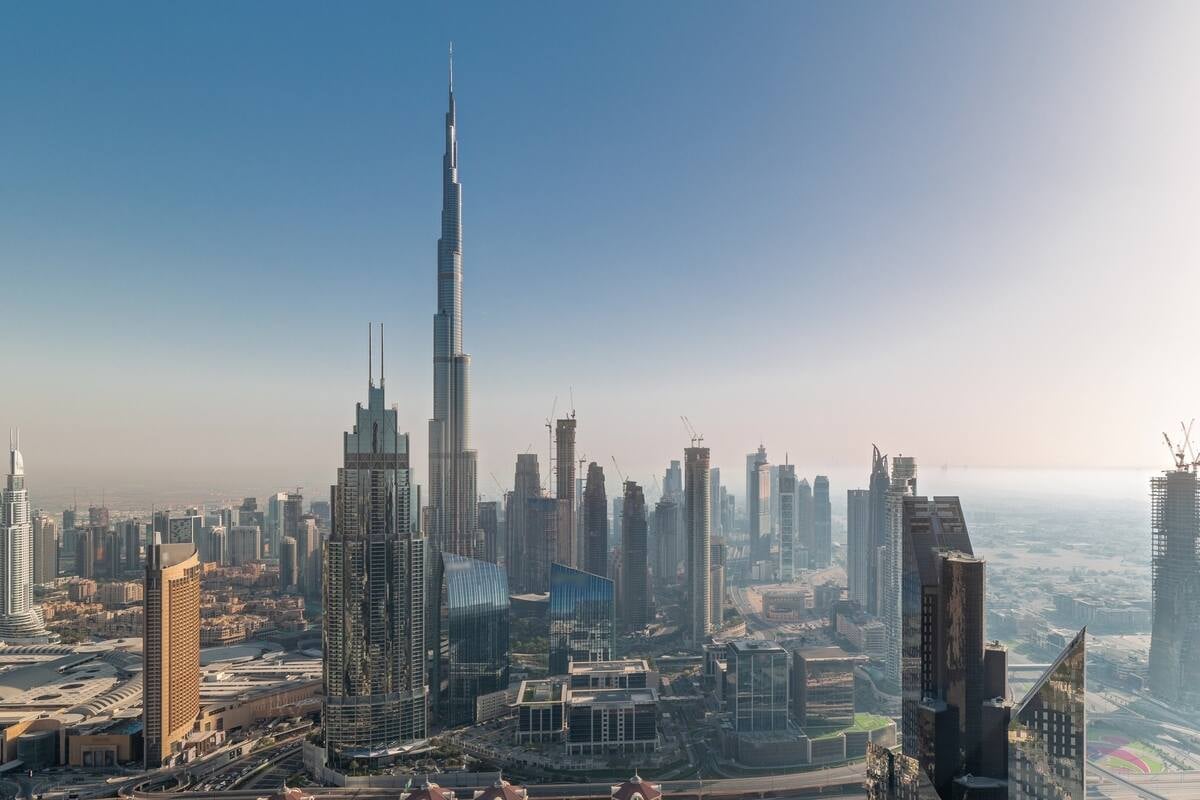
    The value of new real estate projects in Dubai has exceeded AED275 billion ($74.88 billion) since the beginning of 2026, reflecting continued exceptional momentum in the sector and reinforcing the emirate’s entry into the largest half-year cycle of new real estate project launches in its history.

    A recent report by W Capital Real Estate Brokerage stated that the total value of new and announced real estate projects in the first half of this year exceeded AED275 billion. This includes 250 new real estate projects launched and registered with the Dubai Land Department by the end of May, valued at nearly AED75 billion, as well as the mega-project announced by Emaar Properties in June, valued at up to AED200 billion.

    The projects launched during the first five months of the year comprise approximately 59,400 residential units and 10,800 villas, reflecting the continued focus on the residential sector as the primary driver of real estate growth in Dubai, supported by strong demand from local and international buyers and investors.

    Historical comparisons indicate that Dubai witnessed the launch of 648 new real estate projects by 258 developers in 2025, encompassing over 167,000 residential units with an estimated value of approximately AED463 billion. This compares to 145,000 units valued at AED360.1 billion in 2024, representing a 15.2 percent increase in the number of units and a 28.4 percent increase in the total project value.

    Apartments continued to dominate the new supply last year, accounting for approximately 88.8 percent of all units offered. Meanwhile, villas and townhouses saw significant growth in total value, driven by increased demand for integrated residential communities and low-density projects.

    Confidence remains strong among developers and investors

    In a statement, Al Zarooni, W Capital CEO, said that the figures recorded in the first half of the year reflect strong confidence in Dubai’s real estate sector among both developers and investors. He emphasized that the emirate has successfully established itself as one of the most active and attractive global real estate markets.

    “The fact that the value of new and announced projects has reached nearly AED300 billion in less than six months is an exceptional indicator reflecting the strength of genuine demand for real estate in Dubai, rather than mere development activity driven by expectations,” said Al Zarooni.

    He also noted that Dubai’s real estate market has become more mature and better able to absorb new projects compared to previous years, thanks to the development of the regulatory environment, enhanced transparency and an advanced legislative framework that protects the rights of both investors and developers.

    Dubai on track to post new record high

    Al Zarooni explained that the current pace of launches puts Dubai on track to record one of its biggest years in history in terms of the value of new real estate projects. He predicted that the value of projects launched this year will surpass last year’s levels if the pace of major project announcements continues into the second half of 2026.

    He emphasized that current indicators reflect Dubai’s transformation into a global hub for attracting real estate capital, at a time when many international markets are experiencing a slowdown or a state of anticipation. He noted that the emirate continues to benefit from its position as a safe destination for investment, living and working, which is directly reflected in the strength of demand and the continued launch of new projects.

    The surge in project launches comes alongside other market developments, including Dubai’s Flexi Rents initiative introduced in June 2026 to ease financial pressure on tenants, and follows projections that Dubai’s real estate market will attract over AED1 trillion ($272.3 billion) in new projects over the next five years.

    “What we are witnessing today is not just cyclical growth, but a new phase of real estate development based on sustainable demand and long-term growth. This gives the market strong momentum and promising opportunities for developers and investors in the coming years,” Al Zarooni concluded.

  • Majid Al Futtaim Signs $3.1 Billion New Cairo Development Deal

    Majid Al Futtaim Signs $3.1 Billion New Cairo Development Deal

    The master-planned development will span approximately 553 feddans—equivalent to 2.32 million square metres—and is set to include around 6,000 residential units, hotel facilities, commercial and entertainment venues, and a dedicated business and services district.

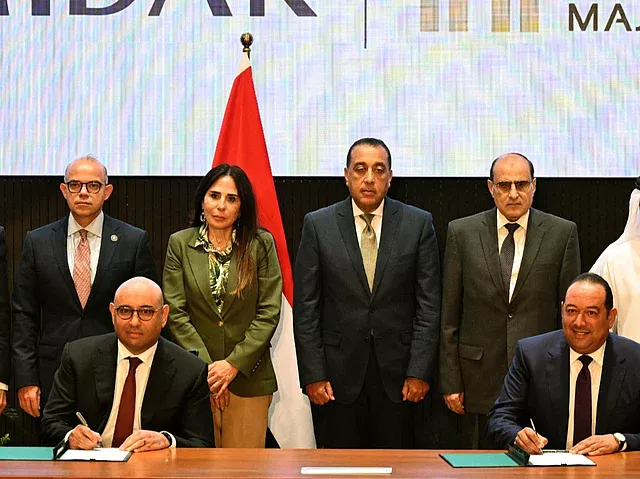
    The agreement was signed at the Egyptian Cabinet headquarters in the New Administrative Capital under the patronage of Prime Minister Dr Mostafa Madbouly. The ceremony brought together senior Egyptian and UAE officials, including Minister of Housing, Utilities and Urban Communities Randa El-Menshawy, Minister of Investment and Foreign Trade Hassan El-Khatib, and UAE Ambassador to Egypt Hamad Obaid Al Zaabi.

    Ahmed Galal Ismail, Chief Executive Officer of Majid Al Futtaim Holding, and Ayman Elkousey, Managing Director and Chief Executive Officer of MIDAR, formalized the partnership.

    “Our strategic partnership with MIDAR marks a proud new chapter for Majid Al Futtaim in Egypt. By bringing our regional expertise in developing integrated, mixed-use communities to Mada City, we are creating an advanced urban model that places quality of life and sustainability at its core,” Ismail said.

    The development will be delivered in phases. The first phase will cover 200 feddans, or 840,000 square metres, over the first four years from the start of implementation. A second phase will encompass 300 feddans, or 1.26 million square metres.

    An additional 60 feddans—approximately 240,000 square metres—have been earmarked for a possible integrated shopping and entertainment destination. This area will be allocated progressively based on the pace of development and occupancy rates, potentially pushing the project’s total development value beyond $4 billion.

    MIDAR confirmed the partnership will operate under a revenue-sharing model, with the expected future value for the company exceeding EGP40 billion. Ayman Elkousey said the deal reinforces Mada City’s position as an attractive urban destination for regional investors and reflects confidence in Egypt’s real estate market.

    Majid Al Futtaim has maintained a presence in Egypt for 27 years, investing approximately $2.8 billion and creating more than 226,000 direct and indirect jobs. The group’s Egyptian portfolio includes Mall of Egypt, City Centre Almaza, City Centre Alexandria, City Centre Maadi, 115 Carrefour and Supeco stores, cinemas, and leisure assets.

    The New Cairo project represents a strategic shift for the Dubai-based developer, extending its regional footprint into large-scale residential communities. Ismail emphasized that the initiative builds on the group’s long-standing investment in Egypt and supports the country’s development priorities, aiming to create meaningful economic value while meeting the highest international standards.

    The move comes as UAE-based developers continue to expand across the region, with Majid Al Futtaim previously announcing a Dh62 billion mixed-use community in partnership with Dubai South. Meanwhile, Dubai’s real estate market is projected to attract over $272 billion in new projects over the next five years, reflecting the strength of Gulf developers’ ambitions both domestically and abroad.

  • Dubai Property Transactions Above Dh10 Million Surge Post-Ceasefire

    Dubai Property Transactions Above Dh10 Million Surge Post-Ceasefire

    Dubai developers confirmed on May 12, 2026, that the emirate’s property market remains on solid footing despite recent geopolitical tensions, with buyer confidence gradually returning and major projects progressing as scheduled.

    Transaction value typically outperforms April by 10 to 30 percent, with residential contributing over 80 per cent of the total market value, according to Property Finder.

    Cherif Sleiman, chief revenue officer of Property Finder, noted that Dubai’s property market in May will “be building from a softer starting point than the summers of 2023 or 2024, given where March landed.”

    June typically pulls back 8 to 12 per cent below May, July recovers, and August through September builds gradually. That pattern has held consistently since 2021, the real estate platform noted.

    High-Value Transactions Return

    “At Springfield Properties, we observed a sharp slowdown in transaction volumes through March, driven by sudden uncertainty. However, from early April — particularly post-ceasefire — we have seen a decisive pickup in activity,” Farooq Syed, CEO of Springfield Properties, said.

    He confirmed that from mid-April onwards, right after the proposed ceasefire deal between Iran and the US, the development has seen a resurgence in high-value activity, with transactions exceeding Dh10 million.

    After the temporary resurgence of attacks on the UAE, Syed said that the underlying fundamentals which support the real estate sector remained intact, though naturally, buyers were cautious.

    The surge in ultra-luxury transactions aligns with broader market trends. Dubai recorded over Dh180 billion in Q1 2026, with ultra-luxury deals valued above Dh10 million surging 62.6% year-on-year to 2,148 transactions.

    Construction Progress Continues

    Dugasta Properties, a real estate developer in Dubai, is among many developers carrying on with project deliveries, including its upcoming Al Haseen Residence 6 project.

    The development’s construction progress, project delivery, and developer pipelines continue to move forward “with confidence across the market,” according to Tauseef Khan, Founder and Chairman at Dugasta Properties.

    “The recent regional developments and heightened security concerns have naturally captured global attention and prompted a more cautious sentiment across international markets. Buyers and investors usually take more time to calculate their next steps in times of unpredictability, which lead to a more measured pace of activity in the short term.”

    Khan told Khaleej Times that Dubai’s property market continues to outperform expectations, with particularly strong momentum around ready-to-move-in homes and income-generating assets.

    Dubai-based Grovy Developers confirmed last month that its residential project, RIVO by Grovy, was progressing on schedule. The 133-unit residential landmark is situated in Dubai Land Residential Complex, with studios starting at Dh690,000. The developer confirmed the project is ready to advance into the next construction phase in line with its Q4 2027 handover commitment.

    Market Outlook

    Looking ahead, Syed expects this renewed momentum to translate into higher conversion levels through May, especially as previously cautious buyers continue to re-engage.

    “Dubai has consistently demonstrated its ability to rebound quickly once uncertainty subsides, and the pace of recovery we are seeing suggests this cycle will follow a similar trajectory — with momentum building rather than resetting.”

    The market’s resilience is further supported by structural reforms. Dubai eliminated the Dh750,000 minimum property value for residency visas on April 30, 2026, opening the market to a broader pool of investors and first-time buyers.

    Meanwhile, the $9 billion Gold Line Metro expansion and sustained off-plan demand continue to support market stability, with off-plan properties reaching 76% of all April transactions.

  • Dubai Property Conversions Triple After Ceasefire Announcement

    Dubai Property Conversions Triple After Ceasefire Announcement

    Dubai’s real estate sector is experiencing a sharp rebound in buyer activity following the ceasefire announcement, with Sobha Realty witnessing customer conversions increase threefold compared to the period before tensions subsided.

    Francis Alfred, managing director of Sobha Realty, told Khaleej Times on April 19, 2026, that the recovery has been immediate and decisive.

    “People who were waiting on the sidelines are beginning to return. International buyers are also coming back,” Alfred said, adding that long-term investors in Dubai remain focused on the emirate’s future prospects rather than short-term geopolitical events.

    The developer, which has delivered 13 master communities in Dubai, is now expanding into Abu Dhabi with its first major project in the capital, bringing the same expertise and customer-focused approach that has defined its operations in Dubai.

    “We have gained deep insights into what customers need and how to deliver high-quality products. We are taking that expertise into Abu Dhabi,” Alfred explained, confirming that the company plans further expansion beyond its debut development in the emirate.

    Quality Over Discounts

    Sobha Realty is maintaining its focus on product quality rather than offering deep discounts to stimulate demand. Alfred emphasized that the company believes in preserving intrinsic value through disciplined pricing.

    “We believe a quality product has intrinsic value. We are not going to discount our projects in a way that reduces that value,” he stated.

    Instead, the developer may offer limited incentives such as support with registration costs while maintaining overall pricing discipline.

    The company’s financial position remains robust, supported by a large land bank, infrastructure assets, and a multi-year revenue backlog from previous sales. Construction funding is largely covered through escrow accounts and customer collections, reducing reliance on additional borrowing.

    “The land is already paid for, and most construction is funded through escrow accounts. We do not foresee any serious requirement for additional funding at this stage,” Alfred confirmed.

    Market Maturity and Resilience

    Alfred noted that the current environment is likely to widen the gap between established developers with proven track records and smaller players with weaker financial foundations. Buyers are increasingly choosing companies with strong reputations and the ability to maintain quality standards.

    “Customers know that trusted developers will deliver the same quality product without compromise,” he said.

    Comparing the current situation with the Covid-19 pandemic, Alfred highlighted that today’s challenges are regional rather than global, meaning the impact on the UAE market should be more contained. He expects the market to return quickly to its previous growth trajectory without experiencing a sharp correction or speculative rally.

    “The UAE property market is now far more mature and resilient. It is not jumping up and down because of short-term events,” Alfred concluded.

    The comments align with broader market trends, as Dubai’s property market staged a sharp recovery in recent weeks despite ongoing volatility in financial markets. The sector recorded Dh32.2 billion in rental contracts during the first quarter of 2026, reflecting sustained stability across residential segments.

  • S&P Rules Out 2008-Style Crash for Dubai Property Market

    S&P Rules Out 2008-Style Crash for Dubai Property Market

    Dubai’s real estate sector is structurally resilient and will not experience a collapse comparable to the 2008 global financial crisis, according to S&P Global Ratings analysts speaking at a March 26, 2026 webinar.

    The ratings agency highlighted that major developers have entered the current period of regional uncertainty from a position of strength, supported by years of robust pre-sales, solid revenue backlogs covering several years of operations, and healthy liquidity reserves.

    Four rated developers demonstrate stability

    S&P’s assessment covers four Dubai-based developers: Damac, Emaar, Omniyat, and Sobha Realty. Notably, Sobha Realty exceeded rating expectations and saw its outlook upgraded from negative to stable.

    “We’re not really seeing that play out just yet. The situation has definitely introduced a level of caution, but what we are seeing are lower transaction volumes,” said Sapna Jagtiani, director and lead analyst of Corporate Ratings at S&P Global Ratings.

    Developers in Dubai are entering this period from a position of strength, supported by strong pre-sales in recent years, solid revenue backlogs, and healthy liquidity buffers, which should help them absorb a short-term shock.

    Fares Shweiky, associate director of Corporate Ratings at S&P, emphasized that the current financial cushion should enable developers to weather short-term volatility.

    Base case scenario: temporary slowdown

    S&P’s base case assumes the regional military conflict will last approximately two to four weeks, with a temporary slowdown in demand and price appreciation following years of rapid growth. The agency expects a slight decline in transaction volumes but sees no indication of a broader market collapse.

    Jagtiani noted that some of the reduced activity can be attributed to Ramadan, when markets typically experience quieter periods with lower sales volumes.

    Market data shows resilience

    Despite regional tensions, Dubai’s property market continues to attract capital, with data from proptech firm Smart Bricks indicating that 85 percent of landlords are holding their assets and continuing transactions at scale.

    Even during Ramadan, traditionally a slower period, Dubai real estate recorded 15,196 transactions with a combined value of Dh50.58 billion, representing a 5.63% year-on-year increase in volume and a 29.7% increase in value, according to Kelt and Co Realty.

    Five-year growth trajectory

    Dubai’s property developers have recorded exceptionally strong sales over the past five years, driven by robust investor demand, government reforms, and the emirate’s expanding global appeal. Growth has been broad-based across apartments, villas, and commercial assets, with developers consistently launching projects met with strong off-plan demand and high absorption rates.

    The momentum continued through 2025, which marked a record-breaking performance for Dubai’s property sector. Developers benefited from sustained population inflows, rising investor confidence, and attractive residency policies that drove both end-user demand and international investment.

    The S&P assessment reinforces market sentiment that Dubai’s real estate fundamentals remain sound, with structural advantages and diversified buyer base providing support even as the region navigates geopolitical uncertainty. Unlike 2008, when overleveraged developers faced liquidity crises and massive project cancellations, today’s market operates with stronger financial controls, more conservative lending practices, and significantly improved regulatory oversight.

  • BEYOND Developments Unveils EVERMORE Master Plan on Marjan Beach

    BEYOND Developments Unveils EVERMORE Master Plan on Marjan Beach

    The announcement, made on February 13, 2026, marks BEYOND’s inaugural venture outside Dubai and introduces a French-inspired waterfront development spanning over 7 million square feet of gross floor area. The project is positioned opposite Wynn Al Marjan Island on one of the emirate’s most strategic beachfront plots.

    Mahdi Amjad, Founder and Executive Chairman of BEYOND Developments, emphasized the significance of the launch:

    “Ras Al Khaimah is witnessing a new phase of development, underpinned by disciplined planning, rising global relevance and the long-term vision of its leadership whose support has been instrumental in enabling our entry into the emirate. EVERMORE stands as a defining milestone in our journey, marking our first expansion outside Dubai and first destination in Ras Al Khaimah.”

    The master plan introduces 250,000 square meters of landscaped open spaces, including a central botanical garden, designed as a fully pedestrian-oriented development. Shaded walkways and green connections link the botanical garden to 3.5 kilometers of accessible beachfront, prioritizing walkability and resident well-being.

    EVERMORE integrates residential, hospitality, and retail components, including 1 million square feet of hospitality and branded residential offerings. The destination features a festival and events plaza, botanical souqs, an F&B village, and a continuous beachfront promenade, forming a self-sustained cultural and leisure district.

    Abdulla Al Abdouli, Group CEO of Marjan, highlighted the project’s importance:

    “As the second-largest master plan within our portfolio, it strengthens Marjan Beach’s evolution as a destination where lifestyle, hospitality, and nature come together to shape the future of the emirate. This master plan adds a meaningful new layer to the beach’s evolution and strengthens its positioning as a global lifestyle and investment destination.”

    The architectural vision draws inspiration from French classical design, reinterpreting proportion, symmetry, and spatial order through a contemporary lens. Cascading buildings are arranged to maximize uninterrupted sea and landscape views, with wind-flow strategies, shaded pathways, dense greenery, and pedestrian bridges ensuring year-round comfort.

    The unveiling took place through an immersive launch experience featuring light installations, layered soundscapes, and theatrical storytelling, translating the spirit of the master plan into a sensory narrative for attendees.

    EVERMORE is designed to contribute meaningfully to the Ras Al Khaimah Vision 2030, aligning with the emirate’s evolving urban and economic development strategy. The project’s scale and positioning reflect growing confidence in Ras Al Khaimah’s real estate investment landscape, as developers increasingly look beyond Dubai’s saturated markets.

  • Emaar Properties Reports Record 2025 Results with Dh80.4 Billion Sales

    Emaar Properties delivered its strongest financial performance to date in 2025, with growth accelerating across all business segments including property development, retail, hospitality, and international operations.

    The Dubai-based developer reported a 16% year-on-year increase in property sales to Dh80.4 billion ($21.9 billion), while total revenue climbed 40% to Dh49.6 billion ($13.5 billion). Net profit before tax rose 36% to Dh25.7 billion ($7 billion), and EBITDA reached Dh25.6 billion ($7 billion), marking a 33% increase from 2024.

    Revenue backlog surged 39% to Dh155 billion ($42.1 billion), providing substantial visibility on future earnings and demonstrating sustained market confidence.

    “Our 2025 results were shaped by a business environment that enables ambition and rewards long-term thinking. The UAE Government and the city of Dubai have created a framework built on stability, clear regulation, and openness to global investment, allowing companies like Emaar to plan with confidence, scale responsibly, and focus on execution,” said Mohamed Alabbar, Emaar founder.

    Domestic Development Drives Growth

    Emaar Development PJSC recorded Dh71.1 billion ($19.4 billion) in UAE property sales, representing a 9% increase from 2024. Revenue from domestic projects reached Dh36.4 billion ($9.9 billion), while net profit before tax grew an impressive 52% to Dh15.5 billion ($4.2 billion).

    The company launched 48 new residential projects throughout the year, including high-profile developments such as Grand Polo Club and Resort, The Valley, and Bristol at Emaar Beachfront. The UAE backlog stood at Dh134.3 billion ($36.6 billion), reflecting strong pre-sales momentum.

    These results align with broader market trends, as Dubai’s property sector continues its upward trajectory with record-breaking transaction volumes.

    International Expansion Accelerates

    International property sales experienced exceptional growth, surging 124% to Dh9.3 billion ($2.5 billion), with revenue of Dh2.6 billion ($0.7 billion) generated across operations in Egypt and India. This expansion demonstrates Emaar’s successful geographic diversification strategy beyond its home market.

    Recurring Revenue Streams Strengthen

    Emaar’s malls and retail leasing revenue increased 13% to Dh6.3 billion ($1.7 billion), maintaining an impressive 98% occupancy rate across its portfolio. The hospitality, leisure, and entertainment segment recorded revenue of Dh4.2 billion ($1.1 billion), up 12%, supported by higher tourism inflows and the addition of three new hotels.

    Combined recurring revenue from malls, hotels, and commercial leasing reached Dh10.5 billion ($2.8 billion), reflecting a 13% increase and strengthening the company’s diversified income base.

    The record performance comes as Dubai’s property market demonstrates exceptional momentum, with investor confidence remaining robust amid favorable regulatory frameworks and economic stability.

    Emaar’s 2025 results reinforce the company’s market leadership position and highlight the sustained appeal of Dubai real estate as a destination for both end-users and investors seeking long-term value in a transparent, well-regulated environment.