• S&P Rules Out 2008-Style Crash for Dubai Property Market

    S&P Rules Out 2008-Style Crash for Dubai Property Market

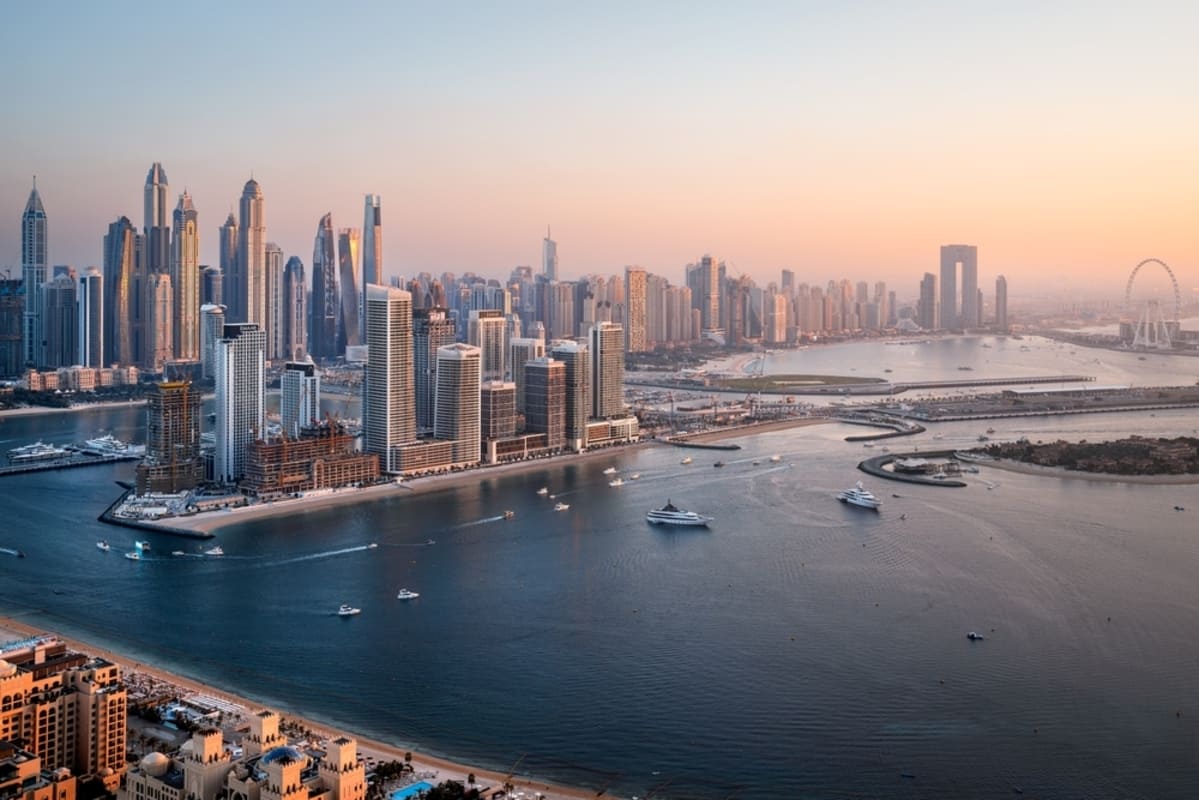
    Dubai’s real estate sector is structurally resilient and will not experience a collapse comparable to the 2008 global financial crisis, according to S&P Global Ratings analysts speaking at a March 26, 2026 webinar.

    The ratings agency highlighted that major developers have entered the current period of regional uncertainty from a position of strength, supported by years of robust pre-sales, solid revenue backlogs covering several years of operations, and healthy liquidity reserves.

    Four rated developers demonstrate stability

    S&P’s assessment covers four Dubai-based developers: Damac, Emaar, Omniyat, and Sobha Realty. Notably, Sobha Realty exceeded rating expectations and saw its outlook upgraded from negative to stable.

    “We’re not really seeing that play out just yet. The situation has definitely introduced a level of caution, but what we are seeing are lower transaction volumes,” said Sapna Jagtiani, director and lead analyst of Corporate Ratings at S&P Global Ratings.

    Developers in Dubai are entering this period from a position of strength, supported by strong pre-sales in recent years, solid revenue backlogs, and healthy liquidity buffers, which should help them absorb a short-term shock.

    Fares Shweiky, associate director of Corporate Ratings at S&P, emphasized that the current financial cushion should enable developers to weather short-term volatility.

    Base case scenario: temporary slowdown

    S&P’s base case assumes the regional military conflict will last approximately two to four weeks, with a temporary slowdown in demand and price appreciation following years of rapid growth. The agency expects a slight decline in transaction volumes but sees no indication of a broader market collapse.

    Jagtiani noted that some of the reduced activity can be attributed to Ramadan, when markets typically experience quieter periods with lower sales volumes.

    Market data shows resilience

    Despite regional tensions, Dubai’s property market continues to attract capital, with data from proptech firm Smart Bricks indicating that 85 percent of landlords are holding their assets and continuing transactions at scale.

    Even during Ramadan, traditionally a slower period, Dubai real estate recorded 15,196 transactions with a combined value of Dh50.58 billion, representing a 5.63% year-on-year increase in volume and a 29.7% increase in value, according to Kelt and Co Realty.

    Five-year growth trajectory

    Dubai’s property developers have recorded exceptionally strong sales over the past five years, driven by robust investor demand, government reforms, and the emirate’s expanding global appeal. Growth has been broad-based across apartments, villas, and commercial assets, with developers consistently launching projects met with strong off-plan demand and high absorption rates.

    The momentum continued through 2025, which marked a record-breaking performance for Dubai’s property sector. Developers benefited from sustained population inflows, rising investor confidence, and attractive residency policies that drove both end-user demand and international investment.

    The S&P assessment reinforces market sentiment that Dubai’s real estate fundamentals remain sound, with structural advantages and diversified buyer base providing support even as the region navigates geopolitical uncertainty. Unlike 2008, when overleveraged developers faced liquidity crises and massive project cancellations, today’s market operates with stronger financial controls, more conservative lending practices, and significantly improved regulatory oversight.

  • Dubai Penthouse Rents for Dh12 Million in Record Burj Khalifa Deal

    Dubai Penthouse Rents for Dh12 Million in Record Burj Khalifa Deal

    The property marks a rare transaction at the very top of Dubai’s rental market, where high-net-worth tenants continue to commit to premium rents for scale, privacy, and prestige. The deal highlights how demand for trophy assets remains intact even as broader regional uncertainty persists.

    “In times of volatility, capital does not retreat, it becomes more selective. It seeks environments defined by stability, security, and long-term vision. Dubai continues to command that trust,” said Karl Haddad, owner of the property.

    A One-of-a-Kind Residence

    The residence stands apart within the Burj Khalifa itself, following a multi-year structural transformation that combined multiple units into a single vertical residence. The process took more than six years, including over three years of approvals, with concrete slabs modified to create a private internal staircase. The result is the only duplex of its kind in the tower.

    Spanning more than 10,000 square feet with plans to expand further, the property includes a large terrace, private pool, cinema, spa, and gym, alongside high-end finishes and custom interiors designed for long-term occupancy.

    “This property is unlike any other in the tower,” Haddad said. “On a personal level, this reinforces why I continue to invest and operate here. Dubai has built an ecosystem where ambition is protected, capital is respected, and confidence is sustained, even in the most testing moments.”

    Shift in Ultra-Prime Rental Demand

    The transaction was facilitated by Keyper and points to a shift in how ultra-wealthy residents approach property in Dubai.

    “Ultra-high net worth individuals are prioritising flexibility without compromising scale, privacy, or prestige. A Dh12 million annual lease would have been unthinkable just a few years ago. Today, it reflects the growing sophistication of Dubai’s ultra prime rental market.”

    Omar Abu Innab, Co-Founder and CEO of Keyper, noted that large-ticket property purchases remain common, though high-value leases at this level are still rare, placing the deal among a limited set of global transactions.

    That positioning has helped sustain activity in Dubai’s prime segment, even as other markets face slower deal flow. The flexible payment structures offered by landlords and the emirate’s strategic appeal continue to attract capital from ultra-high-net-worth individuals seeking stability and premium lifestyle offerings.

    The transaction comes as Dubai’s property market maintains resilience through ongoing regional tensions, with industry leaders citing structural advantages and a diversified buyer base as key factors supporting continued investor confidence across all segments.

  • Dubai South Awards Dh2 Billion Contract for HAYAT Residential Project

    Dubai South Awards Dh2 Billion Contract for HAYAT Residential Project

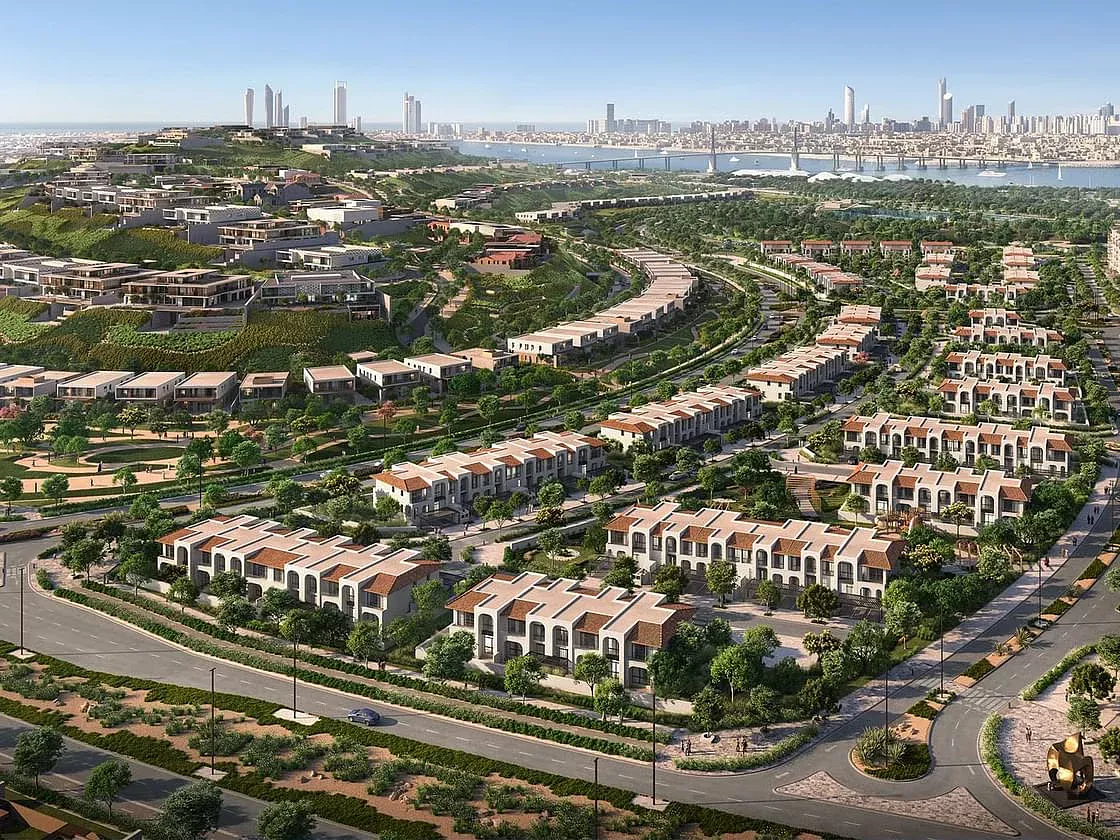
    Dubai South Properties, the real estate development arm of Dubai South, confirmed the appointment of Mohammed Abdulmohsin Al Kharafi & Sons LLC for the contract, which will cover several phases of HAYAT by Dubai South, a master-planned development spanning 10 million square feet.

    The project is located near Al Maktoum International Airport, adjacent to the Golf District, and is planned as an integrated community focused on balanced living and wellness-oriented amenities.

    HAYAT will include around 2,500 residential units, ranging from one- to five-bedroom layouts. The mix will feature townhouses, semi-detached and standalone villas, mansions, apartments and hotel apartments.

    Nabil Al Kindi, Group CEO of Dubai South, said:

    Since its launch in 2025, the project has witnessed strong demand and interest, driven by its unique positioning and wellness-inspired features. Through this development, we are focused on creating a well-balanced community that combines quality living, connectivity, and lifestyle-driven amenities, while reinforcing Dubai South’s position as a key destination for residents and investors.

    The homes are designed with a minimalist architectural style, offering privacy, flexibility and contemporary living spaces.

    The development will also include amenities such as parks, shaded walking trails, play areas, outdoor recreation spaces, fitness facilities, community pools and landscaped gardens. Plans also include lagoons, a scenic lake, a community mall and a retail boulevard with shops, cafés and essential services.

    The location offers access to major roads and economic hubs, including Al Maktoum International Airport, Sheikh Mohammed bin Zayed Road, Emirates Road, Jebel Ali Free Zone and Dubai South Free Zone.

    Construction is scheduled to begin in the second quarter of 2026, with initial phases expected to be completed by 2028.

    Dubai South said it continues to expand its residential ecosystem with facilities including parks, sports courts, retail outlets, a 50,000-square-foot hypermarket, a mosque, a petrol station, and a public bus route linking to the Expo Metro station. The area also includes a GEMS Founders School, and a 200,000-square-foot mall is under development.

    The Dh2 billion HAYAT project adds to Dubai’s expanding residential pipeline as the emirate continues to attract investor interest. Earlier in March, Futura EDGE launched Oak Yard Residences in JVC, while BEYOND Developments unveiled an 8 million sq ft masterplan at Dubai Maritime City, reflecting the sustained momentum across multiple districts.

  • Dubai Records Dh84.6 Million Off-Plan Apartment Sale in Jumeirah

    Dubai Records Dh84.6 Million Off-Plan Apartment Sale in Jumeirah

    A luxury off-plan apartment spanning approximately 11,566 square feet has been sold for Dh84.6 million in Dubai’s Jumeirah 1 district, according to data from the Dubai Land Department’s Dubai REST platform released March 24, 2026.

    The property, located within the Solaya 1, 2, 3 development, was transacted at an average price exceeding Dh7,317 per square foot, reflecting sustained demand in the emirate’s ultra-prime residential segment.

    The transaction contributed to a strong trading day, with total real estate transactions reaching approximately Dh1.57 billion by midday, including property sales exceeding Dh1.32 billion.

    Record-Breaking Luxury Market Performance

    Dubai’s luxury property market delivered exceptional results in 2025, recording 6,668 high-end transactions worth Dh143.8 billion, compared with 4,735 deals valued at Dh99.3 billion in 2024. This marked growth of 41% in transaction volume and 45% in value year-on-year.

    The performance was driven by growing interest from high-net-worth individuals worldwide, attracted by the emirate’s investment environment, regulatory framework, and tax advantages.

    Continued Market Momentum

    The Jumeirah 1 sale follows a series of major transactions across Dubai’s most prestigious addresses. Earlier in March, a luxury off-plan apartment at Armani Beach Residences on Palm Jumeirah sold for Dh92.5 million, while a villa on the World Islands changed hands for Dh220 million on March 12, 2026.

    The sustained appetite for premium properties comes as Dubai’s property market demonstrates resilience despite regional geopolitical tensions, with international capital continuing to flow into the emirate’s real estate sector.

    The transaction underscores the strength of Dubai’s off-plan luxury segment, where pre-construction developments continue to attract significant buyer interest from both resident and international investors seeking exposure to the emirate’s evolving skyline and lifestyle offering.

  • Dubai Launches Al Ras Walkway with 12km Pedestrian Network

    Dubai Launches Al Ras Walkway with 12km Pedestrian Network

    Dubai’s historic Al Ras district is set for a pedestrian-focused transformation under a new infrastructure initiative designed to improve walkability, heritage connectivity, and public transport integration.

    The Roads and Transport Authority (RTA) has awarded the contract for Phase I of the Dubai Walk Master Plan in Al Ras, marking the start of a comprehensive effort to reshape urban mobility in one of the city’s oldest neighborhoods.

    Key Features of Phase I

    The first phase will deliver 12km of dedicated walkways and 5km of cycling tracks, alongside the rehabilitation of 10 artistic spaces created in partnership with the Dubai Culture and Arts Authority, featuring work by Emirati and local artists.

    Mattar Al Tayer, director general and chairman of the Board of Executive Directors of the RTA, said the project supports Dubai’s wider goal of creating a “20-minute city” under the Dubai Urban Plan 2040, where more than 80 per cent of essential services are accessible within a 20-minute journey.

    “The plan enhances pedestrian safety, strengthens connections between districts, and integrates cultural and creative elements into walkways. It also gives young people a chance to contribute ideas to the design of these public spaces.”

    Connecting Heritage and Transport

    The walkway will link key landmarks including Al Ahmadiya School, Sheikh Saeed Al Maktoum House, Al Fahidi Fort, and the Al Shindagha Historic District, while connecting to 11 metro, bus, and marine stations to facilitate seamless public transport access.

    The design preserves the area’s historic character while upgrading the pedestrian experience through widened pavements, additional shading and seating, expanded green spaces, and improved wayfinding systems.

    Advanced lighting will highlight the district’s heritage, while interactive installations and artwork will enhance engagement along the route.

    Part of a Wider Vision

    Phase I forms part of the broader Dubai Walk Pedestrian Master Plan, which aims to create more than 6,000km of walkways across 160 areas by 2040, supported by 110 pedestrian bridges and underpasses.

    The initiative targets an increase in walking and soft mobility trips from 16 per cent in 2025 to 25 per cent by 2040, with planned infrastructure projects improving connections across key districts.

    The walkways will feature landscaping, misting systems, digital wayfinding, recreational and fitness equipment, rest areas, and commercial spaces, while maintaining barrier-free access throughout.

    The Al Ras Walkway represents a strategic step in Dubai’s urban evolution, integrating mobility, heritage preservation, and public art into a cohesive pedestrian network designed to serve residents and visitors across the city’s historic core.

  • Futura EDGE Launches Oak Yard Residences in Dubai’s JVC

    Futura EDGE has made its entry into the UAE real estate market with a 19-floor, 190-unit residential development in Jumeirah Village Circle, bringing institutional standards refined across European markets to one of Dubai’s most active residential communities.

    The company, which has delivered over 3 million square metres of residential and commercial real estate across the UK, Germany, Spain, and Eastern Europe since 2009, entered the project as both investor and main managing partner through a strategic investment in Yard Development, a local developer.

    Oak Yard Residences is scheduled for completion in the fourth quarter of 2026 in JVC District 10. The development features what the company describes as the largest gymnasium in JVC, along with an outdoor yoga area, Finnish and infrared saunas, a swimming pool, BBQ facilities, and over 1,000 square metres of outdoor space.

    Inside, a NextGen Workhub targets Dubai’s remote working community, while a biophilic kids’ zone and photocatalytic air purification system set indoor air quality standards ahead of typical market offerings. Every unit includes a private terrace and premium Italian and German interior finishes.

    The development also offers built-in rental management services designed to provide investors with a hands-off ownership experience.

    Futura EDGE has already begun construction on its second UAE project, located on Dubai Islands, with a public launch planned for May 2026. The move from JVC to one of Dubai’s emerging waterfront destinations signals the company’s escalating ambition in the emirate.

    The entry comes as Dubai’s property market rebounds with transaction volumes rising sharply in March 2026, while major residential allocations continue across the emirate.

    For Futura EDGE, the UAE expansion represents a calculated extension of a development philosophy built on fewer projects, higher standards, and longer-term thinking—a model the company has applied across multiple European markets over the past 17 years.

    Interested investors can contact the developer at 800663 9273 or via email at [email protected].

  • Dubai Property Market Rebounds as DFM Real Estate Stocks Extend Losses

    Dubai Property Market Rebounds as DFM Real Estate Stocks Extend Losses

    Two weeks after the onset of regional conflict on February 28, a significant divergence has emerged between Dubai’s physical real estate market and its listed equities, as property transactions rebound while financial markets continue to reprice risk.

    Transaction Liquidity Rebounds After Initial Shock

    Following an initial risk-off pause, the physical property market demonstrated a notable bounce-back in the second week of March. According to Dubai Land Department records analyzed by The Real Estate Reports, total transaction value on a headline basis, including land transactions, surged to Dhs15.66 billion in the week of March 9–15, representing a 51% increase in value and a 58% jump in transaction counts over the previous week.

    However, a closer examination reveals the recovery was primarily volume-driven. When excluding land plots to remove the volatility of high-value land deals, built value grew 13% to Dhs8.26 billion while transaction volume rose 56% to 4,327 deals. The discrepancy between modest value growth and surging volume indicates the market remains operational under more cautious, broader-based participation, with average ticket sizes softening.

    Off-Plan Sales Maintain Market Dominance

    The structural integrity of the market appears to have held. Off-plan sales continued to command the lion’s share of activity, accounting for 63% of built property value in the second week of March, compared to 66% in the week immediately following the conflict’s start.

    The most visible shift within this segment was a rotation toward villas. Off-plan villa sales rose to approximately 23% of the segment’s value, up from 16%, while the ready market similarly saw increased interest in landed homes over commercial assets. This suggests selective risk-taking by buyers who are prioritizing tangible residential assets over more sensitive commercial segments.

    Mortgage registrations nearly doubled to 1,053 in the second week of March, demonstrating that the fundamental infrastructure of the property market remains intact. Earlier this week, property services handled over 563,920 customers throughout 2025, reflecting the sector’s operational capacity.

    DFM Real Estate Index Plunges 13.8%

    The resilience in physical transactions stands in stark contrast to the Dubai Financial Market. Since trading resumed on March 4, aided by a temporary 5% limit-down threshold to prevent panic, equities have undergone a sustained de-risking phase.

    The DFM General Index (DFMGI) fell 5.7% in the second week of March on a turnover of 1.52 billion shares, nearly double the volume of the prior week. The pain was most acute in the Real Estate Index (DFMREI), which slumped 13.8% last week as investors demanded a higher risk premium for regional exposure.

    “While the physical market shows signs of a recovery in activity, the heavy-volume sell-off on the DFM suggests that financial markets may be pricing in a more prolonged period of uncertainty.”

    Growing Gap Between Sentiment and Real Economy

    The data highlights a widening gap between sentiment-driven equities and real economy property transactions. In the stock market, liquid shares are being sold as investors demand higher risk premiums for regional exposure. In the physical market, the normalization of mortgage registrations and sustained transaction volumes suggest the operational framework of the industry remains intact.

    Ali Shahin, founder of The Real Estate Reports, noted the contrast between the two markets, stating that while Dubai real estate is proving it can operate under pressure, listed counterparts are absorbing the brunt of the geopolitical shock.

    The divergence comes as global capital continues flowing into Dubai property, with industry leaders citing structural advantages and a diversified buyer base. Despite regional tensions causing an initial pause, off-plan demand has held firm, with luxury sales continuing across premium locations.

    For now, Dubai real estate is proving it can operate under pressure, even as its listed counterparts absorb the brunt of the geopolitical shock. The question remains whether financial markets are pricing in risks that the physical market has yet to fully experience, or whether the resilience on display will ultimately validate current transaction levels.

  • UAE Condemns Iran Attack on Habshan Gas Facility and Bab Field

    UAE Condemns Iran Attack on Habshan Gas Facility and Bab Field

    The UAE Ministry of Foreign Affairs issued a strong statement following the attempted strike on critical energy infrastructure, describing the attack as a direct threat to regional security and global energy supply.

    “The UAE reserves its full right to take all necessary measures to protect its sovereignty and national security, and to safeguard its national interests,” the ministry stated.

    This terrorist attack targeting critical infrastructure and oil facilities represents a direct threat to regional security and stability, as well as to global energy security.

    The attack comes amid a broader escalation across Gulf energy infrastructure. Reuters reported that Iran had warned of retaliatory strikes on energy sites in Saudi Arabia, the UAE and Qatar after Iranian gas facilities were hit on Wednesday.

    In Qatar, missile attacks caused extensive damage at Ras Laffan Industrial City, the centre of the country’s LNG operations, although no casualties were reported. The strikes mark a significant escalation in regional tensions, with critical energy infrastructure now directly in the crosshairs.

    Oil Markets React to Energy Security Threat

    Oil markets responded sharply to the latest attacks. Brent crude rose by as much as 3 per cent on Thursday as investors assessed the growing risk to energy infrastructure and supply routes.

    Brent futures climbed $3.69, or 3.44 per cent, reaching $111 per barrel earlier in the day. US West Texas Intermediate (WTI) crude rose $2.29, or 2.38 per cent, to $98.61.

    The attacks on UAE facilities follow a pattern of escalating strikes across the region. Earlier this week, Dubai’s property market demonstrated resilience despite ongoing regional geopolitical tensions, with industry leaders citing structural advantages and diversified buyer base as key factors supporting continued capital inflows.

    The UAE’s air defence systems successfully intercepted the attack, preventing damage to the Habshan gas facility and Bab field. No injuries were reported, according to official sources.

    The incident underscores the vulnerability of Gulf energy infrastructure and raises fresh concerns about the security of global energy supply at a time when markets are already under pressure from geopolitical instability.

  • Abu Dhabi Approves $1.15 Billion Housing Package for Citizens

    Abu Dhabi Approves $1.15 Billion Housing Package for Citizens

    The housing package, approved under the directives of Sheikh Mohamed bin Zayed Al Nahyan, President of the UAE, includes housing loans amounting to AED2.1 billion for 1,415 citizens, ready-built housing grants valued at AED1.82 billion for 914 citizens, residential land grants worth AED144 million for 185 citizens, and exemptions from housing loan repayments totalling AED142 million for 138 senior citizens, limited-income retirees, and heirs of deceased citizens.

    Abu Dhabi’s disbursement of the first housing package of 2026 comes ahead of Eid Al Fitr and reflects the leadership’s ongoing commitment to enhancing Emirati families’ wellbeing and ensuring their social stability and happiness in an environment that meets their aspirations and needs.

    “We extend our sincere gratitude and appreciation to His Highness Sheikh Mohamed bin Zayed Al Nahyan, President of the UAE, and to His Highness Sheikh Khaled bin Mohamed bin Zayed Al Nahyan, Crown Prince of Abu Dhabi and Chairman of the Abu Dhabi Executive Council, for their continued generous directives, care and commitment to providing citizens with the highest standards of living,” said Mohamed Ali Al Shorafa, Chairman of the Board of Directors of Abu Dhabi Housing Authority.

    Al Shorafa added that the leadership’s directives to disburse this housing benefits package reflect their commitment to meeting citizens’ aspirations and housing needs, enhancing their quality of life and ensuring stability and well-being for Emirati families.

    This package brings the total housing benefits delivered to citizens in Abu Dhabi since the establishment of the Abu Dhabi Housing Authority to more than 132,000, exceeding AED181 billion.

    Hamad Hareb Al Muhairi, Director-General of Abu Dhabi Housing Authority, noted that the new housing benefits package embodies the leadership’s ongoing dedication to ensuring dignified living standards and family stability for Emirati citizens, while serving comprehensive development objectives and underscoring the importance of suitable housing as a cornerstone of a cohesive and prosperous society.

    Al Muhairi further stated that Abu Dhabi Housing Authority continuously works to enhance and develop its programs and services, facilitating citizens’ access to suitable housing, in line with the leadership’s directives and ambitious vision for a prosperous future for citizens.

    The announcement comes as regional authorities continue to prioritize citizen welfare through housing initiatives. Earlier on March 18, Dubai allocated 4,631 residential plots valued at Dh5.3 billion for Emirati citizens across multiple communities. Abu Dhabi’s housing sector has also demonstrated strong momentum, with 75 million square meters of development approved in 2025, marking a 137% year-on-year increase.

  • Dubai Allocates 4,631 Residential Plots Worth Dh5.3 Billion for Citizens

    Dubai Allocates 4,631 Residential Plots Worth Dh5.3 Billion for Citizens

    The new housing package spans over 71 million square feet across three strategic locations in Dubai, forming part of the emirate’s broader citizen housing initiative designed to create integrated residential communities with advanced infrastructure and high quality of life standards.

    Allocations will be conducted through the Emirati platform on the DubaiNow app in the coming week, according to Dubai Media Office.

    “Today we approved the allocation of 4,631 residential plots valued at Dh5.3 billion, spanning an area of over 71 million square feet in Al Eyas, Latifa City and Mushrif areas. Our vision is consistent: Dubai’s true capital is its people and their families. The UAE citizen will always remain at the top of our priorities,” Sheikh Mohammed said.

    The Dubai Ruler emphasized that providing suitable housing for every Emirati family is central to Dubai’s development strategy, describing the initiative as part of broader urban development projects aimed at building integrated and vibrant communities.

    Sheikh Mohammed added that Dubai’s goal is to become the world’s best city for family life by offering a leading urban ecosystem that combines an integrated social environment and advanced housing supported by state-of-the-art infrastructure and services.

    Comprehensive Infrastructure for Future Communities

    The new residential plots are designed according to future urban planning standards, integrating green and open spaces to promote safe, healthy, and socially connected living. The planned communities will offer easy access to service centres providing top-tier amenities, supported by sustainable infrastructure that aligns with the Dubai 2040 Urban Master Plan.

    Eng Marwan bin Ghalita praised Sheikh Mohammed’s initiative, saying it “supports Dubai’s sustainable urban development and reflects Sheikh Mohammed’s commitment to the welfare of citizens.”

    Dubai Municipality is committed to carrying out Sheikh Mohammed’s directives by creating an urban planning model for future-ready residential communities supported by sustainable infrastructure and integrated services, Eng Marwan noted.

    Allocation Details Across Three Communities

    The Al Eyas area will receive 2,540 plots covering 39 million square feet. The community will feature advanced infrastructure, mosques, a neighbourhood Majlis, retail centres, a school, and an early childhood centre. Parks, recreational facilities, and a green path with cycling tracks will connect all neighbourhoods.

    Latifa City will receive 1,761 plots across 28 million square feet. Planned amenities include mosques, parks, retail centres, a school, an early childhood centre, a community neighbourhood Majlis, and a Quran memorisation centre, along with a dedicated green path.

    The Mushrif area is allocated 330 plots covering 4 million square feet, with planned amenities including two mosques, a family park, a retail centre, and supporting infrastructure.

    Dubai’s Vision for Family-Centric Urban Development

    Dubai Municipality is committed to advancing sustainable urban planning and cutting-edge construction to create integrated neighbourhoods. By leveraging the latest technologies, the municipality aims to enhance the quality of life for all residents while preserving the city’s aesthetics.

    The initiative reflects Dubai’s ambition to remain a premier global destination while providing Emirati citizens with modern, safe, and community-focused living spaces. The new housing package reinforces Dubai’s position as a city that nurtures families and supports their wellbeing through comprehensive urban development that prioritizes people-centric design.

    The residential allocation comes as Dubai’s property market continues to demonstrate robust activity, with the emirate’s real estate sector maintaining strong transaction volumes and investor confidence across all segments.