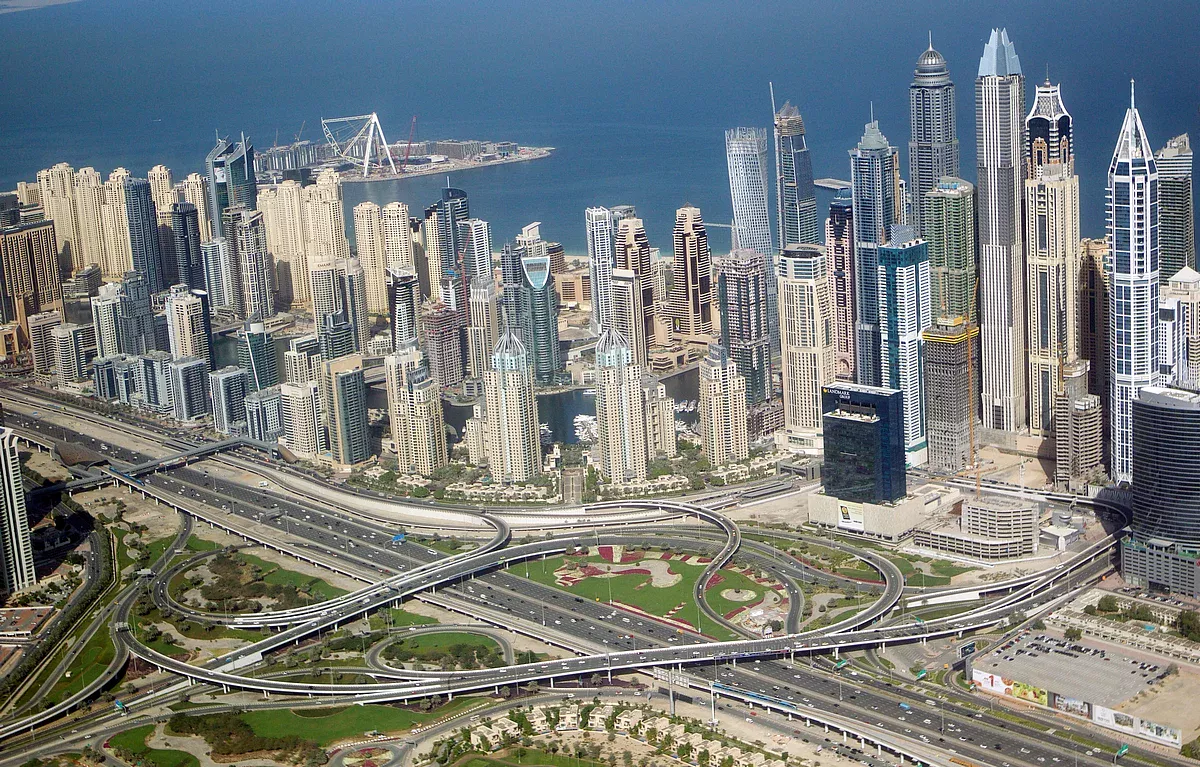
Buyers from more than 150 countries invested in Dubai’s housing market during 2025, with Indian nationals accounting for 22% of all purchases, followed by British buyers at 17% and Chinese investors at 14%, marking the continuation of a long-standing trend of expatriate-led investment in the emirate.
The consultancy found that Dubai’s residential market remained resilient during the US-Iran regional conflict, with buyer confidence returning quickly after a brief slowdown in March and April 2026.
Overall residential prices averaged about Dh1,900 per square foot in the first half of 2026, up from Dh1,800 per square foot during the same period last year, representing a 6% annual increase despite broader market uncertainty.
“While geopolitical tensions briefly affected buyer sentiment during March and April 2026, the correction was largely sentiment-driven – not structural,” said Aayush Puri, CEO of Residential, Middle East & CEO at Anarock Channel Partners, India.
Puri noted that residential prices softened by just 4–7% in the February to April period, significantly outperforming the Dubai Financial Market Real Estate stock index, which dropped 34% at its peak, marking “the widest sentiment-to-asset gap of any Dubai crisis on record.”
The recovery was supported by strong market fundamentals, with off-plan properties accounting for 70–77% of residential transactions during the period, reflecting sustained buyer confidence despite short-term uncertainty.
Weekly residential sales rebounded to as much as Dh10 billion after ceasefire efforts progressed, suggesting investors viewed the slowdown as temporary rather than a sign of weakening fundamentals.
Dubai’s growing population continued to support demand. The emirate added around 470 new residents a day in 2025, taking its population above 4.03 million by year-end.
More than 129,600 new investors entered Dubai’s property market in 2025, up 23% year-on-year. Around 80% of transactions were cash purchases, reducing the market’s exposure to interest rate fluctuations.
Among buyers, 38% purchased homes for their own use, while 28% bought properties for rental income. Another 21% invested to qualify for the UAE’s Golden Visa programme, while 13% cited capital preservation as their main motivation.
The data reflects broader trends across the region, with Abu Dhabi recording Dh117 billion in real estate transactions during the first half of 2026, marking a 112% year-on-year increase driven by foreign direct investment.
Looking ahead, Anarock expects Dubai’s residential prices to rise by 4–7% in 2026, supported by continued population growth, expanding international buyer demand and government initiatives. However, it warned that renewed regional conflict in the second half of 2026 remains the main downside risk to the market.
The report underscores Dubai’s position as a safe-haven destination for global capital, particularly among Indian and British investors seeking wealth preservation, residency options, and stable returns in an uncertain geopolitical environment.
Leave a Reply