Tag: Dubai South

  • Dubai Metro Expansion Could Boost Demand in JVC, Meydan and DSO

    Dubai Metro Expansion Could Boost Demand in JVC, Meydan and DSO

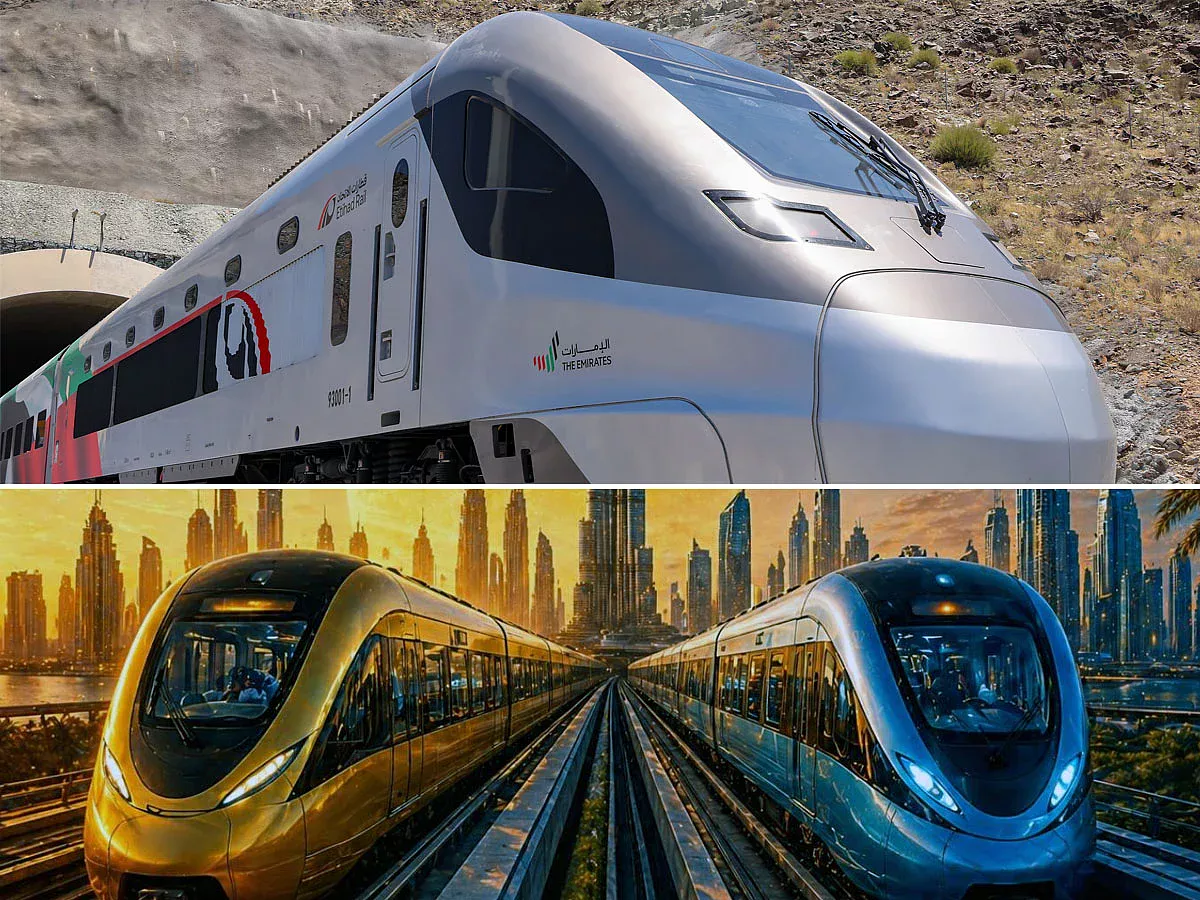
    Living farther from work could become a more practical option for Dubai residents once Etihad Rail and the Metro Blue and Gold Lines connect more communities directly to business districts and transport hubs.

    International City, Dubai Silicon Oasis, JVC, Meydan, Dubai South, Jumeirah Golf Estates, Mirdif and Al Warqa repeatedly emerge among the areas property executives expect to benefit, particularly where residents currently depend heavily on cars or buses.

    The shift could give tenants and buyers more choice beyond Downtown Dubai, Business Bay and Dubai Marina, where proximity to workplaces has historically justified paying more for housing.

    Fibha Ahmed, VP of Property Sales at Bayut, said improved transport can alter that calculation by reducing travel time between outer communities and employment centres.

    Traditionally, buyers and tenants paid a significant premium to live in central hubs like Downtown Dubai, Business Bay, or Dubai Marina to avoid long peak-hour highway commutes.

    Better rail links would not remove demand for central addresses, according to the executives, but could make lower-priced communities more viable for residents who previously considered the commute too difficult.

    International City and DSO Move Up the List

    The Blue Line, scheduled to open in 2029, puts several eastern Dubai communities in a different position.

    International City, Warsan, Dubai Silicon Oasis, Academic City, Dubai Creek Harbour, Mirdif and Al Warqa are among the areas expected to gain from direct Metro access.

    Many already have established housing, schools and employment bases but lack the rail connectivity available in more central parts of Dubai.

    Vivek Bhavsar, Director of Consulting at JLL MENA, said the effect could be clearest where the Metro is arriving for the first time.

    Areas gaining metro access for the first time will feel it most.

    International City stands out because of its lower entry prices, while Dubai Silicon Oasis combines residential demand with a large technology and employment base. Academic City has a sizeable student population, giving the wider corridor another potential source of rental demand once the line becomes operational.

    Ahmed expects high-density, mid-market communities that previously lacked rail access to see some of the strongest response, particularly where a station removes an existing obstacle for tenants.

    International City Phase 2 and Dubai Silicon Oasis also feature among the areas experts consider relatively well priced before the new connections are completed.

    JVC, Meydan and Jumeirah Golf Estates Gain Another Connection

    The planned Gold Line shifts attention towards JVC, Meydan, Mohammed Bin Rashid City, Nad Al Sheba, Al Barsha South and Jumeirah Golf Estates.

    JVC has developed into one of Dubai’s major residential communities without direct Metro access, making a future station particularly relevant to residents who currently rely on road travel.

    Mohammed Al Sari, CEO of HRE Development, said the way residents judge location is beginning to change with each expansion of the transport network.

    The market’s definition of well-located is shifting from proximity to the city centre toward proximity to the network.

    That could benefit communities where residents can still find more space or different price points while retaining practical links to Business Bay, Meydan and other employment centres.

    Jumeirah Golf Estates could become particularly important because it is expected to combine Gold Line access with Etihad Rail, while Meydan is frequently cited by developers and brokers because of its position on the planned route.

    Murad Saleh, Co-Founder and CEO of Amwaj Development, said transport can widen the range of locations residents consider without making distance irrelevant.

    Dubai’s next phase of growth will be defined less by distance and more by connectivity.

    He said transport works best when it is accompanied by good housing, amenities and wider community planning, meaning proximity to a future station alone does not guarantee stronger long-term performance.

    Dubai South Gets a Different Kind of Boost

    Etihad Rail places Dubai South, Jebel Ali and Dubai Investments Park in focus for a different reason.

    These areas combine residential development with logistics, employment and industrial activity, while Dubai South also sits close to Expo City and Al Maktoum International Airport.

    Better inter-emirate connectivity could widen the pool of people willing to live there, particularly those whose jobs involve regular travel between Dubai, Abu Dhabi and other emirates.

    Salman Ali Khan, COO and Co-Founder of 3S Real Estate Brokers, expects rents to respond before sale prices where new transport links materially improve accessibility.

    Better connectivity drives higher demand. Rents usually rise first, followed by prices.

    He puts the typical premium around stations at between 5% and 25%, while also identifying International City, Silicon Oasis, Al Warqa, Mirdif, Dubai South and selected parts of JVC and Meydan among areas still trading at a relative discount to what future connectivity could bring.

    Could Residents Move Farther Out?

    The more immediate question for tenants is whether better transport could make a larger home farther from the city centre worthwhile.

    Property executives broadly expect it to expand the choice.

    A resident working in central Dubai could consider communities such as International City, Dubai Silicon Oasis or JVC with less reliance on highway commuting, while Etihad Rail opens up another set of possibilities for people travelling between emirates.

    The transport expansion comes as Dubai completed 24,800 units in the first half of 2026, with residential rents declining 6.2 percent quarter-on-quarter as new supply eased tenant pressure. Meanwhile, residential sales hit $9.5 billion in July 2026, indicating sustained buyer interest across the emirate’s property market.
  • Zoya Developments Sells Out Dh104 Million Elinor Project in Under Two Weeks

    Zoya Developments Sells Out Dh104 Million Elinor Project in Under Two Weeks

    The complete sell-out of Elinor by Zoya reflects sustained investor appetite for premium residential communities in Dubai South, one of the emirate’s fastest-growing districts anchored by Al Maktoum International Airport’s expansion.

    The milestone was achieved following completion of all critical project requirements, including establishment of the escrow account and execution of all Sales and Purchase Agreements, according to a statement released on August 14, 2026.

    First Prime Properties, led by CEO Ali Al Dahari, served as the exclusive sales partner for the development. The firm’s market expertise and strategic execution played a central role in securing buyers across local and international segments.

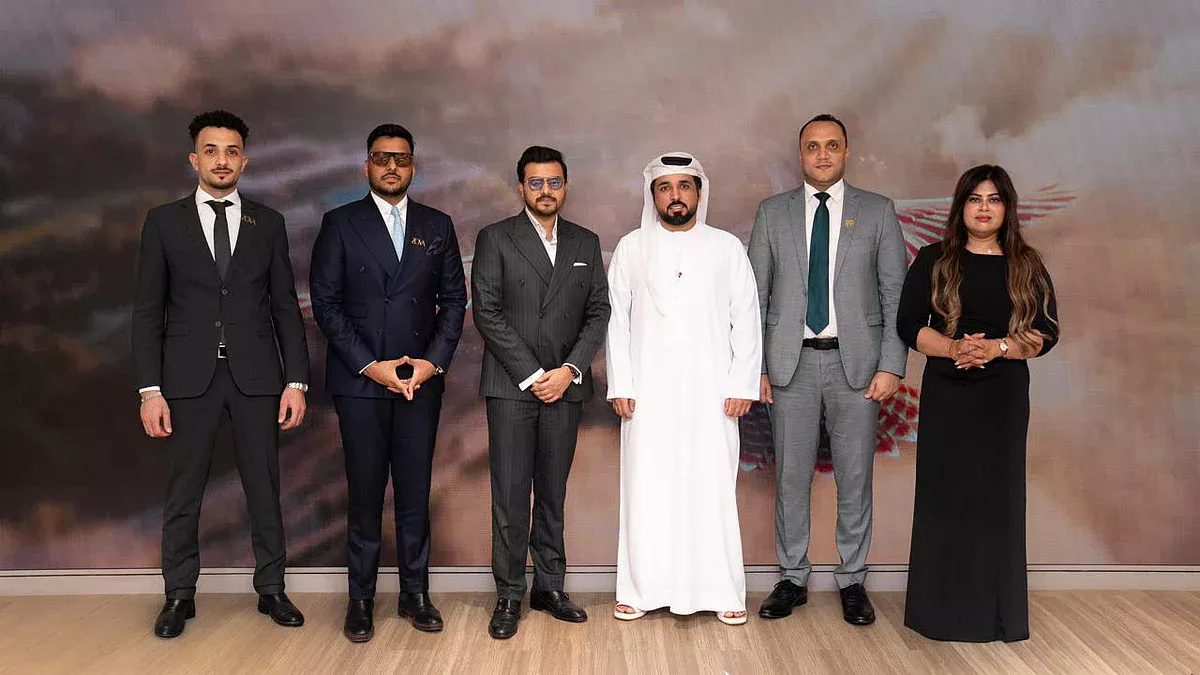
    “Selling a Dh104 million development in less than two weeks is a significant milestone that reflects the strength of our product, the trust of our investors, and the dedication of our sales partners,” said Imtiaz Khan, Managing Director and Co-Founder of Zoya Developments.

    Khan extended appreciation to Al Dahari and the First Prime Properties team, noting the achievement reinforces the developer’s vision of delivering high-quality projects that outperform market expectations.

    The rapid absorption comes as Dubai’s property market demonstrates strength across all price segments in 2026, with developers recording robust sales volumes through diverse project portfolios.

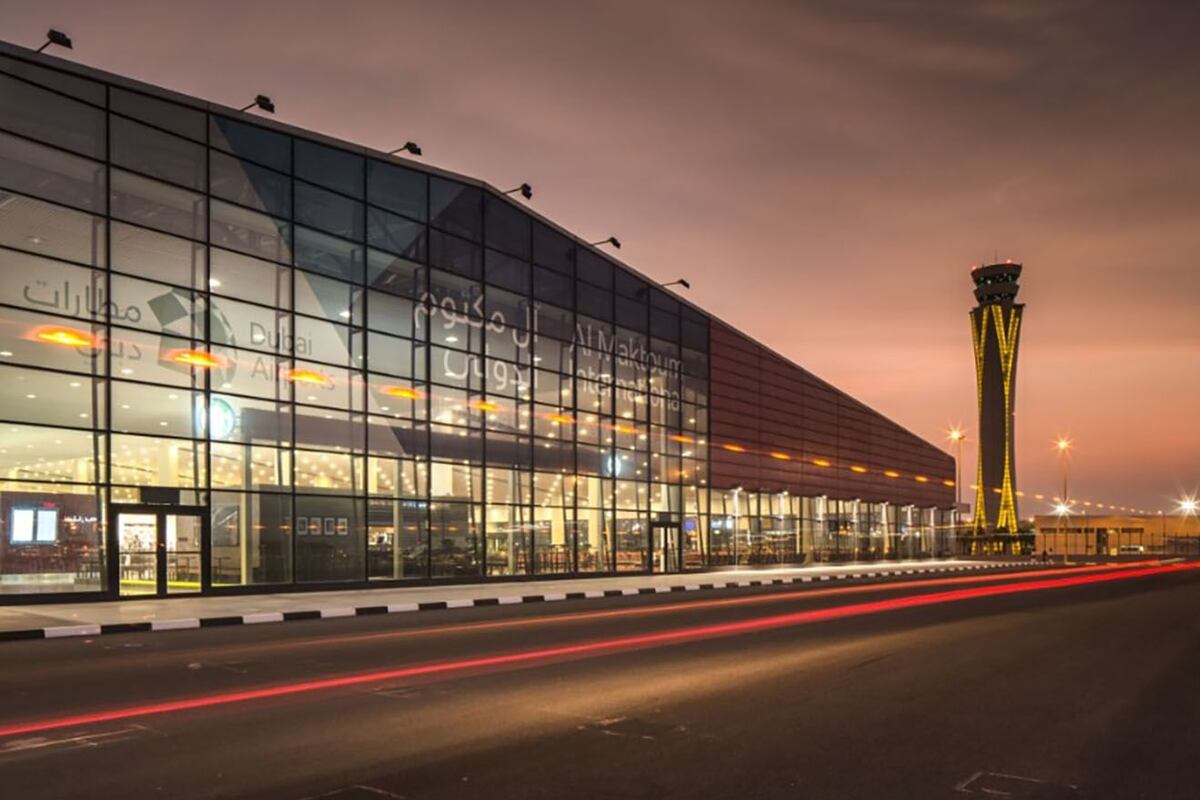
    Dubai South continues to attract investors and end-users seeking long-term value, connectivity and lifestyle-focused environments. The district’s appeal has intensified following the Dh128 billion expansion program for Al Maktoum International Airport, designed to accommodate 260 million passengers annually.

    Zoya Developments emphasized its commitment to strong governance, operational excellence and delivering confidence to investors at every stage of the development journey. The company said the sell-out strengthens its position among Dubai’s fastest-growing real estate developers as it expands across key growth locations.

    The successful sell-out adds to a broader trend of accelerated sales velocity in Dubai’s off-plan segment, where 84 percent of global investors consider the emirate more attractive than rival markets, according to recent surveys.

  • Al Maktoum Airport Expansion Drives Southern Dubai Real Estate Growth

    Al Maktoum Airport Expansion Drives Southern Dubai Real Estate Growth

    The future airport is designed to accommodate up to 260 million passengers annually, alongside 12 million tonnes of cargo, five parallel runways and more than 400 aircraft stands. Its first major phase is expected to provide capacity for approximately 150 million passengers a year, making the development one of the largest aviation infrastructure projects globally.

    An AED128 billion airport designed for 260 million passengers is not simply an aviation project. It is the foundation of a new economic center that will influence where companies operate, where employment is created and where future residents choose to live. The most important number for property investors is not passenger capacity alone. It is the scale of business activity, job creation and population growth expected around the airport. As infrastructure and employment move south, residential and commercial demand are likely to follow.

    Loai Al Fakir, CEO of Provident Estate

    New Investment Zones Emerge as Expansion Progresses

    The impact of this expansion on Dubai’s real estate market is expected to extend well beyond the airport boundary. An aviation economic-impact study estimated that construction related to the expansion could contribute approximately AED6.1 billion to Dubai’s GDP in 2030 and support around 132,000 jobs, creating demand for housing, offices, hospitality, retail and community services across nearby locations.

    According to Provident Estate, the emerging investment zone includes Dubai South, Emaar South, Expo City Dubai and Jebel Ali, linking the future passenger and cargo hub with established port infrastructure, free-zone activity, residential communities and global trade routes.

    Dubai South is already recording measurable business growth. The master development attracted 653 new companies in 2025, taking the total number of operating businesses to more than 4,200. New business licenses increased by 65 percent, while the area retained 90 percent of its existing companies.

    Residential real estate demand is also beginning to move alongside commercial activity. Dubai South reported more than AED19 billion in residential sales in 2024, while its South Square development sold out its first tower within three hours, indicating growing demand for early-stage property opportunities close to the future airport.

    Emaar South Becomes Principal Residential Community

    Emaar South is emerging as one of the corridor’s principal residential communities, offering apartments, townhouses and villas alongside an 18-hole championship golf course. Its proximity to Al Maktoum International Airport and Expo City Dubai positions it to attract both long-term investors and end users seeking family-oriented housing within a master-planned environment.

    Expo City Dubai contributes a mixed-use business and residential component, with commercial districts, free-zone operations and new residential neighborhoods helping transform the former Expo site into a permanent urban center.

    Meanwhile, Jebel Ali provides the established trade and logistics base. In the first half of 2025, Jebel Ali Port handled 545,000 vehicles, an increase of 28 percent year on year, while its wider port, free-zone and industrial ecosystem strengthens the connection between sea freight, aviation and logistics activity across southern Dubai.

    Corridor Attracts Multiple Investor Profiles

    The corridor is expected to attract several investor profiles. Wealthy British investors have increased their exposure to Dubai, with U.K. investment in Dubai real estate rising 62 percent year-on-year during Q2 2025. British buyers became the emirate’s largest foreign buyer group during the period, moving ahead of Indian investors, who have historically remained among Dubai’s most active real estate purchasers.

    Indian investors continue to target Dubai for rental income, capital preservation, business access and family relocation, while British and European buyers are increasingly seeking international diversification and long-term exposure to the UAE.

    High-net-worth individuals and family offices may also view Dubai South as an earlier-stage alternative to established prime areas, particularly when building portfolios with longer holding periods.

    Investors are becoming more analytical. They are no longer assessing Dubai South only according to current occupancy or today’s rental returns. They are studying where infrastructure, jobs and population will be concentrated over the next five to ten years. British and Indian buyers remain important, but their investment objectives vary. International investors may be seeking early positioning and capital appreciation, while UAE-based buyers are often considering mortgage affordability, family use and future rental demand. Dubai South and Emaar South can appeal to both groups.

    Mohammad Jaafari, Off-Plan and Operations Director at Provident Estate

    He added that the airport will be a major catalyst, but proximity alone does not guarantee investment performance. Developer strength, project delivery, future supply, property type and community maturity will determine which assets convert infrastructure growth into sustainable value.

    The expansion of Al Maktoum International Airport is therefore creating more than a new aviation hub. Combined with Dubai South, Emaar South, Expo City Dubai and Jebel Ali, it is establishing a connected economic and residential zone that could shape Dubai’s next decade of real estate demand.

    The strategic alignment of aviation capacity, logistics infrastructure, employment growth and residential supply across southern Dubai marks a significant shift in the emirate’s spatial development. As this corridor matures, its influence on property values, urban planning and investor strategy is expected to intensify through 2030 and beyond.

  • Dubai Rental Market Records Highest Monthly Activity with 40,022 Contracts in June

    Dubai Rental Market Records Highest Monthly Activity with 40,022 Contracts in June

    Dubai’s rental market reached a historic milestone in June 2026, recording 40,022 rental contracts—the highest monthly figure ever registered in the emirate—driven by sustained population growth, business expansion, and the continued arrival of international companies and skilled professionals.

    According to W Capital Real Estate Brokerage, the June performance reflects a more mature and structurally stronger rental market supported by genuine housing demand rather than speculative investment activity, underscoring Dubai’s evolution as a global hub for living, working, and long-term residency.

    New rental contracts surged 48.6% year-on-year to 19,245, while renewal contracts rose 28.5% to 20,777, demonstrating both the continued influx of new residents and strong tenant retention across the emirate.

    “Crossing the milestone of 40,000 rental contracts in a single month is far more than a record-breaking achievement. It is a clear indication that Dubai has evolved into a fully integrated destination for living, working and investing, reinforcing the long-term sustainability of its real estate market,” said Walid Al Zarooni, Chairman of W Capital Real Estate Brokerage.

    The record rental activity coincided with robust sales performance, as Dubai registered 13,933 property transactions worth AED33.2 billion ($9.04 billion) in June, bringing total first-half sales to AED286.2 billion ($77.88 billion).

    Al Zarooni noted that the simultaneous strength in both rental and sales markets reflects a healthier market structure where investment demand is increasingly supported by real housing needs, stronger demographics, and business growth rather than short-term speculation.

    The company highlighted the positive impact of the Dubai Land Department’s “Easy Rental” initiative, which introduced flexible monthly payment solutions through partnerships with 11 real estate companies, making rental payments more accessible while improving market efficiency and the landlord-tenant relationship.

    Market data for the first half of 2026 showed 118,385 new rental contracts signed, compared with 135,607 renewals, while canceled contracts declined by 25%, reflecting stronger confidence between landlords and tenants and a more stable leasing environment overall.

    Al Zarooni also pointed to Dubai South’s position as the city’s most active real estate district for the fourth consecutive month, describing it as clear evidence of the government’s long-term urban development strategy and the growing importance of emerging communities supported by world-class infrastructure and logistics.

    He added that Dubai is now home to more than 10,000 licensed real estate offices, illustrating the scale, maturity, and professionalism of the sector under a transparent regulatory framework that protects all market participants.

    “The rental market has become one of the strongest indicators of Dubai’s economic health. Investors may purchase properties, but sustained rental demand reflects genuine end-user activity that supports market stability and reduces reliance on short-term speculation, creating a more balanced and resilient growth model,” Al Zarooni concluded.

    The June milestone comes as the broader UAE property market shows signs of maturation, with ready-home transactions surging 46.8% month-on-month in June despite continued price moderation, pointing to a rebalancing toward occupancy-driven demand across the region.

  • Dubai South and Majid Al Futtaim Launch Dh62 Billion Mixed-Use Community

    Dubai South and Majid Al Futtaim Launch Dh62 Billion Mixed-Use Community

    The new development will be located near Al Maktoum International Airport in Dubai South, featuring a diverse range of residential, retail, and lifestyle units across 22 million square feet. The project will be anchored by a large shopping mall, marking one of the most significant partnerships in Dubai’s evolving urban landscape.

    A growing number of developers are concentrating on the Dubai South area in anticipation of Al Maktoum International Airport’s opening, which will become the world’s largest airport upon completion.

    “Dubai continues to demonstrate the resilience and strength of its economy through strategic developments that reinforce its position as a global destination for investment, business, and quality living,” said Nabil Al Kindi, Group CEO of Dubai South.

    Ahmed Galal Ismail, CEO of Majid Al Futtaim Holding, emphasized the development underscores the company’s long-term confidence in Dubai’s growth trajectory and its commitment to creating destinations that deliver lasting economic value.

    “Dubai South is emerging as the next major chapter in the city’s development. Dubai continues to set a global benchmark for resilience and ambition, and our collaboration with Dubai South is a strategic investment in the emirate’s future, helping to build its next economic hub through an integrated destination that brings together retail, entertainment, hospitality, and residential experiences within one of Dubai’s fastest-growing urban hubs.”

    Dubai South represents one of Dubai’s largest master-planned urban developments, spanning 145 square kilometres and centred around Al Maktoum International Airport. The strategic location positions the new community within a rapidly expanding economic zone designed to support Dubai’s long-term growth ambitions.

    With owned assets valued at $20 billion, Majid Al Futtaim holds the highest credit rating (BBB) among privately held companies in the region. The company operates 29 shopping malls, including the flagship Mall of the Emirates, Mall of Egypt, and Mall of Oman, as well as the iconic City Centre destinations.

    The announcement comes as Dubai’s property market recorded over Dh180 billion in transactions during the first quarter of 2026, reflecting sustained momentum across multiple sectors. The partnership between Dubai South and Majid Al Futtaim signals continued developer confidence in the emirate’s real estate landscape, particularly in strategically positioned master-planned communities.

    The Dh62 billion investment adds to a series of major announcements that have characterized Dubai’s property sector in recent months, with developers launching projects across the emirate despite regional geopolitical challenges. The scale of the development underscores the strategic importance of Dubai South as a future economic hub, particularly as infrastructure projects such as the $9 billion Gold Line Metro expansion enhance connectivity across the emirate.

  • Dubai Off-Plan Sales Drive $10.18 Billion Residential Market in April

    Dubai Off-Plan Sales Drive $10.18 Billion Residential Market in April

    Dubai’s residential sector maintained stable activity levels through April despite a more measured global investment environment, with transaction values increasing 0.46% compared to March 2026.

    Off-Plan Segment Accounts for AED28.55 Billion

    Off-plan activity remained the primary driver of market performance during the month, recording 9,990 transactions worth AED28.55 billion and representing 76.39% of total transaction value. The segment continues to benefit from demand for newly launched communities, phased payment structures, and infrastructure-led residential development.

    Dubai’s market performance through April once again reinforced the strength of the city’s long-term fundamentals. Despite broader geopolitical uncertainty, liquidity remained healthy, transaction activity held steady and investor participation across key residential corridors continued to reflect confidence in Dubai’s long-term growth trajectory.

    Farooq Syed, CEO of Springfield Properties, emphasized sustained confidence despite regional challenges.

    Secondary Market Records 3,072 Transactions

    Dubai’s secondary real estate market contributed AED8.83 billion across 3,072 transactions, with activity concentrated in established residential communities supported by end-user demand and long-term ownership confidence.

    Residential activity remained concentrated across several key master-planned communities. Dubai South recorded the highest transaction volume with 1,140 deals, followed by Jumeirah Village Circle with 797 transactions and Dubai Islands with 693 transactions. DAMAC Lagoons and Dubai Creek Harbour also maintained healthy activity levels.

    Pricing Holds Firm Across Segments

    Residential pricing remained broadly firm during April. Off-plan apartments averaged AED2,111 per square foot, while off-plan villas reached AED2,293 per square foot. Secondary villas maintained premium positioning at AED2,406 per square foot, reflecting sustained demand for completed family-oriented communities.

    Properties priced between AED1 million and AED3 million represented 53.62% of transactions with recorded sale values, while higher-value segments above AED5 million maintained stable activity levels.

    Commercial Sector Records AED10.35 Billion

    Beyond residential, Dubai’s commercial real estate market recorded AED10.35 billion across 963 transactions during April. Office transactions alone accounted for AED3.34 billion across 428 deals, reinforcing occupier and investor demand across established business districts and mixed-use commercial corridors.

    The report noted that recent updates to Dubai’s property-linked residency requirements are expected to support broader market participation over the medium term, particularly across affordable and mid-market residential segments.

    Dubai continues to strengthen its position as a global destination for capital, business and long-term residency. What differentiates the market today is not only resilience, but also the consistency of the city’s long-term vision, infrastructure investment, regulatory clarity and ability to sustain confidence through changing global conditions.

    Syed concluded that activity levels are expected to remain supported by population growth, strategic development, and sustained international demand across both residential and commercial sectors as market conditions continue to stabilize.

    The April figures align with broader market trends documented across the first quarter of 2026, when Dubai’s property sales exceeded Dh180 billion, reinforcing the emirate’s position as a global real estate destination.

  • Dubai Real Estate Records Dh48 Billion in April Sales

    Dubai Real Estate Records Dh48 Billion in April Sales

    Transaction volumes rose 3.5% month-on-month, while overall deal value climbed 10.7%, pointing to continued strength in higher-value segments, according to data from fäm Properties released on May 4, 2026.

    The performance comes at a time of heightened geopolitical tensions and global economic uncertainty, yet Dubai continues to attract strong capital inflows, supported by its reputation as a safe, transparent and well-regulated investment hub.

    Primary market dominates activity

    The primary market remained the clear driver of activity, with 10,563 transactions worth Dh35.8 billion, compared with 3,414 resale deals valued at Dh12.2 billion, according to DXBinteract. The continued strength of off-plan sales reflects investor appetite for new projects and expectations of future capital appreciation.

    “April’s performance reflects the market’s underlying strength, with steady demand across both residential and commercial segments,” said Firas Al Msaddi, noting that the emirate continues to benefit from its global positioning as a stable destination for investors.

    Apartments led the market with 11,377 transactions worth Dh24.1 billion, up 6.5% month-on-month, while plot sales surged 34.7% to Dh6.6 billion, indicating strong interest in land development opportunities. Commercial real estate also posted robust gains, with 561 transactions worth Dh4 billion, rising sharply both year-on-year and from March, signalling renewed business activity.

    Regional hotspots and luxury deals

    Dubai South retained its position as the top-performing area for the second consecutive month, recording 1,171 transactions worth Dh2.7 billion, followed by Jebel Ali First and Al Barsha South Fourth. Dubai Islands emerged as a high-value hotspot, generating Dh2.8 billion in sales, reflecting rising demand for premium waterfront developments.

    Luxury transactions continued to capture attention, with the most expensive apartment selling for Dh171 million at Aman Residences in Jumeirah. Other high-end deals included Dh122 million at Baccarat Residences in Downtown Dubai and Dh118 million at Marsa Dubai, while the top villa sale reached Dh76 million at Eden Hills.

    The bulk of transactions remained concentrated in the mid-market segment, with properties priced between Dh1 million and Dh2 million accounting for 34.7% of sales. Units below Dh1 million made up 23.3%, highlighting continued demand from first-time buyers and investors targeting rental yields, while properties above Dh5 million accounted for nearly 12%.

    Signs of price moderation emerge

    Average property prices rose 16.1% year-on-year to Dh1,840 per square foot, although recent indicators suggest the pace of appreciation is beginning to ease after a multi-year rally.

    Data from ValuStrat indicates that its residential capital values index declined 3.8% in the first quarter of 2026 to 229.2 points, marking the first quarterly contraction since 2020. Market experts say the dip reflects a natural adjustment following sharp gains over the past three years rather than a downturn, as increased supply and shifting investor preferences begin to temper price growth.

    “The moderation in prices is a healthy development and points to a more sustainable growth trajectory. Transaction volumes remain strong, liquidity is robust, and the fundamentals underpinning demand — from population growth to foreign investment — are firmly intact,” a Dubai-based analyst said.

    With Dubai’s population having crossed the four million mark and new project launches continuing across emerging districts, the outlook for the sector remains broadly positive. Industry stakeholders expect the market to maintain steady momentum through 2026, supported by strategic initiatives such as the Dubai Economic Agenda D33 and the emirate’s expanding role as a global hub for business and investment.

    The April performance follows a strong first quarter, during which the emirate recorded over Dh180 billion in property transactions, reinforcing its position as one of the world’s most resilient real estate markets.

  • Dubai South Awards Dh2 Billion Contract for HAYAT Residential Project

    Dubai South Awards Dh2 Billion Contract for HAYAT Residential Project

    Dubai South Properties, the real estate development arm of Dubai South, confirmed the appointment of Mohammed Abdulmohsin Al Kharafi & Sons LLC for the contract, which will cover several phases of HAYAT by Dubai South, a master-planned development spanning 10 million square feet.

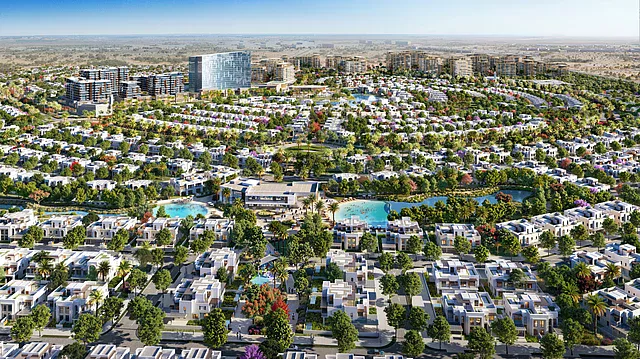
    The project is located near Al Maktoum International Airport, adjacent to the Golf District, and is planned as an integrated community focused on balanced living and wellness-oriented amenities.

    HAYAT will include around 2,500 residential units, ranging from one- to five-bedroom layouts. The mix will feature townhouses, semi-detached and standalone villas, mansions, apartments and hotel apartments.

    Nabil Al Kindi, Group CEO of Dubai South, said:

    Since its launch in 2025, the project has witnessed strong demand and interest, driven by its unique positioning and wellness-inspired features. Through this development, we are focused on creating a well-balanced community that combines quality living, connectivity, and lifestyle-driven amenities, while reinforcing Dubai South’s position as a key destination for residents and investors.

    The homes are designed with a minimalist architectural style, offering privacy, flexibility and contemporary living spaces.

    The development will also include amenities such as parks, shaded walking trails, play areas, outdoor recreation spaces, fitness facilities, community pools and landscaped gardens. Plans also include lagoons, a scenic lake, a community mall and a retail boulevard with shops, cafés and essential services.

    The location offers access to major roads and economic hubs, including Al Maktoum International Airport, Sheikh Mohammed bin Zayed Road, Emirates Road, Jebel Ali Free Zone and Dubai South Free Zone.

    Construction is scheduled to begin in the second quarter of 2026, with initial phases expected to be completed by 2028.

    Dubai South said it continues to expand its residential ecosystem with facilities including parks, sports courts, retail outlets, a 50,000-square-foot hypermarket, a mosque, a petrol station, and a public bus route linking to the Expo Metro station. The area also includes a GEMS Founders School, and a 200,000-square-foot mall is under development.

    The Dh2 billion HAYAT project adds to Dubai’s expanding residential pipeline as the emirate continues to attract investor interest. Earlier in March, Futura EDGE launched Oak Yard Residences in JVC, while BEYOND Developments unveiled an 8 million sq ft masterplan at Dubai Maritime City, reflecting the sustained momentum across multiple districts.