Tag: Dubai real estate

  • Dubai Commercial Property Prices Jump 28% Despite Regional Conflict

    Dubai Commercial Property Prices Jump 28% Despite Regional Conflict

    Dubai’s commercial property prices climbed 28% year-on-year during the period from February 28 to March 19, 2026, according to data released by Property Finder on April 2, 2026, demonstrating resilience in the emirate’s commercial real estate segment despite the start of regional conflict.

    Several communities recorded exceptional growth in per-square-meter prices, with Dubai Investment Park Second witnessing a 323% increase compared to the same period last year, while Al Safouh saw prices rise by 286%.

    Cherif Sleiman, Chief Revenue Officer at Property Finder, attributed the price growth to transactions concentrating at higher values.

    The primary segment continues to show relative strength compared to the overall market, with transactions up to 1.9% year-on-year across the same period (Feb 28 – March 19).

    Total real estate transactions between February 28 and March 19 stood at 8,549 compared to 10,404 in the same period last year, amounting to Dh28 billion ($7.62 billion) compared to Dh32.7 billion ($8.9 billion) the previous year. However, the commercial segment saw a 44.2% decline in transaction volumes year-on-year during this period.

    In the off-plan segment, primary transactions increased by 1.9% year-on-year despite lower overall volumes, with year-on-year transaction values up 15.9% during the same period. Prices in this segment saw a temporary adjustment of 5.2% compared to the previous two weeks.

    “Importantly, year-on-year transaction values from the same period are up 15.9%, despite lower volumes, indicating demand for premium properties. This points to buyers continuing to transact, but at higher-values, which indicates sustained market confidence,” Sleiman explained.

    The commercial segment’s performance aligns with broader market dynamics. Off-plan apartment sales climbed 12.9% in March 2026, while the market continues to demonstrate what industry leaders describe as structural resilience amid geopolitical uncertainty.

    Dubai’s commercial real estate sector recorded an impressive 77.9% growth in sales value and 35.1% increase in transaction volume in 2025, with office sales more than doubling to Dh131.1 billion, the strongest performance in more than a decade according to Cavendish Maxwell.

    Property Finder noted that buyer inquiries have remained fairly stable in recent weeks, with only a slight dip as purchasers adopt a more measured approach rather than withdrawing from the market entirely. The data suggests that confidence in Dubai’s commercial property fundamentals remains intact, with investors continuing to commit capital at premium pricing levels despite the regional security situation.
  • Dubai Off-Plan Apartment Sales Rise 12.9% to $4.77 Billion in March

    Dubai Off-Plan Apartment Sales Rise 12.9% to $4.77 Billion in March

    Dubai’s real estate market demonstrated continued resilience in March 2026, with off-plan residential apartment sales reaching AED17.5 billion ($4.77 billion), up from AED15.5 billion in the same month last year, according to an analysis of Dubai Land Department (DLD) data released April 1, 2026.

    Transaction volumes increased 2.3% year-on-year to 7,983 off-plan residential apartment deals, compared to 7,801 transactions in March 2025, reflecting sustained investor confidence in Dubai’s under-construction residential segment.

    Dubai Islands Leads Off-Plan Sales

    Al Masdar Al Aqaari’s latest report revealed that Dubai Islands emerged as the top-performing area by sales value, generating AED1.3 billion from 402 transactions during March. Madinat Al Mataar, near Al Maktoum International Airport, ranked second with AED1.2 billion across 809 off-plan residential apartment transactions while also leading in transaction volume.

    Jumeirah Second secured third place with AED1.1 billion in total sales, driven by just nine high-value transactions within the Dubai Peninsula master development, including Aman Residences Dubai and Peninsula Dubai Residences – Tower 2.

    By transaction volume, Madinat Al Mataar led with 809 deals, followed by Dubai Land Residence Complex with 651 transactions worth AED618.9 million, and Jumeirah Village Circle (JVC), which recorded 570 transactions totaling AED660.6 million.

    Luxury Segment Posts Record Transactions

    Dubai’s luxury real estate segment recorded several landmark deals in March, with Aman Residences Dubai completing the third most expensive off-plan apartment sale in Dubai’s history. The transaction, valued at AED422 million, involved a 31,201-square-foot off-plan residential apartment sold at AED13,525 per square foot. The project also recorded another high-value deal, with a similar-sized unit selling for AED356.2 million at AED11,417 per square foot.

    The highest price per square foot during the month was recorded at South Square, Madinat Al Mataar, where a 1,230-square-foot off-plan residential apartment sold for AED19.9 million, equating to AED16,180 per square foot.

    The second-highest rate was at Aman Residences Dubai, where a 3,824-square-foot off-plan residential apartment sold for more than AED55.6 million at AED14,545 per square foot.

    Market Context

    The strong March performance comes as Dubai’s property market shows resilience amid ongoing regional tensions. Industry analysts note that the off-plan segment continues to attract both local and international investors, with move-in-ready properties and under-construction units both seeing strong demand.

    The data reinforces Dubai’s position as a leading real estate investment destination, with developers continuing to launch new projects and buyers maintaining confidence in the emirate’s long-term growth trajectory. As S&P Global Ratings recently noted, strong developer fundamentals and substantial revenue backlogs continue to support market stability.

  • Hotel Apartments Dominate Dubai’s Furnished Property Market

    Hotel Apartments Dominate Dubai’s Furnished Property Market

    More than a quarter of all homes currently on the market in Dubai come fully furnished, with hotel apartments leading the shift as the emirate attracts a globally mobile workforce seeking immediate convenience and flexibility.

    New research from eXp Realty Dubai reveals that nearly nine out of ten hotel apartments are move-in ready, offering everything from furniture and kitchenware to housekeeping and building services — a sharp contrast to penthouses and standard apartments, where only about a third are furnished.

    Dounia Fadi, Managing Director of eXp Realty Dubai, said:

    Buying a furnished property can be particularly appealing for some buyers, as it allows them to move straight into a home without the additional cost and effort of furnishing it themselves.

    For thousands of people relocating to Dubai each year, hotel apartments solve a practical problem: instead of spending weeks shopping for furniture, arranging deliveries or coordinating utilities, residents can walk into a home that is already set up for daily life.

    This convenience is proving especially attractive among young professionals, consultants and executives who relocate frequently or want flexibility in tenure. Larger homes such as villas and townhouses rarely fall into the furnished category, reflecting that families settling long-term usually prefer to personalize their living spaces.

    Demand for furnished apartments remains resilient even as Dubai’s rental market matures. Faisal Durrani, partner and head of research for MENA at Knight Frank, said:

    Furnished rentals continue to outperform in prime locations, particularly where flexibility and immediacy are valued.

    For tenants, the benefits extend beyond furniture. Hotel apartments often include maintenance, security and amenities, allowing residents to focus on work and life rather than home management — a trade-off many find worthwhile in a fast-paced city.

    The trend reflects broader shifts in Dubai’s population dynamics. As the emirate continues to grow and diversify, fully furnished hotel apartments are no longer just a stopgap for visitors but a practical, popular way for people to live, work and settle into the city on their own terms.

    The shift comes as Dubai’s property market maintains strong momentum with sustained international interest, while the sector adapts to evolving resident preferences and lifestyle patterns shaped by increased global mobility.

  • Neoterra Developments Breaks Ground on Dh130 Million ELMORA Tower

    Neoterra Developments Breaks Ground on Dh130 Million ELMORA Tower

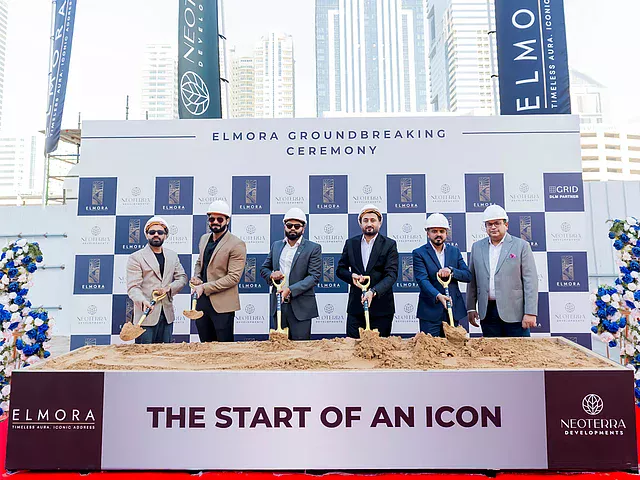
    The groundbreaking ceremony for ELMORA marks a significant milestone for Neoterra Developments as the company accelerates its presence in Dubai’s residential market. The upscale tower, strategically positioned just off Sheikh Zayed Road, features studio, one-bedroom, and two-bedroom apartments, with studios and one-bedroom units completely sold out and limited two-bedroom residences available starting at Dh1.7 million.

    Naresh Perwani, Founder and Chairman of Neoterra Developments, emphasized the project’s strategic importance.

    The groundbreaking of ELMORA at Jumeirah Garden City signals a significant step forward in our growth strategy as we accelerate our footprint in Dubai. ELMORA reflects our long-term vision to create boutique, design-led residences in prime yet evolving urban districts of the city, aligned with Dubai’s vision for next-generation urban communities.

    Strategic Location and Connectivity

    ELMORA offers residents direct access to Dubai’s key business and lifestyle destinations. The development is located minutes from the Dubai International Financial Centre and just five minutes from the recently announced Dh100 billion DIFC 2.0 expansion. Proximity to Downtown Dubai, Jumeirah, and La Mer beach, along with metro stations and major highways, positions the tower within Dubai’s integrated urban framework.

    The project is being developed in collaboration with GRID as its Development Lifecycle Management partner. Shreen R. Gupta, Founder and CEO of GRID, confirmed the company’s commitment to timely delivery.

    Despite the broader geopolitical scenarios, GRID’s extensive network enables us to secure the right partners and ensure timely, high-quality delivery.

    Amenities and Sustainable Design

    The 85-unit tower integrates hospitality-inspired services with residential living. Amenities include an exclusive jogging track, rooftop business lounge, state-of-the-art gymnasium, infinity lap pool, Jacuzzi with panoramic views, male and female sauna suites, and landscaped podium gardens. The lobby has been designed and curated by Grandé Maison by GRID.

    Residents will have access to dedicated concierge services covering reservations, deliveries, professional housekeeping, laundry, airport transfers, grocery management, nutrition support, and private chef experiences for special occasions.

    Sustainability forms a core component of the development. ELMORA incorporates EV-ready parking, water-efficient fixtures, solar-control glazing to minimize heat gain, and energy-efficient cooling systems to reduce resource consumption while enhancing indoor comfort.

    Expansion Plans

    Alongside the ELMORA groundbreaking, Neoterra Developments announced its next project in Dubai Production City, targeted for launch in the second quarter of 2026. Perwani stated,

    This reflects our continued growth and long-term confidence in Dubai’s evolving residential hubs.

    The announcement comes as Dubai’s property market maintains strong transaction volumes and investor interest despite ongoing regional geopolitical tensions. The near-complete sellout of ELMORA before construction began demonstrates continued demand for well-positioned, boutique residential projects in the emirate.

    With construction now underway and completion scheduled for February 2028, ELMORA represents Neoterra Developments’ strategy to deliver design-led, technology-integrated residences in prime urban locations as Dubai continues its transformation into a global residential destination.

  • Dubai South Awards Dh2 Billion Contract for HAYAT Residential Project

    Dubai South Awards Dh2 Billion Contract for HAYAT Residential Project

    Dubai South Properties, the real estate development arm of Dubai South, confirmed the appointment of Mohammed Abdulmohsin Al Kharafi & Sons LLC for the contract, which will cover several phases of HAYAT by Dubai South, a master-planned development spanning 10 million square feet.

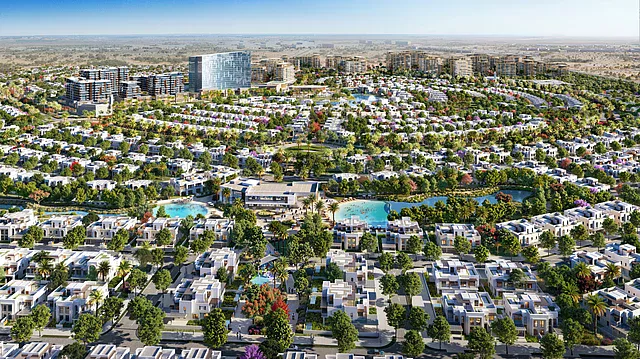
    The project is located near Al Maktoum International Airport, adjacent to the Golf District, and is planned as an integrated community focused on balanced living and wellness-oriented amenities.

    HAYAT will include around 2,500 residential units, ranging from one- to five-bedroom layouts. The mix will feature townhouses, semi-detached and standalone villas, mansions, apartments and hotel apartments.

    Nabil Al Kindi, Group CEO of Dubai South, said:

    Since its launch in 2025, the project has witnessed strong demand and interest, driven by its unique positioning and wellness-inspired features. Through this development, we are focused on creating a well-balanced community that combines quality living, connectivity, and lifestyle-driven amenities, while reinforcing Dubai South’s position as a key destination for residents and investors.

    The homes are designed with a minimalist architectural style, offering privacy, flexibility and contemporary living spaces.

    The development will also include amenities such as parks, shaded walking trails, play areas, outdoor recreation spaces, fitness facilities, community pools and landscaped gardens. Plans also include lagoons, a scenic lake, a community mall and a retail boulevard with shops, cafés and essential services.

    The location offers access to major roads and economic hubs, including Al Maktoum International Airport, Sheikh Mohammed bin Zayed Road, Emirates Road, Jebel Ali Free Zone and Dubai South Free Zone.

    Construction is scheduled to begin in the second quarter of 2026, with initial phases expected to be completed by 2028.

    Dubai South said it continues to expand its residential ecosystem with facilities including parks, sports courts, retail outlets, a 50,000-square-foot hypermarket, a mosque, a petrol station, and a public bus route linking to the Expo Metro station. The area also includes a GEMS Founders School, and a 200,000-square-foot mall is under development.

    The Dh2 billion HAYAT project adds to Dubai’s expanding residential pipeline as the emirate continues to attract investor interest. Earlier in March, Futura EDGE launched Oak Yard Residences in JVC, while BEYOND Developments unveiled an 8 million sq ft masterplan at Dubai Maritime City, reflecting the sustained momentum across multiple districts.

  • BEYOND Developments Unveils 8 Million Sq Ft Masterplan at Dubai Maritime City

    BEYOND Developments Unveils 8 Million Sq Ft Masterplan at Dubai Maritime City

    BEYOND Developments announced the details of its flagship masterplan at Dubai Maritime City, a fully integrated urban ecosystem spanning 8 million square feet that combines waterfront living with nature-focused design across two distinct precincts.

    The masterplan, positioned along one of Dubai’s most strategic coastal corridors, represents a large-scale approach to urban placemaking that integrates residential towers, hospitality destinations, retail experiences, educational facilities, healthcare services, and lifestyle amenities within a single cohesive framework.

    Two Districts with Distinct Identities

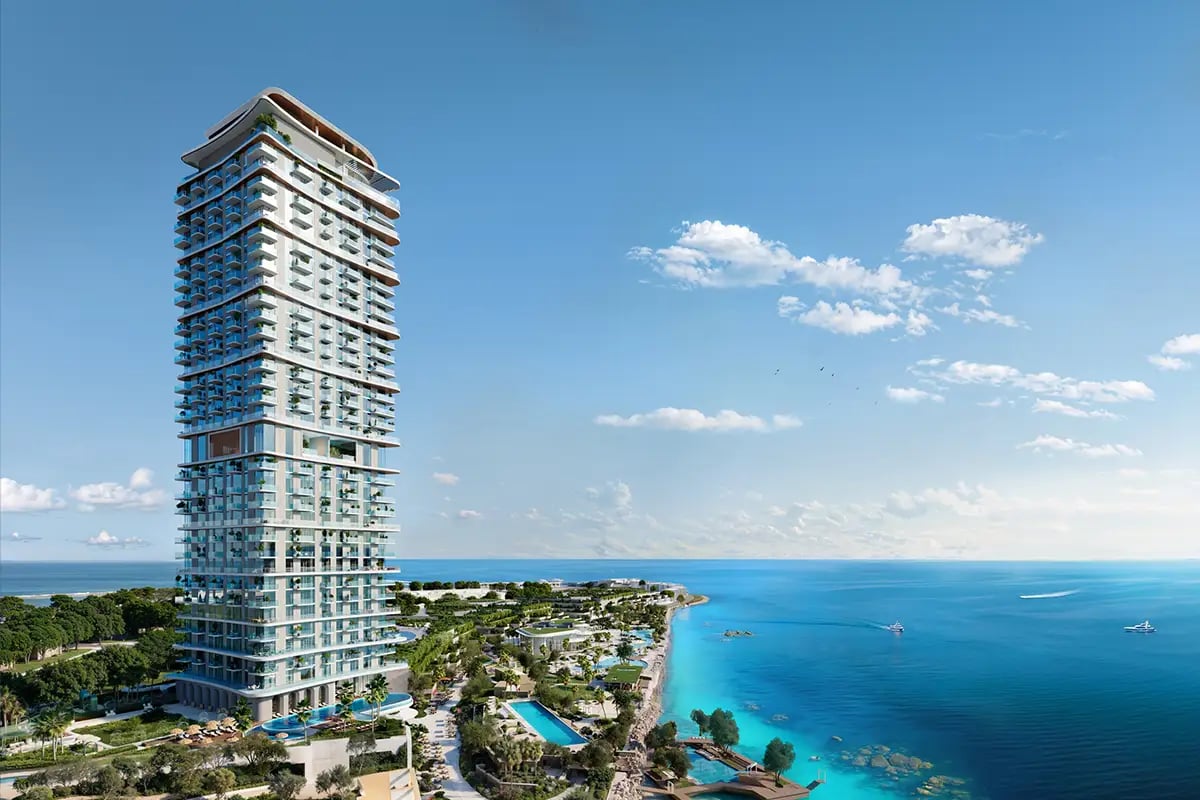
    The development is structured around two complementary environments: The Bay and The Forest. The Bay district delivers more than two kilometers of continuous waterfront promenades and cycleways connecting residences, hospitality venues, and curated food and beverage experiences along the shoreline, with a focus on absolute oceanfront living and sea-facing residential units.

    The Forest introduces what the developer describes as the region’s first forest district by the sea, anchored by a 65,000 square meter central forest that functions as living infrastructure designed to shape microclimate, movement patterns, and daily wellbeing through shaded trails, wellness spaces, and nature-led public realms.

    Residences within The Forest precinct are oriented toward greenery and privacy while maintaining visual connections to both the sea and Dubai’s skyline, with a significant portion of the masterplan dedicated to landscaped open spaces.

    Infrastructure and Connectivity

    The masterplan incorporates a network of signal-free access points, internal flyovers, and viaduct connections designed to enable efficient movement into and out of the district, while internal circulation relies on shaded boulevards, pedestrian bridges, and interconnected promenades that prioritize pedestrian mobility alongside uninterrupted vehicular traffic flow.

    The wider Dubai Maritime City district provides supporting infrastructure including schools, nurseries, healthcare facilities, wellness-focused hospitality, mosques, and community services, allowing the masterplan to integrate seamlessly into an established urban framework.

    Global Investment Appeal

    The masterplan has attracted buyers and residents from Europe, North America, Asia, Australia, Russia, and the wider MENA region, reflecting its positioning as a destination for international capital, long-term residency, and cross-border real estate investment.

    BEYOND has unveiled eight projects within the district to date, including SARIA, ORISE, SENSIA, THE MURAL, SOULEVER, 31 ABOVE (a commercial tower), TALEA, and KANYON within The Forest precinct, with additional announcements planned for 2026 as the district continues to evolve.

    Market Context

    The announcement comes as Dubai’s property market staged a sharp recovery in the second week of March 2026, with transaction volumes rising 58% despite regional tensions, while industry leaders cite structural advantages and a diversified buyer base as key factors supporting continued capital inflows into the emirate’s real estate sector.

    The masterplan aligns with Dubai’s broader urban strategy focused on wellbeing, connectivity, and sustainable economic growth, positioning the district as a long-term investment destination built to support multi-generational residency and capital appreciation within the emirate’s evolving coastal landscape.

  • Dubai Property Market Pauses Amid Regional Tensions, Off-Plan Demand Holds

    Dubai Property Market Pauses Amid Regional Tensions, Off-Plan Demand Holds

    The start of the conflict on February 28 has left a visible mark on Dubai’s real estate market, according to data tracked by The Real Estate Report. After entering the year with strong momentum, the market saw transaction volumes and values drop sharply in the first full week following the escalation.

    In Week 9 (February 23–March 1), the market recorded Dh20.72 billion across 5,473 transactions. By Week 10 (March 2–8), those figures fell to Dh10.37 billion across 3,038 transactions—a 49.9% decline in value and 44.5% fewer deals week-on-week.

    Looking at weekdays only to avoid weekend lulls, the five business days before the conflict saw Dh20.41 billion in activity, while the five days after saw Dh10.16 billion. Essentially, the market’s run-rate cut in half almost immediately.

    Off-Plan Still Leads Despite Slowdown

    One of the most significant findings is that the structure of the market remained stable. Despite geopolitical uncertainty, off-plan properties continued to dominate. In Week 9, off-plan made up 62.4% of built-property value. In Week 10, that share actually grew slightly to 66.2%.

    This suggests that investors have not abandoned long-term plays. Off-plan flats remain the core driver, making up about 78% of all off-plan value in Week 10. The ready market followed a similar pattern, remaining largely apartment-led.

    Luxury Segment Shows Resilience

    While overall sales cooled, the luxury end of the market demonstrated continued strength. On March 4, 2026, a single apartment at Aman Residences in Jumeirah 2 transacted for Dh422 million, marking the third most expensive apartment sale in Dubai’s history.

    Deals like this serve as a reminder that high-ticket liquidity has not disappeared. The top end of the market tends to operate on its own logic, even during periods of caution.

    Mortgages Remain Meaningful

    Mortgage registrations also eased but stayed meaningful, representing about 19% of the total market value in Week 10. These registrations remain heavily concentrated in the ready-property segment, where financing is most common.

    Market Context and Outlook

    It is important to keep the broader context in mind. Dubai entered this period from a position of extreme strength. Total market value in 2025 reached Dh841.7 billion, up from Dh665.4 billion in 2024. January 2026 alone nearly doubled the previous year’s performance.

    “The current data reflects a ‘risk-off’ environment where buyers are exercising caution,” said Ali Shahin, founder of The Real Estate Report.

    Activity continues to cluster in familiar hubs including Dubai Marina, Palm Jumeirah, Burj Khalifa, and Business Bay. These areas remain core to investor interest despite the temporary slowdown.

    Industry observers note that while the run-rate is lower for now, the fundamental interest in Dubai real estate remains intact. The market has slowed, but it has not broken. The structural preference for off-plan and the occasional massive luxury transaction suggest that underlying demand persists.

    Dubai’s property sector has weathered previous periods of uncertainty, and authorities continue to reinforce confidence in the emirate’s long-term stability. As the region navigates ongoing tensions, market participants are watching closely for signs of normalization in transaction activity.

  • Dubai Landlords Offer Flexible Payment Plans Amid Regional Tensions

    Dubai Landlords Offer Flexible Payment Plans Amid Regional Tensions

    Dubai landlords are adapting to evolving market conditions by introducing more flexible payment terms for tenants, with properties previously marketed on one or two cheques now being offered with additional payment options to help secure occupancy.

    The shift comes as the emirate’s rental market maintains steady activity despite regional uncertainty, with real estate firm Betterhomes recording more than 1,200 tenant inquiries over the eight days preceding March 13, 2026.

    Market Remains Functional

    “We understand that many people are looking for reassurance right now,” said Rupert Simmonds, Director of Leasing at Betterhomes. “What our data shows is that Dubai’s leasing market is still functioning.”

    “Tenants continue to search for, renew, and move homes, which shows how the leasing market is able to withstand regional uncertainty.”

    Recent leasing data indicates that tenant enquiry levels continue to exceed the number of new rental listings entering the market, demonstrating sustained demand despite a 45% drop in enquiries from typical levels following the escalation of regional tensions on February 28, 2026.

    Supply Wave on the Horizon

    The increased flexibility from landlords is driven in part by a sustained increase in residential supply expected between 2026 and 2028. According to property consultancy Colliers, Dubai recorded the highest volume of residential completions in its history in 2025.

    The scale of the development pipeline could influence rental and pricing dynamics in the coming years, with performance expected to vary by asset quality, location and pricing, Colliers noted.

    “The market has become more measured, but it hasn’t stopped,” Simmonds said. “In the current environment, accurate pricing, flexibility and strong local insight are making the biggest difference.”

    Context of Growth

    Before regional tensions escalated dramatically in late February, Dubai’s property boom had reached a record Dh916 billion amid growing population and improved borrowing conditions. Engagement levels across digital platforms have remained consistent, suggesting that many potential tenants continue to monitor the market actively.

    The trend toward greater flexibility in Dubai’s rental sector aligns with broader regulatory changes, including new shared housing regulations that introduce mandatory permits and occupancy standards.

    As more projects come online, well-positioned and competitively priced properties are likely to perform strongly, while others may rely more on incentives and flexible payment structures to maintain occupancy, according to market analysts.

  • Dubai World Islands Villa Sells for Dh220 Million

    Dubai World Islands Villa Sells for Dh220 Million

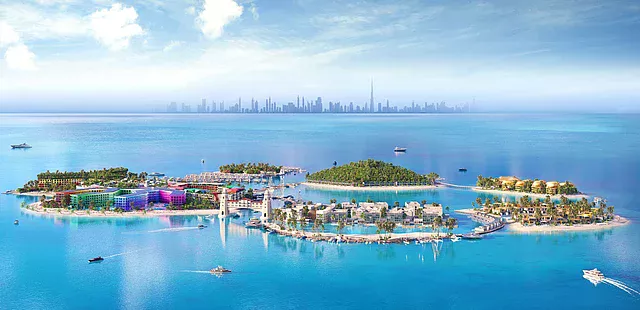
    Dubai’s property market recorded a significant transaction on Thursday with the sale of a luxury villa on the World Islands for Dh220 million, highlighting strong momentum in the emirate’s ultra-prime real estate sector.

    According to data from the Dubai REST application, operated by the Dubai Land Department, the villa spans approximately 58,080 square feet, equivalent to about 5,395 square metres. The transaction reflects an average price of Dh3,787 per square foot.

    The property is located on Amali Island, one of the high-end residential projects within the World Islands development, which continues to attract growing interest from international investors and wealthy buyers seeking exclusive waterfront properties in Dubai.

    Dubai’s luxury real estate market recorded unprecedented activity during 2025, supported by rising demand from high-net-worth individuals from around the world who continue to choose the emirate for its attractive investment climate, favourable regulatory framework and competitive tax environment.

    Data show that Dubai recorded 6,668 luxury property transactions last year with a combined value of about Dh143.8 billion. This compares with 4,735 deals worth Dh99.3 billion in 2024, representing a 41% increase in the number of transactions and a 45% rise in total value.

    The Dh220 million villa sale comes as the emirate continues to process high-value transactions across multiple segments. Earlier this month, Dubai recorded a Dh422 million apartment sale at Aman Residences, marking the third most expensive apartment transaction in the emirate’s history.

    The World Islands transaction reflects broader market confidence despite regional tensions, with the emirate’s fundamentals—including stable leadership, long-term planning, and a regulated investment environment—continuing to support investor sentiment in the ultra-prime segment.

    The continued demand for exclusive waterfront properties on developments such as the World Islands underscores Dubai’s position as a leading destination for global wealth, with the emirate’s luxury market showing resilience and sustained momentum into 2026.

  • Dubai Brokerage Commissions Surge 31% to $3.7 Billion in 2025

    Dubai Brokerage Commissions Surge 31% to $3.7 Billion in 2025

    The emirate’s brokerage industry has evolved from a transactional service into a major economic driver, supported by stringent regulatory frameworks and a growing base of professionally licensed agents operating across residential, commercial, and investment property segments.

    Dubai Land Department figures show broker-led transactions climbed 54% to 96,440 deals in 2025, demonstrating the sector’s central role in maintaining market efficiency as property values and transaction volumes continued their upward trajectory.

    Women Drive 83% Commission Growth

    Women brokers emerged as a major force within the sector, completing 28,909 transactions—a 49% increase—and earning AED2.98 billion in commissions, reflecting 83% growth year-on-year.

    By year-end 2025, women accounted for 11,371 of the 32,294 registered brokers in Dubai, underscoring the sector’s capacity to attract diverse talent within a competitive and equitable professional environment.

    The performance demonstrates the impact of inclusive licensing frameworks and professional development initiatives aimed at expanding participation across demographic segments.

    Broker Numbers Expand 38%

    The influx of new real estate brokers rose to 13,083 in 2025, representing a 38% increase from the previous year as the profession gained appeal amid sustained market momentum and attractive commission structures.

    Registered brokerage offices reached 9,785, operating under regulatory standards designed to balance market expansion with service quality and consumer protection.

    The emirate’s property market recorded AED60.60 billion in transactions during February 2026 alone, maintaining the momentum that has driven brokerage sector growth.

    Emirati Broker Development Programme

    Dubai Land Department has prioritized national talent development through initiatives including the Dubai Real Estate Brokers Programme and the Real Estate Brokers Incubator Programme, developed in partnership with Dubai Silicon Oasis and academic institutions.

    These programs support Emirati brokers in transitioning from individual practitioners to owners of integrated brokerage firms aligned with international best practices, with participants now managing transactions worth billions of dirhams.

    The structured approach reflects broader efforts to enhance local participation in the sector while maintaining professional standards that have contributed to market resilience amid regional challenges.

    Regulatory Framework Strengthens Market

    The sector’s expansion has occurred within a regulatory environment that mandates structured licensing requirements, ensuring professionalism and market discipline as transaction values increase.

    This framework has enhanced service quality and transaction efficiency, contributing to Dubai’s position as a transparent and professionally managed real estate market attracting international capital.

    The 2025 performance builds on long-term growth trends, with strategic capital now accounting for approximately 40% of transactions as the market transitions from speculation-led dynamics to structured capital allocation.