Tag: Dubai property market

  • Dubai Off-Plan Apartment Sales Rise 12.9% to $4.77 Billion in March

    Dubai Off-Plan Apartment Sales Rise 12.9% to $4.77 Billion in March

    Dubai’s real estate market demonstrated continued resilience in March 2026, with off-plan residential apartment sales reaching AED17.5 billion ($4.77 billion), up from AED15.5 billion in the same month last year, according to an analysis of Dubai Land Department (DLD) data released April 1, 2026.

    Transaction volumes increased 2.3% year-on-year to 7,983 off-plan residential apartment deals, compared to 7,801 transactions in March 2025, reflecting sustained investor confidence in Dubai’s under-construction residential segment.

    Dubai Islands Leads Off-Plan Sales

    Al Masdar Al Aqaari’s latest report revealed that Dubai Islands emerged as the top-performing area by sales value, generating AED1.3 billion from 402 transactions during March. Madinat Al Mataar, near Al Maktoum International Airport, ranked second with AED1.2 billion across 809 off-plan residential apartment transactions while also leading in transaction volume.

    Jumeirah Second secured third place with AED1.1 billion in total sales, driven by just nine high-value transactions within the Dubai Peninsula master development, including Aman Residences Dubai and Peninsula Dubai Residences – Tower 2.

    By transaction volume, Madinat Al Mataar led with 809 deals, followed by Dubai Land Residence Complex with 651 transactions worth AED618.9 million, and Jumeirah Village Circle (JVC), which recorded 570 transactions totaling AED660.6 million.

    Luxury Segment Posts Record Transactions

    Dubai’s luxury real estate segment recorded several landmark deals in March, with Aman Residences Dubai completing the third most expensive off-plan apartment sale in Dubai’s history. The transaction, valued at AED422 million, involved a 31,201-square-foot off-plan residential apartment sold at AED13,525 per square foot. The project also recorded another high-value deal, with a similar-sized unit selling for AED356.2 million at AED11,417 per square foot.

    The highest price per square foot during the month was recorded at South Square, Madinat Al Mataar, where a 1,230-square-foot off-plan residential apartment sold for AED19.9 million, equating to AED16,180 per square foot.

    The second-highest rate was at Aman Residences Dubai, where a 3,824-square-foot off-plan residential apartment sold for more than AED55.6 million at AED14,545 per square foot.

    Market Context

    The strong March performance comes as Dubai’s property market shows resilience amid ongoing regional tensions. Industry analysts note that the off-plan segment continues to attract both local and international investors, with move-in-ready properties and under-construction units both seeing strong demand.

    The data reinforces Dubai’s position as a leading real estate investment destination, with developers continuing to launch new projects and buyers maintaining confidence in the emirate’s long-term growth trajectory. As S&P Global Ratings recently noted, strong developer fundamentals and substantial revenue backlogs continue to support market stability.
  • S&P Rules Out 2008-Style Crash for Dubai Property Market

    S&P Rules Out 2008-Style Crash for Dubai Property Market

    Dubai’s real estate sector is structurally resilient and will not experience a collapse comparable to the 2008 global financial crisis, according to S&P Global Ratings analysts speaking at a March 26, 2026 webinar.

    The ratings agency highlighted that major developers have entered the current period of regional uncertainty from a position of strength, supported by years of robust pre-sales, solid revenue backlogs covering several years of operations, and healthy liquidity reserves.

    Four rated developers demonstrate stability

    S&P’s assessment covers four Dubai-based developers: Damac, Emaar, Omniyat, and Sobha Realty. Notably, Sobha Realty exceeded rating expectations and saw its outlook upgraded from negative to stable.

    “We’re not really seeing that play out just yet. The situation has definitely introduced a level of caution, but what we are seeing are lower transaction volumes,” said Sapna Jagtiani, director and lead analyst of Corporate Ratings at S&P Global Ratings.

    Developers in Dubai are entering this period from a position of strength, supported by strong pre-sales in recent years, solid revenue backlogs, and healthy liquidity buffers, which should help them absorb a short-term shock.

    Fares Shweiky, associate director of Corporate Ratings at S&P, emphasized that the current financial cushion should enable developers to weather short-term volatility.

    Base case scenario: temporary slowdown

    S&P’s base case assumes the regional military conflict will last approximately two to four weeks, with a temporary slowdown in demand and price appreciation following years of rapid growth. The agency expects a slight decline in transaction volumes but sees no indication of a broader market collapse.

    Jagtiani noted that some of the reduced activity can be attributed to Ramadan, when markets typically experience quieter periods with lower sales volumes.

    Market data shows resilience

    Despite regional tensions, Dubai’s property market continues to attract capital, with data from proptech firm Smart Bricks indicating that 85 percent of landlords are holding their assets and continuing transactions at scale.

    Even during Ramadan, traditionally a slower period, Dubai real estate recorded 15,196 transactions with a combined value of Dh50.58 billion, representing a 5.63% year-on-year increase in volume and a 29.7% increase in value, according to Kelt and Co Realty.

    Five-year growth trajectory

    Dubai’s property developers have recorded exceptionally strong sales over the past five years, driven by robust investor demand, government reforms, and the emirate’s expanding global appeal. Growth has been broad-based across apartments, villas, and commercial assets, with developers consistently launching projects met with strong off-plan demand and high absorption rates.

    The momentum continued through 2025, which marked a record-breaking performance for Dubai’s property sector. Developers benefited from sustained population inflows, rising investor confidence, and attractive residency policies that drove both end-user demand and international investment.

    The S&P assessment reinforces market sentiment that Dubai’s real estate fundamentals remain sound, with structural advantages and diversified buyer base providing support even as the region navigates geopolitical uncertainty. Unlike 2008, when overleveraged developers faced liquidity crises and massive project cancellations, today’s market operates with stronger financial controls, more conservative lending practices, and significantly improved regulatory oversight.

  • Dubai Property Market Rebounds as DFM Real Estate Stocks Extend Losses

    Dubai Property Market Rebounds as DFM Real Estate Stocks Extend Losses

    Two weeks after the onset of regional conflict on February 28, a significant divergence has emerged between Dubai’s physical real estate market and its listed equities, as property transactions rebound while financial markets continue to reprice risk.

    Transaction Liquidity Rebounds After Initial Shock

    Following an initial risk-off pause, the physical property market demonstrated a notable bounce-back in the second week of March. According to Dubai Land Department records analyzed by The Real Estate Reports, total transaction value on a headline basis, including land transactions, surged to Dhs15.66 billion in the week of March 9–15, representing a 51% increase in value and a 58% jump in transaction counts over the previous week.

    However, a closer examination reveals the recovery was primarily volume-driven. When excluding land plots to remove the volatility of high-value land deals, built value grew 13% to Dhs8.26 billion while transaction volume rose 56% to 4,327 deals. The discrepancy between modest value growth and surging volume indicates the market remains operational under more cautious, broader-based participation, with average ticket sizes softening.

    Off-Plan Sales Maintain Market Dominance

    The structural integrity of the market appears to have held. Off-plan sales continued to command the lion’s share of activity, accounting for 63% of built property value in the second week of March, compared to 66% in the week immediately following the conflict’s start.

    The most visible shift within this segment was a rotation toward villas. Off-plan villa sales rose to approximately 23% of the segment’s value, up from 16%, while the ready market similarly saw increased interest in landed homes over commercial assets. This suggests selective risk-taking by buyers who are prioritizing tangible residential assets over more sensitive commercial segments.

    Mortgage registrations nearly doubled to 1,053 in the second week of March, demonstrating that the fundamental infrastructure of the property market remains intact. Earlier this week, property services handled over 563,920 customers throughout 2025, reflecting the sector’s operational capacity.

    DFM Real Estate Index Plunges 13.8%

    The resilience in physical transactions stands in stark contrast to the Dubai Financial Market. Since trading resumed on March 4, aided by a temporary 5% limit-down threshold to prevent panic, equities have undergone a sustained de-risking phase.

    The DFM General Index (DFMGI) fell 5.7% in the second week of March on a turnover of 1.52 billion shares, nearly double the volume of the prior week. The pain was most acute in the Real Estate Index (DFMREI), which slumped 13.8% last week as investors demanded a higher risk premium for regional exposure.

    “While the physical market shows signs of a recovery in activity, the heavy-volume sell-off on the DFM suggests that financial markets may be pricing in a more prolonged period of uncertainty.”

    Growing Gap Between Sentiment and Real Economy

    The data highlights a widening gap between sentiment-driven equities and real economy property transactions. In the stock market, liquid shares are being sold as investors demand higher risk premiums for regional exposure. In the physical market, the normalization of mortgage registrations and sustained transaction volumes suggest the operational framework of the industry remains intact.

    Ali Shahin, founder of The Real Estate Reports, noted the contrast between the two markets, stating that while Dubai real estate is proving it can operate under pressure, listed counterparts are absorbing the brunt of the geopolitical shock.

    The divergence comes as global capital continues flowing into Dubai property, with industry leaders citing structural advantages and a diversified buyer base. Despite regional tensions causing an initial pause, off-plan demand has held firm, with luxury sales continuing across premium locations.

    For now, Dubai real estate is proving it can operate under pressure, even as its listed counterparts absorb the brunt of the geopolitical shock. The question remains whether financial markets are pricing in risks that the physical market has yet to fully experience, or whether the resilience on display will ultimately validate current transaction levels.

  • Dubai Property Transactions Reach Dh3.8 Billion on Monday

    Dubai Property Transactions Reach Dh3.8 Billion on Monday

    Dubai’s real estate market processed transactions worth Dh3.8 billion at the start of the week through 1,194 deals, according to data released by the Dubai Land Department on March 16, 2026.

    Sales accounted for the largest share, reaching Dh2.93 billion through 930 transactions. Among the most prominent deals were properties in Al Yalyis 5 valued at Dh515.6 million, followed by Palm Jebel Ali with transactions worth Dh387 million, and Dubai Land Residence Complex totalling Dh187 million.

    Mortgage transactions reached Dh718.3 million across 243 deals. The largest mortgage was recorded in Dubai South (Dubai Aviation City) at Dh214.4 million, followed by Dubai Studio City at Dh82 million, and Meydan One with mortgages worth Dh81 million.

    Property gifts also contributed to the overall activity, totalling Dh164 million across 21 transactions. The most notable gifts were registered in Mohammed Bin Rashid City – District One valued at Dh43.5 million, Business Bay at Dh34.3 million, and Jumeirah Islands worth Dh28 million.

    The figures reflect continued momentum in Dubai’s property sector, with strong investor interest across a range of residential and mixed-use developments. The single-day volume underscores the market’s resilience as transaction activity remains robust across multiple segments.

    The data arrives as Dubai’s property market staged a sharp recovery in the second week of March 2026, with transaction volumes rising significantly despite continued selling pressure in real estate equities on the Dubai Financial Market.

    Industry observers note that the emirate’s real estate sector continues to attract diverse capital flows, supported by structural advantages and a diversified buyer base. Recent weeks have also seen major development announcements that signal long-term confidence in the market’s trajectory.

    The sustained transaction volumes demonstrate that Dubai’s property market maintains its appeal to both end-users and investors, with activity spread across established communities and emerging districts alike.

  • BEYOND Developments Unveils 8 Million Sq Ft Masterplan at Dubai Maritime City

    BEYOND Developments Unveils 8 Million Sq Ft Masterplan at Dubai Maritime City

    BEYOND Developments announced the details of its flagship masterplan at Dubai Maritime City, a fully integrated urban ecosystem spanning 8 million square feet that combines waterfront living with nature-focused design across two distinct precincts.

    The masterplan, positioned along one of Dubai’s most strategic coastal corridors, represents a large-scale approach to urban placemaking that integrates residential towers, hospitality destinations, retail experiences, educational facilities, healthcare services, and lifestyle amenities within a single cohesive framework.

    Two Districts with Distinct Identities

    The development is structured around two complementary environments: The Bay and The Forest. The Bay district delivers more than two kilometers of continuous waterfront promenades and cycleways connecting residences, hospitality venues, and curated food and beverage experiences along the shoreline, with a focus on absolute oceanfront living and sea-facing residential units.

    The Forest introduces what the developer describes as the region’s first forest district by the sea, anchored by a 65,000 square meter central forest that functions as living infrastructure designed to shape microclimate, movement patterns, and daily wellbeing through shaded trails, wellness spaces, and nature-led public realms.

    Residences within The Forest precinct are oriented toward greenery and privacy while maintaining visual connections to both the sea and Dubai’s skyline, with a significant portion of the masterplan dedicated to landscaped open spaces.

    Infrastructure and Connectivity

    The masterplan incorporates a network of signal-free access points, internal flyovers, and viaduct connections designed to enable efficient movement into and out of the district, while internal circulation relies on shaded boulevards, pedestrian bridges, and interconnected promenades that prioritize pedestrian mobility alongside uninterrupted vehicular traffic flow.

    The wider Dubai Maritime City district provides supporting infrastructure including schools, nurseries, healthcare facilities, wellness-focused hospitality, mosques, and community services, allowing the masterplan to integrate seamlessly into an established urban framework.

    Global Investment Appeal

    The masterplan has attracted buyers and residents from Europe, North America, Asia, Australia, Russia, and the wider MENA region, reflecting its positioning as a destination for international capital, long-term residency, and cross-border real estate investment.

    BEYOND has unveiled eight projects within the district to date, including SARIA, ORISE, SENSIA, THE MURAL, SOULEVER, 31 ABOVE (a commercial tower), TALEA, and KANYON within The Forest precinct, with additional announcements planned for 2026 as the district continues to evolve.

    Market Context

    The announcement comes as Dubai’s property market staged a sharp recovery in the second week of March 2026, with transaction volumes rising 58% despite regional tensions, while industry leaders cite structural advantages and a diversified buyer base as key factors supporting continued capital inflows into the emirate’s real estate sector.

    The masterplan aligns with Dubai’s broader urban strategy focused on wellbeing, connectivity, and sustainable economic growth, positioning the district as a long-term investment destination built to support multi-generational residency and capital appreciation within the emirate’s evolving coastal landscape.

  • Dubai Property Market Rebounds as DFM Real Estate Stocks Extend Losses

    Dubai Property Market Rebounds as DFM Real Estate Stocks Extend Losses

    Two weeks after regional conflict began on February 28, Dubai’s real estate sector is demonstrating a striking divergence between physical market performance and listed equity valuations.

    According to Dubai Land Department (DLD) data analyzed by The Real Estate Reports, total transaction value surged to Dh15.66 billion in the week of March 9–15, representing a 51% increase in value and a 58% jump in transaction counts compared to the previous week.

    However, when excluding land plots to remove volatility from high-value land deals, built property value grew a more modest 13% to Dh8.26 billion, while transaction volume rose 56% to 4,327 deals. The gap between volume growth and value growth suggests buyers are proceeding with caution, resulting in a lower average ticket size per transaction.

    Off-Plan Sales Drive Market Activity

    Off-plan properties continued to dominate, accounting for 63% of built property value in the second week of March, only slightly below the 66% recorded immediately after conflict began. Within this segment, villa sales increased their share to approximately 23% of off-plan value, up from 16% the previous week, indicating buyer preference for tangible residential assets over commercial properties.

    The recovery in mortgage registrations provided further evidence of market functionality, with 1,053 mortgages registered during the week, nearly double the prior period, suggesting that the financing infrastructure supporting Dubai’s property sector remains intact despite regional tensions.

    “While the physical market shows signs of a recovery in activity, the heavy-volume sell-off on the DFM suggests that financial markets may be pricing in a more prolonged period of uncertainty.”

    Equity Markets Tell Different Story

    In stark contrast to the physical market’s resilience, the Dubai Financial Market (DFM) continued its downward trajectory. The DFM General Index (DFMGI) fell 5.7% in the second week of March on turnover of 1.52 billion shares—nearly double the volume of the previous week.

    Real estate stocks bore the brunt of the sell-off, with the DFM Real Estate Index (DFMREI) plunging 13.8% last week as investors demanded higher risk premiums for regional exposure. Trading resumed on March 4 with a temporary 5% limit-down threshold implemented to prevent panic selling.

    The divergence highlights how sentiment-driven equity markets are repricing regional risk while the underlying property economy continues to function. For investors, the data suggests that while short-term caution prevails in financial markets, Dubai’s real estate infrastructure and transactional mechanisms remain operational.

    Ali Shahin, founder of The Real Estate Reports, noted that Dubai real estate is proving it can operate under pressure even as listed property companies absorb the immediate shock of geopolitical uncertainty.

    The physical market’s resilience comes despite an initial 50% drop in weekly transactions immediately following the start of regional conflict, with industry leaders citing structural advantages and a diversified buyer base as key factors supporting continued capital inflows.

    For now, Dubai’s property sector appears capable of maintaining operational momentum despite elevated geopolitical risk, though the heavy selling in listed real estate stocks suggests investors remain cautious about medium-term prospects in the region.

  • Dubai Property Market Shows Resilience as Global Capital Flows Continue

    Dubai Property Market Shows Resilience as Global Capital Flows Continue

    Dubai’s real estate sector continues to demonstrate operational stability as developers, brokers and analysts report sustained investor interest across prime locations and luxury developments, with transaction activity maintaining momentum through the first weeks of March 2026.

    Firas Al Msaddi, chief executive of fäm Properties, emphasized the emirate’s track record of recovery following market disruptions. “I launched my company in Dubai in 2009 amid the global financial crisis, and have seen the market negotiate various geopolitical events since then,” he said. “Every single downturn in Dubai’s real estate history has been followed by a recovery that saw the market surpass the previous peak.”

    Market data supports this pattern. Sales value in Dubai’s property market rose from Dh71.5 billion in 2020 to Dh686.8 billion in 2025, while prices climbed approximately 60% and transaction volumes increased sixfold, according to DXBinteract data.

    Structural Advantages Support Demand

    Tauseef Khan, founder and chairman of Dugasta Properties, noted that core demand remains steady particularly for prime and well-located assets. “While short-term caution may reduce speculative activity, core demand from both regional and international investors often remains steady,” he said.

    Al Msaddi highlighted fundamental changes in market composition. “This moment is another test of Dubai’s resilience, and Dubai is well-equipped to pass the test again,” he said. “Over 70% of transactions are now end-user driven, not speculative. The buyer base is globally diversified, mortgage activity has doubled in four years, and the regulatory environment has matured.”

    The shift toward cash buyers has strengthened market stability. “Last year there were 129 villa transactions above Dh40 million totalling Dh11.5 billion,” Al Msaddi said. “Only around 55 were mortgaged.”

    Ultra-Prime Segment Shows Strength

    The luxury property segment continues to process high-value transactions without significant price adjustments. Khan confirmed that several major deals have closed at full asking prices. “The closure of high-value deals at full price shows continued confidence in Dubai’s real estate fundamentals, even through regional uncertainty,” he said.

    Abdullah Alajaji, founder and chief executive of Driven, Forbes Global Properties, noted that transaction evidence across prime and ultra-prime segments indicates stable pricing. “While opportunistic investors are actively screening for assets trading below intrinsic value, broad-based repricing has not been evidenced in current transaction data at this end of the market,” he said.

    Macroeconomic Backdrop

    The UAE’s strong fiscal position provides additional market support. S&P reaffirmed the country’s AA/A-1+ sovereign credit rating with a stable outlook in March 2026, highlighting consolidated net assets equivalent to 184% of GDP.

    Alajaji attributed recent market volatility to geopolitical events rather than structural issues. “Recent volatility in oil prices and global markets is likely to be cyclical rather than structural, largely reflecting current geopolitical escalation,” he said.

    Dubai’s economic diversification reduces direct correlation between oil prices and property demand, with non-oil sectors now accounting for approximately three-quarters of economic output.

    Market Data Timeline

    Industry experts cautioned that comprehensive impact assessment requires additional time. “Less than two weeks into the current conflict, it’s too early to give an overall assessment,” Al Msaddi said. “In real estate, transaction data takes 45 to 90 days to fully reflect actual sentiment from buyers, sellers and developers alike.”

    Current market indicators suggest balanced conditions. “Buyer demand is steady across most price ranges,” Al Msaddi said. “Sellers are being patient, buyers are being selective but committed, and that balance is holding.”

    The emirate’s regulatory framework continues to strengthen, with new building safety standards and shared housing regulations introduced in March 2026 to enhance market oversight and investor protection.

    Khan said geopolitical developments often reinforce Dubai’s regional positioning over time. “Geopolitical developments can initially introduce a degree of caution among investors, particularly in the speculative segment of the market,” he said. “However, over time, they often reinforce Dubai’s position as a stable investment destination within the region.”

  • Dubai Property Market Pauses Amid Regional Tensions, Off-Plan Demand Holds

    Dubai Property Market Pauses Amid Regional Tensions, Off-Plan Demand Holds

    The start of the conflict on February 28 has left a visible mark on Dubai’s real estate market, according to data tracked by The Real Estate Report. After entering the year with strong momentum, the market saw transaction volumes and values drop sharply in the first full week following the escalation.

    In Week 9 (February 23–March 1), the market recorded Dh20.72 billion across 5,473 transactions. By Week 10 (March 2–8), those figures fell to Dh10.37 billion across 3,038 transactions—a 49.9% decline in value and 44.5% fewer deals week-on-week.

    Looking at weekdays only to avoid weekend lulls, the five business days before the conflict saw Dh20.41 billion in activity, while the five days after saw Dh10.16 billion. Essentially, the market’s run-rate cut in half almost immediately.

    Off-Plan Still Leads Despite Slowdown

    One of the most significant findings is that the structure of the market remained stable. Despite geopolitical uncertainty, off-plan properties continued to dominate. In Week 9, off-plan made up 62.4% of built-property value. In Week 10, that share actually grew slightly to 66.2%.

    This suggests that investors have not abandoned long-term plays. Off-plan flats remain the core driver, making up about 78% of all off-plan value in Week 10. The ready market followed a similar pattern, remaining largely apartment-led.

    Luxury Segment Shows Resilience

    While overall sales cooled, the luxury end of the market demonstrated continued strength. On March 4, 2026, a single apartment at Aman Residences in Jumeirah 2 transacted for Dh422 million, marking the third most expensive apartment sale in Dubai’s history.

    Deals like this serve as a reminder that high-ticket liquidity has not disappeared. The top end of the market tends to operate on its own logic, even during periods of caution.

    Mortgages Remain Meaningful

    Mortgage registrations also eased but stayed meaningful, representing about 19% of the total market value in Week 10. These registrations remain heavily concentrated in the ready-property segment, where financing is most common.

    Market Context and Outlook

    It is important to keep the broader context in mind. Dubai entered this period from a position of extreme strength. Total market value in 2025 reached Dh841.7 billion, up from Dh665.4 billion in 2024. January 2026 alone nearly doubled the previous year’s performance.

    “The current data reflects a ‘risk-off’ environment where buyers are exercising caution,” said Ali Shahin, founder of The Real Estate Report.

    Activity continues to cluster in familiar hubs including Dubai Marina, Palm Jumeirah, Burj Khalifa, and Business Bay. These areas remain core to investor interest despite the temporary slowdown.

    Industry observers note that while the run-rate is lower for now, the fundamental interest in Dubai real estate remains intact. The market has slowed, but it has not broken. The structural preference for off-plan and the occasional massive luxury transaction suggest that underlying demand persists.

    Dubai’s property sector has weathered previous periods of uncertainty, and authorities continue to reinforce confidence in the emirate’s long-term stability. As the region navigates ongoing tensions, market participants are watching closely for signs of normalization in transaction activity.

  • Dubai Landlords Offer Flexible Payment Plans Amid Regional Tensions

    Dubai Landlords Offer Flexible Payment Plans Amid Regional Tensions

    Dubai landlords are adapting to evolving market conditions by introducing more flexible payment terms for tenants, with properties previously marketed on one or two cheques now being offered with additional payment options to help secure occupancy.

    The shift comes as the emirate’s rental market maintains steady activity despite regional uncertainty, with real estate firm Betterhomes recording more than 1,200 tenant inquiries over the eight days preceding March 13, 2026.

    Market Remains Functional

    “We understand that many people are looking for reassurance right now,” said Rupert Simmonds, Director of Leasing at Betterhomes. “What our data shows is that Dubai’s leasing market is still functioning.”

    “Tenants continue to search for, renew, and move homes, which shows how the leasing market is able to withstand regional uncertainty.”

    Recent leasing data indicates that tenant enquiry levels continue to exceed the number of new rental listings entering the market, demonstrating sustained demand despite a 45% drop in enquiries from typical levels following the escalation of regional tensions on February 28, 2026.

    Supply Wave on the Horizon

    The increased flexibility from landlords is driven in part by a sustained increase in residential supply expected between 2026 and 2028. According to property consultancy Colliers, Dubai recorded the highest volume of residential completions in its history in 2025.

    The scale of the development pipeline could influence rental and pricing dynamics in the coming years, with performance expected to vary by asset quality, location and pricing, Colliers noted.

    “The market has become more measured, but it hasn’t stopped,” Simmonds said. “In the current environment, accurate pricing, flexibility and strong local insight are making the biggest difference.”

    Context of Growth

    Before regional tensions escalated dramatically in late February, Dubai’s property boom had reached a record Dh916 billion amid growing population and improved borrowing conditions. Engagement levels across digital platforms have remained consistent, suggesting that many potential tenants continue to monitor the market actively.

    The trend toward greater flexibility in Dubai’s rental sector aligns with broader regulatory changes, including new shared housing regulations that introduce mandatory permits and occupancy standards.

    As more projects come online, well-positioned and competitively priced properties are likely to perform strongly, while others may rely more on incentives and flexible payment structures to maintain occupancy, according to market analysts.

  • Dubai World Islands Villa Sells for Dh220 Million

    Dubai World Islands Villa Sells for Dh220 Million

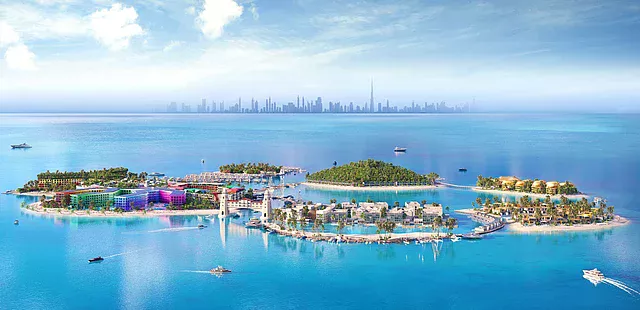
    Dubai’s property market recorded a significant transaction on Thursday with the sale of a luxury villa on the World Islands for Dh220 million, highlighting strong momentum in the emirate’s ultra-prime real estate sector.

    According to data from the Dubai REST application, operated by the Dubai Land Department, the villa spans approximately 58,080 square feet, equivalent to about 5,395 square metres. The transaction reflects an average price of Dh3,787 per square foot.

    The property is located on Amali Island, one of the high-end residential projects within the World Islands development, which continues to attract growing interest from international investors and wealthy buyers seeking exclusive waterfront properties in Dubai.

    Dubai’s luxury real estate market recorded unprecedented activity during 2025, supported by rising demand from high-net-worth individuals from around the world who continue to choose the emirate for its attractive investment climate, favourable regulatory framework and competitive tax environment.

    Data show that Dubai recorded 6,668 luxury property transactions last year with a combined value of about Dh143.8 billion. This compares with 4,735 deals worth Dh99.3 billion in 2024, representing a 41% increase in the number of transactions and a 45% rise in total value.

    The Dh220 million villa sale comes as the emirate continues to process high-value transactions across multiple segments. Earlier this month, Dubai recorded a Dh422 million apartment sale at Aman Residences, marking the third most expensive apartment transaction in the emirate’s history.

    The World Islands transaction reflects broader market confidence despite regional tensions, with the emirate’s fundamentals—including stable leadership, long-term planning, and a regulated investment environment—continuing to support investor sentiment in the ultra-prime segment.

    The continued demand for exclusive waterfront properties on developments such as the World Islands underscores Dubai’s position as a leading destination for global wealth, with the emirate’s luxury market showing resilience and sustained momentum into 2026.