Tag: Aldar Properties

  • Abu Dhabi Launches Dh100 Billion Marsa Al Saadiyat Waterfront Development

    Abu Dhabi Launches Dh100 Billion Marsa Al Saadiyat Waterfront Development

    The waterfront district will extend across eight kilometres of waterfront, including 5.6 kilometres of beaches, and is designed to accommodate more than 58,000 residents through a mix of homes, hotels, schools, cultural facilities, parks and commercial areas.

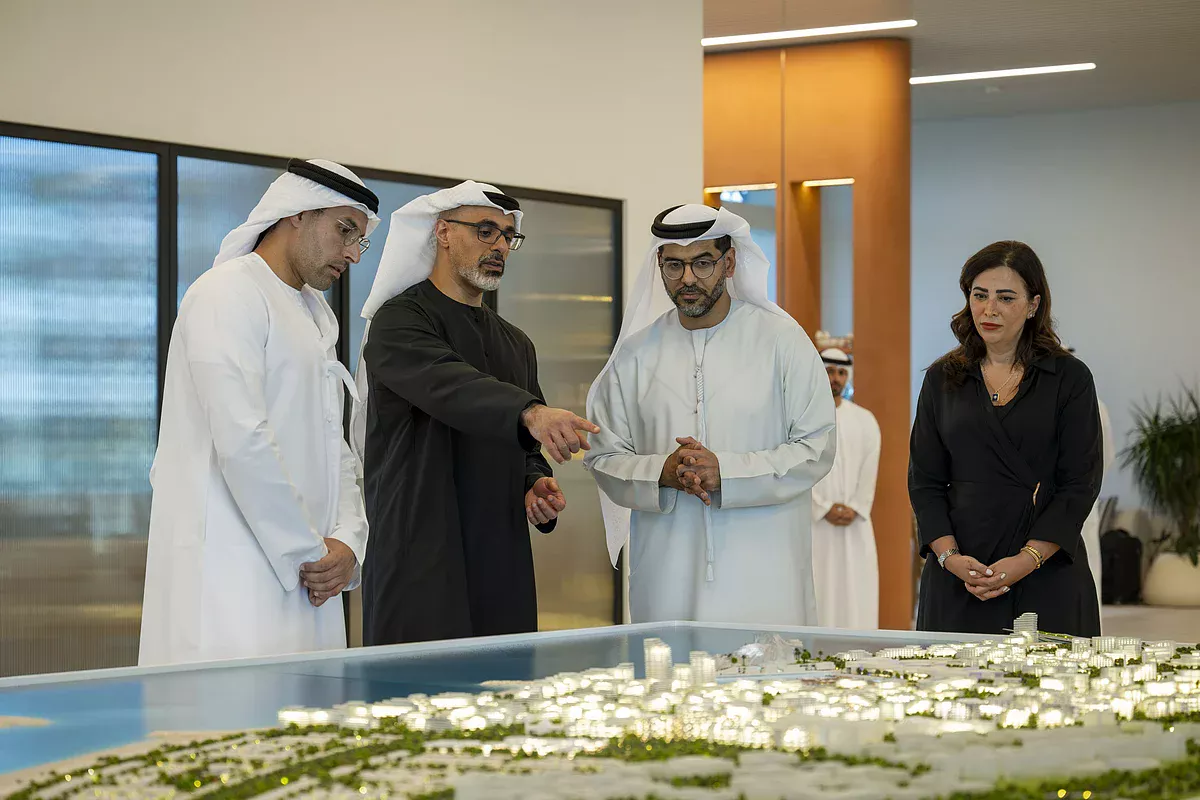
    Sheikh Khaled bin Mohamed bin Zayed Al Nahyan, Crown Prince of Abu Dhabi and Chairman of the Abu Dhabi Executive Council, visited the project site to review its masterplan, infrastructure and community amenities. He directed that the development be renamed from Saadiyat Marina District to Marsa Al Saadiyat, reflecting the UAE’s maritime heritage.

    The development’s centrepiece will be Abu Dhabi’s largest marina, with capacity for up to 350 sailing boats and luxury yachts. Aldar has been appointed as the project’s master developer, responsible for its overall design and primary infrastructure.

    Sales of the first homes will begin in the second half of 2026, with site enabling and infrastructure works scheduled to start in the third quarter.

    “Marsa Al Saadiyat marks the activation of the final phase of the Saadiyat Island masterplan, and with it, the beginning of the most ambitious chapter yet in the island’s evolution,” said Mohamed Khalifa Al Mubarak, Chairman of the Department of Culture and Tourism – Abu Dhabi and Chairman of Aldar.

    The residential mix will include private mansions, luxury villas, waterfront apartments and branded residences. A hillside community of standalone villas rising 22.5 metres will be positioned to make use of the surrounding landscape.

    Community Infrastructure and Amenities

    A landscaped central park will extend towards the waterfront and connect with a network of linear green spaces. The community will feature children’s play areas, clubhouses with outdoor swimming pools, sports courts, healthcare facilities and three schools.

    The masterplan includes approximately 140 kilometres of interconnected walking paths and a 46-kilometre cycling track. Its layout will place everyday services within walking, cycling or short driving distance of homes.

    A one-kilometre promenade will form the development’s main retail and dining district. Marsa Al Saadiyat will also contain a yacht club and two luxury hotels, creating a commercial and leisure centre around the marina.

    Cultural and Performing Arts Hub

    A theatre district will be anchored by Dar al Funoon, a performing arts venue with capacity for more than 6,000 guests. It is planned to host musicals, live productions and international performances throughout the year.

    A scenic walkway will connect Marsa Al Saadiyat directly with the Saadiyat Cultural District, giving residents access to Louvre Abu Dhabi, the Natural History Museum, Zayed National Museum and teamLab Phenomena Abu Dhabi. Guggenheim Abu Dhabi is also planned for the island.

    Saadiyat Island’s wider education network includes NYU Abu Dhabi, Berklee Abu Dhabi, Cranleigh Abu Dhabi, American Community School of Abu Dhabi and Harrow International School Abu Dhabi.

    Transport and Connectivity

    Marsa Al Saadiyat will connect with Umm Yifeenah Island and Reem Island through a new network of roads and tunnels designed to cut travel time between the development and central Abu Dhabi.

    The district will feature an underground station for Etihad Rail’s high-speed passenger service, strengthening links between Abu Dhabi and the other emirates. A new bridge will provide a further connection between Marsa Al Saadiyat and another island being developed off Saadiyat Island’s coast.

    Talal Al Dhiyebi, Group Chief Executive Officer at Aldar, said the masterplan would add scale and character to Saadiyat Island, which has developed into one of Abu Dhabi’s main cultural and lifestyle districts.

    Sheikh Khaled emphasized that the project reflected the UAE leadership’s commitment to developing integrated infrastructure that meets future needs and strengthens the country’s competitiveness as a place to live, supporting the UAE’s development model by bringing together quality of life, economic competitiveness and sustainability.

    The Dh100 billion development adds to Abu Dhabi’s record real estate momentum in 2026, as the emirate continues to expand its waterfront portfolio alongside major projects on Yas Island and other strategic locations across the capital.
  • Aldar Unveils Dh6 Billion Yas Point Waterfront Destination

    Aldar Unveils Dh6 Billion Yas Point Waterfront Destination

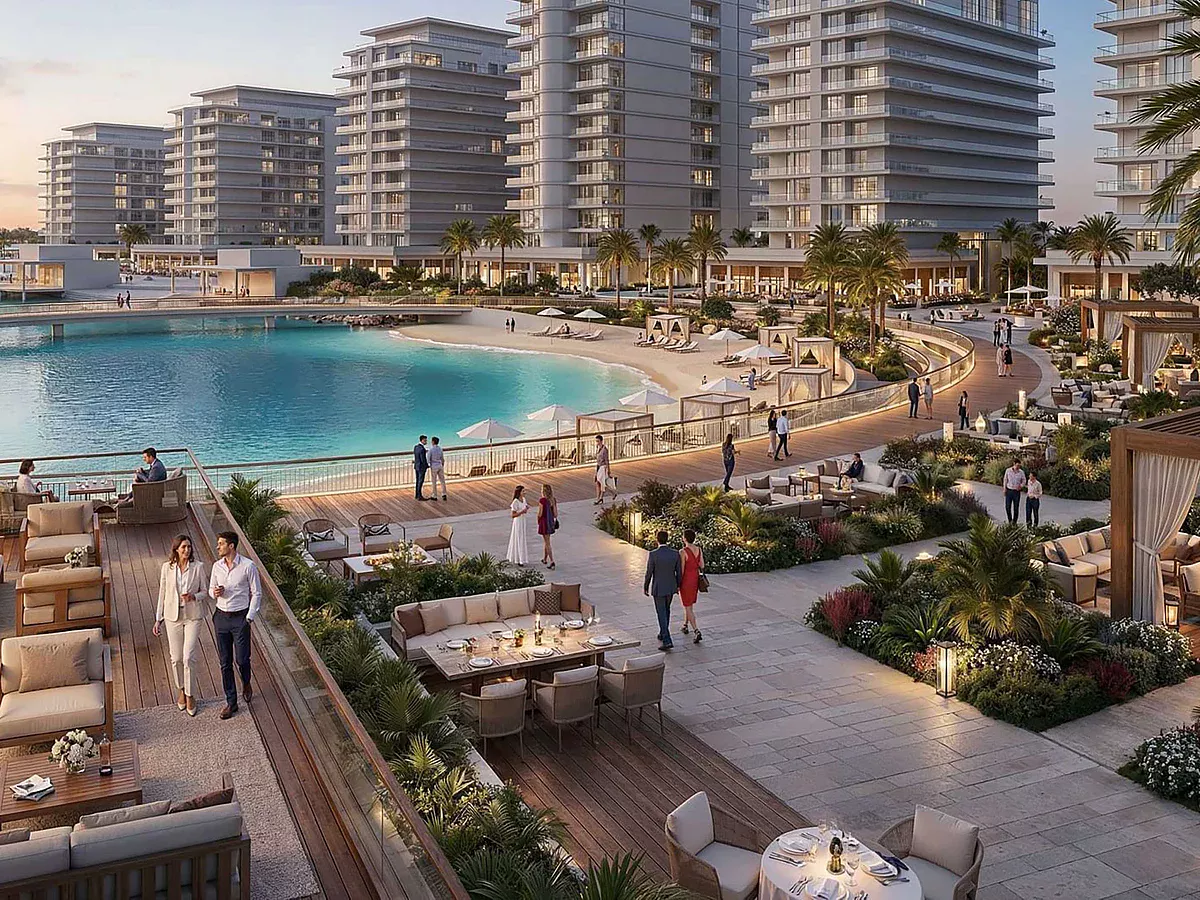
    The development spans approximately 600,000 square meters and marks a significant expansion of one of the world’s leading entertainment and lifestyle destinations, positioning Yas Island for continued growth as a residential and tourism hub.

    Yas Point will combine luxury living, hospitality, retail and entertainment in a single waterfront location on the northern side of Yas Island, connected to the island’s existing attractions including theme parks, sports venues, and cultural facilities.

    “The world’s greatest destinations never stand still; they continue to evolve to remain globally relevant and create new reasons for people to visit, live, and connect. Yas Point reflects that ambition, introducing a vibrant waterfront destination that expands how people experience Yas Island and reinforces Abu Dhabi’s position as a leading destination for lifestyle, tourism, and investment,” said Jonathan Emery, Chief Executive Officer of Aldar Development.

    The masterplan features a walkable layout designed to encourage movement and discovery, with park connections, waterfront pathways, and public spaces intended to serve both residents and visitors year-round.

    The project includes a five-star resort hotel, branded residences, an international school, and a mix of retail, dining, and leisure amenities, all positioned along a beachfront community setting. The development is designed as a destination for daily living as well as short-term visits, with lively waterfront zones and gathering spaces integrated throughout.

    Once complete, Yas Point will house 5,000 residents across 1,600 residential units, adding substantial supply to Abu Dhabi’s growing residential market. The announcement comes as Abu Dhabi’s property market rebounds with buyer activity recovering to 95% of baseline levels in the first half of 2026.

    The project is part of Abu Dhabi’s Dh200 billion infrastructure portfolio, which includes over 600 ongoing projects across housing, transport, healthcare, education, and tourism sectors. Aldar’s latest launch reinforces the emirate’s focus on integrated communities that blend residential, commercial, and hospitality functions in strategic coastal locations.

    Yas Point is located on one of Yas Island’s most prominent coastal sites, offering direct access to beaches and waterfront experiences. The development is expected to attract both local and international buyers seeking lifestyle-oriented properties in close proximity to globally recognized attractions.

    The announcement follows a series of major waterfront developments across the UAE, where coastal properties have appreciated by more than 140 percent over the past five years, significantly outperforming the wider residential market as scarce land and wellness-focused demand drive premiums to record levels.

  • Dubai Property Market Shifts to Long-Term Investment Destination

    Dubai Property Market Shifts to Long-Term Investment Destination

    The average time for a renter in the UAE to become a homeowner has dropped to just 4.8 years, highlighting a growing shift toward long-term residency and ownership rather than short-term property trading, according to Nagham Hassan, market analyst at eToro, a trading and investing platform.

    The trend reflects changing buyer behaviour across the UAE property market. In 2025, data showed that the investor base expanded to more than 193,000 active participants, with resident investors accounting for over half of total investments by value — a trend analysts say reflects increasing market maturity and stronger long-term confidence in the UAE economy.

    Dubai has also launched the First Time Home Buyer Programme to support individuals seeking to purchase their first home in the emirate by offering a range of exclusive benefits that make it easier to enter the property ownership market.

    Industry experts noted that strong demand, fast-moving launches and limited supply in key communities are encouraging buyers to make quicker long-term purchasing decisions rather than waiting on the sidelines.

    Dubai recorded Dh252 billion in real estate transactions during the first quarter of 2026, up 31 per cent year-on-year, following a record-breaking Dh917 billion in transactions during 2025. Meanwhile, property prices rose 9.81 per cent last year, moderating from the double-digit gains seen in previous years.

    Despite heightened regional tensions earlier this year, Dubai’s property sector showed resilience. February transactions reached Dh84 billion before slowing to Dh56 billion in March as buyers briefly paused amid geopolitical uncertainty. However, sales rebounded 23 per cent in April to Dh69 billion, signalling renewed confidence in the market.

    The resilience has also extended to listed real estate developers, although share prices have lagged behind physical market performance.

    Emaar Properties entered 2026 with a revenue backlog of Dh163.4 billion, up 29 per cent year-on-year, while Aldar Properties reported a 12 per cent increase in revenue and a 22 per cent rise in EBITDA, alongside total liquidity of Dh38.2 billion.

    A resolution in the regional conflict would act as a catalyst, unlocking the pent-up demand that has already proven itself in the physical market and accelerating the repricing of both stocks toward their fundamental value.

    Analysts say the sector’s long-term outlook remains supported by escrow-protected sales structures, recurring income streams and strong project pipelines, making major UAE developers relatively insulated from short-term market volatility.

    The structural shift toward homeownership is further reinforced by Dubai homeowners now holding properties for periods comparable to mature markets like London and New York, reflecting the emirate’s maturation as a global residential hub.

  • Dubai Real Estate Defies Regional Tensions with $100M Deals

    Dubai Real Estate Defies Regional Tensions with $100M Deals

    The UAE property market is operating normally despite heightened geopolitical tensions, with real estate activity continuing across the country and developers maintaining scheduled project launches.

    A $100 million-plus property transaction was recorded in Dubai this week, demonstrating sustained investor appetite even as some international buyers pause purchase decisions to monitor regional developments.

    Broker Ben Crompton confirmed that transactions already underway are progressing as planned.

    Buyers who already signed MOUs are proceeding as normal, and some deals are still being negotiated. Most buyers are in a ‘wait-and-see’ mode as you can imagine.

    He noted that property prices typically decline only during periods of forced selling triggered by widespread job losses or sharp interest rate increases—conditions that have not materialized in the UAE.

    International Investors Monitor Closely

    International investors, who represent a significant share of UAE property buyers, are watching the situation more closely than long-term residents, according to market participants.

    A second broker, speaking anonymously, said a major project scheduled to launch next week is proceeding as planned.

    They are not postponing launches because of the current situation.

    The broker emphasized that Abu Dhabi’s market is anchored by families with deep roots in the emirate.

    A large proportion of residents here are families who have been in the UAE for many years. They consider this their home and they are planning long-term—with schools, jobs and their families here—so they still want to buy property.

    However, some foreign buyers from the UK, US, and Germany have become more cautious, the broker noted.

    Opportunity for Strategic Investors

    Market professionals indicated that short-term uncertainty can create opportunities for cash investors. When sellers exit quickly and reduce prices, those units tend to be acquired rapidly by investors with available liquidity.

    The broker cited examples of properties valued at Dh1.3 million being negotiated at Dh1 million for quick transactions, with investors planning to hold until market conditions stabilize.

    Real estate is a slow and stable market. It doesn’t react like the stock market where prices can suddenly fall by 10 per cent in a day. For significant price changes to happen, a large number of people would need to move in the same direction. Right now, the majority still believe in the UAE and its government, so the market remains stable.

    Developers Emphasize Continuity

    On March 6, 2026, Emaar Properties confirmed normal operations across all assets. Earlier, Aldar Properties stated that all its residential communities, retail destinations, commercial offices, hotels, schools, and development sites continue to operate without interruption.

    Aldar highlighted its strong financial position with more than Dh30 billion in available liquidity, including Dh14.2 billion in free cash and Dh16.4 billion in undrawn bank facilities.

    Developers have not adjusted launch pricing, but some are offering more flexible payment plans—such as 35-65 or 40-60 structures instead of 50-50—to reduce upfront costs and maintain investor confidence.

    Economic Fundamentals Remain Robust

    Crompton emphasized that broader economic conditions supporting the property market remain strong.

    The economic fundamentals are very strong. Capital hates uncertainty more than anything. The sooner there is long-term clarity, the sooner investors will feel comfortable committing again.

    The UAE real estate sector has been supported by strong population growth, international investment, and economic expansion. Dubai’s population has surpassed four million, driving unprecedented housing demand as the emirate’s property market recorded nearly Dh900 billion in transactions during 2025.

    Industry professionals point to continued long-term demand across key residential hubs including Reem Island, Yas Island, and Saadiyat Island, where new infrastructure and lifestyle developments are expected to support property values over time.

    The broker concluded:

    There is still strong belief in the long-term prospects of the market. Real estate in the UAE has historically moved upward over the long term, even if there are short-term fluctuations.