Author: Estattor.com

  • Alabbar: Dubai Property Market Remains Strong Despite Regional Tensions

    Alabbar: Dubai Property Market Remains Strong Despite Regional Tensions

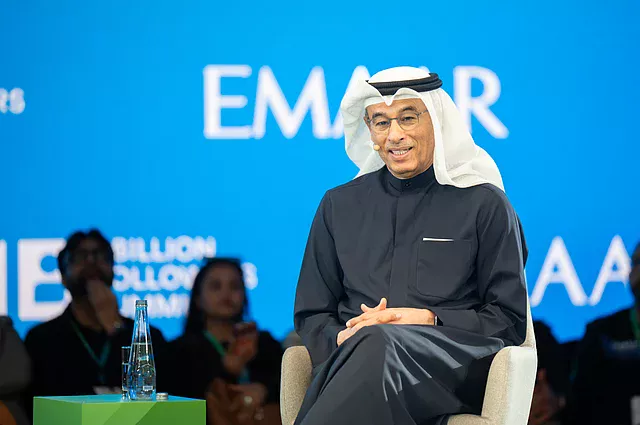
    Dubai’s real estate sector remains fundamentally strong as global capital continues to flow into the emirate, according to Mohamed Alabbar, who told CNBC that the UAE’s long-term development strategy and stable leadership have created an environment that withstands external pressures.

    “It’s the global business hub, and its success, its limelight, its reflection of what life should be and what success should be, what prosperity should be, what positive you should be is this place,” Alabbar said, adding that attempts to undermine that success will ultimately fail.

    Fundamentals Built Over Four Decades

    Alabbar acknowledged that social media speculation can amplify fears during periods of geopolitical tension but emphasized that the UAE’s track record demonstrates consistency and wisdom. “If you were to look and study the trajectory of UAE policies, you will see consistency, you will see sustainability, you will see wisdom, you will see stability,” he stated.

    According to the Emaar founder, the country’s leadership has spent more than 40 years building systems designed to deliver prosperity for residents and investors. Recent events have only reinforced confidence in the nation’s safety and infrastructure, he noted.

    “I promise you what happened will only strengthen what this country is all about.”

    Capital Flows Accelerate, Not Reverse

    Addressing concerns that capital moved to the UAE during global crises could now begin to leave, Alabbar pointed to recent market performance as evidence of sustained confidence. “If you were to look at the past two years, just look at our business, the real estate business alone, we had an increase of almost 70% in 2023, we had 40% in 2024, we have another 40% in 2025,” he said.

    The developer said sophisticated investors recognize the strength of the UAE’s fundamentals and are likely to deepen their commitments rather than pull back. Dubai’s real estate market recorded AED2.46 billion in transactions on March 2, 2026, demonstrating sustained activity levels.

    “Smart capital understands that a country like this, with all these principles and stable leadership and the safety that it has shown that it can deliver,” Alabbar said. “People with true capital understand this and they appreciate this and they will double down on investing anyway.”

    No Signs of Market Weakness

    Alabbar said current demand shows no indication of softening. He recounted his own recent experience searching for an apartment in Dubai: “Myself, I’m looking for one building, one apartment overlooking the sea that I didn’t buy in, and the past two days I’ve been looking and it seemed like nobody want to budge. Nobody want to give a discount.”

    That reflects a market where sellers remain confident and demand stays firm. While consumer confidence may soften temporarily during periods of uncertainty, the country’s policies tend to restore confidence quickly, he added.

    Correction Forecasts ‘Unrealistic’

    Some analysts have warned that Dubai’s property market could face a correction as new supply enters the market, with Fitch Ratings recently suggesting prices could decline by up to 15%. Alabbar dismissed that scenario as unlikely.

    “I know my business well. I know the banking, I know the business environment, because I operate in multi industries,” he said. “The banking system is so strict, amazing discipline. Government policies are just getting better and better. I have no concerns.”

    Asked directly whether a 15% correction was realistic, Alabbar was unequivocal: “In my opinion, the way I do, the way I look at my business and listen, I look at so much data, I think it’s very unrealistic.”

    Recent high-value transactions support his assessment. Dubai recorded a Dh422 million apartment sale at Aman Residences on March 5, 2026, marking the third most expensive apartment transaction in the emirate’s history.

    New Supply Could Stabilize Growth

    Dubai is preparing for a wave of new property supply expected in 2026 and 2027. Alabbar said additional inventory could benefit the market by preventing prices from rising too quickly and maintaining the city’s competitiveness.

    “I said this a year ago. The supply that’s coming in in 2026 and 2027 will be good for the market,” he stated. “We are not here for the short run. We are here for a long time to do business.”

    The developer said he prefers a market where property prices rise gradually—around 5% to 6% annually—rather than experiencing sharp spikes that could undermine long-term stability. “Jacking up prices too high doesn’t benefit anybody,” he said.

    Real estate costs play a significant role in inflation, contributing approximately 50% to 52% of overall price increases, Alabbar noted. Maintaining balanced growth helps both investors and residents. “We don’t also want investors and people who come here for their jobs to really feel that the city is too expensive,” he added.

    Long-Term Stability Over Short-Term Gains

    Alabbar said the goal for Dubai’s property sector should be stability rather than aggressive price increases. Developers are already generating strong returns at current price levels, and maintaining balanced growth will help sustain Dubai’s appeal as a global destination.

    “Developers are making enough money with these prices. We should not shoot too high,” he said. “I want stability. I want long term.”

    A modest adjustment driven by new supply could help ease pressure on housing costs without undermining the broader market, he concluded. Emaar recently confirmed that UAE property sales reached Dh17.2 billion in the first two months of 2026, marking a 118% increase year-on-year.

  • Dubai Real Estate Maintains Momentum Amid Regional Uncertainty

    Dubai Real Estate Maintains Momentum Amid Regional Uncertainty

    The Dubai Land Department confirmed 874 property transactions valued at AED2.46 billion ($670 million) on March 2, reinforcing the emirate’s reputation as one of the world’s most resilient investment destinations despite periodic regional tensions.

    Market analysts note that regional escalations have historically been short-lived and strategically contained, with limited long-term economic impact. In contrast, the UAE’s framework is built on diversified industries, institutional strength, and long-term planning.

    “Regional tensions may create headlines and short-term sentiment shifts, but the UAE’s long-term economic fundamentals remain extremely solid,” said Loai Al Fakir, CEO of Provident Estate. “Investors understand that the country’s stability, governance and strategic global positioning make it one of the safest places to allocate capital.”

    Al Fakir noted that Dubai has consistently demonstrated resilience through global financial crises, regional conflicts, and the pandemic. “Each time, the market not only recovered quickly but attracted even greater international investment,” he added.

    The March 2 figures highlight continued market liquidity and sustained investor confidence. Across the sector, operations remain fully active, with holiday homes operating at high occupancy levels, hotel bookings staying strong, and property handovers, contract renewals, and secondary market activity continuing consistently across key communities.

    “Experienced investors understand that geopolitical cycles come and go, but the UAE’s economic trajectory remains consistently upward. Dubai offers a rare combination of safety, transparency, strong regulation and tax efficiency.” — Mohamad Jaafari, Operations and Primary Director at Provident Estate

    Dubai’s real estate market is driven by long-term structural factors including sustained population growth—with the emirate’s population now exceeding four million—rising global migration, strong foreign direct investment, and ambitious government development strategies.

    Industry experts note that periods of uncertainty typically follow a familiar pattern: a brief pause in investor decision-making, followed by renewed confidence and increased demand. The slowdown observed over the recent weekend was sentiment-driven rather than indicative of any structural market shift.

    The UAE plays a central role as a global hub for aviation, finance, international trade, tourism, and real estate. With advanced security systems, strong diplomatic positioning, and a globally integrated economy, the country remains insulated from prolonged instability affecting conflict zones.

    The emirate’s property market recorded nearly Dh900 billion in transactions during 2025, reinforcing its position as a leading global real estate investment destination. As international investors continue to prioritize stability and long-term economic growth, the UAE remains positioned as one of the most attractive property markets globally.

  • Dubai Records Dh422 Million Apartment Sale Amid Regional Tensions

    Dubai Records Dh422 Million Apartment Sale Amid Regional Tensions

    A luxury apartment spanning 31,201 square feet at Aman Residences Dubai on the Jumeirah Peninsula has been sold for Dh422 million ($115 million), marking one of the most significant property transactions in the emirate’s history amid heightened regional uncertainty.

    The deal, confirmed by fäm Properties, was completed off-plan and valued at Dh13,525 per square foot according to DXBinteract, the data platform developed in partnership with Dubai Land Department.

    Firas Al Msaddi, CEO of fäm Properties, said the transaction reflects fundamental structural strength in Dubai’s real estate sector.

    “The sale of an ultra-luxury unit at this level is particularly relevant in the current circumstances. It underlines the fact that the Dubai real estate market is structurally stronger than it has ever been. Over 70 per cent of transactions are now end-user driven, not speculative. The buyer base is globally diversified,” Al Msaddi stated.

    He emphasized that mortgage activity has doubled in four years and the regulatory environment has matured, with market fundamentals remaining unchanged despite regional events.

    The transaction comes as Dubai’s ultra-prime segment continues to demonstrate resilience. The sale represents the third most expensive apartment ever recorded in the emirate.

    Market analysts point to shifting buyer dynamics supporting the sector’s evolution. End-users transitioning from rental to ownership, continued international capital participation, and expansion of freehold corridors across strategic districts have broadened the participation base.

    Al Msaddi noted that UAE authorities’ commitment to safety and security sends a powerful message to investors globally. “It’s a sale which says so much about the UAE as a whole, and in this case, in particular, about Dubai as one of the world’s leading destinations for wealthy real estate investors,” he added.

    The market’s momentum is supported by disciplined supply pipelines and phased project launches that continue to reinforce pricing stability across key communities. More than 70 per cent of current transactions are driven by end-users rather than speculation, with a globally diversified buyer base providing additional market stability.

    This transaction reinforces Dubai’s position as a safe-haven real estate market, demonstrating that high-value property activity continues despite external pressures, with investors maintaining confidence in the emirate’s long-term prospects and governance framework.

  • Dubai Records Dh422 Million Apartment Sale, Third Highest Ever

    Dubai Records Dh422 Million Apartment Sale, Third Highest Ever

    The luxury residential unit, located within the Aman Residences Dubai development by H&H Development, spans approximately 31,200 square feet (around 2,898 square metres) and includes six bedrooms and eight parking spaces, according to figures released by Dubai Land Department on Thursday.

    At an average price of roughly Dh13,525 per square foot, the transaction underscores sustained investor demand in Dubai’s ultra-prime property segment, even as heightened geopolitical tensions affect the broader region.

    The Dh422 million deal ranks behind only two other apartment sales in Dubai’s history. The emirate’s most expensive apartment sale was registered in 2025, when a unit at Bugatti Residences by Binghatti sold for Dh550 million. The second-most expensive transaction took place in 2023 at Como Residences, developed by Nakheel, where a unit changed hands for Dh500 million.

    The sale comes as Dubai’s property market recorded 16,959 transactions valued at AED60.60 billion in February 2026, with off-plan sales comprising 62% of total activity. The market’s performance reflects broader confidence in Dubai’s real estate fundamentals, supported by population growth that has recently surpassed four million residents.

    Aman Residences Dubai is positioned within Jumeirah 2, one of the emirate’s established prime residential locations. The development caters to ultra-high-net-worth buyers seeking branded residences with premium amenities and services.

    The latest sale further underlines continued demand for high-end property in Dubai’s prime locations, reinforcing the emirate’s status as a leading destination for international real estate investment despite external market pressures.

    Dubai’s ultra-prime segment has consistently attracted buyers seeking stability, residency options including the Golden Visa programme, and exposure to one of the region’s most liquid property markets. The resilience demonstrated by this transaction suggests that investor confidence in Dubai’s long-term fundamentals remains strong, even as UAE property sales reached Dh17.2 billion in the first two months of 2026—a 118% increase year-on-year.

  • Emaar Confirms Normal Operations as Sales Double in Early 2026

    Emaar Confirms Normal Operations as Sales Double in Early 2026

    Dubai’s largest property developer assured investors and residents that comprehensive business continuity planning and coordination with relevant authorities ensure uninterrupted operations across all its assets.

    The statement, posted on the Dubai Financial Market where Emaar is listed, comes as the company reported exceptional momentum entering 2026 following record-breaking 2025 results.

    “With diversified income streams, strong liquidity, and disciplined cost management, Emaar remains well-positioned to sustain growth and contribute to the continued strength and resilience of Dubai’s capital markets,” the company stated.

    Record 2025 Performance Sets Foundation

    Emaar achieved its highest-ever property sales of AED80.4 billion ($21.9 billion) in 2025, alongside record revenue of AED49.6 billion and net profit before tax of AED25.7 billion. The company’s revenue backlog reached AED155 billion as of December 31, 2025, providing strong visibility over future earnings and cash flows.

    Recurring income streams across malls, hospitality, leisure, entertainment and commercial leasing accounted for 32% of total EBITDA, reflecting the strength of Emaar’s diversified and resilient operating model.

    “Emaar’s performance reflects the strength of Dubai’s economic vision and the confidence investors place in its stability and long-term prospects,” said Mohamed Alabbar, Founder of Emaar. “The city continues to demonstrate resilience, supported by effective leadership, sound regulation and a dynamic business environment.”

    Strong 2026 Start Signals Sustained Demand

    The developer’s UAE property sales reached AED17.2 billion in the first two months of 2026, compared to AED7.9 billion during the same period in 2025, representing a 118% year-on-year increase. This performance aligns with broader market trends showing sustained transaction volumes across Dubai’s property sector.

    Supported by strong cash generation and consistent performance, Emaar’s Board of Directors recommended maintaining dividends at 100% of share capital for 2025, reinforcing the company’s commitment to delivering sustainable value to shareholders.

    Strategic Position for Long-Term Growth

    Emaar’s strong balance sheet includes a substantial land bank of approximately 618 million square feet, positioning the company to navigate evolving regional developments while maintaining disciplined expansion. The developer emphasized that Dubai’s clear regulatory environment, diversified economy and proactive governance continue to reinforce investor confidence.

    The company’s performance comes as Dubai’s real estate market transitions toward more structured capital allocation, with major developers expanding their portfolios to meet growing demand driven by population growth exceeding four million residents.

    Emaar’s operational continuity and financial strength underscore the resilience of Dubai’s real estate sector, which recorded nearly Dh900 billion in transactions during 2025, reinforcing the emirate’s position as a leading global property investment destination.

  • UAE Real Estate Shows Resilience as Dubai Records $670 Million in Transactions

    UAE Real Estate Shows Resilience as Dubai Records $670 Million in Transactions

    The UAE economy and real estate sector remain resilient amid rising regional tensions, according to a report released by Provident Estate on March 4, 2026. Recent geopolitical developments following escalation between the United States and Iran over the weekend of March 1 triggered precautionary measures across several Gulf states, including the UAE.

    While such developments naturally created short-term uncertainty among investors and market observers in Dubai, Abu Dhabi, and Ras Al Khaimah, the operational reality across the country remained stable with underlying fundamentals unchanged.

    Market Activity Rebounds Quickly

    Following a temporary sentiment-driven slowdown over the weekend, the UAE real estate market resumed momentum as the new week began. Official figures from the Dubai Land Department confirmed that 874 real estate transactions worth AED2.46 billion ($670 million) were recorded on Monday, March 2.

    These numbers highlight continued market liquidity and sustained investor confidence. Across the sector, operations remained fully active: holiday homes continued operating at high occupancy levels, hotel bookings remained strong, and property handovers, snagging services, contract renewals, and secondary market viewings proceeded consistently across key communities.

    “Dubai’s real estate market has proven time and again that it is built on strong fundamentals rather than short-term sentiment. What we are seeing now is a brief moment of caution, not a shift in investor confidence. Activity across transactions, rentals and hospitality clearly shows that the market continues to operate with resilience and stability,” said Loai Al Fakir, CEO of Provident Estate.

    The performance aligns with broader market trends documented earlier in 2026. Emaar Properties reported doubled sales in the first two months of 2026, with UAE property sales reaching Dh17.2 billion—a 118% year-on-year increase.

    Government Response Ensures Continuity

    The UAE government responded swiftly to developments, implementing enhanced security measures across air, sea, and land infrastructure to ensure operational continuity. Authorities acted immediately to safeguard infrastructure, supply chains, utilities, and public services.

    As a result, daily life across the country continued uninterrupted. Airports remained fully operational, roads and transportation networks functioned normally, and retail and hospitality venues stayed open. Major destinations including Dubai Mall, Downtown Dubai, and other central commercial districts remained active, reinforcing the stability of the UAE’s economic environment.

    Despite heightened media attention, the difference between perception and reality on the ground proved significant. Over the 48 hours following the initial weekend tensions, no further escalation occurred, with public spaces remaining busy and daily routines continuing normally.

    Structural Strengths Underpin Market Confidence

    Real estate remains a cornerstone of the UAE’s long-term economic strategy, playing a central role in the country’s positioning as a global hub for investment, tourism, aviation, and financial services. The resilience of the market is supported by several structural strengths:

    • Strong banking liquidity
    • Advanced institutional crisis management
    • Diversified national economy
    • Long-term urban development strategies
    • Continued global investor confidence

    These foundational pillars represent permanent features of the UAE’s economic model rather than temporary advantages. The broader market context supports this assessment: Dubai’s February 2026 transactions totaled AED60.60 billion ($16.5 billion), marking an 18.14% value increase year-on-year.

    The commercial sector has shown particular strength, with commercial property sales reaching Dh17.1 billion in early 2026—an 82% year-on-year increase driven by limited Grade A office supply.

    Market Outlook Remains Positive

    Based on current developments, market expectations remain positive for continued operational stability. The absence of further escalation reinforces confidence that the situation remains contained.

    “The UAE has repeatedly demonstrated its ability to navigate regional tensions while maintaining economic continuity and investor trust. Short-term headlines may shift sentiment, but they do not alter long-term fundamentals. Operations continue. Confidence remains. The market is functioning,” the Provident Estate report concluded.

    The resilience demonstrated in early March 2026 reflects the maturation of the UAE real estate sector from speculation-driven dynamics to a more institutionalized market structure, with strategic capital now accounting for approximately 40% of transactions.

  • Emaar Confirms Normal Operations as Sales Double in Early 2026

    Emaar Confirms Normal Operations as Sales Double in Early 2026

    Emaar Properties issued a statement to the Dubai Financial Market on Wednesday confirming business continuity across its entire portfolio as the master developer recorded exceptional sales growth in early 2026.

    “All Emaar communities, malls, hospitality assets, and development projects continue to operate normally, supported by comprehensive business continuity planning and close coordination with relevant authorities,” the company stated.

    The announcement comes as regional military conflict involving the US, Israel, and Iran has affected the Gulf since Saturday, with Iran targeting the region with missiles and drones.

    Mohamed Alabbar, founder of Emaar, emphasized Dubai’s stability:

    “The city continues to demonstrate resilience, supported by effective leadership, sound regulation, and a dynamic business environment. Our focus remains on disciplined execution, operational excellence, and delivering sustainable value for our shareholders and customers.”

    Emaar owns and operates landmark assets including Dubai Mall, Burj Khalifa, Dubai Hills Estate, and Dubai Creek Harbour.

    Record Sales Momentum Continues

    The UAE’s largest developer reported Dh17.2 billion in property sales during January and February 2026, compared to Dh7.9 billion in the same period of 2025—representing a 118% year-on-year increase.

    This performance follows Emaar’s record-breaking 2025 results, which included property sales of Dh80.4 billion, revenue of Dh49.6 billion, and net profit before tax of Dh25.7 billion—the strongest results in company history.

    The company’s revenue backlog stood at Dh155 billion as of December 31, 2025. Recurring income streams from malls, hospitality, leisure, entertainment, and commercial leasing accounted for 32% of total EBITDA.

    “Emaar’s performance reflects the strength of Dubai’s economic vision and the confidence investors place in its stability and long-term prospects,” Alabbar added.

    Market Context

    Emaar’s performance aligns with broader momentum across Dubai’s property sector, which recorded Dh60.60 billion in transactions during February 2026—an 18.14% increase year-on-year.

    The developer reaffirmed its commitment to disciplined growth: “With diversified income streams, strong liquidity, and disciplined cost management, Emaar remains well-positioned to sustain growth and contribute to the continued strength and resilience of Dubai’s capital markets.”

    The statement underscores investor confidence in Dubai’s regulatory framework and economic stability, even as geopolitical developments affect the wider region.

  • Wasl Group Plans to Double Affordable Housing Portfolio by 2031

    Wasl Group Plans to Double Affordable Housing Portfolio by 2031

    Wasl Group currently manages one of Dubai’s largest affordable housing portfolios, comprising approximately 45,000 residential units across the emirate. These communities accommodate nearly 180,000 residents, over 90% of whom are families, positioning Wasl as a central player in supporting stable, community-driven living.

    The expansion plan follows a Memorandum of Understanding signed in May 2025 with the Roads and Transport Authority and Dubai Municipality. The coordinated effort will span a total planned area of 1.46 million square metres, with delivery phased over multiple stages to ensure infrastructure readiness and long-term community viability.

    Wasl’s current developments include Wasl Village in Al Qusais, which comprises about 6,200 residential units ranging from studios to three-bedroom apartments, and Wasl Green Park, offering around 2,527 units set within landscaped surroundings. Both projects exemplify the integration of affordability with quality urban living standards.

    The initiative directly supports the Dubai 2040 Urban Master Plan, which calls for a balanced housing ecosystem encompassing luxury, mid-income, and affordable segments. In August 2025, Dubai’s population crossed 4 million, with nearly 567 new residents settling in the emirate daily.

    The programme additionally advances the Dubai Economic Agenda D33, supporting workforce stability and economic productivity by diversifying housing supply amid the city’s rapidly growing population. With property market momentum continuing into 2026, the focus on affordable housing addresses a critical segment of market demand.

    Wasl’s developments are designed around connectivity, community infrastructure, greenery, and access to premium amenities, reflecting a commitment that quality living should be accessible across all income levels. The phased delivery approach aims to ensure infrastructure readiness and sustainable community development as the emirate’s residential market evolves.

  • Dubai Real Estate Sales Surge 18% to $16.5 Billion in February 2026

    Dubai Real Estate Sales Surge 18% to $16.5 Billion in February 2026

    Dubai’s real estate sector maintained exceptional momentum through February 2026, with transaction values climbing 18.14% year-on-year despite evolving market dynamics across property segments. According to Dubai Land Department data, total sales reached 16,959 deals generating AED60.60 billion ($16.5 billion), representing a 5% increase in volume compared to February 2025.

    Off-plan properties dominated market activity, accounting for 10,526 transactions or approximately 62% of total sales, while ready properties recorded 6,437 deals representing 38% of the market.

    Apartments Drive Residential Growth

    The apartment segment emerged as the primary growth driver, with transactions rising from 11,385 sales worth AED21.7 billion in February 2025 to 12,820 deals totaling AED26.6 billion in February 2026. The villa market experienced a sharp contraction, with transactions declining from 3,966 deals valued at AED19.7 billion to just 1,563 sales worth AED6.4 billion year-on-year.

    Commercial property demonstrated exceptional performance, with transactions surging from 443 sales valued at AED1.2 billion to 717 deals totaling AED9.54 billion—a near eight-fold increase in value.

    “Hitting over AED60 billion in sales volume solidifies Dubai’s position as one of the globe’s most resilient and desirable real estate hubs. This surge is driven by a balanced blend of end-user demand and enduring investor confidence,” said Tara Khan, Sales Director of Kelt and Co Realty.

    Khan noted that the market has reached a mature phase with steady price growth, strategically managed supply, and buyer involvement across both emerging and established communities.

    Transaction Activity Concentrated in Key Districts

    By volume, Jumeirah Village Circle led with 1,146 transactions, reaffirming its status as one of Dubai’s most active residential hubs. Al Yelayiss 1 followed with 916 deals, Madinat Al Mataar recorded 828 transactions, while Dubai Land Residence Complex registered 750 sales and Business Bay closed the top five with 733 deals.

    In value terms, Al Yelayiss 1 dominated with AED5.38 billion in sales, followed by Al Yelayiss 5 at AED2.41 billion and Me’Aisem Second at AED2.27 billion. Business Bay generated AED2.21 billion, while Palm Jumeirah reached AED1.89 billion, driven by continued demand for ultra-prime waterfront properties.

    Ultra-Luxury Transactions Define Upper Tier

    Among apartments, The Alba Residences by Omniyat topped the list with a AED225.97 million sale, followed by Peninsula Dubai Residences – Tower 2 at AED210 million. Solara Tower Dubai recorded a transaction worth AED113.66 million, while Passo by Beyond achieved AED98 million and Como Residences closed at AED63.5 million.

    In the villa segment, EOME at Palm Jumeirah led with a sale valued at AED115 million. Zaya Zuha Island at The World Islands featured multiple transactions at AED68.58 million, while Amali Island at The World Islands recorded a sale of AED68.4 million.

    The February performance follows Dubai’s landmark 2025, when the emirate’s population exceeded four million residents as property transactions approached Dh900 billion. The market has transitioned toward structured capital allocation, with strategic capital now accounting for approximately 40% of transactions.

    Market fundamentals remain supported by expanding business activity and tight inventory, particularly in the office sector where limited Grade A supply continues to drive investment activity across commercial segments.

  • DMCC Unveils 600-Metre Tower for Uptown District Phase 3

    DMCC Unveils 600-Metre Tower for Uptown District Phase 3

    The proposed megatall tower represents the latest expansion of DMCC’s strategic development in Dubai’s southern corridor, aligning with the emirate’s broader infrastructure transformation centered on Al Maktoum International Airport.

    Phase 1 of the Uptown District delivered the 340-metre Uptown Tower and central plaza. Phase 2, comprising two Grade A office towers and two residential towers, is under construction with completion scheduled for late 2027 and early 2028.

    Strategic positioning around future aviation hub

    Ahmed Bin Sulayem, Executive Chairman and Chief Executive Officer of DMCC, emphasized that the development responds to tangible market demand rather than speculative construction.

    “We build to meet the clear, growing requirements of a global trade community that is outgrowing its current footprint. The decision to develop the world’s largest airport in the southern corridor has broadened Dubai’s economic centre of gravity. Uptown District is the strategic anchor of this corridor.”

    The reference to structured capital allocation aligns with broader market trends as institutional investors prioritize strategic positioning over short-term gains.

    According to DMCC, approximately 50% of the tower’s space will be allocated to Grade A offices designed for multinational companies consolidating regional operations. The development will also include a luxury hotel operated by an international hospitality brand and high-end residential units.

    Smart infrastructure and connectivity

    The tower will incorporate smart-building systems and sustainability features, with direct integration to the Dubai Metro via a climate-controlled link bridge. Road infrastructure upgrades, including flyover access to Sheikh Zayed Road, are planned to support increased traffic capacity.

    DMCC stated the project targets continued demand from high-net-worth individuals relocating to Dubai, a trend reflected in recent market data showing sustained buyer interest across premium segments.

    The tower will feature a public viewing deck intended to attract visitors and serve as a vertical landmark for the district.

    Financial backing and market context

    DMCC confirmed that several major banks have expressed interest in partnering on the development, though specific financial details and timelines were not disclosed.

    Bin Sulayem described the development as part of creating “a sophisticated ecosystem where commerce and lifestyle are inextricably linked,” positioning the megatall tower as the district’s vertical anchor.

    The announcement comes as Dubai’s commercial property sector recorded Dh17.1 billion in sales during early 2026, with limited Grade A office supply in core business districts driving investors and corporates to secure prime space amid occupancy rates exceeding 95%.

    The planned expansion of Al Maktoum International Airport, set to accommodate 260 million passengers and 12 million tonnes of cargo annually, is reshaping development patterns across Dubai’s southern districts and reinforcing the strategic value of projects like Uptown District.