Tag: UAE real estate

  • Alabbar: Dubai Property Market Remains Strong Despite Regional Tensions

    Alabbar: Dubai Property Market Remains Strong Despite Regional Tensions

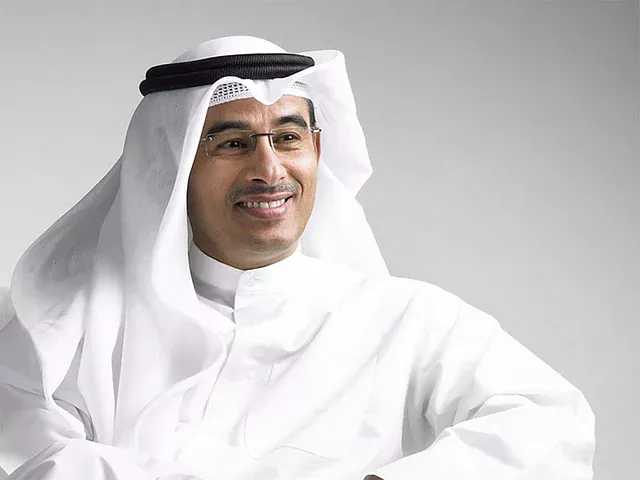
    Dubai’s real estate sector remains fundamentally strong as global capital continues to flow into the emirate, according to Mohamed Alabbar, who told CNBC that the UAE’s long-term development strategy and stable leadership have created an environment that withstands external pressures.

    “It’s the global business hub, and its success, its limelight, its reflection of what life should be and what success should be, what prosperity should be, what positive you should be is this place,” Alabbar said, adding that attempts to undermine that success will ultimately fail.

    Fundamentals Built Over Four Decades

    Alabbar acknowledged that social media speculation can amplify fears during periods of geopolitical tension but emphasized that the UAE’s track record demonstrates consistency and wisdom. “If you were to look and study the trajectory of UAE policies, you will see consistency, you will see sustainability, you will see wisdom, you will see stability,” he stated.

    According to the Emaar founder, the country’s leadership has spent more than 40 years building systems designed to deliver prosperity for residents and investors. Recent events have only reinforced confidence in the nation’s safety and infrastructure, he noted.

    “I promise you what happened will only strengthen what this country is all about.”

    Capital Flows Accelerate, Not Reverse

    Addressing concerns that capital moved to the UAE during global crises could now begin to leave, Alabbar pointed to recent market performance as evidence of sustained confidence. “If you were to look at the past two years, just look at our business, the real estate business alone, we had an increase of almost 70% in 2023, we had 40% in 2024, we have another 40% in 2025,” he said.

    The developer said sophisticated investors recognize the strength of the UAE’s fundamentals and are likely to deepen their commitments rather than pull back. Dubai’s real estate market recorded AED2.46 billion in transactions on March 2, 2026, demonstrating sustained activity levels.

    “Smart capital understands that a country like this, with all these principles and stable leadership and the safety that it has shown that it can deliver,” Alabbar said. “People with true capital understand this and they appreciate this and they will double down on investing anyway.”

    No Signs of Market Weakness

    Alabbar said current demand shows no indication of softening. He recounted his own recent experience searching for an apartment in Dubai: “Myself, I’m looking for one building, one apartment overlooking the sea that I didn’t buy in, and the past two days I’ve been looking and it seemed like nobody want to budge. Nobody want to give a discount.”

    That reflects a market where sellers remain confident and demand stays firm. While consumer confidence may soften temporarily during periods of uncertainty, the country’s policies tend to restore confidence quickly, he added.

    Correction Forecasts ‘Unrealistic’

    Some analysts have warned that Dubai’s property market could face a correction as new supply enters the market, with Fitch Ratings recently suggesting prices could decline by up to 15%. Alabbar dismissed that scenario as unlikely.

    “I know my business well. I know the banking, I know the business environment, because I operate in multi industries,” he said. “The banking system is so strict, amazing discipline. Government policies are just getting better and better. I have no concerns.”

    Asked directly whether a 15% correction was realistic, Alabbar was unequivocal: “In my opinion, the way I do, the way I look at my business and listen, I look at so much data, I think it’s very unrealistic.”

    Recent high-value transactions support his assessment. Dubai recorded a Dh422 million apartment sale at Aman Residences on March 5, 2026, marking the third most expensive apartment transaction in the emirate’s history.

    New Supply Could Stabilize Growth

    Dubai is preparing for a wave of new property supply expected in 2026 and 2027. Alabbar said additional inventory could benefit the market by preventing prices from rising too quickly and maintaining the city’s competitiveness.

    “I said this a year ago. The supply that’s coming in in 2026 and 2027 will be good for the market,” he stated. “We are not here for the short run. We are here for a long time to do business.”

    The developer said he prefers a market where property prices rise gradually—around 5% to 6% annually—rather than experiencing sharp spikes that could undermine long-term stability. “Jacking up prices too high doesn’t benefit anybody,” he said.

    Real estate costs play a significant role in inflation, contributing approximately 50% to 52% of overall price increases, Alabbar noted. Maintaining balanced growth helps both investors and residents. “We don’t also want investors and people who come here for their jobs to really feel that the city is too expensive,” he added.

    Long-Term Stability Over Short-Term Gains

    Alabbar said the goal for Dubai’s property sector should be stability rather than aggressive price increases. Developers are already generating strong returns at current price levels, and maintaining balanced growth will help sustain Dubai’s appeal as a global destination.

    “Developers are making enough money with these prices. We should not shoot too high,” he said. “I want stability. I want long term.”

    A modest adjustment driven by new supply could help ease pressure on housing costs without undermining the broader market, he concluded. Emaar recently confirmed that UAE property sales reached Dh17.2 billion in the first two months of 2026, marking a 118% increase year-on-year.
  • Dubai Records Dh422 Million Apartment Sale Amid Regional Tensions

    Dubai Records Dh422 Million Apartment Sale Amid Regional Tensions

    A luxury apartment spanning 31,201 square feet at Aman Residences Dubai on the Jumeirah Peninsula has been sold for Dh422 million ($115 million), marking one of the most significant property transactions in the emirate’s history amid heightened regional uncertainty.

    The deal, confirmed by fäm Properties, was completed off-plan and valued at Dh13,525 per square foot according to DXBinteract, the data platform developed in partnership with Dubai Land Department.

    Firas Al Msaddi, CEO of fäm Properties, said the transaction reflects fundamental structural strength in Dubai’s real estate sector.

    “The sale of an ultra-luxury unit at this level is particularly relevant in the current circumstances. It underlines the fact that the Dubai real estate market is structurally stronger than it has ever been. Over 70 per cent of transactions are now end-user driven, not speculative. The buyer base is globally diversified,” Al Msaddi stated.

    He emphasized that mortgage activity has doubled in four years and the regulatory environment has matured, with market fundamentals remaining unchanged despite regional events.

    The transaction comes as Dubai’s ultra-prime segment continues to demonstrate resilience. The sale represents the third most expensive apartment ever recorded in the emirate.

    Market analysts point to shifting buyer dynamics supporting the sector’s evolution. End-users transitioning from rental to ownership, continued international capital participation, and expansion of freehold corridors across strategic districts have broadened the participation base.

    Al Msaddi noted that UAE authorities’ commitment to safety and security sends a powerful message to investors globally. “It’s a sale which says so much about the UAE as a whole, and in this case, in particular, about Dubai as one of the world’s leading destinations for wealthy real estate investors,” he added.

    The market’s momentum is supported by disciplined supply pipelines and phased project launches that continue to reinforce pricing stability across key communities. More than 70 per cent of current transactions are driven by end-users rather than speculation, with a globally diversified buyer base providing additional market stability.

    This transaction reinforces Dubai’s position as a safe-haven real estate market, demonstrating that high-value property activity continues despite external pressures, with investors maintaining confidence in the emirate’s long-term prospects and governance framework.

  • UAE Real Estate Shows Resilience as Dubai Records $670 Million in Transactions

    UAE Real Estate Shows Resilience as Dubai Records $670 Million in Transactions

    The UAE economy and real estate sector remain resilient amid rising regional tensions, according to a report released by Provident Estate on March 4, 2026. Recent geopolitical developments following escalation between the United States and Iran over the weekend of March 1 triggered precautionary measures across several Gulf states, including the UAE.

    While such developments naturally created short-term uncertainty among investors and market observers in Dubai, Abu Dhabi, and Ras Al Khaimah, the operational reality across the country remained stable with underlying fundamentals unchanged.

    Market Activity Rebounds Quickly

    Following a temporary sentiment-driven slowdown over the weekend, the UAE real estate market resumed momentum as the new week began. Official figures from the Dubai Land Department confirmed that 874 real estate transactions worth AED2.46 billion ($670 million) were recorded on Monday, March 2.

    These numbers highlight continued market liquidity and sustained investor confidence. Across the sector, operations remained fully active: holiday homes continued operating at high occupancy levels, hotel bookings remained strong, and property handovers, snagging services, contract renewals, and secondary market viewings proceeded consistently across key communities.

    “Dubai’s real estate market has proven time and again that it is built on strong fundamentals rather than short-term sentiment. What we are seeing now is a brief moment of caution, not a shift in investor confidence. Activity across transactions, rentals and hospitality clearly shows that the market continues to operate with resilience and stability,” said Loai Al Fakir, CEO of Provident Estate.

    The performance aligns with broader market trends documented earlier in 2026. Emaar Properties reported doubled sales in the first two months of 2026, with UAE property sales reaching Dh17.2 billion—a 118% year-on-year increase.

    Government Response Ensures Continuity

    The UAE government responded swiftly to developments, implementing enhanced security measures across air, sea, and land infrastructure to ensure operational continuity. Authorities acted immediately to safeguard infrastructure, supply chains, utilities, and public services.

    As a result, daily life across the country continued uninterrupted. Airports remained fully operational, roads and transportation networks functioned normally, and retail and hospitality venues stayed open. Major destinations including Dubai Mall, Downtown Dubai, and other central commercial districts remained active, reinforcing the stability of the UAE’s economic environment.

    Despite heightened media attention, the difference between perception and reality on the ground proved significant. Over the 48 hours following the initial weekend tensions, no further escalation occurred, with public spaces remaining busy and daily routines continuing normally.

    Structural Strengths Underpin Market Confidence

    Real estate remains a cornerstone of the UAE’s long-term economic strategy, playing a central role in the country’s positioning as a global hub for investment, tourism, aviation, and financial services. The resilience of the market is supported by several structural strengths:

    • Strong banking liquidity
    • Advanced institutional crisis management
    • Diversified national economy
    • Long-term urban development strategies
    • Continued global investor confidence

    These foundational pillars represent permanent features of the UAE’s economic model rather than temporary advantages. The broader market context supports this assessment: Dubai’s February 2026 transactions totaled AED60.60 billion ($16.5 billion), marking an 18.14% value increase year-on-year.

    The commercial sector has shown particular strength, with commercial property sales reaching Dh17.1 billion in early 2026—an 82% year-on-year increase driven by limited Grade A office supply.

    Market Outlook Remains Positive

    Based on current developments, market expectations remain positive for continued operational stability. The absence of further escalation reinforces confidence that the situation remains contained.

    “The UAE has repeatedly demonstrated its ability to navigate regional tensions while maintaining economic continuity and investor trust. Short-term headlines may shift sentiment, but they do not alter long-term fundamentals. Operations continue. Confidence remains. The market is functioning,” the Provident Estate report concluded.

    The resilience demonstrated in early March 2026 reflects the maturation of the UAE real estate sector from speculation-driven dynamics to a more institutionalized market structure, with strategic capital now accounting for approximately 40% of transactions.

  • Dubai Real Estate Shifts from Speculation to Structured Capital Allocation

    Dubai Real Estate Shifts from Speculation to Structured Capital Allocation

    Strategic capital now drives approximately 40 percent of Dubai’s real estate market, according to a new report by VVS Estate, marking a fundamental shift from the momentum-based trading that characterized the 2014 cycle. This evolution reflects deeper regulatory oversight, improved transparency, and increasingly disciplined capital participation.

    “While property cycles are often described in terms of volatility and momentum, Dubai’s current evolution is structural in nature, shaped by regulatory depth, improved transparency and increasingly disciplined capital participation,” said Valentina Rusu, Founder of VVS Estate.

    High-Value Transactions Signal Long-Term Investment Behavior

    The proportion of residential transactions priced above Dh5 million has risen to 9 percent, reflecting sustained appetite for higher-value residential assets, according to Savills Middle East’s Dubai Residential Market Report 2025. Growth at the top end of the market typically indicates strategic capital deployment rather than short-term speculative activity.

    Off-plan transactions, widely viewed as a proxy for strategic capital allocation, account for over 60 percent of total residential transaction value, equivalent to approximately Dh223 billion, according to JLL data. Taken together with Savills’ pricing analysis, the figures point to a market increasingly shaped by deliberate allocation decisions.

    Property Finder insights show that premium and branded residences now represent a growing share of overall transactions. With a higher proportion of deals occurring above Dh2,500 per square foot, citywide averages have naturally moved higher.

    “This is not inflation. It reflects a segmentation shift. Comparing today’s market directly with 2014 without adjusting for product mix oversimplifies the analysis,” Rusu explained.

    Prices Surpass 2014 Peak Amid Structural Improvements

    Dubai reached its previous market peak in September 2014. A decade later, prices have not only recovered but surpassed those levels. According to the Dynamic Price Index published by Property Monitor, average apartment prices reached approximately Dh1,484 per square foot in early 2025, more than 20 percent above the 2014 high, before exceeding Dh1,600 per square foot by mid-2025.

    However, VVS Estate emphasizes that price recovery alone does not define market quality. “In 2014, growth was largely momentum-driven,” Rusu said. “Today, performance is supported by regulatory reinforcement, escrow discipline, standardized registration and improved execution transparency. The difference is structural.”

    Regulatory Frameworks Reduce Execution Risk

    One of the most consequential changes since the previous cycle has been the strengthening of regulatory frameworks under the oversight of the Dubai Land Department. Contract registration now operates within defined timelines through centralized systems, while escrow accounts follow milestone-based release mechanisms aligned with construction progress.

    “This regulatory depth has materially reshaped Dubai’s risk profile and increased its appeal to institutional and long-horizon capital,” Rusu noted.

    Investor behavior increasingly reflects disciplined capital allocation, with buyers focusing on net yields after service charges, resale comparables, supply-pipeline concentration, and developer delivery consistency. “Speculative markets depend on entry enthusiasm,” Rusu said. “Structured markets depend on exit depth.”

    The most significant change underway is behavioral rather than price-driven. Participation is shifting from excitement-led entry to allocation-driven decision-making, where capital is deployed strategically rather than reactively. Investors are increasingly viewing Dubai as a structured capital environment, defined by regulatory clarity, liquidity depth, and global positioning.

    The emirate’s property market continues to demonstrate strong fundamentals, with transactions nearing Dh900 billion as the population exceeded four million residents. Across the UAE, real estate growth remains robust, supported by infrastructure investment and economic diversification.

  • UAE Real Estate Records Strong 2025 Growth as Abu Dhabi Leads

    UAE Real Estate Records Strong 2025 Growth as Abu Dhabi Leads

    The year marked a defining period characterized by strong transactional activity, sustained developer confidence and policy-backed market growth. While all emirates recorded positive performance, Abu Dhabi emerged as a clear standout, supported by record sales volumes, rising end-user participation and growing international investor interest.

    Abu Dhabi Delivers Record Performance

    Abu Dhabi delivered one of its strongest residential real estate market performances on record in 2025, with transactions exceeding 21,000 units. Off-plan sales accounted for a growing share of activity, with 15,000 transactions, while completed unit sales reached nearly 6,000.

    The emirate added 7,000 residential units in 2025, complemented by record-breaking launch volumes that signal renewed developer confidence. Construction activity was further supported by the recommencement of several previously on-hold projects, particularly within established communities such as Al Reem Island.

    The year saw the highest concentration of branded and lifestyle-led development launches to date, many reaching sell-out status shortly after release. Separately, Abu Dhabi’s housing authority announced approximately 40,000 housing units and residential plots for UAE nationals.

    Leasing activity remained firmly positive, with high occupancy levels maintained across the Investment Zones. Prime and high-end apartments increased by 10 to 25 percent, depending on the community, while mid-quality apartments saw growth of 7 to 35 percent. The villa segment recorded average increases of 5 to 10 percent overall, with prime communities outperforming at 10 to 15 percent.

    The office market recorded its strongest performance in over a decade, driven by limited availability of premium space, corporate expansion and rising demand for flexible, high-quality workplaces. Several Grade A assets approached full occupancy, including Aldar’s Quartz Tower.

    Dubai Records Historic Completion Volumes

    Dubai remained a global focal point for real estate activity, recording the highest volume of residential completions in its history during 2025. The emirate delivered approximately 37,950 apartments and 9,700 villas, representing the highest residential delivery volume on record.

    The off-plan segment continued to underpin sales activity, supported by a steady flow of new launches and increasingly flexible payment structures. Well-positioned and competitively priced projects continued to perform strongly.

    In the rental market, growth moderated as affordability considerations became more prominent. The introduction of the Smart Rental Index in early 2025 played a pivotal role in guiding renewal negotiations, enhancing transparency and supporting a gradual stabilization of rental growth.

    The Dubai office sector continued its growth phase, characterized by substantial increases in demand, rising occupancy levels and rental rates, particularly for Grade A and well-located assets. Commercial supply was limited in 2025, with less than 280,000 square feet of office space delivered. However, new supply is expected to pick up significantly in 2026 with approximately 1.7 million square feet anticipated for handover.

    Northern Emirates Gain Momentum

    Across the Northern Emirates, 2025 saw accelerating development momentum and rising investor interest. A growing pipeline of residential, hospitality and mixed-use projects reflects improving confidence in the region’s long-term prospects, supported by government initiatives, infrastructure investment and tourism growth.

    Sharjah and Ras Al Khaimah continued to anchor activity, while Ajman recorded improving traction among both end-users and investors, supported by competitive pricing and improving project quality.

    Residential supply across the Northern Emirates is expected to become increasingly visible in 2026, as a growing number of developments transition into active handover phases. Approximately 12,900 residential units are forecast for completion, with delivery activity primarily concentrated in Sharjah, followed by RAK and Ajman.

    Policy Initiatives Support Market Growth

    Several major policy initiatives underpinned real estate market confidence throughout 2025. These include the continued implementation of formal rental index frameworks in Abu Dhabi, Dubai and Sharjah, the launch of Dubai’s First-Time Home Buyer Program in July 2025, ongoing housing initiatives in Abu Dhabi, continued regulatory reforms, digitalization of transactions and confirmation that Etihad Passenger Rail services are scheduled to commence operations in 2026.

    With 7,000 units scheduled for completion in Abu Dhabi and sustained delivery across Dubai and the Northern Emirates, the UAE real estate market is positioned for continued growth supported by disciplined development, policy frameworks and strong fundamentals.

  • UAE to Add 390,000 New Homes by 2030

    UAE to Add 390,000 New Homes by 2030

    Dubai will account for the majority of this pipeline, with apartment-led mixed-use communities continuing to dominate new launches, while Abu Dhabi focuses more on premium villas and waterfront neighbourhoods.

    Across the broader Gulf region, residential supply is expected to increase from approximately 6.26 million units in 2025 to 7.28 million units by 2030, with Saudi Arabia and the UAE accounting for the bulk of new supply. Saudi Arabia’s residential stock is estimated to grow by 499,000 units during this period, reaching 3.45 million by 2030, driven by giga projects in Riyadh and Jeddah.

    “Dubai has led this transformation, establishing itself as a global metropolis fuelled by foreign ownership, massive infrastructure investments and ambitious strategies,” said Sameena Ahmad, Managing Director, Alpen Capital.

    According to Ahmad, the region’s real estate industry is expected to witness steady supply across residential, commercial, hospitality and retail segments over the next few years, largely supported by continued government spending and investments in world-class infrastructure.

    What This Means for Rental Prices

    A supply increase of this scale typically shifts the balance between landlords and tenants. The report stated that supply growth in the GCC is becoming more “structured” and increasingly aligned with demand rather than speculative expansion, which could reduce the risk of sharp corrections.

    However, with nearly 390,000 additional homes entering the UAE market over five years, rental growth is likely to moderate if deliveries outpace new household formation. The study highlights that population growth, expatriate inflows and urbanisation remain strong demand drivers.

    The UAE’s population has surpassed 11 million in 2025, according to Worldometer, with continued inflow of expatriates and high-net-worth individuals supporting both mid-tier and luxury segments. If those inflows remain steady, the additional supply may ease pressure without triggering a widespread rent correction. But in sub-markets where deliveries cluster heavily, tenants could gain greater negotiating power.

    Property Price Outlook

    The report from Alpen stated that supply across the GCC is entering a more disciplined phase, with greater emphasis on mixed-use developments, asset quality and long-term livability.

    “Over the coming years, we expect supply–demand dynamics across the GCC to become more balanced. Large-scale developments are being phased more strategically, with a clear emphasis on quality, mixed-use formats, and demand-led execution,” said Sharmin Karanjia, Executive Director, Alpen Capital.

    Karanjia noted that development trends are shifting towards master-planned, sustainable, and technology-enabled communities focused on long-term liveability. While certain sub-markets may experience short-term oversupply pressures, well-located and high-quality projects are likely to continue seeing strong absorption and pricing support.

    “As major development zones reach operational maturity, investors will have a broad base of high-quality assets maintaining interest from both regional and international buyers,” Sharmin added.

    Future Development Drivers

    High disposable incomes, steady population growth, expatriate inflows, and a favourable tax environment will remain key demand drivers across the region. Future development pipelines will feature mixed-use projects, enhanced asset quality, sustainability, and the integration of residential, commercial and lifestyle components.

    In the commercial segment, office supply across the GCC is estimated to expand from 33.3 million sqm in 2025 to 42.4 million sqm by 2030, with over 65 per cent of new supply delivered in Saudi Arabia and the UAE, according to the existing pipeline.

    The findings align with broader market trends, as GCC real estate markets sustain growth momentum driven by infrastructure investment and easing monetary conditions. Meanwhile, property buyers shift to value-driven approaches, prioritizing developer credibility and rental yields over speculative gains.