Tag: UAE property investment

  • Dubai Property Market Stabilizes on New Visa Rules, Metro Expansion

    Dubai Property Market Stabilizes on New Visa Rules, Metro Expansion

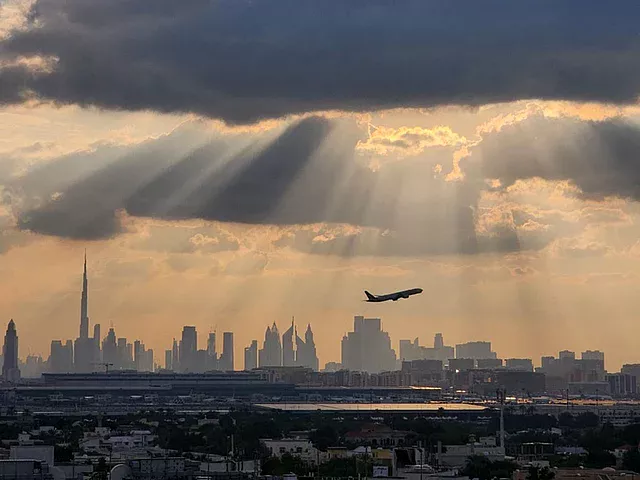
    Government policy reforms, resilient investor appetite, and strong off-plan demand are helping Dubai’s real estate sector weather geopolitical uncertainty, according to industry experts and new market data presented during a recent Betterhomes webinar on May 10, 2026.

    The emirate’s property market remains fundamentally strong nearly 10 weeks into regional conflict, though rental corrections and softer secondary market activity suggest the sector is entering a more balanced phase after years of rapid growth.

    Total property transactions in April edged up nearly 2% month-on-month, underscoring continued market resilience even as investors globally remain cautious amid geopolitical risks. Off-plan sales dominated the market, accounting for 76% of all transactions in April, up 7% from March.

    Three Key Policy Drivers

    The webinar highlighted three major policy developments expected to support medium- and long-term market growth.

    One significant measure was the removal of the Dh750,000 minimum threshold previously required for investor visa eligibility. This effectively widens residency-linked property investment access to a broader pool of buyers and could stimulate demand in affordable and mid-market housing segments, which are increasingly attracting both end-users and overseas investors.

    Another key driver is Dubai’s proposed Gold Line Metro expansion project, a $9 billion transport corridor expected to connect 15 districts by 2032. Analysts noted that major transport infrastructure announcements in Dubai historically triggered property price appreciation of 8 to 11% in surrounding communities, citing earlier metro-linked gains in areas such as Jumeirah Village Circle, Business Bay, and Dubai Marina.

    The webinar also referenced the UAE’s recent decision to leave OPEC, describing the move as potentially giving the country greater flexibility in shaping its long-term economic and energy strategies. Broader economic diversification efforts, including expansion in tourism, financial services, logistics, and technology sectors, continue to reinforce Dubai’s attractiveness to global investors.

    Rental Market Shows Moderation

    In the leasing market, tenant enquiries surged nearly 40% in April, reflecting sustained demand for rental accommodation amid continued population growth and business expansion.

    However, rental prices have begun to moderate after two years of steep increases. Approximately 70% of rental listings recorded price reductions averaging just under 10%, according to Betterhomes. Property analysts say the correction could improve affordability for middle-income residents and help stabilize the market after rapid rental inflation in recent years.

    Dubai’s market is moving from an overheated phase into a healthier period of consolidation.

    Analysts noted during the webinar that demand fundamentals remain intact despite geopolitical headwinds.

    Secondary Market Activity Softens

    While activity in the secondary market has softened, listing volumes have not risen sharply, showing property owners are not engaging in panic selling despite heightened regional uncertainty. This aligns with recent investor sentiment data showing buyers are delaying decisions rather than exiting the market.

    Industry analysts note that Dubai’s property market has remained among the world’s strongest-performing real estate sectors over the past three years, driven by robust foreign investment inflows, liberal residency policies, low taxes, and sustained demand from high-net-worth individuals relocating to the UAE.

    According to data from the Dubai Land Department, Dubai recorded property transactions worth more than Dh760 billion in 2025, the highest annual total on record, with the number of deals crossing 226,000 for the first time.

    Dubai vs. London Investment Appeal

    The discussion compared Dubai’s investment appeal with London, arguing that rising taxes, tighter landlord regulations, and higher entry costs in the UK have reduced London’s relative attractiveness for international property investors. By contrast, Dubai continues to benefit from tax efficiency, high rental yields, flexible visa regimes, and comparatively lower acquisition costs.

    Property experts cautioned off-plan buyers against walking away from purchases due to market uncertainty, stressing that sale and purchase agreements remain legally binding and buyers should carefully review long-stop completion clauses before making decisions.

    Despite softer price momentum and geopolitical concerns, analysts broadly agree that Dubai’s property sector remains underpinned by strong economic fundamentals, infrastructure investment, and sustained foreign capital inflows — factors expected to support long-term market stability and growth.

  • Dubai Unifies Real Estate and Residency Services Under Single System

    Dubai Unifies Real Estate and Residency Services Under Single System

    Dubai has taken a significant step toward simplifying government processes by bringing real estate and residency services under one unified platform. The partnership between GDRFA Dubai and Dubai Land Department aims to eliminate bureaucratic delays and create a seamless experience for those investing in or owning property in the emirate.

    The agreement was signed by Lieutenant General Mohammed Ahmed Al Marri, Director General of GDRFA Dubai, and Omar Hamad Bu Shehab, Director General of Dubai Land Department, marking a shift toward integrated service delivery.

    Three Key Services Under One Roof

    Under the new framework, three major residency programmes—Golden Residency, Retiree Residency, and Property Residency—will be integrated into GDRFA Dubai’s system. Applicants will no longer need to navigate multiple government entities to complete their requests. Instead, they will access a single channel that handles the entire process from application to approval.

    Officials confirmed that the integration will reduce waiting times, improve coordination between departments, and enable faster decision-making. Enhanced data sharing between the two entities is expected to create a more reliable and transparent process, particularly as demand in Dubai’s real estate sector continues to grow.

    “This agreement reflects GDRFA Dubai’s focus on placing customers at the centre of services while improving quality of life,” said Lieutenant General Mohammed Ahmed Al Marri.

    He also acknowledged the Dubai Land Department’s role in adopting digital tools and automating services, which made this collaboration possible.

    Strengthening Investor Confidence

    The initiative is designed to boost trust in Dubai’s property market and make the city more attractive for long-term investors. By linking residency options directly with real estate ownership, authorities aim to offer greater stability and value to those choosing to live and work in Dubai.

    Bu Shehab described the agreement as a key step toward closer cooperation between government bodies. “It will improve efficiency and raise service standards across the real estate sector,” he said.

    The partnership aligns with Dubai’s efforts to maintain investor confidence amid regional challenges and supports the broader goals of Dubai Economic Agenda D33, which aims to position the emirate among the world’s top three cities by economic output.

    Part of a Digital Government Push

    The move is part of a wider government strategy to connect services digitally and improve accessibility. As Dubai’s real estate sector experiences sustained activity—with transaction volumes rebounding strongly in recent months—authorities are working to ensure that administrative infrastructure keeps pace with market demand.

    The unified system is expected to attract more investment, strengthen market stability, and improve the everyday experience for residents. It reflects Dubai’s ongoing commitment to creating a flexible, responsive government framework that supports economic growth and enhances quality of life.

    By eliminating redundant steps and centralizing critical services, the emirate continues to position itself as a global hub for living, working, and doing business—one that responds quickly to the evolving needs of a diverse, international population.

  • Dubai Property Market Shows Resilience as Global Capital Flows Continue

    Dubai Property Market Shows Resilience as Global Capital Flows Continue

    Dubai’s real estate sector continues to demonstrate operational stability as developers, brokers and analysts report sustained investor interest across prime locations and luxury developments, with transaction activity maintaining momentum through the first weeks of March 2026.

    Firas Al Msaddi, chief executive of fäm Properties, emphasized the emirate’s track record of recovery following market disruptions. “I launched my company in Dubai in 2009 amid the global financial crisis, and have seen the market negotiate various geopolitical events since then,” he said. “Every single downturn in Dubai’s real estate history has been followed by a recovery that saw the market surpass the previous peak.”

    Market data supports this pattern. Sales value in Dubai’s property market rose from Dh71.5 billion in 2020 to Dh686.8 billion in 2025, while prices climbed approximately 60% and transaction volumes increased sixfold, according to DXBinteract data.

    Structural Advantages Support Demand

    Tauseef Khan, founder and chairman of Dugasta Properties, noted that core demand remains steady particularly for prime and well-located assets. “While short-term caution may reduce speculative activity, core demand from both regional and international investors often remains steady,” he said.

    Al Msaddi highlighted fundamental changes in market composition. “This moment is another test of Dubai’s resilience, and Dubai is well-equipped to pass the test again,” he said. “Over 70% of transactions are now end-user driven, not speculative. The buyer base is globally diversified, mortgage activity has doubled in four years, and the regulatory environment has matured.”

    The shift toward cash buyers has strengthened market stability. “Last year there were 129 villa transactions above Dh40 million totalling Dh11.5 billion,” Al Msaddi said. “Only around 55 were mortgaged.”

    Ultra-Prime Segment Shows Strength

    The luxury property segment continues to process high-value transactions without significant price adjustments. Khan confirmed that several major deals have closed at full asking prices. “The closure of high-value deals at full price shows continued confidence in Dubai’s real estate fundamentals, even through regional uncertainty,” he said.

    Abdullah Alajaji, founder and chief executive of Driven, Forbes Global Properties, noted that transaction evidence across prime and ultra-prime segments indicates stable pricing. “While opportunistic investors are actively screening for assets trading below intrinsic value, broad-based repricing has not been evidenced in current transaction data at this end of the market,” he said.

    Macroeconomic Backdrop

    The UAE’s strong fiscal position provides additional market support. S&P reaffirmed the country’s AA/A-1+ sovereign credit rating with a stable outlook in March 2026, highlighting consolidated net assets equivalent to 184% of GDP.

    Alajaji attributed recent market volatility to geopolitical events rather than structural issues. “Recent volatility in oil prices and global markets is likely to be cyclical rather than structural, largely reflecting current geopolitical escalation,” he said.

    Dubai’s economic diversification reduces direct correlation between oil prices and property demand, with non-oil sectors now accounting for approximately three-quarters of economic output.

    Market Data Timeline

    Industry experts cautioned that comprehensive impact assessment requires additional time. “Less than two weeks into the current conflict, it’s too early to give an overall assessment,” Al Msaddi said. “In real estate, transaction data takes 45 to 90 days to fully reflect actual sentiment from buyers, sellers and developers alike.”

    Current market indicators suggest balanced conditions. “Buyer demand is steady across most price ranges,” Al Msaddi said. “Sellers are being patient, buyers are being selective but committed, and that balance is holding.”

    The emirate’s regulatory framework continues to strengthen, with new building safety standards and shared housing regulations introduced in March 2026 to enhance market oversight and investor protection.

    Khan said geopolitical developments often reinforce Dubai’s regional positioning over time. “Geopolitical developments can initially introduce a degree of caution among investors, particularly in the speculative segment of the market,” he said. “However, over time, they often reinforce Dubai’s position as a stable investment destination within the region.”

  • Sharjah Property Deals Hit Record Dh9.3 Billion in January 2026

    Sharjah Property Deals Hit Record Dh9.3 Billion in January 2026

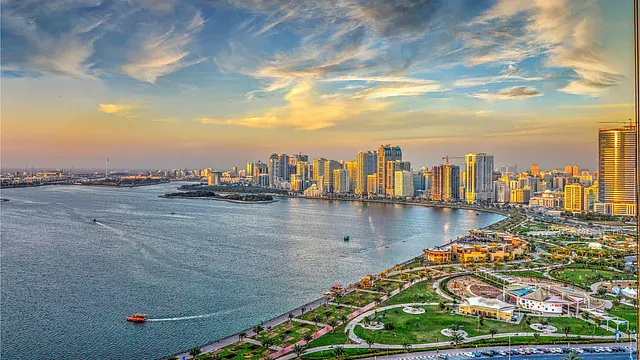
    Sharjah recorded 10,333 property transactions in January 2026, with total trading area reaching approximately 23.8 million square feet, reflecting continued rapid growth and solidified confidence in the emirate’s real estate market at the outset of the year.

    The emirate’s real estate landscape continues to evolve, demonstrating increasing market maturity and diversification of its investor base. Government policies, progressive legislation, and strategic urban planning initiatives have reinforced Sharjah’s position as a premier long-term investment destination. Large-scale development projects and infrastructure expansion have further stimulated both local and international capital inflows.

    A total of 4,868 sales transactions took place across 129 areas distributed throughout the cities and regions of Sharjah, encompassing residential, commercial, industrial, and agricultural land. By property type, 2,101 transactions involved units in towers, 1,672 transactions were for land, and 1,095 transactions for built-in land.

    Al-Khan area recorded the highest real estate transaction for built-in land, valued at Dh90 million, while Al-Tay West area recorded the highest mortgage transaction for land valued at Dh240 million.

    Within Sharjah City, 4,061 sales transactions were recorded in January. Muwaileh Commercial led with 787 transactions, followed by Al-Khan with 442, Al-Mamzar with 334, and Al-Hamriyah West with 293 transactions.

    In terms of trading value, Muwaileh Commercial topped the list with Dh1.1 billion, followed by Al-Khan with Dh718 million, Al-Hamriyah West with Dh714.6 million, and Rawdat Al-Sidr with Dh567.5 million.

    In the Central Region, a total of 753 sales transactions were recorded, with the majority concentrated in Al-Belaida area, which recorded 433 transactions and the highest trading volume valued at Dh649.8 million.

    In the Eastern Region, 54 sales transactions took place, with Hay Al-Gharb area leading with 11 deals and accounting for the highest share of trading volume at Dh24.9 million.

    Sharjah’s performance mirrors broader UAE real estate market strength across emirates. The emirate’s strategic positioning and investment-friendly policies continue to attract both regional and international buyers seeking value-driven property opportunities amid ongoing residential expansion across the UAE.

  • Gulf Property Buyers Shift to Value-Driven Approach in 2026

    Gulf Property Buyers Shift to Value-Driven Approach in 2026

    The Gulf property market is experiencing a fundamental shift in buyer behavior as 2026 unfolds. While transaction volumes remain robust, particularly in Dubai, the urgency that characterized late 2024 and much of 2025 has given way to careful, data-driven decision-making.

    Developers and sales leaders report that geopolitical uncertainty has sharpened buyers’ analytical skills without dampening demand. The UAE and wider Gulf continue to be viewed as stable environments for both residence and investment, but selectivity has become the defining characteristic of today’s market.

    From Speed to Strategy

    The most pronounced change is the transition from rapid purchasing to comprehensive due diligence. Donna Lee-Elliott, Chief of Sales at OCTA Properties, observed that buyers are increasingly favoring prime locations, reputable developers with proven track records, and projects underpinned by strong community fundamentals.

    Geopolitical headlines have not removed demand, but they have sharpened decision-making. Buyer sentiment in the first half of the year has shifted less towards hesitation and more towards disciplined selectivity.

    Enquiry levels in Dubai remain resilient, reflecting continued confidence in economic stability, infrastructure development, and regulatory transparency. However, purchasing behavior now emphasizes escrow compliance, construction-linked payment plans, and delivery certainty.

    Credibility and Clarity Drive Decisions

    Ahmed Hashish, Head of Sales at HRE Development, identified the growing emphasis on transparency as the market’s biggest transformation. “Buyers are still active, but they are more analytical,” he explained. “They are asking deeper questions about delivery timelines, build quality, long-term community value, and operating costs.”

    This scrutiny is creating market polarization. Strong projects with clear value propositions and proven track records continue to transact quickly, while projects lacking clarity face longer decision cycles and heavier negotiation.

    Demand is concentrating around established communities and well-planned lifestyle developments, while properties perceived as speculative or heavily reliant on short-term price appreciation are experiencing slower absorption.

    Safety and Predictability Attract Capital

    Heightened global uncertainty typically pushes investors toward stable, predictable assets—a pattern clearly visible across Gulf real estate markets. Ajay Rajendran, Founder and Chairman of Meraki Group, noted that buyers are gravitating toward established communities with proven demand through occupancy and resale activity.

    “When global uncertainty increases, buyers usually move toward what feels safe and predictable,” Rajendran said, adding that smaller apartments in well-connected locations and appropriately priced townhouses remain particularly active segments.

    This shift reflects broader movement toward practicality, with buyers focusing on liveability, long-term comfort, and sustainable service costs rather than speculative gains.

    Income Generation Over Trading

    A defining trend is the growing emphasis on income generation and long-term holding strategies. Investors are increasingly assessing realistic rental yields, service charges, and tenant demand before committing funds.

    Ammar Malhi, Chief Operating Officer at SmartCrowd, summarized the shift: “Buyers haven’t disappeared. They’ve just slowed down enough to think.” He noted that investors are focusing more on steady income than short-term price gains.

    Rental performance across Dubai remains strong, with many communities recording double-digit increases over the past two years, reinforcing the appeal of income-producing assets. Holding periods are extending while flipping activity has moderated as investors adopt longer time horizons.

    End-Users Shape Market Dynamics

    A rising share of transactions is being driven by end-users rather than short-term investors, particularly in lifestyle-led developments. Xu Ma, Founder and Chairman of Tomorrow World Properties, reported that owner-occupiers account for more than 85% of transactions.

    “Buyers are increasingly taking their time and prioritizing lifestyle and long-term fit over quick flips,” Ma said. Demand is strongest for larger homes, wellness-focused communities, and properties offering immediate move-in readiness.

    Investors remain active but are focusing more heavily on delivery credibility, rental demand, and long-term value retention.

    UAE Stability Supports Sustained Demand

    The UAE’s neutral geopolitical positioning remains a major factor attracting both people and capital to the property market. Relocation activity from Europe, South Asia, and North America continues to rise, driven by the country’s stable regulatory environment, business-friendly policies, and strong infrastructure.

    For many buyers, property ownership is tied to broader decisions around residency, lifestyle, and business continuity rather than purely financial returns. This combination of stability and opportunity is helping sustain demand even during periods of global volatility.

    Market Outlook

    Industry experts expect demand to remain resilient through the second half of 2026, though increasingly concentrated around high-quality assets. Prime residential developments, established communities, and projects with strong rental potential are likely to maintain momentum.

    Speculative or undifferentiated supply may face longer decision cycles, reflecting a maturing market where buyers prioritize fundamentals and long-term value over rapid gains. Major developers reporting record results continue to benefit from this flight to quality.

    The shift from urgency to analysis marks a healthy evolution in the Gulf property market, indicating growing sophistication among buyers and a more sustainable foundation for long-term growth.