Tag: real estate resilience

  • Dubai Property Market Has Nothing to Fear, Says Emaar Founder

    Dubai Property Market Has Nothing to Fear, Says Emaar Founder

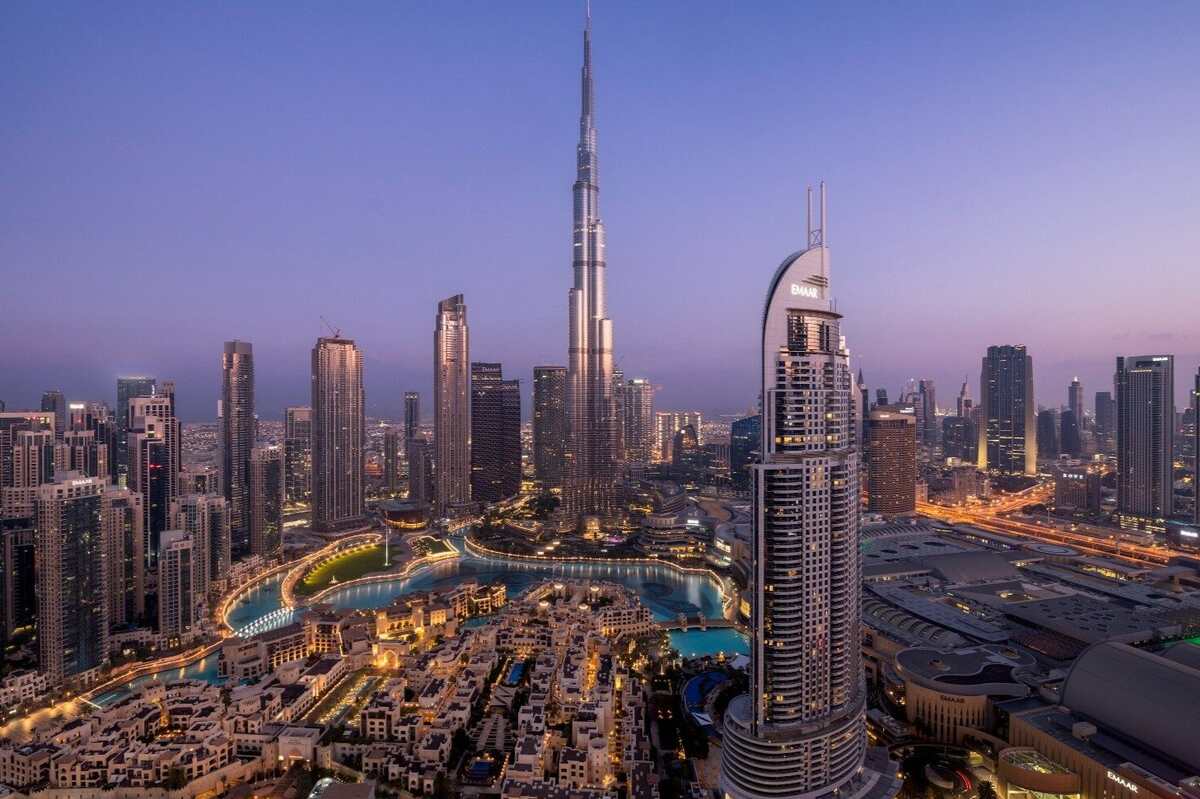
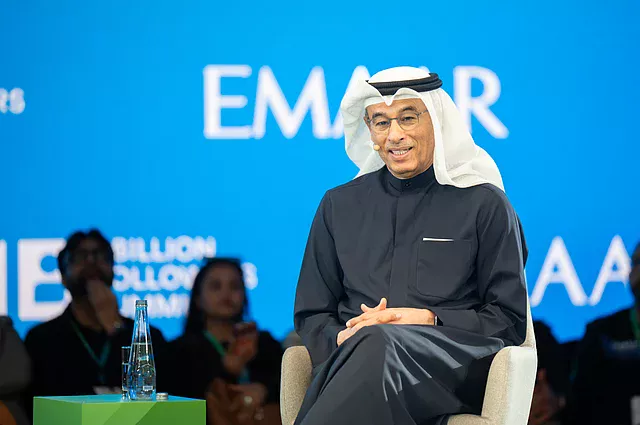
    The UAE’s real estate sector continues to demonstrate exceptional confidence amid geopolitical uncertainty, according to one of its most prominent figures. Mohamed Alabbar, CEO and founder of Emaar Properties, one of the world’s largest real estate developers, expressed absolute certainty that Dubai’s property market will weather both regional tensions and the wave of new supply expected in 2026 and 2027.

    “We are not here for the short run. We are here for a long, long time to do business,” Alabbar said in a recent interview with CNBC. He characterized the incoming supply as a natural feature of a market built on decade-long ambitions rather than short-term speculation. While acknowledging that a brief cooling-off period is possible, he dismissed concerns about structural problems ahead.

    Market Sentiment Remains Firm

    To illustrate current confidence levels, Alabbar shared a telling anecdote from his personal property search. Currently looking for a seafront apartment for his own use, he noted that after two days of viewing, not a single seller was willing to negotiate on price.

    “Nobody wants to budge. Nobody wants to give a discount. That’s a true situation.”

    The observation serves as a quiet but powerful signal of where sentiment stands on the ground, reflecting sustained demand despite external pressures.

    Structural Resilience Built on Prudent Lending

    Alabbar highlighted a fundamental characteristic that distinguishes Dubai from other global property markets: its real estate sector is not built on bank borrowing. Lending to buyers remains tightly restricted, insulating the market from credit-driven collapses seen elsewhere during financial crises.

    “Our real estate business is not built on bank borrowing. Bank borrowing is very restricted in this market,” he explained, adding that while consumer confidence may experience temporary dips, the UAE’s policy environment has a proven track record of restoring it quickly.

    This assessment aligns with recent market performance. Dubai real estate continues processing deals exceeding $100 million, with developers reporting uninterrupted operations despite some buyers adopting a cautious stance.

    Long-Term Capital Recognizes Stability

    On the broader question of geopolitical uncertainty and Dubai’s reputation as a refuge for global wealth, Alabbar expressed unwavering confidence. He argued that investors who study the trajectory of UAE policy over years and decades will consistently find the same qualities: consistency, sustainability, wisdom, and stability.

    “A country like this, with all these principles and stable leadership and the safety, it has shown that it can deliver,” he stated.

    Alabbar reserved particular admiration for the UAE’s leadership and its capacity for long-range strategic planning. While acknowledging he is not versed in military affairs, he said he was genuinely moved by the country’s demonstrated capabilities during recent tensions.

    “People with true capital understand this, they appreciate this, and they will double down on investing.”

    The sentiment echoes statements made earlier this week, when Alabbar noted that recent attacks have ultimately reinforced confidence in the country’s stability, pointing to decades of consistent policy and institutional strength.

    Market Context and Performance

    Alabbar’s confidence comes as Dubai’s property sector maintains strong fundamentals. The emirate’s real estate market recorded 874 transactions worth AED2.46 billion on March 2, 2026, demonstrating sustained investor confidence as economic fundamentals continue to outweigh short-term geopolitical sentiment.

    The debt-free structure of Dubai’s real estate market, combined with prudent lending restrictions and long-term government planning, positions the emirate to absorb new supply without the leverage-driven volatility that has characterized property cycles in other global cities. As regional tensions persist, Dubai’s market continues to attract capital seeking stability, transparency, and proven governance frameworks.
  • Dubai Real Estate Defies Regional Tensions with $100M Deals

    Dubai Real Estate Defies Regional Tensions with $100M Deals

    The UAE property market is operating normally despite heightened geopolitical tensions, with real estate activity continuing across the country and developers maintaining scheduled project launches.

    A $100 million-plus property transaction was recorded in Dubai this week, demonstrating sustained investor appetite even as some international buyers pause purchase decisions to monitor regional developments.

    Broker Ben Crompton confirmed that transactions already underway are progressing as planned.

    Buyers who already signed MOUs are proceeding as normal, and some deals are still being negotiated. Most buyers are in a ‘wait-and-see’ mode as you can imagine.

    He noted that property prices typically decline only during periods of forced selling triggered by widespread job losses or sharp interest rate increases—conditions that have not materialized in the UAE.

    International Investors Monitor Closely

    International investors, who represent a significant share of UAE property buyers, are watching the situation more closely than long-term residents, according to market participants.

    A second broker, speaking anonymously, said a major project scheduled to launch next week is proceeding as planned.

    They are not postponing launches because of the current situation.

    The broker emphasized that Abu Dhabi’s market is anchored by families with deep roots in the emirate.

    A large proportion of residents here are families who have been in the UAE for many years. They consider this their home and they are planning long-term—with schools, jobs and their families here—so they still want to buy property.

    However, some foreign buyers from the UK, US, and Germany have become more cautious, the broker noted.

    Opportunity for Strategic Investors

    Market professionals indicated that short-term uncertainty can create opportunities for cash investors. When sellers exit quickly and reduce prices, those units tend to be acquired rapidly by investors with available liquidity.

    The broker cited examples of properties valued at Dh1.3 million being negotiated at Dh1 million for quick transactions, with investors planning to hold until market conditions stabilize.

    Real estate is a slow and stable market. It doesn’t react like the stock market where prices can suddenly fall by 10 per cent in a day. For significant price changes to happen, a large number of people would need to move in the same direction. Right now, the majority still believe in the UAE and its government, so the market remains stable.

    Developers Emphasize Continuity

    On March 6, 2026, Emaar Properties confirmed normal operations across all assets. Earlier, Aldar Properties stated that all its residential communities, retail destinations, commercial offices, hotels, schools, and development sites continue to operate without interruption.

    Aldar highlighted its strong financial position with more than Dh30 billion in available liquidity, including Dh14.2 billion in free cash and Dh16.4 billion in undrawn bank facilities.

    Developers have not adjusted launch pricing, but some are offering more flexible payment plans—such as 35-65 or 40-60 structures instead of 50-50—to reduce upfront costs and maintain investor confidence.

    Economic Fundamentals Remain Robust

    Crompton emphasized that broader economic conditions supporting the property market remain strong.

    The economic fundamentals are very strong. Capital hates uncertainty more than anything. The sooner there is long-term clarity, the sooner investors will feel comfortable committing again.

    The UAE real estate sector has been supported by strong population growth, international investment, and economic expansion. Dubai’s population has surpassed four million, driving unprecedented housing demand as the emirate’s property market recorded nearly Dh900 billion in transactions during 2025.

    Industry professionals point to continued long-term demand across key residential hubs including Reem Island, Yas Island, and Saadiyat Island, where new infrastructure and lifestyle developments are expected to support property values over time.

    The broker concluded:

    There is still strong belief in the long-term prospects of the market. Real estate in the UAE has historically moved upward over the long term, even if there are short-term fluctuations.

  • Dubai Real Estate Maintains Momentum Amid Regional Uncertainty

    Dubai Real Estate Maintains Momentum Amid Regional Uncertainty

    The Dubai Land Department confirmed 874 property transactions valued at AED2.46 billion ($670 million) on March 2, reinforcing the emirate’s reputation as one of the world’s most resilient investment destinations despite periodic regional tensions.

    Market analysts note that regional escalations have historically been short-lived and strategically contained, with limited long-term economic impact. In contrast, the UAE’s framework is built on diversified industries, institutional strength, and long-term planning.

    “Regional tensions may create headlines and short-term sentiment shifts, but the UAE’s long-term economic fundamentals remain extremely solid,” said Loai Al Fakir, CEO of Provident Estate. “Investors understand that the country’s stability, governance and strategic global positioning make it one of the safest places to allocate capital.”

    Al Fakir noted that Dubai has consistently demonstrated resilience through global financial crises, regional conflicts, and the pandemic. “Each time, the market not only recovered quickly but attracted even greater international investment,” he added.

    The March 2 figures highlight continued market liquidity and sustained investor confidence. Across the sector, operations remain fully active, with holiday homes operating at high occupancy levels, hotel bookings staying strong, and property handovers, contract renewals, and secondary market activity continuing consistently across key communities.

    “Experienced investors understand that geopolitical cycles come and go, but the UAE’s economic trajectory remains consistently upward. Dubai offers a rare combination of safety, transparency, strong regulation and tax efficiency.” — Mohamad Jaafari, Operations and Primary Director at Provident Estate

    Dubai’s real estate market is driven by long-term structural factors including sustained population growth—with the emirate’s population now exceeding four million—rising global migration, strong foreign direct investment, and ambitious government development strategies.

    Industry experts note that periods of uncertainty typically follow a familiar pattern: a brief pause in investor decision-making, followed by renewed confidence and increased demand. The slowdown observed over the recent weekend was sentiment-driven rather than indicative of any structural market shift.

    The UAE plays a central role as a global hub for aviation, finance, international trade, tourism, and real estate. With advanced security systems, strong diplomatic positioning, and a globally integrated economy, the country remains insulated from prolonged instability affecting conflict zones.

    The emirate’s property market recorded nearly Dh900 billion in transactions during 2025, reinforcing its position as a leading global real estate investment destination. As international investors continue to prioritize stability and long-term economic growth, the UAE remains positioned as one of the most attractive property markets globally.

  • Emaar Confirms Normal Operations as Sales Double in Early 2026

    Emaar Confirms Normal Operations as Sales Double in Early 2026

    Dubai’s largest property developer assured investors and residents that comprehensive business continuity planning and coordination with relevant authorities ensure uninterrupted operations across all its assets.

    The statement, posted on the Dubai Financial Market where Emaar is listed, comes as the company reported exceptional momentum entering 2026 following record-breaking 2025 results.

    “With diversified income streams, strong liquidity, and disciplined cost management, Emaar remains well-positioned to sustain growth and contribute to the continued strength and resilience of Dubai’s capital markets,” the company stated.

    Record 2025 Performance Sets Foundation

    Emaar achieved its highest-ever property sales of AED80.4 billion ($21.9 billion) in 2025, alongside record revenue of AED49.6 billion and net profit before tax of AED25.7 billion. The company’s revenue backlog reached AED155 billion as of December 31, 2025, providing strong visibility over future earnings and cash flows.

    Recurring income streams across malls, hospitality, leisure, entertainment and commercial leasing accounted for 32% of total EBITDA, reflecting the strength of Emaar’s diversified and resilient operating model.

    “Emaar’s performance reflects the strength of Dubai’s economic vision and the confidence investors place in its stability and long-term prospects,” said Mohamed Alabbar, Founder of Emaar. “The city continues to demonstrate resilience, supported by effective leadership, sound regulation and a dynamic business environment.”

    Strong 2026 Start Signals Sustained Demand

    The developer’s UAE property sales reached AED17.2 billion in the first two months of 2026, compared to AED7.9 billion during the same period in 2025, representing a 118% year-on-year increase. This performance aligns with broader market trends showing sustained transaction volumes across Dubai’s property sector.

    Supported by strong cash generation and consistent performance, Emaar’s Board of Directors recommended maintaining dividends at 100% of share capital for 2025, reinforcing the company’s commitment to delivering sustainable value to shareholders.

    Strategic Position for Long-Term Growth

    Emaar’s strong balance sheet includes a substantial land bank of approximately 618 million square feet, positioning the company to navigate evolving regional developments while maintaining disciplined expansion. The developer emphasized that Dubai’s clear regulatory environment, diversified economy and proactive governance continue to reinforce investor confidence.

    The company’s performance comes as Dubai’s real estate market transitions toward more structured capital allocation, with major developers expanding their portfolios to meet growing demand driven by population growth exceeding four million residents.

    Emaar’s operational continuity and financial strength underscore the resilience of Dubai’s real estate sector, which recorded nearly Dh900 billion in transactions during 2025, reinforcing the emirate’s position as a leading global property investment destination.