Tag: property investment

  • Dubai Off-Plan Apartment Sales Rise 12.9% to $4.77 Billion in March

    Dubai Off-Plan Apartment Sales Rise 12.9% to $4.77 Billion in March

    Dubai’s real estate market demonstrated continued resilience in March 2026, with off-plan residential apartment sales reaching AED17.5 billion ($4.77 billion), up from AED15.5 billion in the same month last year, according to an analysis of Dubai Land Department (DLD) data released April 1, 2026.

    Transaction volumes increased 2.3% year-on-year to 7,983 off-plan residential apartment deals, compared to 7,801 transactions in March 2025, reflecting sustained investor confidence in Dubai’s under-construction residential segment.

    Dubai Islands Leads Off-Plan Sales

    Al Masdar Al Aqaari’s latest report revealed that Dubai Islands emerged as the top-performing area by sales value, generating AED1.3 billion from 402 transactions during March. Madinat Al Mataar, near Al Maktoum International Airport, ranked second with AED1.2 billion across 809 off-plan residential apartment transactions while also leading in transaction volume.

    Jumeirah Second secured third place with AED1.1 billion in total sales, driven by just nine high-value transactions within the Dubai Peninsula master development, including Aman Residences Dubai and Peninsula Dubai Residences – Tower 2.

    By transaction volume, Madinat Al Mataar led with 809 deals, followed by Dubai Land Residence Complex with 651 transactions worth AED618.9 million, and Jumeirah Village Circle (JVC), which recorded 570 transactions totaling AED660.6 million.

    Luxury Segment Posts Record Transactions

    Dubai’s luxury real estate segment recorded several landmark deals in March, with Aman Residences Dubai completing the third most expensive off-plan apartment sale in Dubai’s history. The transaction, valued at AED422 million, involved a 31,201-square-foot off-plan residential apartment sold at AED13,525 per square foot. The project also recorded another high-value deal, with a similar-sized unit selling for AED356.2 million at AED11,417 per square foot.

    The highest price per square foot during the month was recorded at South Square, Madinat Al Mataar, where a 1,230-square-foot off-plan residential apartment sold for AED19.9 million, equating to AED16,180 per square foot.

    The second-highest rate was at Aman Residences Dubai, where a 3,824-square-foot off-plan residential apartment sold for more than AED55.6 million at AED14,545 per square foot.

    Market Context

    The strong March performance comes as Dubai’s property market shows resilience amid ongoing regional tensions. Industry analysts note that the off-plan segment continues to attract both local and international investors, with move-in-ready properties and under-construction units both seeing strong demand.

    The data reinforces Dubai’s position as a leading real estate investment destination, with developers continuing to launch new projects and buyers maintaining confidence in the emirate’s long-term growth trajectory. As S&P Global Ratings recently noted, strong developer fundamentals and substantial revenue backlogs continue to support market stability.
  • Sharjah Property Market Hits Dh2.3 Billion in First Half of March

    Sharjah Property Market Hits Dh2.3 Billion in First Half of March

    Abdulaziz Rashid Al Saleh, Director of the Sharjah Real Estate Registration Department, confirmed on March 17, 2026, that the emirate’s property market recorded Dh2.3 billion ($626.3 million) in total transactions across 3,556 deals during the first half of March.

    Al Saleh emphasized that the figures demonstrate the robustness and resilience of Sharjah’s real estate sector, driven by rising interest from capital allocators. He noted that the department continues to deliver services through digital platforms and an extensive network of branches across the emirate.

    “The data demonstrates the robustness and steadfastness of the property sector in Sharjah, propelled by rising interest from capital allocators,” Al Saleh stated.

    The director attributed the sustained market activity to the consistent legal framework established by the emirate under the strategic vision of His Highness Sheikh Dr. Sultan bin Mohammed Al Qasimi, Supreme Council Member and Ruler of Sharjah, and the oversight of His Highness Sheikh Sultan bin Mohammed bin Sultan Al Qasimi, Crown Prince and Deputy Ruler of Sharjah.

    Sharjah’s real estate performance in early March reflects broader momentum across the UAE property sector. While Dubai recorded Dh3.8 billion in transactions on a single day earlier this week, neighboring emirates continue to demonstrate sustained investor confidence despite regional dynamics.

    The emirate’s property market has consistently posted strong growth over recent quarters, with institutional and retail investors maintaining active participation in both off-plan and secondary market segments. The Sharjah Real Estate Registration Department has facilitated this activity through ongoing digitalization of registration processes and enhanced service accessibility.

    Market analysts note that Sharjah’s relative affordability compared to Dubai, combined with expanding infrastructure and strengthened regulatory frameworks across the UAE, continues to support sustained transaction volumes as investors seek diversified exposure within the Gulf’s property markets.

  • Abu Dhabi Residential Market Enters 2026 with Strong Fundamentals

    The market is expected to remain resilient throughout 2026, with sales prices and rental rates likely to record further increases in the near term, although the pace of growth will vary across communities as new supply gradually enters the market.

    Record-Breaking 2025 Performance

    In 2025, Abu Dhabi’s residential real estate market delivered a record-breaking performance, with total transaction volumes reaching approximately 22,400 deals—up 55% year-on-year—while total sales value climbed to AED73.2 billion. This performance was driven by robust end-user demand, sustained investor activity, and a wave of new project launches that kept the off-plan segment at the center of market activity.

    Apartments dominated the market, accounting for 66.1% of transactions, while villas and townhouses also recorded strong growth, supported by demand from families and high-net-worth individuals seeking larger living spaces.

    Off-Plan Segment Leads Market Activity

    The off-plan segment continued to lead market activity, accounting for 71% of total transactions, supported by flexible payment plans, competitive developer incentives, and strategic launches across key districts. Meanwhile, ready market activity also remained resilient, supported by population growth, rising rental costs, and a growing shift among tenants toward homeownership.

    On the supply side, residential stock continued to expand steadily, with approximately 7,400 units completed in 2025, bringing total supply to around 315,000 units. While approximately 15,900 units are projected for completion in 2026, recent handover trends suggest actual deliveries are likely to be lower, in the range of 6,500-9,000 units. This measured pace of supply delivery is expected to support pricing momentum and help prevent near-term market imbalances.

    Sustained Price Growth Across All Segments

    Apartment sales prices in Abu Dhabi continued their upward trajectory in 2025, rising 15.1% year-on-year, accelerating from the 10.9% growth recorded in 2024. This strong price performance was driven by a broadening buyer base, as owner-occupiers sought affordable homeownership amid rising rental costs and investors were attracted by strong rental yields and capital appreciation potential.

    Villa sales prices grew 12.2% year-on-year in 2025, slightly accelerating from 11.6% in 2024, driven by a combination of end-user and investor demand. This trend has been shaped largely by the post-pandemic shift in lifestyle priorities, with buyers increasingly seeking larger living spaces, community-focused environments, and access to outdoor areas.

    Rental growth also remained robust, with apartment rents rising 12.5% and villa rents increasing 5.5%. Elevated rental levels have further reinforced sales demand, as tenants increasingly viewed homeownership as a more cost-effective long-term option.

    Structural Demand Drivers Remain in Place

    Looking forward, transaction activity is expected to remain elevated in 2026, with the off-plan segment continuing to lead the market. Several structural factors are expected to support robust housing demand beyond 2026, including population growth, continued talent inflows, business-friendly visa policies, and expanding employment across various sectors.

    Long-term residency initiatives, including the Golden Visa program, are also expected to broaden the buyer base by attracting high-net-worth individuals and professionals seeking stable, long-term ties to the emirate.

    Taking these factors into account, Abu Dhabi’s residential market is expected to enter 2026 from a position of strength. Supply discipline, strong investor confidence, and a supportive macroeconomic backdrop support market resilience and help mitigate external shocks. While potential risks should continue to be monitored, the likelihood of a broad market correction remains relatively low, supporting the outlook for sustainable growth throughout the year.

    The Abu Dhabi market’s performance mirrors broader trends across the UAE, where expatriates now drive 62% of home sales and the UAE real estate sector concluded 2025 with exceptional growth led by Abu Dhabi’s record-breaking performance.

  • Dubai Property Market Has Nothing to Fear, Says Emaar Founder

    Dubai Property Market Has Nothing to Fear, Says Emaar Founder

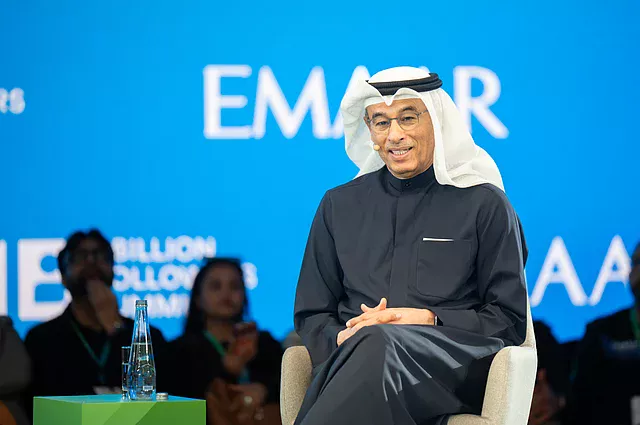
    The UAE’s real estate sector continues to demonstrate exceptional confidence amid geopolitical uncertainty, according to one of its most prominent figures. Mohamed Alabbar, CEO and founder of Emaar Properties, one of the world’s largest real estate developers, expressed absolute certainty that Dubai’s property market will weather both regional tensions and the wave of new supply expected in 2026 and 2027.

    “We are not here for the short run. We are here for a long, long time to do business,” Alabbar said in a recent interview with CNBC. He characterized the incoming supply as a natural feature of a market built on decade-long ambitions rather than short-term speculation. While acknowledging that a brief cooling-off period is possible, he dismissed concerns about structural problems ahead.

    Market Sentiment Remains Firm

    To illustrate current confidence levels, Alabbar shared a telling anecdote from his personal property search. Currently looking for a seafront apartment for his own use, he noted that after two days of viewing, not a single seller was willing to negotiate on price.

    “Nobody wants to budge. Nobody wants to give a discount. That’s a true situation.”

    The observation serves as a quiet but powerful signal of where sentiment stands on the ground, reflecting sustained demand despite external pressures.

    Structural Resilience Built on Prudent Lending

    Alabbar highlighted a fundamental characteristic that distinguishes Dubai from other global property markets: its real estate sector is not built on bank borrowing. Lending to buyers remains tightly restricted, insulating the market from credit-driven collapses seen elsewhere during financial crises.

    “Our real estate business is not built on bank borrowing. Bank borrowing is very restricted in this market,” he explained, adding that while consumer confidence may experience temporary dips, the UAE’s policy environment has a proven track record of restoring it quickly.

    This assessment aligns with recent market performance. Dubai real estate continues processing deals exceeding $100 million, with developers reporting uninterrupted operations despite some buyers adopting a cautious stance.

    Long-Term Capital Recognizes Stability

    On the broader question of geopolitical uncertainty and Dubai’s reputation as a refuge for global wealth, Alabbar expressed unwavering confidence. He argued that investors who study the trajectory of UAE policy over years and decades will consistently find the same qualities: consistency, sustainability, wisdom, and stability.

    “A country like this, with all these principles and stable leadership and the safety, it has shown that it can deliver,” he stated.

    Alabbar reserved particular admiration for the UAE’s leadership and its capacity for long-range strategic planning. While acknowledging he is not versed in military affairs, he said he was genuinely moved by the country’s demonstrated capabilities during recent tensions.

    “People with true capital understand this, they appreciate this, and they will double down on investing.”

    The sentiment echoes statements made earlier this week, when Alabbar noted that recent attacks have ultimately reinforced confidence in the country’s stability, pointing to decades of consistent policy and institutional strength.

    Market Context and Performance

    Alabbar’s confidence comes as Dubai’s property sector maintains strong fundamentals. The emirate’s real estate market recorded 874 transactions worth AED2.46 billion on March 2, 2026, demonstrating sustained investor confidence as economic fundamentals continue to outweigh short-term geopolitical sentiment.

    The debt-free structure of Dubai’s real estate market, combined with prudent lending restrictions and long-term government planning, positions the emirate to absorb new supply without the leverage-driven volatility that has characterized property cycles in other global cities. As regional tensions persist, Dubai’s market continues to attract capital seeking stability, transparency, and proven governance frameworks.

  • Dubai Real Estate Defies Regional Tensions with $100M Deals

    Dubai Real Estate Defies Regional Tensions with $100M Deals

    The UAE property market is operating normally despite heightened geopolitical tensions, with real estate activity continuing across the country and developers maintaining scheduled project launches.

    A $100 million-plus property transaction was recorded in Dubai this week, demonstrating sustained investor appetite even as some international buyers pause purchase decisions to monitor regional developments.

    Broker Ben Crompton confirmed that transactions already underway are progressing as planned.

    Buyers who already signed MOUs are proceeding as normal, and some deals are still being negotiated. Most buyers are in a ‘wait-and-see’ mode as you can imagine.

    He noted that property prices typically decline only during periods of forced selling triggered by widespread job losses or sharp interest rate increases—conditions that have not materialized in the UAE.

    International Investors Monitor Closely

    International investors, who represent a significant share of UAE property buyers, are watching the situation more closely than long-term residents, according to market participants.

    A second broker, speaking anonymously, said a major project scheduled to launch next week is proceeding as planned.

    They are not postponing launches because of the current situation.

    The broker emphasized that Abu Dhabi’s market is anchored by families with deep roots in the emirate.

    A large proportion of residents here are families who have been in the UAE for many years. They consider this their home and they are planning long-term—with schools, jobs and their families here—so they still want to buy property.

    However, some foreign buyers from the UK, US, and Germany have become more cautious, the broker noted.

    Opportunity for Strategic Investors

    Market professionals indicated that short-term uncertainty can create opportunities for cash investors. When sellers exit quickly and reduce prices, those units tend to be acquired rapidly by investors with available liquidity.

    The broker cited examples of properties valued at Dh1.3 million being negotiated at Dh1 million for quick transactions, with investors planning to hold until market conditions stabilize.

    Real estate is a slow and stable market. It doesn’t react like the stock market where prices can suddenly fall by 10 per cent in a day. For significant price changes to happen, a large number of people would need to move in the same direction. Right now, the majority still believe in the UAE and its government, so the market remains stable.

    Developers Emphasize Continuity

    On March 6, 2026, Emaar Properties confirmed normal operations across all assets. Earlier, Aldar Properties stated that all its residential communities, retail destinations, commercial offices, hotels, schools, and development sites continue to operate without interruption.

    Aldar highlighted its strong financial position with more than Dh30 billion in available liquidity, including Dh14.2 billion in free cash and Dh16.4 billion in undrawn bank facilities.

    Developers have not adjusted launch pricing, but some are offering more flexible payment plans—such as 35-65 or 40-60 structures instead of 50-50—to reduce upfront costs and maintain investor confidence.

    Economic Fundamentals Remain Robust

    Crompton emphasized that broader economic conditions supporting the property market remain strong.

    The economic fundamentals are very strong. Capital hates uncertainty more than anything. The sooner there is long-term clarity, the sooner investors will feel comfortable committing again.

    The UAE real estate sector has been supported by strong population growth, international investment, and economic expansion. Dubai’s population has surpassed four million, driving unprecedented housing demand as the emirate’s property market recorded nearly Dh900 billion in transactions during 2025.

    Industry professionals point to continued long-term demand across key residential hubs including Reem Island, Yas Island, and Saadiyat Island, where new infrastructure and lifestyle developments are expected to support property values over time.

    The broker concluded:

    There is still strong belief in the long-term prospects of the market. Real estate in the UAE has historically moved upward over the long term, even if there are short-term fluctuations.

  • Abu Dhabi Introduces Digital Registration for Off-Plan Property Interest

    Abu Dhabi Introduces Digital Registration for Off-Plan Property Interest

    Abu Dhabi’s property sector has implemented a significant regulatory upgrade designed to strengthen transparency and safeguard investor funds in off-plan transactions.

    The Abu Dhabi Real Estate Centre (ADREC) now requires all developers launching new off-plan projects to register Expressions of Interest (EOIs) digitally through its Madhmoun platform. An EOI represents an early payment or commitment made by a buyer before a property project reaches completion.

    Under the new framework, EOI funds will be placed in a government-managed escrow account supervised by ADREC. This arrangement ensures that buyer payments are held securely and monitored before being transferred to developers, offering a higher level of financial protection than traditional manual or intermediary-based processes.

    The first project to operate under the updated system is Manchester City Yas Residences by Ohana, marking the operational rollout of the digital registration requirement.

    ADREC emphasized that the new system reduces risks associated with manual fund handling and introduces a digital refund mechanism if required. Officials stated that the changes are designed to protect investors while maintaining a clear and efficient process for developers.

    “The move is part of wider efforts to improve transparency, strengthen regulation and modernise Abu Dhabi’s real estate sector,” ADREC said in a statement.

    The initiative reinforces Abu Dhabi’s commitment to positioning itself as a secure and transparent real estate investment destination. The digital EOI system adds a layer of regulatory oversight that aligns with broader efforts across the UAE to enhance buyer confidence and market stability.

    The regulatory development comes as UAE property markets continue to attract significant investor interest, with Dubai recording over 200,000 transactions in 2025 and major developers reporting record-breaking sales figures.

    Abu Dhabi’s emphasis on modernizing its real estate infrastructure through digital solutions reflects a strategic approach to maintaining investor trust and supporting sustainable market growth in a competitive regional environment.