Tag: Palm Jebel Ali

  • Nine UAE Mega Projects Set to Reshape Transport, Tourism and Finance

    Nine UAE Mega Projects Set to Reshape Transport, Tourism and Finance

    The UAE’s development pipeline includes Etihad Rail, Dubai’s Gold Metro Line, the Dubai Loop underground network, DIFC Zabeel District, Palm Jebel Ali, Al Maryah Island expansion, Group 42’s Project Stargate, the planned Disney Resort in Abu Dhabi, and Wynn Al Marjan Island in Ras Al Khaimah.

    Siraj Ahmed, Director and Head of Strategy and Consulting at Cavendish Maxwell, said priority should be placed on projects that strengthen competitiveness.

    In the current environment, priority should be placed on projects that underpin economic resilience and long-term competitiveness. Infrastructure and technology-led initiatives such as Etihad Rail and G42’s AI platforms are well positioned to support the UAE’s logistics, trade, and knowledge-based economy.

    Dubai Loop enters construction phase

    Dubai Loop, the underground transport network being developed by Elon Musk’s Boring Company with Dubai’s Roads and Transport Authority, has entered its foundation-laying stage with an initial investment of approximately Dh565 million.

    The first phase will cover 6.4 kilometers and include four stations, before a planned expansion to a 22.2-kilometer network with 19 stations connecting Dubai World Trade Centre and the financial district with Business Bay. The pilot route will connect Dubai International Financial Centre with Dubai Mall, reducing a journey that can take about 20 minutes to around three minutes.

    The system will transport passengers in electric vehicles through dedicated underground tunnels measuring 3.6 meters in diameter. The network is expected to carry approximately 13,000 passengers daily upon completion, with the full system projected to handle about 30,000 passengers a day.

    Etihad Rail and Gold Metro Line strengthen connectivity

    Etihad Rail’s 900-kilometer national railway network connecting all seven emirates is advancing toward phased completion between 2026 and 2030. Each train can replace about 300 trucks, helping cut emissions by up to 80 percent while improving logistics and reducing transport costs.

    Dubai’s Gold Metro Line, valued at $9.2 billion and scheduled for completion in 2032, will connect existing metro lines with Etihad Rail, strengthening the emirate’s public transport network and reducing pressure on the Red Line.

    Matthew Green, Head of Research at CBRE MENA, described the Gold Metro Line as “a catalyst for economic growth” that will “further advance Dubai’s already stellar position as a global city with leading infrastructure.”

    Financial districts expand capacity

    DIFC Zabeel District, also known as DIFC 2.0, is planned to more than double the capacity of Dubai’s financial centre by 2030 to 2040, supporting more than 42,000 companies and over 125,000 professionals while adding millions of square feet of mixed-use space.

    Green said the project is “undoubtedly one of the most important drivers of future growth for not just the finance sector, but also the wider real estate sector and economy.”

    In Abu Dhabi, Al Maryah Island’s Dh60 billion-plus expansion is planned to add about 1.5 million square meters of mixed-use space by 2029 to 2030, strengthening the emirate’s position as a financial and business center closely tied to Abu Dhabi Global Market.

    AI infrastructure takes center stage

    Group 42’s Project Stargate UAE is developing a 1-gigawatt AI infrastructure cluster as part of a wider 5-gigawatt UAE-US AI campus. The 26-square-kilometer campus has an estimated budget of $40 billion and is backed by major US technology companies including OpenAI, Oracle, Cisco and NVIDIA.

    Green said the project, already under construction, could position Abu Dhabi and the UAE as a global leader in AI and data centers, supporting AI model training, large-scale inferencing and sovereign data management.

    Tourism anchors add family-focused attractions

    The planned Disney Resort in Abu Dhabi, estimated at about $7 billion and expected around 2030, represents a move toward globally branded, family-oriented destination tourism. The development is expected to widen Abu Dhabi’s visitor base and add another major attraction to the emirate’s culture, museums, events and leisure offerings.

    Wynn Al Marjan Island in Ras Al Khaimah, valued at about $5.8 billion and expected to open in 2027, has been described by Green as the UAE’s first large-scale gaming-led tourism development. The integrated resort is expected to raise Ras Al Khaimah’s profile as a tourism destination and attract new visitor segments.

    Green said the Disney Resort and Wynn Al Marjan Island together “are expected to be transformational, significantly increasing the scale and depth of the UAE’s tourism sector, diversifying source markets and guest profiles.”

    Waterfront development continues expansion

    Palm Jebel Ali, one of Dubai’s largest waterfront projects, is expected to expand the city’s coastline by about 110 kilometers between 2028 and 2030. The development is planned to accommodate more than 35,000 families and include more than 80 hotels and resorts.

    Ahmed said large-scale tourism and residential-led developments should be delivered with care if regional conditions take longer to normalize.

    It would be prudent to adopt a measured and phased approach to large-scale developments that are primarily driven by tourism and residential sales. Should regional conditions take longer to fully normalize, buyer and visitor sentiment may remain selective in the short term, which could moderate absorption rates.

    The UAE’s project pipeline shows a clear split between infrastructure that improves productivity and lifestyle-led developments that support tourism, investment and population growth, with analysts pointing to the importance of aligning supply with demonstrated demand while maintaining delivery flexibility.
  • Nakheel Releases 222 Beachfront Homes on Palm Jebel Ali

    Nakheel Releases 222 Beachfront Homes on Palm Jebel Ali

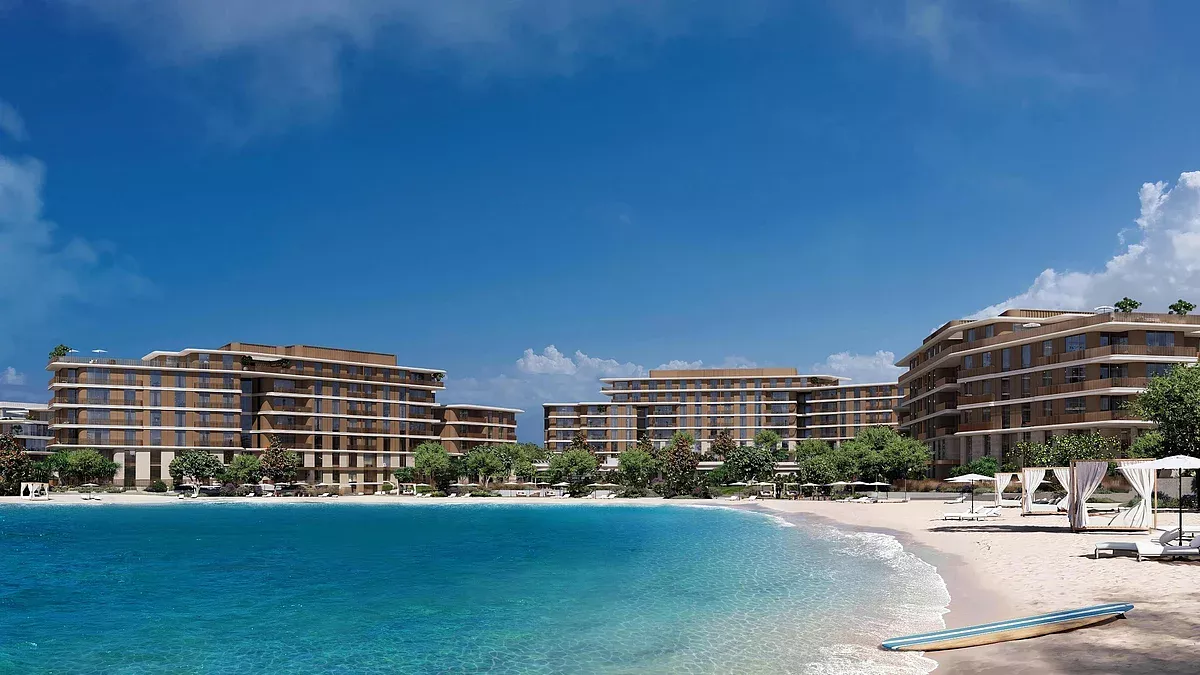
    The new release comprises homes across three low- to mid-rise residential buildings, including one- to four-bedroom apartments and four- to five-bedroom townhouses. All units will have direct beach access, with selected duplex residences featuring double-height living areas and large terraces.

    Residents will have access to amenities such as a fitness centre, games room, children’s club, swimming pools, landscaped outdoor spaces, and sports courts. As part of the wider masterplan, Palm Jebel Ali will include a 9,000-square-metre retail centre and the Palm Jebel Ali Friday Mosque, which will accommodate up to 1,000 worshippers.

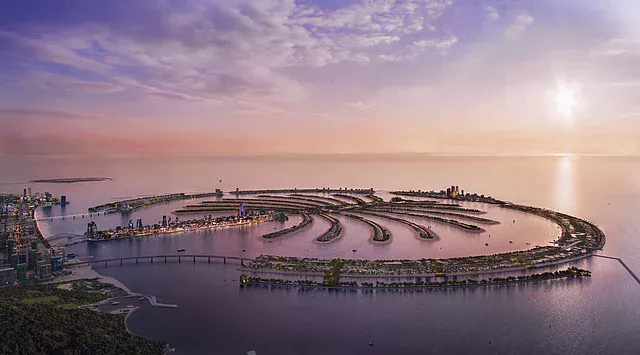
    Spanning 13.4 kilometres, Palm Jebel Ali consists of seven interconnected islands and over 90 kilometres of coastline. The development is part of Dubai’s long-term urban expansion plans under the Dubai 2040 Urban Master Plan and the Dubai Economic Agenda D33.

    “This next phase of Palm Central Private Residences builds on that momentum, offering a new benchmark for beachfront living while reinforcing our commitment to shaping world-class communities that contribute meaningfully to Dubai’s future growth,” said Khalid Al Malik, CEO of Dubai Holding Real Estate.

    Al Malik said demand for Palm Jebel Ali reflects continued investor confidence in Dubai’s property market and the emirate’s long-term growth prospects.

    The latest release comes as Palm Jebel Ali prepares for first handovers later this year, with construction advancing across key residential areas following more than Dh8.5 billion in contracts awarded since 2024. The project aligns with broader market momentum, as Dubai’s property sector is projected to attract over $272 billion in new developments over the next five years.

  • Palm Jebel Ali Villas Set for First Handovers in 2026

    Palm Jebel Ali Villas Set for First Handovers in 2026

    Construction activity is progressing steadily across Palm Jebel Ali’s residential communities, with the island’s first villa handovers on track to begin before the end of 2026, according to Khalid Al Malik, Chief Executive Officer of Dubai Holding Real Estate.

    “Today, there is real momentum on the ground across infrastructure, utilities, access roads, and the first residential communities, laying the foundations for what will become one of Dubai’s most significant waterfront destinations,” Al Malik told Gulf News in an exclusive interview on June 16, 2026.

    Dh8.5 Billion in Construction Contracts

    Nakheel awarded Dh5 billion in contracts in 2024 to Ginco General Contracting, Shapoorji Pallonji Mideast and UNEC for the construction of 723 Beach and Coral Collection villas across Fronds K to P, along with supporting infrastructure and public spaces. In April 2026, the developer awarded additional contracts worth more than Dh3.5 billion for villas across Fronds A to F.

    “These milestones reflect a clear commitment to delivering Palm Jebel Ali with the scale, quality and infrastructure readiness expected of a destination of this significance,” Al Malik said.

    Phased Delivery Strategy

    The island will not open on a single handover date, with Palm Jebel Ali set to come to life in phases as construction advances across different sections. Al Malik confirmed that the project’s immediate priority is the first residential phases and the infrastructure required to support them.

    “The priority is not simply speed. It is quality, infrastructure readiness, customer experience and long-term value. Palm Jebel Ali is being developed as a destination that will serve Dubai for generations.”

    Future milestones will be announced once each phase is approved and reaches the appropriate stage of readiness, he added.

    Master-Planned Destination

    Palm Jebel Ali is being developed as a comprehensive waterfront destination combining residential, hospitality, leisure, wellness, and community infrastructure. More than 80 hotels and resorts are expected to form part of the wider masterplan, alongside beach clubs, dining venues, civic infrastructure, and public spaces.

    The masterplan already includes Palm Central Private Residences and the Palm Jebel Ali Friday Mosque, designed by Skidmore, Owings & Merrill, which will serve as a cultural and architectural landmark for the island.

    International architectural firms including NAGA, LOCI, WATG, LW Design, SAOTA and Whitespace have been engaged to design the Beach and Coral Collection villas, with each collection centered around space, light, privacy, waterfront views and coastal environment integration.

    Strategic Location Advantage

    Al Malik emphasized that Palm Jebel Ali’s position is strengthened by its connection to Dubai’s future growth corridor, including Expo City Dubai and Al Maktoum International Airport.

    “It offers waterfront living on a scale difficult to find elsewhere in the region, while remaining connected to Dubai’s future growth corridor,” he stated.

    Strong Buyer Demand

    Buyer appetite for Palm Jebel Ali’s residential releases has been robust, particularly among those seeking waterfront homes with privacy, scale and long-term value. The project is attracting buyers who view Dubai as a base for family life, wealth preservation and long-term investment.

    “What makes the proposition compelling is its rarity,” Al Malik explained. “Palm Jebel Ali offers new coastal supply at a scale that is extremely difficult to replicate, within one of Dubai’s most important future growth corridors.”

    The demand reflects a wider shift in Dubai’s property market, where buyers are increasingly seeking larger homes, wellness-led communities, access to nature and master-planned destinations.

    According to Al Malik, three elements will define Palm Jebel Ali’s next phase: delivery momentum with major infrastructure advancing, the scale and quality of the integrated waterfront community, and the island’s character shaped by integrated mobility, walkable neighborhoods, and community-led planning.

    “Over time, people should expect to see more detail around hospitality, public realm, mobility, landscape, art and community amenities,” Al Malik said. “These are the elements that will define Palm Jebel Ali as a destination with its own rhythm, community and identity, one that people will feel proud to call home.”