Tag: Etihad Rail

  • Dubai Metro Expansion Could Boost Demand in JVC, Meydan and DSO

    Dubai Metro Expansion Could Boost Demand in JVC, Meydan and DSO

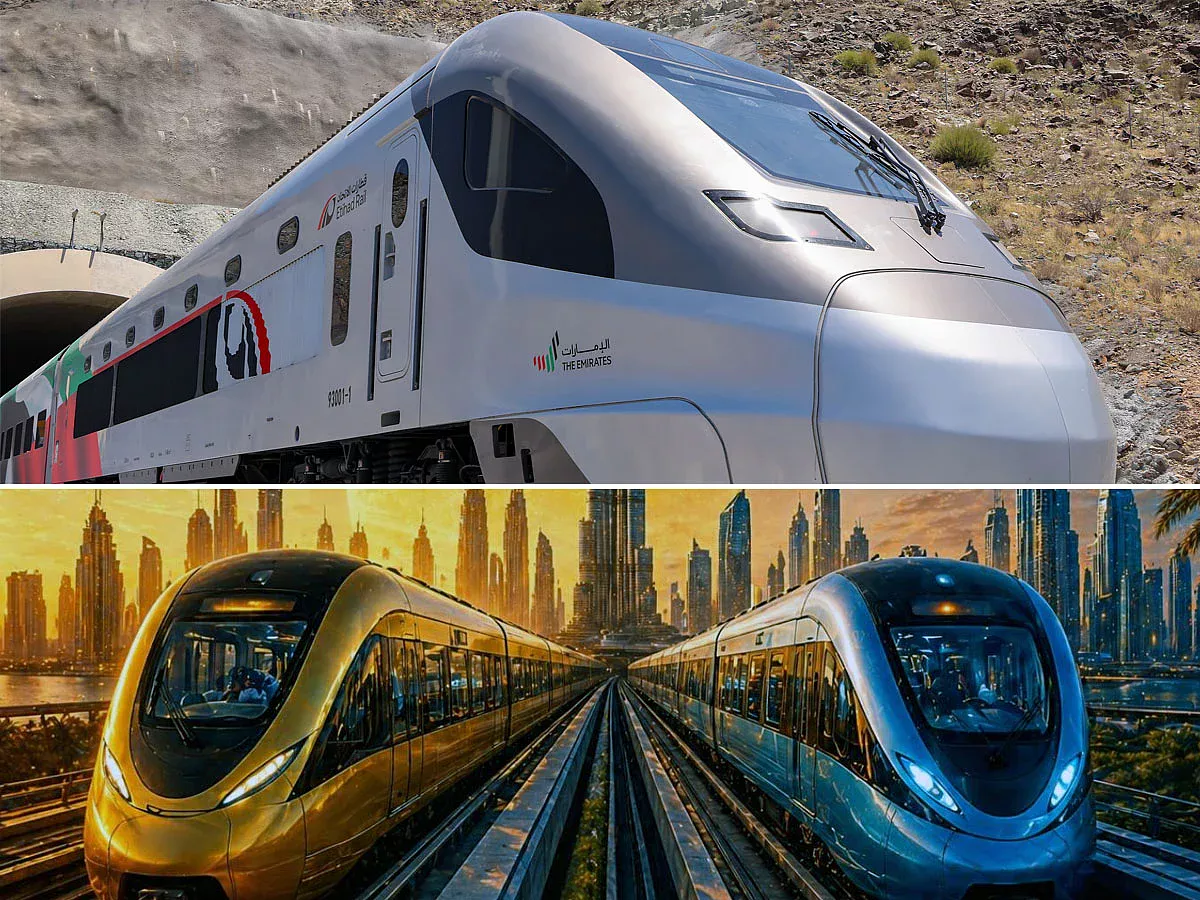
    Living farther from work could become a more practical option for Dubai residents once Etihad Rail and the Metro Blue and Gold Lines connect more communities directly to business districts and transport hubs.

    International City, Dubai Silicon Oasis, JVC, Meydan, Dubai South, Jumeirah Golf Estates, Mirdif and Al Warqa repeatedly emerge among the areas property executives expect to benefit, particularly where residents currently depend heavily on cars or buses.

    The shift could give tenants and buyers more choice beyond Downtown Dubai, Business Bay and Dubai Marina, where proximity to workplaces has historically justified paying more for housing.

    Fibha Ahmed, VP of Property Sales at Bayut, said improved transport can alter that calculation by reducing travel time between outer communities and employment centres.

    Traditionally, buyers and tenants paid a significant premium to live in central hubs like Downtown Dubai, Business Bay, or Dubai Marina to avoid long peak-hour highway commutes.

    Better rail links would not remove demand for central addresses, according to the executives, but could make lower-priced communities more viable for residents who previously considered the commute too difficult.

    International City and DSO Move Up the List

    The Blue Line, scheduled to open in 2029, puts several eastern Dubai communities in a different position.

    International City, Warsan, Dubai Silicon Oasis, Academic City, Dubai Creek Harbour, Mirdif and Al Warqa are among the areas expected to gain from direct Metro access.

    Many already have established housing, schools and employment bases but lack the rail connectivity available in more central parts of Dubai.

    Vivek Bhavsar, Director of Consulting at JLL MENA, said the effect could be clearest where the Metro is arriving for the first time.

    Areas gaining metro access for the first time will feel it most.

    International City stands out because of its lower entry prices, while Dubai Silicon Oasis combines residential demand with a large technology and employment base. Academic City has a sizeable student population, giving the wider corridor another potential source of rental demand once the line becomes operational.

    Ahmed expects high-density, mid-market communities that previously lacked rail access to see some of the strongest response, particularly where a station removes an existing obstacle for tenants.

    International City Phase 2 and Dubai Silicon Oasis also feature among the areas experts consider relatively well priced before the new connections are completed.

    JVC, Meydan and Jumeirah Golf Estates Gain Another Connection

    The planned Gold Line shifts attention towards JVC, Meydan, Mohammed Bin Rashid City, Nad Al Sheba, Al Barsha South and Jumeirah Golf Estates.

    JVC has developed into one of Dubai’s major residential communities without direct Metro access, making a future station particularly relevant to residents who currently rely on road travel.

    Mohammed Al Sari, CEO of HRE Development, said the way residents judge location is beginning to change with each expansion of the transport network.

    The market’s definition of well-located is shifting from proximity to the city centre toward proximity to the network.

    That could benefit communities where residents can still find more space or different price points while retaining practical links to Business Bay, Meydan and other employment centres.

    Jumeirah Golf Estates could become particularly important because it is expected to combine Gold Line access with Etihad Rail, while Meydan is frequently cited by developers and brokers because of its position on the planned route.

    Murad Saleh, Co-Founder and CEO of Amwaj Development, said transport can widen the range of locations residents consider without making distance irrelevant.

    Dubai’s next phase of growth will be defined less by distance and more by connectivity.

    He said transport works best when it is accompanied by good housing, amenities and wider community planning, meaning proximity to a future station alone does not guarantee stronger long-term performance.

    Dubai South Gets a Different Kind of Boost

    Etihad Rail places Dubai South, Jebel Ali and Dubai Investments Park in focus for a different reason.

    These areas combine residential development with logistics, employment and industrial activity, while Dubai South also sits close to Expo City and Al Maktoum International Airport.

    Better inter-emirate connectivity could widen the pool of people willing to live there, particularly those whose jobs involve regular travel between Dubai, Abu Dhabi and other emirates.

    Salman Ali Khan, COO and Co-Founder of 3S Real Estate Brokers, expects rents to respond before sale prices where new transport links materially improve accessibility.

    Better connectivity drives higher demand. Rents usually rise first, followed by prices.

    He puts the typical premium around stations at between 5% and 25%, while also identifying International City, Silicon Oasis, Al Warqa, Mirdif, Dubai South and selected parts of JVC and Meydan among areas still trading at a relative discount to what future connectivity could bring.

    Could Residents Move Farther Out?

    The more immediate question for tenants is whether better transport could make a larger home farther from the city centre worthwhile.

    Property executives broadly expect it to expand the choice.

    A resident working in central Dubai could consider communities such as International City, Dubai Silicon Oasis or JVC with less reliance on highway commuting, while Etihad Rail opens up another set of possibilities for people travelling between emirates.

    The transport expansion comes as Dubai completed 24,800 units in the first half of 2026, with residential rents declining 6.2 percent quarter-on-quarter as new supply eased tenant pressure. Meanwhile, residential sales hit $9.5 billion in July 2026, indicating sustained buyer interest across the emirate’s property market.
  • Nine UAE Mega Projects Set to Reshape Transport, Tourism and Finance

    Nine UAE Mega Projects Set to Reshape Transport, Tourism and Finance

    The UAE’s development pipeline includes Etihad Rail, Dubai’s Gold Metro Line, the Dubai Loop underground network, DIFC Zabeel District, Palm Jebel Ali, Al Maryah Island expansion, Group 42’s Project Stargate, the planned Disney Resort in Abu Dhabi, and Wynn Al Marjan Island in Ras Al Khaimah.

    Siraj Ahmed, Director and Head of Strategy and Consulting at Cavendish Maxwell, said priority should be placed on projects that strengthen competitiveness.

    In the current environment, priority should be placed on projects that underpin economic resilience and long-term competitiveness. Infrastructure and technology-led initiatives such as Etihad Rail and G42’s AI platforms are well positioned to support the UAE’s logistics, trade, and knowledge-based economy.

    Dubai Loop enters construction phase

    Dubai Loop, the underground transport network being developed by Elon Musk’s Boring Company with Dubai’s Roads and Transport Authority, has entered its foundation-laying stage with an initial investment of approximately Dh565 million.

    The first phase will cover 6.4 kilometers and include four stations, before a planned expansion to a 22.2-kilometer network with 19 stations connecting Dubai World Trade Centre and the financial district with Business Bay. The pilot route will connect Dubai International Financial Centre with Dubai Mall, reducing a journey that can take about 20 minutes to around three minutes.

    The system will transport passengers in electric vehicles through dedicated underground tunnels measuring 3.6 meters in diameter. The network is expected to carry approximately 13,000 passengers daily upon completion, with the full system projected to handle about 30,000 passengers a day.

    Etihad Rail and Gold Metro Line strengthen connectivity

    Etihad Rail’s 900-kilometer national railway network connecting all seven emirates is advancing toward phased completion between 2026 and 2030. Each train can replace about 300 trucks, helping cut emissions by up to 80 percent while improving logistics and reducing transport costs.

    Dubai’s Gold Metro Line, valued at $9.2 billion and scheduled for completion in 2032, will connect existing metro lines with Etihad Rail, strengthening the emirate’s public transport network and reducing pressure on the Red Line.

    Matthew Green, Head of Research at CBRE MENA, described the Gold Metro Line as “a catalyst for economic growth” that will “further advance Dubai’s already stellar position as a global city with leading infrastructure.”

    Financial districts expand capacity

    DIFC Zabeel District, also known as DIFC 2.0, is planned to more than double the capacity of Dubai’s financial centre by 2030 to 2040, supporting more than 42,000 companies and over 125,000 professionals while adding millions of square feet of mixed-use space.

    Green said the project is “undoubtedly one of the most important drivers of future growth for not just the finance sector, but also the wider real estate sector and economy.”

    In Abu Dhabi, Al Maryah Island’s Dh60 billion-plus expansion is planned to add about 1.5 million square meters of mixed-use space by 2029 to 2030, strengthening the emirate’s position as a financial and business center closely tied to Abu Dhabi Global Market.

    AI infrastructure takes center stage

    Group 42’s Project Stargate UAE is developing a 1-gigawatt AI infrastructure cluster as part of a wider 5-gigawatt UAE-US AI campus. The 26-square-kilometer campus has an estimated budget of $40 billion and is backed by major US technology companies including OpenAI, Oracle, Cisco and NVIDIA.

    Green said the project, already under construction, could position Abu Dhabi and the UAE as a global leader in AI and data centers, supporting AI model training, large-scale inferencing and sovereign data management.

    Tourism anchors add family-focused attractions

    The planned Disney Resort in Abu Dhabi, estimated at about $7 billion and expected around 2030, represents a move toward globally branded, family-oriented destination tourism. The development is expected to widen Abu Dhabi’s visitor base and add another major attraction to the emirate’s culture, museums, events and leisure offerings.

    Wynn Al Marjan Island in Ras Al Khaimah, valued at about $5.8 billion and expected to open in 2027, has been described by Green as the UAE’s first large-scale gaming-led tourism development. The integrated resort is expected to raise Ras Al Khaimah’s profile as a tourism destination and attract new visitor segments.

    Green said the Disney Resort and Wynn Al Marjan Island together “are expected to be transformational, significantly increasing the scale and depth of the UAE’s tourism sector, diversifying source markets and guest profiles.”

    Waterfront development continues expansion

    Palm Jebel Ali, one of Dubai’s largest waterfront projects, is expected to expand the city’s coastline by about 110 kilometers between 2028 and 2030. The development is planned to accommodate more than 35,000 families and include more than 80 hotels and resorts.

    Ahmed said large-scale tourism and residential-led developments should be delivered with care if regional conditions take longer to normalize.

    It would be prudent to adopt a measured and phased approach to large-scale developments that are primarily driven by tourism and residential sales. Should regional conditions take longer to fully normalize, buyer and visitor sentiment may remain selective in the short term, which could moderate absorption rates.

    The UAE’s project pipeline shows a clear split between infrastructure that improves productivity and lifestyle-led developments that support tourism, investment and population growth, with analysts pointing to the importance of aligning supply with demonstrated demand while maintaining delivery flexibility.