Tag: Dubai real estate 2026

  • S&P Rules Out 2008-Style Crash for Dubai Property Market

    S&P Rules Out 2008-Style Crash for Dubai Property Market

    Dubai’s real estate sector is structurally resilient and will not experience a collapse comparable to the 2008 global financial crisis, according to S&P Global Ratings analysts speaking at a March 26, 2026 webinar.

    The ratings agency highlighted that major developers have entered the current period of regional uncertainty from a position of strength, supported by years of robust pre-sales, solid revenue backlogs covering several years of operations, and healthy liquidity reserves.

    Four rated developers demonstrate stability

    S&P’s assessment covers four Dubai-based developers: Damac, Emaar, Omniyat, and Sobha Realty. Notably, Sobha Realty exceeded rating expectations and saw its outlook upgraded from negative to stable.

    “We’re not really seeing that play out just yet. The situation has definitely introduced a level of caution, but what we are seeing are lower transaction volumes,” said Sapna Jagtiani, director and lead analyst of Corporate Ratings at S&P Global Ratings.

    Developers in Dubai are entering this period from a position of strength, supported by strong pre-sales in recent years, solid revenue backlogs, and healthy liquidity buffers, which should help them absorb a short-term shock.

    Fares Shweiky, associate director of Corporate Ratings at S&P, emphasized that the current financial cushion should enable developers to weather short-term volatility.

    Base case scenario: temporary slowdown

    S&P’s base case assumes the regional military conflict will last approximately two to four weeks, with a temporary slowdown in demand and price appreciation following years of rapid growth. The agency expects a slight decline in transaction volumes but sees no indication of a broader market collapse.

    Jagtiani noted that some of the reduced activity can be attributed to Ramadan, when markets typically experience quieter periods with lower sales volumes.

    Market data shows resilience

    Despite regional tensions, Dubai’s property market continues to attract capital, with data from proptech firm Smart Bricks indicating that 85 percent of landlords are holding their assets and continuing transactions at scale.

    Even during Ramadan, traditionally a slower period, Dubai real estate recorded 15,196 transactions with a combined value of Dh50.58 billion, representing a 5.63% year-on-year increase in volume and a 29.7% increase in value, according to Kelt and Co Realty.

    Five-year growth trajectory

    Dubai’s property developers have recorded exceptionally strong sales over the past five years, driven by robust investor demand, government reforms, and the emirate’s expanding global appeal. Growth has been broad-based across apartments, villas, and commercial assets, with developers consistently launching projects met with strong off-plan demand and high absorption rates.

    The momentum continued through 2025, which marked a record-breaking performance for Dubai’s property sector. Developers benefited from sustained population inflows, rising investor confidence, and attractive residency policies that drove both end-user demand and international investment.

    The S&P assessment reinforces market sentiment that Dubai’s real estate fundamentals remain sound, with structural advantages and diversified buyer base providing support even as the region navigates geopolitical uncertainty. Unlike 2008, when overleveraged developers faced liquidity crises and massive project cancellations, today’s market operates with stronger financial controls, more conservative lending practices, and significantly improved regulatory oversight.
  • Dubai Records Dh84.6 Million Off-Plan Apartment Sale in Jumeirah

    Dubai Records Dh84.6 Million Off-Plan Apartment Sale in Jumeirah

    A luxury off-plan apartment spanning approximately 11,566 square feet has been sold for Dh84.6 million in Dubai’s Jumeirah 1 district, according to data from the Dubai Land Department’s Dubai REST platform released March 24, 2026.

    The property, located within the Solaya 1, 2, 3 development, was transacted at an average price exceeding Dh7,317 per square foot, reflecting sustained demand in the emirate’s ultra-prime residential segment.

    The transaction contributed to a strong trading day, with total real estate transactions reaching approximately Dh1.57 billion by midday, including property sales exceeding Dh1.32 billion.

    Record-Breaking Luxury Market Performance

    Dubai’s luxury property market delivered exceptional results in 2025, recording 6,668 high-end transactions worth Dh143.8 billion, compared with 4,735 deals valued at Dh99.3 billion in 2024. This marked growth of 41% in transaction volume and 45% in value year-on-year.

    The performance was driven by growing interest from high-net-worth individuals worldwide, attracted by the emirate’s investment environment, regulatory framework, and tax advantages.

    Continued Market Momentum

    The Jumeirah 1 sale follows a series of major transactions across Dubai’s most prestigious addresses. Earlier in March, a luxury off-plan apartment at Armani Beach Residences on Palm Jumeirah sold for Dh92.5 million, while a villa on the World Islands changed hands for Dh220 million on March 12, 2026.

    The sustained appetite for premium properties comes as Dubai’s property market demonstrates resilience despite regional geopolitical tensions, with international capital continuing to flow into the emirate’s real estate sector.

    The transaction underscores the strength of Dubai’s off-plan luxury segment, where pre-construction developments continue to attract significant buyer interest from both resident and international investors seeking exposure to the emirate’s evolving skyline and lifestyle offering.

  • Dubai Property Market Rebounds as DFM Real Estate Stocks Extend Losses

    Dubai Property Market Rebounds as DFM Real Estate Stocks Extend Losses

    Two weeks after the onset of regional conflict on February 28, a significant divergence has emerged between Dubai’s physical real estate market and its listed equities, as property transactions rebound while financial markets continue to reprice risk.

    Transaction Liquidity Rebounds After Initial Shock

    Following an initial risk-off pause, the physical property market demonstrated a notable bounce-back in the second week of March. According to Dubai Land Department records analyzed by The Real Estate Reports, total transaction value on a headline basis, including land transactions, surged to Dhs15.66 billion in the week of March 9–15, representing a 51% increase in value and a 58% jump in transaction counts over the previous week.

    However, a closer examination reveals the recovery was primarily volume-driven. When excluding land plots to remove the volatility of high-value land deals, built value grew 13% to Dhs8.26 billion while transaction volume rose 56% to 4,327 deals. The discrepancy between modest value growth and surging volume indicates the market remains operational under more cautious, broader-based participation, with average ticket sizes softening.

    Off-Plan Sales Maintain Market Dominance

    The structural integrity of the market appears to have held. Off-plan sales continued to command the lion’s share of activity, accounting for 63% of built property value in the second week of March, compared to 66% in the week immediately following the conflict’s start.

    The most visible shift within this segment was a rotation toward villas. Off-plan villa sales rose to approximately 23% of the segment’s value, up from 16%, while the ready market similarly saw increased interest in landed homes over commercial assets. This suggests selective risk-taking by buyers who are prioritizing tangible residential assets over more sensitive commercial segments.

    Mortgage registrations nearly doubled to 1,053 in the second week of March, demonstrating that the fundamental infrastructure of the property market remains intact. Earlier this week, property services handled over 563,920 customers throughout 2025, reflecting the sector’s operational capacity.

    DFM Real Estate Index Plunges 13.8%

    The resilience in physical transactions stands in stark contrast to the Dubai Financial Market. Since trading resumed on March 4, aided by a temporary 5% limit-down threshold to prevent panic, equities have undergone a sustained de-risking phase.

    The DFM General Index (DFMGI) fell 5.7% in the second week of March on a turnover of 1.52 billion shares, nearly double the volume of the prior week. The pain was most acute in the Real Estate Index (DFMREI), which slumped 13.8% last week as investors demanded a higher risk premium for regional exposure.

    “While the physical market shows signs of a recovery in activity, the heavy-volume sell-off on the DFM suggests that financial markets may be pricing in a more prolonged period of uncertainty.”

    Growing Gap Between Sentiment and Real Economy

    The data highlights a widening gap between sentiment-driven equities and real economy property transactions. In the stock market, liquid shares are being sold as investors demand higher risk premiums for regional exposure. In the physical market, the normalization of mortgage registrations and sustained transaction volumes suggest the operational framework of the industry remains intact.

    Ali Shahin, founder of The Real Estate Reports, noted the contrast between the two markets, stating that while Dubai real estate is proving it can operate under pressure, listed counterparts are absorbing the brunt of the geopolitical shock.

    The divergence comes as global capital continues flowing into Dubai property, with industry leaders citing structural advantages and a diversified buyer base. Despite regional tensions causing an initial pause, off-plan demand has held firm, with luxury sales continuing across premium locations.

    For now, Dubai real estate is proving it can operate under pressure, even as its listed counterparts absorb the brunt of the geopolitical shock. The question remains whether financial markets are pricing in risks that the physical market has yet to fully experience, or whether the resilience on display will ultimately validate current transaction levels.

  • Dubai Property Market Shows Resilience as Global Capital Flows Continue

    Dubai Property Market Shows Resilience as Global Capital Flows Continue

    Dubai’s real estate sector continues to demonstrate operational stability as developers, brokers and analysts report sustained investor interest across prime locations and luxury developments, with transaction activity maintaining momentum through the first weeks of March 2026.

    Firas Al Msaddi, chief executive of fäm Properties, emphasized the emirate’s track record of recovery following market disruptions. “I launched my company in Dubai in 2009 amid the global financial crisis, and have seen the market negotiate various geopolitical events since then,” he said. “Every single downturn in Dubai’s real estate history has been followed by a recovery that saw the market surpass the previous peak.”

    Market data supports this pattern. Sales value in Dubai’s property market rose from Dh71.5 billion in 2020 to Dh686.8 billion in 2025, while prices climbed approximately 60% and transaction volumes increased sixfold, according to DXBinteract data.

    Structural Advantages Support Demand

    Tauseef Khan, founder and chairman of Dugasta Properties, noted that core demand remains steady particularly for prime and well-located assets. “While short-term caution may reduce speculative activity, core demand from both regional and international investors often remains steady,” he said.

    Al Msaddi highlighted fundamental changes in market composition. “This moment is another test of Dubai’s resilience, and Dubai is well-equipped to pass the test again,” he said. “Over 70% of transactions are now end-user driven, not speculative. The buyer base is globally diversified, mortgage activity has doubled in four years, and the regulatory environment has matured.”

    The shift toward cash buyers has strengthened market stability. “Last year there were 129 villa transactions above Dh40 million totalling Dh11.5 billion,” Al Msaddi said. “Only around 55 were mortgaged.”

    Ultra-Prime Segment Shows Strength

    The luxury property segment continues to process high-value transactions without significant price adjustments. Khan confirmed that several major deals have closed at full asking prices. “The closure of high-value deals at full price shows continued confidence in Dubai’s real estate fundamentals, even through regional uncertainty,” he said.

    Abdullah Alajaji, founder and chief executive of Driven, Forbes Global Properties, noted that transaction evidence across prime and ultra-prime segments indicates stable pricing. “While opportunistic investors are actively screening for assets trading below intrinsic value, broad-based repricing has not been evidenced in current transaction data at this end of the market,” he said.

    Macroeconomic Backdrop

    The UAE’s strong fiscal position provides additional market support. S&P reaffirmed the country’s AA/A-1+ sovereign credit rating with a stable outlook in March 2026, highlighting consolidated net assets equivalent to 184% of GDP.

    Alajaji attributed recent market volatility to geopolitical events rather than structural issues. “Recent volatility in oil prices and global markets is likely to be cyclical rather than structural, largely reflecting current geopolitical escalation,” he said.

    Dubai’s economic diversification reduces direct correlation between oil prices and property demand, with non-oil sectors now accounting for approximately three-quarters of economic output.

    Market Data Timeline

    Industry experts cautioned that comprehensive impact assessment requires additional time. “Less than two weeks into the current conflict, it’s too early to give an overall assessment,” Al Msaddi said. “In real estate, transaction data takes 45 to 90 days to fully reflect actual sentiment from buyers, sellers and developers alike.”

    Current market indicators suggest balanced conditions. “Buyer demand is steady across most price ranges,” Al Msaddi said. “Sellers are being patient, buyers are being selective but committed, and that balance is holding.”

    The emirate’s regulatory framework continues to strengthen, with new building safety standards and shared housing regulations introduced in March 2026 to enhance market oversight and investor protection.

    Khan said geopolitical developments often reinforce Dubai’s regional positioning over time. “Geopolitical developments can initially introduce a degree of caution among investors, particularly in the speculative segment of the market,” he said. “However, over time, they often reinforce Dubai’s position as a stable investment destination within the region.”

  • Alabbar: Dubai Property Market Remains Strong Despite Regional Tensions

    Alabbar: Dubai Property Market Remains Strong Despite Regional Tensions

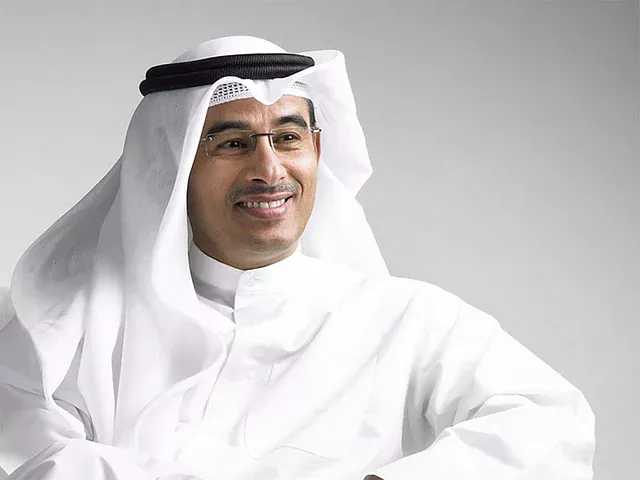
    Dubai’s real estate sector remains fundamentally strong as global capital continues to flow into the emirate, according to Mohamed Alabbar, who told CNBC that the UAE’s long-term development strategy and stable leadership have created an environment that withstands external pressures.

    “It’s the global business hub, and its success, its limelight, its reflection of what life should be and what success should be, what prosperity should be, what positive you should be is this place,” Alabbar said, adding that attempts to undermine that success will ultimately fail.

    Fundamentals Built Over Four Decades

    Alabbar acknowledged that social media speculation can amplify fears during periods of geopolitical tension but emphasized that the UAE’s track record demonstrates consistency and wisdom. “If you were to look and study the trajectory of UAE policies, you will see consistency, you will see sustainability, you will see wisdom, you will see stability,” he stated.

    According to the Emaar founder, the country’s leadership has spent more than 40 years building systems designed to deliver prosperity for residents and investors. Recent events have only reinforced confidence in the nation’s safety and infrastructure, he noted.

    “I promise you what happened will only strengthen what this country is all about.”

    Capital Flows Accelerate, Not Reverse

    Addressing concerns that capital moved to the UAE during global crises could now begin to leave, Alabbar pointed to recent market performance as evidence of sustained confidence. “If you were to look at the past two years, just look at our business, the real estate business alone, we had an increase of almost 70% in 2023, we had 40% in 2024, we have another 40% in 2025,” he said.

    The developer said sophisticated investors recognize the strength of the UAE’s fundamentals and are likely to deepen their commitments rather than pull back. Dubai’s real estate market recorded AED2.46 billion in transactions on March 2, 2026, demonstrating sustained activity levels.

    “Smart capital understands that a country like this, with all these principles and stable leadership and the safety that it has shown that it can deliver,” Alabbar said. “People with true capital understand this and they appreciate this and they will double down on investing anyway.”

    No Signs of Market Weakness

    Alabbar said current demand shows no indication of softening. He recounted his own recent experience searching for an apartment in Dubai: “Myself, I’m looking for one building, one apartment overlooking the sea that I didn’t buy in, and the past two days I’ve been looking and it seemed like nobody want to budge. Nobody want to give a discount.”

    That reflects a market where sellers remain confident and demand stays firm. While consumer confidence may soften temporarily during periods of uncertainty, the country’s policies tend to restore confidence quickly, he added.

    Correction Forecasts ‘Unrealistic’

    Some analysts have warned that Dubai’s property market could face a correction as new supply enters the market, with Fitch Ratings recently suggesting prices could decline by up to 15%. Alabbar dismissed that scenario as unlikely.

    “I know my business well. I know the banking, I know the business environment, because I operate in multi industries,” he said. “The banking system is so strict, amazing discipline. Government policies are just getting better and better. I have no concerns.”

    Asked directly whether a 15% correction was realistic, Alabbar was unequivocal: “In my opinion, the way I do, the way I look at my business and listen, I look at so much data, I think it’s very unrealistic.”

    Recent high-value transactions support his assessment. Dubai recorded a Dh422 million apartment sale at Aman Residences on March 5, 2026, marking the third most expensive apartment transaction in the emirate’s history.

    New Supply Could Stabilize Growth

    Dubai is preparing for a wave of new property supply expected in 2026 and 2027. Alabbar said additional inventory could benefit the market by preventing prices from rising too quickly and maintaining the city’s competitiveness.

    “I said this a year ago. The supply that’s coming in in 2026 and 2027 will be good for the market,” he stated. “We are not here for the short run. We are here for a long time to do business.”

    The developer said he prefers a market where property prices rise gradually—around 5% to 6% annually—rather than experiencing sharp spikes that could undermine long-term stability. “Jacking up prices too high doesn’t benefit anybody,” he said.

    Real estate costs play a significant role in inflation, contributing approximately 50% to 52% of overall price increases, Alabbar noted. Maintaining balanced growth helps both investors and residents. “We don’t also want investors and people who come here for their jobs to really feel that the city is too expensive,” he added.

    Long-Term Stability Over Short-Term Gains

    Alabbar said the goal for Dubai’s property sector should be stability rather than aggressive price increases. Developers are already generating strong returns at current price levels, and maintaining balanced growth will help sustain Dubai’s appeal as a global destination.

    “Developers are making enough money with these prices. We should not shoot too high,” he said. “I want stability. I want long term.”

    A modest adjustment driven by new supply could help ease pressure on housing costs without undermining the broader market, he concluded. Emaar recently confirmed that UAE property sales reached Dh17.2 billion in the first two months of 2026, marking a 118% increase year-on-year.

  • UAE Real Estate Shows Resilience as Dubai Records $670 Million in Transactions

    UAE Real Estate Shows Resilience as Dubai Records $670 Million in Transactions

    The UAE economy and real estate sector remain resilient amid rising regional tensions, according to a report released by Provident Estate on March 4, 2026. Recent geopolitical developments following escalation between the United States and Iran over the weekend of March 1 triggered precautionary measures across several Gulf states, including the UAE.

    While such developments naturally created short-term uncertainty among investors and market observers in Dubai, Abu Dhabi, and Ras Al Khaimah, the operational reality across the country remained stable with underlying fundamentals unchanged.

    Market Activity Rebounds Quickly

    Following a temporary sentiment-driven slowdown over the weekend, the UAE real estate market resumed momentum as the new week began. Official figures from the Dubai Land Department confirmed that 874 real estate transactions worth AED2.46 billion ($670 million) were recorded on Monday, March 2.

    These numbers highlight continued market liquidity and sustained investor confidence. Across the sector, operations remained fully active: holiday homes continued operating at high occupancy levels, hotel bookings remained strong, and property handovers, snagging services, contract renewals, and secondary market viewings proceeded consistently across key communities.

    “Dubai’s real estate market has proven time and again that it is built on strong fundamentals rather than short-term sentiment. What we are seeing now is a brief moment of caution, not a shift in investor confidence. Activity across transactions, rentals and hospitality clearly shows that the market continues to operate with resilience and stability,” said Loai Al Fakir, CEO of Provident Estate.

    The performance aligns with broader market trends documented earlier in 2026. Emaar Properties reported doubled sales in the first two months of 2026, with UAE property sales reaching Dh17.2 billion—a 118% year-on-year increase.

    Government Response Ensures Continuity

    The UAE government responded swiftly to developments, implementing enhanced security measures across air, sea, and land infrastructure to ensure operational continuity. Authorities acted immediately to safeguard infrastructure, supply chains, utilities, and public services.

    As a result, daily life across the country continued uninterrupted. Airports remained fully operational, roads and transportation networks functioned normally, and retail and hospitality venues stayed open. Major destinations including Dubai Mall, Downtown Dubai, and other central commercial districts remained active, reinforcing the stability of the UAE’s economic environment.

    Despite heightened media attention, the difference between perception and reality on the ground proved significant. Over the 48 hours following the initial weekend tensions, no further escalation occurred, with public spaces remaining busy and daily routines continuing normally.

    Structural Strengths Underpin Market Confidence

    Real estate remains a cornerstone of the UAE’s long-term economic strategy, playing a central role in the country’s positioning as a global hub for investment, tourism, aviation, and financial services. The resilience of the market is supported by several structural strengths:

    • Strong banking liquidity
    • Advanced institutional crisis management
    • Diversified national economy
    • Long-term urban development strategies
    • Continued global investor confidence

    These foundational pillars represent permanent features of the UAE’s economic model rather than temporary advantages. The broader market context supports this assessment: Dubai’s February 2026 transactions totaled AED60.60 billion ($16.5 billion), marking an 18.14% value increase year-on-year.

    The commercial sector has shown particular strength, with commercial property sales reaching Dh17.1 billion in early 2026—an 82% year-on-year increase driven by limited Grade A office supply.

    Market Outlook Remains Positive

    Based on current developments, market expectations remain positive for continued operational stability. The absence of further escalation reinforces confidence that the situation remains contained.

    “The UAE has repeatedly demonstrated its ability to navigate regional tensions while maintaining economic continuity and investor trust. Short-term headlines may shift sentiment, but they do not alter long-term fundamentals. Operations continue. Confidence remains. The market is functioning,” the Provident Estate report concluded.

    The resilience demonstrated in early March 2026 reflects the maturation of the UAE real estate sector from speculation-driven dynamics to a more institutionalized market structure, with strategic capital now accounting for approximately 40% of transactions.

  • Dubai Rents Cool as New Supply Reshapes Market

    Dubai Rents Cool as New Supply Reshapes Market

    Fresh data from Allsopp & Allsopp and industry analysts confirms the market is entering a more balanced phase, with demand remaining robust but rental inflation easing across several key segments. Industry experts characterize the shift as a maturing property cycle rather than a downturn, with rents expected to plateau in many communities as more units are handed over.

    Transaction Volumes Surge as Rental Growth Moderates

    Data from Allsopp & Allsopp for January revealed a 48 per cent surge in rental transaction volumes alongside a 5 per cent rise in total rental value, indicating that while tenant activity remains strong, rental growth is slowing compared with previous years. The moderation reflects growing supply and increased tenant choice across the emirate.

    Year-on-year figures from the Dubai Land Department point to further rebalancing. Rental renewals declined by 15 per cent in volume and 9 per cent in value, while new contracts slipped by 3 per cent in volume and 4 per cent in value, suggesting that tenants are negotiating more actively and exploring alternative options as new inventory enters the market.

    Average lettings prices across apartments, villas and townhouses have softened in some locations, with overall rental levels dipping in certain communities. This easing follows a period in which Dubai rents rose sharply amid strong population growth, limited supply and rising demand from global professionals and investors relocating to the emirate.

    After several years of consistent rental growth, we’re now seeing the market move into a phase of stabilisation. Demand remains strong, but as more supply comes to market — particularly apartments — the pace of rental increases is slowing. This is a healthy sign that the market is becoming more balanced and sustainable over the long term.

    Lewis Allsopp, chairman of Allsopp & Allsopp, emphasized the transition.

    Apartment Supply Drives Market Rebalancing

    Supply growth is emerging as a key driver of the shift. In the sales market, nearly 80 per cent of recent off-plan transactions have been apartments, with off-plan deals accounting for 78 per cent of total sales value. As these projects reach completion and enter the leasing market, they are expected to exert downward pressure on apartment rents, especially in mid-market and emerging communities.

    Apartment rentals have already recorded a year-on-year dip in both volume and value, and further adjustments are anticipated as additional units are delivered. In contrast, villa and townhouse rents remain relatively resilient due to limited new supply and continued demand from families seeking larger homes and lifestyle communities.

    Tenant Demand Remains Strong

    Despite signs of stabilization, tenant demand remains strong. Allsopp & Allsopp reported a 70 per cent month-on-month increase in listings, a 50 per cent rise in tenant registrations and a 53 per cent jump in property viewings in January, reflecting sustained interest from new residents and relocating professionals. Dubai’s population growth — driven by business expansion, visa reforms and its safe-haven status — continues to underpin rental demand.

    According to a recent report by property consultancy CBRE, average residential rents in Dubai rose by around 17 per cent in 2025 but the pace of growth is expected to slow significantly in 2026 as supply increases.

    The residential market is transitioning towards a more sustainable trajectory, with rental growth moderating as new completions provide tenants with greater choice.

    Knight Frank echoed a similar view, stating that while prime villa and waterfront locations may continue to command premium rents, broader market conditions are shifting towards equilibrium. “Dubai’s strong population growth and economic expansion will continue to support rental demand, but the scale of new supply scheduled for delivery over the next two years is likely to temper rental inflation,” the consultancy said in a recent research note.

    Market Entering Recalibration Phase

    Market watchers say Dubai’s rental market is entering a phase of recalibration rather than contraction. With demand still supported by economic growth, job creation and continued inflows of global talent, analysts expect rents to stabilise across much of the market through 2026, creating a more sustainable environment for both tenants and landlords.

  • Dubai Rental Market Stabilizes as Supply Eases Price Growth

    Dubai Rental Market Stabilizes as Supply Eases Price Growth

    Dubai’s rental sector is experiencing a significant market recalibration according to latest data from the Dubai Land Department and Allsopp & Allsopp, with new supply beginning to ease the price pressure that characterized recent years. In January 2026, rental transaction volumes jumped 48% alongside a modest 5% rise in total rental value, indicating that rents are no longer accelerating at the pace witnessed in previous periods.

    Year-on-year figures reveal further market rebalancing, with renewals declining 15% in volume and 9% in value, while new rental contracts fell 3% in volume and 4% in value. The average lettings price across apartments, villas, and townhouses dropped 25% year-on-year, demonstrating that pricing pressure is easing across key segments.

    Lewis Allsopp, Chairman of Allsopp & Allsopp, noted that after several years of consistent growth, the market is moving into a phase of healthy stabilization as more supply, particularly in the apartment sector, enters circulation. This development follows record-breaking rental contract values recorded throughout 2025.

    Supply Dynamics Reshape Market Balance

    Supply is playing a central role in this transition. In the sales market, nearly 80% of January’s off-plan transactions were apartments, with off-plan properties accounting for 78% of total sales value. As apartment inventory increases significantly compared to villas and townhouses, the expanded pipeline is expected to place further downward pressure on apartment rents.

    Apartments have already recorded an 11% year-on-year decline in rental volume and 5% in value, marking the segment where the most significant price adjustment is anticipated. In contrast, villas and townhouses remain more supply-constrained, with a 10% dip in rental volume year-on-year and just over 1% in value, though prices remain competitive for tenants.

    Robust Tenant Activity Persists

    Despite stabilizing prices, demand remains robust across Dubai’s rental market. Month-on-month, Allsopp & Allsopp reported a 70% increase in listings, 50% growth in registrations, and a 53% rise in viewings compared to December 2025. This demonstrates continued tenant activity, though January typically experiences heightened engagement due to seasonal resident inflows at year start.

    The data points toward a maturing rental market where strong demand is balanced by growing supply, creating conditions that favor sustainability over speculation. This trend aligns with broader population growth dynamics as Dubai’s residential base expands beyond four million residents.

    Market Outlook and Implications

    Industry analysts expect rental prices to continue stabilizing throughout 2026 as additional residential projects reach completion. The current market correction represents a healthy adjustment after years of rapid appreciation, potentially improving affordability for residents while maintaining Dubai’s attractiveness as a global real estate destination.

    The stabilization phase may also encourage long-term renters to transition toward home ownership, particularly as developers offer competitive pricing and flexible payment structures. This dynamic could further reshape Dubai’s residential landscape in the months ahead, balancing rental and ownership markets as the emirate continues its rapid urban expansion.

  • School Proximity Drives 35% Villa Price Surge in Dubai

    School Proximity Drives 35% Villa Price Surge in Dubai

    Mature villa neighborhoods with easy access to top-tier educational institutions are significantly outperforming the broader Dubai property market, with genuine end-user demand from families replacing speculative investment as the primary driver of growth.

    The latest Property Monitor Dynamic Price Index, tracking three-month moving average median prices per square foot across 42 master communities, reveals that education proximity has become a primary decision-making filter for villa buyers planning five to ten years ahead.

    Victory Heights leads the surge, with non-renovated villas posting annual price increases between 25% and 35%, while renovated properties rose 15% to 20%. Townhouses around the Dh5 million mark saw more modest gains of approximately 10%, partly due to mortgage loan-to-value restrictions on properties above this threshold.

    Matthew Bate, founder and CEO of BlackBrick, emphasized the fundamental shift in buyer behavior:

    Dubai’s villa market is being led by families planning five to ten years ahead, and education is central to that decision. School proximity is no longer a secondary consideration—it has become one of the primary decision-making filters.

    Arabian Ranches demonstrates similar pricing resilience, driven by sustained demand from families seeking proximity to Jumeirah English Speaking School (JESS). Non-renovated villas in the community have delivered annual gains of 20% to 25%, with high-end properties above Dh15 million achieving rental yields up to 7-8% when fully renovated.

    Annual tuition fees at leading British and International Baccalaureate schools in Dubai typically range from Dh95,000 to over Dh105,000, reinforcing the profile of buyers who prioritize convenience and long-term lifestyle planning over short-term investment returns.

    The trend mirrors patterns in mature global real estate markets such as London and Singapore, where properties near top schools consistently command price premiums. Knight Frank reported that Dubai’s prime villa market recorded double-digit growth through 2025, driven largely by expatriate families relocating for long-term residency.

    Faisal Durrani, partner and head of Middle East research at Knight Frank, observed:

    The shift toward end-user driven buying is making the market more stable and sustainable. Communities offering lifestyle infrastructure such as schools, parks and retail are seeing the strongest and most resilient price growth.

    CBRE data supports the education-driven narrative, reporting that average villa prices in Dubai rose by more than 20% in 2025, significantly outpacing apartment price growth as family buyers sought larger homes in well-established neighborhoods.

    Taimur Khan, head of research for the Middle East and Africa at CBRE, noted that villa communities with strong schooling options and established infrastructure continue to outperform, supported by limited supply and a growing base of long-term residents.

    The growing importance of education-linked property decisions is reinforcing long-term market stability. With many buyers committing to five- to ten-year ownership horizons, transaction volumes in mature villa communities are increasingly driven by end users rather than short-term investors, reducing volatility and supporting sustained capital appreciation.

    Industry analysts expect school proximity to remain a defining factor in villa pricing as Dubai continues to attract global talent and high-income families seeking long-term residency. With limited new supply in mature neighborhoods and strong demand from families prioritizing education and lifestyle, the emirate’s established villa communities are likely to maintain upward momentum through 2026 and beyond.