Tag: Dubai Property

  • Dubai Property Portals Urged to Tighten Verified Listing Controls

    Dubai Property Portals Urged to Tighten Verified Listing Controls

    A growing concern over misleading ‘verified’ property listings has sparked calls for tighter checks on Dubai’s online real estate portals, with industry professionals warning that advertisements carrying verification badges should accurately reflect the official permit details attached to the properties they promote.

    Prominent Dubai realtor Salman Bin Ali said the issue extends beyond fake property listings appearing online. The greater concern, he argued, is that some advertisements may appear verified even though the permit information allegedly corresponds to a different property, potentially misleading buyers, tenants and investors who rely on verification badges when making property decisions.

    Verified property listings must actually match the official permit details. The issue is not only fake listings – it is fake listings appearing verified to the public.

    Why Verification Matters

    In Dubai’s highly digital real estate market, online portals are often the first point of contact between buyers and sellers. Verification badges are intended to reassure consumers that a listing complies with regulatory requirements and represents a genuine property.

    However, Bin Ali believes verification should go beyond confirming that a permit exists. Instead, platforms should ensure the permit belongs to the exact property being advertised.

    He said he had reviewed cases where apartment listings allegedly referenced permit information linked to land or plot records with substantially different classifications and sizes. According to Bin Ali, such discrepancies could give buyers false confidence that a property has passed compliance checks when the underlying permit does not correspond to the advertised unit.

    Calls for Smarter Verification

    Bin Ali said property portals should strengthen their automated verification systems by cross-checking official permit information against listing details before advertisements go live. The verification process should compare key information including property type, size, location, building name, project, unit details, permit validity and transaction type.

    He also suggested that once permit information is retrieved, brokers should not be able to manually alter critical listing details, reducing the risk of valid permits being used to support unrelated advertisements.

    In my view, permit data should be tied to the actual property being marketed, not used as a general compliance reference.

    Protecting Buyers and Compliant Brokers

    Bin Ali noted that inaccurate verified listings not only expose buyers to potential misinformation but also disadvantage brokers who comply with advertising regulations. Misleading listings can attract enquiries and online visibility despite not accurately reflecting the properties being marketed.

    He called for stronger penalties for agencies or brokers that repeatedly misuse permit information, arguing that simply removing misleading advertisements is insufficient if similar listings quickly reappear. He proposed a system of escalating enforcement, including warnings, temporary suspension of listing privileges, broker-level sanctions and referrals to the relevant authorities in cases of repeated violations.

    Existing Safeguards

    Dubai has already tightened oversight of property advertising. In 2024, the Dubai Land Department and the Real Estate Regulatory Agency (RERA) introduced stricter rules requiring brokers to obtain advertising permits before listing properties online and limiting the number of agents permitted to market the same property. The reforms significantly reduced duplicate listings across major property portals.

    Bin Ali said the next step is ensuring that verification systems confirm not only the existence of a valid permit but also that it accurately matches the property being advertised.

    The call for enhanced verification comes as Dubai’s property market continues to attract record investment and buyer interest. With new project launches exceeding $75 billion in the first half of 2026, ensuring listing accuracy and transparency has become increasingly critical for market integrity and consumer protection.

  • Dubai Holding Real Estate Launches Golden Visa Service at Sales Centres

    Dubai Holding Real Estate Launches Golden Visa Service at Sales Centres

    Dubai Holding Real Estate has integrated residency services into the property purchase journey at its Meraas and Nakheel sales centres, offering customers immediate support on Golden Visa eligibility, required documents, and application procedures at the same location where they select their homes.

    Applications will be processed by an approved visa services provider, while Nakheel and Meraas will provide guidance and support without directly issuing visas, according to Al Khaleej Arabic daily.

    The service covers key residency options available to property investors, including the UAE’s 10-year Golden Visa for eligible real estate investors who own one or more properties worth at least Dh2 million, subject to applicable conditions and approval by the relevant authorities.

    “By integrating the Golden Visa and investor residency process into the property ownership journey, we are empowering our customers with greater clarity and confidence as they choose their homes,” said Khalid Al Malik, Chief Executive Officer of Dubai Holding Real Estate.

    Dubai Holding Real Estate confirmed the initiative also applies to existing customers and is designed to provide clearer guidance, help sales teams and brokers follow a more consistent process, and improve the end-to-end ownership experience across the company’s portfolio.

    The initiative supports Dubai’s ambition to become a leading global destination for investors, residents and talent. It also aligns with the Dubai Real Estate Strategy 2033, which aims to raise home ownership to 33 per cent, double the real estate sector’s contribution to Dubai’s GDP to about Dh73 billion, and increase real estate transactions by 70 per cent.

    The streamlined service comes as Dubai’s property market continues to attract strong investor interest, with the emirate projected to attract over AED1 trillion in new real estate projects over the next five years, driven by foreign investment inflows and a steady pipeline of mega-developments.

    By reducing administrative friction and consolidating services, Dubai Holding Real Estate aims to make ownership across its portfolio simpler and more closely aligned with the long-term opportunities Dubai offers to international investors and residents.

  • Sharjah Rents Surge Amid Dubai Spillover and Housing Demand

    Sharjah Rents Surge Amid Dubai Spillover and Housing Demand

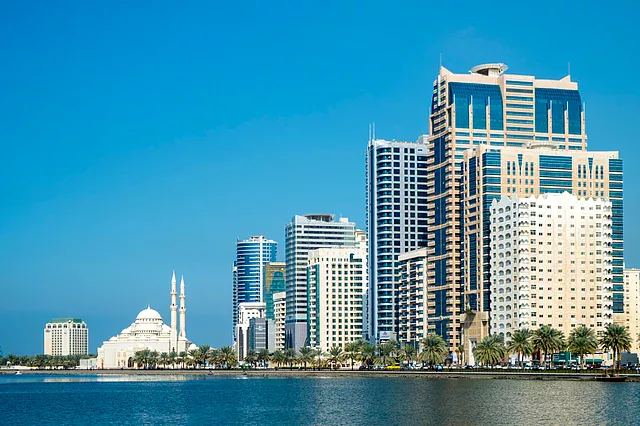
    Sharjah’s residential rental market is experiencing one of its strongest growth phases in recent years, fueled by population growth, an influx of Dubai residents seeking lower housing costs, and a robust infrastructure and development pipeline reshaping the emirate’s residential landscape.

    Overall rental activity, including both residential and commercial leases, exceeded 368,500 contracts in 2025, representing annual growth of 4.4%, the Cavendish Maxwell report shows.

    Families accounted for 86% of all residential rental contracts, underlining Sharjah’s position as the preferred destination for long-term family living. Single tenants represented 10% of contracts, while staff and worker accommodation accounted for the remaining 4%.

    “Foreign ownership reforms, infrastructure investments and Sharjah’s comparatively lower living costs are driving unprecedented demand for real estate across the emirate,” said Ali Siddiqui, research manager at Cavendish Maxwell.

    Affordability Driving Migration from Dubai

    Residential rents in Sharjah are typically 20% to 30% lower than comparable properties in Dubai, encouraging a growing number of professionals and families to relocate while continuing to work in Dubai, the report estimates.

    Industry executives say this migration trend has intensified over the past two years as rental costs in Dubai have climbed sharply amid strong population growth and record residential demand.

    The resulting pressure on Sharjah’s housing stock has pushed rents significantly higher in several popular districts. Market data shows that some residential neighbourhoods have recorded annual rental increases ranging from 33% to 56%, particularly in high-demand areas such as Muwaileh, Aljada and emerging mixed-use communities offering modern amenities and improved transport connectivity.

    Tenant Protection Framework

    To protect residents from excessive rent hikes, Sharjah maintains one of the UAE’s most tenant-friendly rental frameworks. Under the emirate’s regulations, rents are frozen for the first three years from the commencement of a tenancy agreement. Landlords are prohibited from increasing rents or refusing lease renewals during this period unless tenants violate contractual obligations.

    Following the initial three-year period, landlords may raise rents only once every two years and any increase must reflect fair market value. The regulations also prohibit renewal fees and require tenancy contracts to be registered with the municipality, creating greater transparency and protection for both landlords and tenants.

    Real estate consultants say these rules have helped Sharjah maintain market stability even as rental values continue to rise.

    Supply Pipeline and Infrastructure

    Around 2,600 residential units were delivered in 2025, with apartments accounting for more than 80% of new supply. Another 1,100 apartments entered the market during the first quarter of 2026.

    Approximately 33,700 additional homes are scheduled for delivery by 2030, including 24,800 apartments and 9,900 villas and townhouses. Major developments by leading developers including Arada, Alef Group, Beeah Group and Eagle Hills are expected to expand housing choices and moderate rental pressures over the medium term.

    Infrastructure investment will further strengthen residential demand. Projects such as the Etihad Rail network, major road upgrades and the expansion of Sharjah International Airport are improving connectivity and reducing commuting times, making Sharjah increasingly attractive for residents employed across the UAE.

    Sharjah’s population is projected to rise from about 1.98 million today to more than 2.1 million by 2030, while expatriates account for over 85% of residents.

    Sharjah’s rental market closely mirrors broader regional trends, with property sales reaching a record Dh65.6 billion in 2025 as the emirate capitalizes on affordability advantages over Dubai. Meanwhile, Abu Dhabi has frozen all rent increases to stabilize its housing market amid rising costs.

    With strong demand fundamentals, a growing population, tenant-friendly regulations and thousands of new homes in the development pipeline, analysts expect Sharjah’s rental market to remain resilient. While fresh supply could ease some pressure on rents over time, the emirate’s affordability advantage and family-oriented appeal are likely to keep demand elevated for the foreseeable future.

  • Palm Jebel Ali Villas Set for First Handovers in 2026

    Palm Jebel Ali Villas Set for First Handovers in 2026

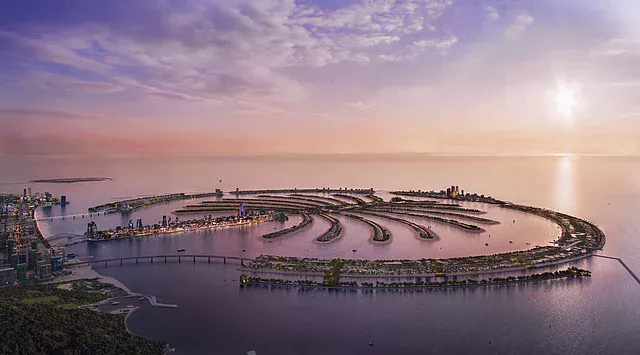
    Construction activity is progressing steadily across Palm Jebel Ali’s residential communities, with the island’s first villa handovers on track to begin before the end of 2026, according to Khalid Al Malik, Chief Executive Officer of Dubai Holding Real Estate.

    “Today, there is real momentum on the ground across infrastructure, utilities, access roads, and the first residential communities, laying the foundations for what will become one of Dubai’s most significant waterfront destinations,” Al Malik told Gulf News in an exclusive interview on June 16, 2026.

    Dh8.5 Billion in Construction Contracts

    Nakheel awarded Dh5 billion in contracts in 2024 to Ginco General Contracting, Shapoorji Pallonji Mideast and UNEC for the construction of 723 Beach and Coral Collection villas across Fronds K to P, along with supporting infrastructure and public spaces. In April 2026, the developer awarded additional contracts worth more than Dh3.5 billion for villas across Fronds A to F.

    “These milestones reflect a clear commitment to delivering Palm Jebel Ali with the scale, quality and infrastructure readiness expected of a destination of this significance,” Al Malik said.

    Phased Delivery Strategy

    The island will not open on a single handover date, with Palm Jebel Ali set to come to life in phases as construction advances across different sections. Al Malik confirmed that the project’s immediate priority is the first residential phases and the infrastructure required to support them.

    “The priority is not simply speed. It is quality, infrastructure readiness, customer experience and long-term value. Palm Jebel Ali is being developed as a destination that will serve Dubai for generations.”

    Future milestones will be announced once each phase is approved and reaches the appropriate stage of readiness, he added.

    Master-Planned Destination

    Palm Jebel Ali is being developed as a comprehensive waterfront destination combining residential, hospitality, leisure, wellness, and community infrastructure. More than 80 hotels and resorts are expected to form part of the wider masterplan, alongside beach clubs, dining venues, civic infrastructure, and public spaces.

    The masterplan already includes Palm Central Private Residences and the Palm Jebel Ali Friday Mosque, designed by Skidmore, Owings & Merrill, which will serve as a cultural and architectural landmark for the island.

    International architectural firms including NAGA, LOCI, WATG, LW Design, SAOTA and Whitespace have been engaged to design the Beach and Coral Collection villas, with each collection centered around space, light, privacy, waterfront views and coastal environment integration.

    Strategic Location Advantage

    Al Malik emphasized that Palm Jebel Ali’s position is strengthened by its connection to Dubai’s future growth corridor, including Expo City Dubai and Al Maktoum International Airport.

    “It offers waterfront living on a scale difficult to find elsewhere in the region, while remaining connected to Dubai’s future growth corridor,” he stated.

    Strong Buyer Demand

    Buyer appetite for Palm Jebel Ali’s residential releases has been robust, particularly among those seeking waterfront homes with privacy, scale and long-term value. The project is attracting buyers who view Dubai as a base for family life, wealth preservation and long-term investment.

    “What makes the proposition compelling is its rarity,” Al Malik explained. “Palm Jebel Ali offers new coastal supply at a scale that is extremely difficult to replicate, within one of Dubai’s most important future growth corridors.”

    The demand reflects a wider shift in Dubai’s property market, where buyers are increasingly seeking larger homes, wellness-led communities, access to nature and master-planned destinations.

    According to Al Malik, three elements will define Palm Jebel Ali’s next phase: delivery momentum with major infrastructure advancing, the scale and quality of the integrated waterfront community, and the island’s character shaped by integrated mobility, walkable neighborhoods, and community-led planning.

    “Over time, people should expect to see more detail around hospitality, public realm, mobility, landscape, art and community amenities,” Al Malik said. “These are the elements that will define Palm Jebel Ali as a destination with its own rhythm, community and identity, one that people will feel proud to call home.”

  • Six Dubai Communities See Property Prices Double in Five Years

    Six Dubai Communities See Property Prices Double in Five Years

    New analysis from Bayut reveals that buyers who entered Dubai’s property market during the post-Covid recovery have witnessed extraordinary returns, with advertised sale prices climbing by as much as 153% in the emirate’s most sought-after communities over a five-year period.

    The UAE property portal compared average advertised prices per square foot in May 2021 with April 2026 using its proprietary Price Index, showing that prices across key Dubai communities have risen by between 41% and 153%.

    Jumeirah Islands topped the growth chart, with advertised prices surging from Dh1,523 per square foot in May 2021 to Dh3,844 in April 2026—a remarkable 153% increase. Jumeirah Golf Estates followed with 119% growth, while Jumeirah Lake Towers recorded a 115% rise over the same period.

    Villa Communities Drive Market Gains

    Established family-oriented communities demonstrated some of the strongest price appreciation, underlining how end-user demand has underpinned long-term value across Dubai’s residential landscape.

    The Meadows recorded a 110% increase, while The Springs rose by 109%. Jumeirah Park climbed 106%, with advertised prices moving from Dh1,076 to Dh2,214 per square foot. Arabian Ranches posted a 95% increase, reinforcing the appeal of mature villa communities among families and long-term buyers.

    Dubai South registered a 92% rise, pointing to continued demand in infrastructure-led locations, while Dubai Hills Estate climbed 87%. Jumeirah Village Circle rose 84%, with advertised prices increasing from Dh827 to Dh1,521 per square foot.

    “Looking back at May 2021, the market was still recovering from the impact of Covid-19, and many buyers were understandably cautious. However, those who entered the market at that time have seen significant gains across several of Dubai’s most established and emerging communities,” said Fibha Ahmed, VP of Sales at Bayut.

    Ahmed added that the current environment differs from 2021, but the underlying lesson remains relevant: “uncertainty can create opportunity for buyers who are guided by data, long-term fundamentals and a clear understanding of market value.”

    Premium Districts Attract Capital

    High-demand lifestyle and waterfront locations also recorded substantial gains during the review period.

    Palm Jumeirah saw advertised prices rise by 83%, from Dh2,452 to Dh4,471 per square foot. Business Bay increased by 78%, while Dubai Marina rose by 67% and Downtown Dubai climbed 64%.

    The findings emerge as Dubai’s market increasingly evolves into a long-term investment destination, with resident investors now accounting for over half of total property investments by value.

    Luxury Off-Plan Market Remains Robust

    The latest data also points to continued strength at the upper end of the market. Dubai developers recorded Dh4.96 billion in off-plan sales for homes priced above Dh5 million in May 2026, according to market analysis from Keturah based on DXBinteract data.

    Villa buyers accounted for Dh2.51 billion across 184 transactions, while apartment sales reached Dh2.45 billion from 207 deals. That translates to 391 luxury off-plan homes sold during the month—an average of 12 homes worth more than Dh5 million changing hands every day, with an average deal value of Dh12.7 million per property.

    The strongest villa activity came in the Dh10 million to Dh20 million bracket, where 60 transactions generated Dh834.2 million in developer off-plan sales. Another 23 villa deals worth Dh746.3 million were recorded in the Dh20 million to Dh50 million range.

    Apartment sales concentrated in the Dh5 million to Dh10 million bracket, which accounted for 158 of the 207 transactions recorded during the month.

    Bayut noted the findings come at a time when regional uncertainty has prompted some buyers to adopt a more cautious approach. However, previous periods of hesitation have also created opportunities for buyers who relied on pricing data and assessed fundamentals before momentum returned.

    “Dubai’s property market has repeatedly shown its ability to recover, recalibrate and move forward with strength,” Ahmed noted. “What matters in moments like these is not reacting emotionally, but using the right information to identify where genuine value exists.”

    The combined data shows a market that has delivered strong five-year gains across established communities while continuing to attract large-ticket off-plan investment, with Dubai’s long-term appeal remaining tied to prime supply, infrastructure growth, and sustained investor confidence.

  • Dubai First-Time Home Buyers Get More Perks Under Expanded Programme

    Dubai First-Time Home Buyers Get More Perks Under Expanded Programme

    The programme, jointly launched by the Dubai Land Department (DLD) and Dubai Department of Economy and Tourism (DET) in July 2025, has already generated more than Dh5 billion in residential transactions and helped over 3,200 residents purchase their first homes. Nearly 45,000 residents have registered in less than a year.

    The latest expansion adds nine new developers: Arada, Dubai World Trade Centre, IRTH Group, Manam, Qube Development, Reportage Properties, SAMANA Developers, Sky View Real Estate and 4Direction Developments. This broadens the range of available homes across different communities, budgets and property types.

    Who Can Apply?

    The programme is open to UAE residents of any nationality who are aged 18 or above, do not own a freehold residential property in Dubai, and are purchasing a property worth up to Dh5 million. Applications can be submitted through the Dubai Land Department website or the Dubai REST app.

    Eligible applicants receive a QR code that unlocks programme benefits with participating developers and banks.

    Key Benefits for First-Time Buyers

    Registered buyers now enjoy advantages generally not available to repeat purchasers:

    • Priority access to new launches: Early access to selected projects before units are released to the wider market
    • Preferential pricing: Exclusive prices on selected units reserved for programme participants
    • Better mortgage terms: Five partner banks offer tailored products with preferential interest rates, reduced fees and faster approvals
    • Lower upfront costs: Interest-free instalment plans on Dubai Land Department registration fees through eligible credit cards
    • Flexible payment plans: Customized payment structures for off-plan purchases, spreading costs over longer periods

    How to Register

    The process remains straightforward:

    1. Register through the DLD website or Dubai REST app
    2. Verify eligibility using Emirates ID and residency details
    3. Receive a First-Time Home Buyer QR code
    4. Use the QR code when engaging with participating developers and banks
    5. Compare eligible properties, financing options and payment plans
    6. Complete mortgage approval and property purchase

    For residents weighing up rising rents against buying a home, the programme offers a clear pathway to ownership. With residential sales through the scheme now exceeding Dh5 billion and developer participation expanding, first-time buyers in Dubai have more options than ever before.

    The initiative aligns with the UAE’s broader effort to encourage long-term residency and homeownership, building on recent measures including expanded VAT refund eligibility for UAE nationals and a sustained focus on investor-friendly regulations.

  • Bayut Launches Property Search App on ChatGPT in UAE First

    Bayut Launches Property Search App on ChatGPT in UAE First

    The Bayut App on ChatGPT allows users to discover listings by simply describing what they are looking for, including location, budget, size, bedroom count or property type. This creates a more intuitive search experience for buyers, tenants and casual browsers, allowing them to begin their property journey in the same conversational environments where they are already asking questions, comparing options and exploring decisions.

    “At Bayut, we have always viewed innovation as a way to solve real user problems and create more efficient property journeys. Search behavior is evolving, and people are increasingly using AI-powered platforms to ask questions, explore options and make decisions. With the Bayut App on ChatGPT, we are making it easier for users to search for properties in a way that feels natural, intuitive and aligned with how they discover information today,” said Haider Khan, CEO of Bayut and dubizzle.

    AI-Led Experiences Meet Global Standards

    The milestone is significant given that apps on ChatGPT are subject to OpenAI’s app submission and approval process, with a strong emphasis on real-world utility, intuitive conversational experiences and clear user value. Bayut’s availability as an app on ChatGPT reflects the relevance of property search as a natural use case for conversational AI, and also points to Bayut’s advanced credibility within the global tech ecosystem.

    For Bayut, this marks more than a product launch. It demonstrates how a UAE-born platform is building technology that meets global standards for AI-led discovery, while bringing meaningful innovation to one of the country’s most important sectors.

    “As a UAE-born platform, we are also proud to contribute to the country’s forward-looking AI agenda. The UAE has created an environment where technology, innovation and ambition can thrive, and this launch is another step in bringing practical AI-led experiences into everyday sectors such as real estate,” added Khan.

    New Discovery Pathway for Properties

    For real estate professionals and clients, the launch also creates another discovery pathway for listings on Bayut, helping properties reach users in emerging AI-led search environments. This reinforces Bayut’s commitment to supporting its partners through technology, visibility and user-first innovation.

    The Bayut App on ChatGPT is available globally across desktop web, mobile browsers and the ChatGPT app, with support for both light and dark modes.

    As the UAE continues to accelerate its artificial intelligence capabilities, Bayut is bringing this vision into the real estate sector through practical, user-focused technology that makes property search more accessible, intelligent and seamless.

    The launch comes as Dubai’s property market evolves into a mature investment destination, with technology playing an increasingly central role in how buyers and tenants discover and evaluate properties. The integration with ChatGPT positions Bayut at the forefront of AI-driven property search, complementing broader market trends that include sustained demand across residential and commercial segments.

  • Meraas Awards Dh2.4 Billion Contracts for 557 Dubailand Villas

    Dubai Holding Real Estate’s flagship developer Meraas has committed Dh2.4 billion to expand its villa communities in Dubailand, awarding major construction contracts as demand for spacious homes maintains momentum across the emirate.

    The contracts, split between United Engineering Construction (UNEC) and GCC Contracting, will deliver a combined 557 villas ranging from three to seven bedrooms across The Acres and The Acres Estates developments.

    UNEC will construct 371 villas at The Acres, featuring three- to five-bedroom homes alongside community infrastructure including roads, utilities and shared amenities. GCC Contracting will handle The Acres Estates, positioned as the more exclusive offering with 186 larger homes spanning five to seven bedrooms.

    “This award reflects both the strength of demand for premium villa communities in Dubai and our continued investment in meeting that demand with quality and distinction,” said Khalid Al Malik, CEO of Dubai Holding Real Estate.

    The developments are designed around nature-focused living, with The Acres centered on Halo Loop Park—a landscaped green space serving as the community anchor. The Acres Estates elevates the concept with larger plots, exclusive architectural designs, and premium features including landscaped waterfront areas and swimmable lagoons.

    “We are focused on efficient execution and maintaining the highest construction standards throughout the project lifecycle,” said Eng. Abdul Halim Muwahid, Chairman of UNEC. Bipin Chandran, CEO of GCC Contracting, described The Acres Estates as “a high-specification residential development” requiring “precision and technical expertise.”

    Located in Dubailand with connectivity through Sheikh Zayed bin Hamdan Al Nahyan Street and Emirates Road, the communities offer proximity to Global Village, Dubai Polo and Equestrian Club, and Hamdan Sports Complex—factors developers say enhance long-term appeal for residents and investors.

    The contracts represent a significant addition to Dubai’s villa pipeline as the emirate’s property market recorded over Dh180 billion in transactions during Q1 2026. The expansion aligns with broader market trends, with luxury home prices jumping 25% in 2025 as Dubai strengthens its position as a global wealth destination.

  • Bollywood Star Tiger Shroff Buys Waterfront Property in Dubai

    Bollywood Star Tiger Shroff Buys Waterfront Property in Dubai

    Tiger Shroff, son of Bollywood star Jackie Shroff, has acquired a waterfront unit at Breez by Danube, reflecting growing confidence among international celebrities in Dubai’s property sector. The purchase underscores the emirate’s appeal to high-net-worth individuals seeking both lifestyle elevation and long-term investment returns.

    “Dubai has always impressed me with its energy, lifestyle, infrastructure, and growth potential,” Shroff said, noting that demand for prime waterfront properties continues to rise across the city.

    The actor joins an extensive list of Bollywood and international celebrities who have invested in Dubai real estate, including Shah Rukh Khan, Salman Khan, Brett Lee, Shilpa Shetty, Abhishek Bachchan, Karan Kundra, and Tejasswi Prakash, among others.

    Rizwan Sajan, founder and chairman of Danube Group, said the investment reflects the strong trust global personalities place in both Dubai and the company’s delivery standards. “Breez is strategically positioned to make real estate ownership more accessible through our signature 1 per cent payment plan, zero-interest charges, and fully furnished apartments in a prime location,” he stated.

    Dubai’s real estate market continues to attract global attention due to its strong economic fundamentals, investor-friendly policies, and world-class infrastructure. With consistent growth, high rental yields, and a tax-efficient environment, the emirate presents a compelling proposition for both end-users and investors.

    Shroff’s purchase follows UFC legend Khabib Nurmagomedov’s entry into the UAE real estate sector through a strategic partnership with DIA Holding, which launched the $70 million LuzOra Residences on Dubai Islands in mid-April 2026.

    The steady flow of celebrity investments comes as buyer confidence surged following recent regional stability, with customer conversions in Dubai’s property market reportedly tripling immediately after the ceasefire announcement between the US and Iran.

    Dubai’s appeal to international investors remains supported by transparent regulations, freehold ownership opportunities, and consistently strong performance metrics. The emirate’s rental market alone recorded Dh32.2 billion in contracts during Q1 2026, with contract cancellations dropping 25% year-on-year, signaling sustained market stability.

  • Dubai Rental Market Records Dh32.2 Billion in Q1 Contracts

    Dubai Rental Market Records Dh32.2 Billion in Q1 Contracts

    The emirate’s rental market demonstrated consistent performance through the opening months of 2026, with data from Dubai Land Department revealing balanced supply-demand dynamics and improved tenant retention across residential and commercial segments.

    Renewal Activity Outpaces New Contracts

    The 135,607 renewal contracts exceeded new agreements by a notable margin, indicating tenant satisfaction with current terms and locations. Industry analysts view this trend as evidence of market maturation, where both landlords and tenants have adjusted expectations following the sharp price movements of previous years.

    The 25% reduction in contract cancellations marks a significant shift from earlier volatility, suggesting fewer disputes over pricing and terms. This decline reflects the impact of Dubai’s rental regulations, which have helped standardize processes and protect both parties’ interests.

    Professional Services Sector Expands

    The number of registered real estate offices reached 10,200 during the quarter, while 3,599 new licenses were issued across various property-related activities. Brokerage services dominated the licensing landscape, with 1,564 permits for sales and purchases and 928 for leasing operations.

    Additional licenses covered property management, valuation, consultancy, mortgage brokerage, and auction services, highlighting the breadth of Dubai’s real estate ecosystem. This professional infrastructure supports market transparency and provides comprehensive service options for investors and residents.

    Market Context and Outlook

    The Q1 rental performance aligns with broader real estate trends observed across Dubai’s property sector. While off-plan apartment sales climbed 12.9% in March, the rental segment has maintained steady momentum without the dramatic price swings seen in previous cycles.

    The diverse service network—from leasing agents to valuation experts—continues to improve operational efficiency and market accessibility. These professional standards have become increasingly important as Dubai attracts international investors and corporate tenants seeking reliable long-term accommodation.

    With ongoing development projects and consistent tenant inflows, the rental sector is positioned to maintain current activity levels through mid-2026. The combination of regulatory clarity, professional service standards, and balanced market conditions suggests Dubai’s rental landscape has entered a more sustainable phase of growth.