Tag: Al Maktoum Airport

  • Al Maktoum Airport Expansion Drives Southern Dubai Real Estate Growth

    Al Maktoum Airport Expansion Drives Southern Dubai Real Estate Growth

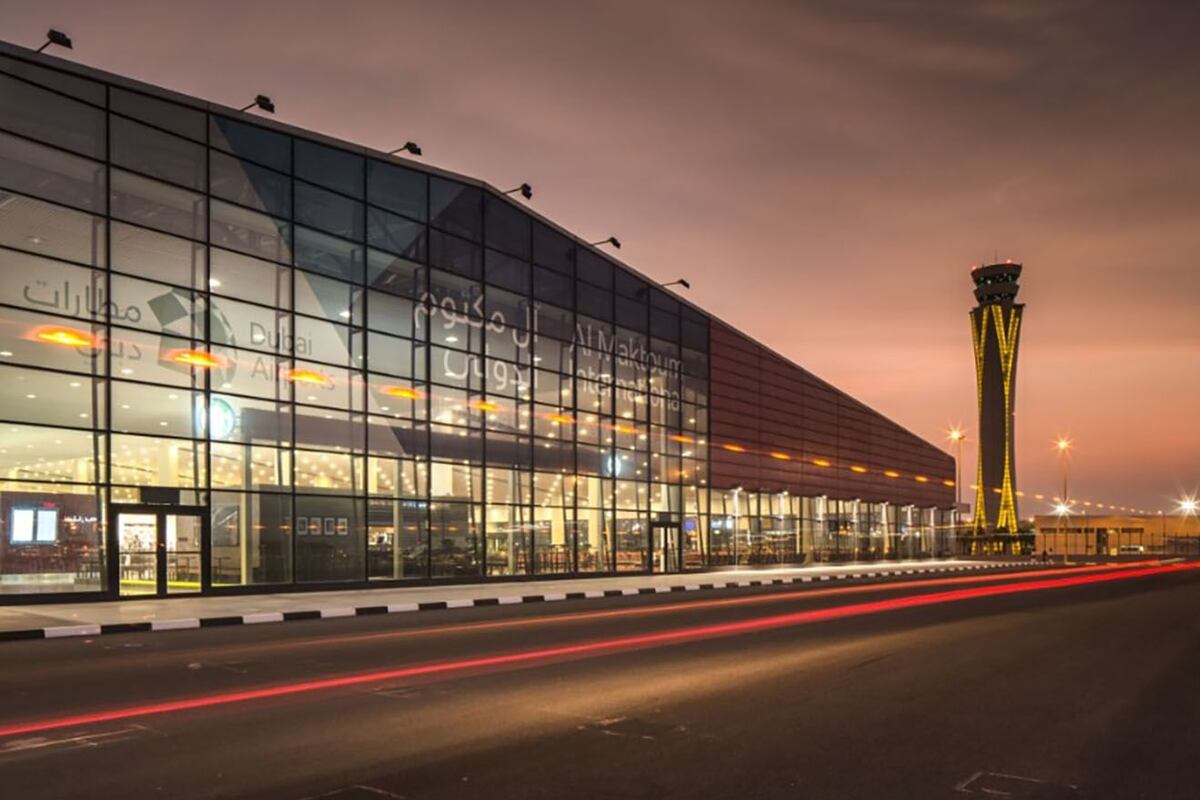
    The future airport is designed to accommodate up to 260 million passengers annually, alongside 12 million tonnes of cargo, five parallel runways and more than 400 aircraft stands. Its first major phase is expected to provide capacity for approximately 150 million passengers a year, making the development one of the largest aviation infrastructure projects globally.

    An AED128 billion airport designed for 260 million passengers is not simply an aviation project. It is the foundation of a new economic center that will influence where companies operate, where employment is created and where future residents choose to live. The most important number for property investors is not passenger capacity alone. It is the scale of business activity, job creation and population growth expected around the airport. As infrastructure and employment move south, residential and commercial demand are likely to follow.

    Loai Al Fakir, CEO of Provident Estate

    New Investment Zones Emerge as Expansion Progresses

    The impact of this expansion on Dubai’s real estate market is expected to extend well beyond the airport boundary. An aviation economic-impact study estimated that construction related to the expansion could contribute approximately AED6.1 billion to Dubai’s GDP in 2030 and support around 132,000 jobs, creating demand for housing, offices, hospitality, retail and community services across nearby locations.

    According to Provident Estate, the emerging investment zone includes Dubai South, Emaar South, Expo City Dubai and Jebel Ali, linking the future passenger and cargo hub with established port infrastructure, free-zone activity, residential communities and global trade routes.

    Dubai South is already recording measurable business growth. The master development attracted 653 new companies in 2025, taking the total number of operating businesses to more than 4,200. New business licenses increased by 65 percent, while the area retained 90 percent of its existing companies.

    Residential real estate demand is also beginning to move alongside commercial activity. Dubai South reported more than AED19 billion in residential sales in 2024, while its South Square development sold out its first tower within three hours, indicating growing demand for early-stage property opportunities close to the future airport.

    Emaar South Becomes Principal Residential Community

    Emaar South is emerging as one of the corridor’s principal residential communities, offering apartments, townhouses and villas alongside an 18-hole championship golf course. Its proximity to Al Maktoum International Airport and Expo City Dubai positions it to attract both long-term investors and end users seeking family-oriented housing within a master-planned environment.

    Expo City Dubai contributes a mixed-use business and residential component, with commercial districts, free-zone operations and new residential neighborhoods helping transform the former Expo site into a permanent urban center.

    Meanwhile, Jebel Ali provides the established trade and logistics base. In the first half of 2025, Jebel Ali Port handled 545,000 vehicles, an increase of 28 percent year on year, while its wider port, free-zone and industrial ecosystem strengthens the connection between sea freight, aviation and logistics activity across southern Dubai.

    Corridor Attracts Multiple Investor Profiles

    The corridor is expected to attract several investor profiles. Wealthy British investors have increased their exposure to Dubai, with U.K. investment in Dubai real estate rising 62 percent year-on-year during Q2 2025. British buyers became the emirate’s largest foreign buyer group during the period, moving ahead of Indian investors, who have historically remained among Dubai’s most active real estate purchasers.

    Indian investors continue to target Dubai for rental income, capital preservation, business access and family relocation, while British and European buyers are increasingly seeking international diversification and long-term exposure to the UAE.

    High-net-worth individuals and family offices may also view Dubai South as an earlier-stage alternative to established prime areas, particularly when building portfolios with longer holding periods.

    Investors are becoming more analytical. They are no longer assessing Dubai South only according to current occupancy or today’s rental returns. They are studying where infrastructure, jobs and population will be concentrated over the next five to ten years. British and Indian buyers remain important, but their investment objectives vary. International investors may be seeking early positioning and capital appreciation, while UAE-based buyers are often considering mortgage affordability, family use and future rental demand. Dubai South and Emaar South can appeal to both groups.

    Mohammad Jaafari, Off-Plan and Operations Director at Provident Estate

    He added that the airport will be a major catalyst, but proximity alone does not guarantee investment performance. Developer strength, project delivery, future supply, property type and community maturity will determine which assets convert infrastructure growth into sustainable value.

    The expansion of Al Maktoum International Airport is therefore creating more than a new aviation hub. Combined with Dubai South, Emaar South, Expo City Dubai and Jebel Ali, it is establishing a connected economic and residential zone that could shape Dubai’s next decade of real estate demand.

    The strategic alignment of aviation capacity, logistics infrastructure, employment growth and residential supply across southern Dubai marks a significant shift in the emirate’s spatial development. As this corridor matures, its influence on property values, urban planning and investor strategy is expected to intensify through 2030 and beyond.
  • Dubai South Awards Dh2 Billion Contract for HAYAT Residential Project

    Dubai South Awards Dh2 Billion Contract for HAYAT Residential Project

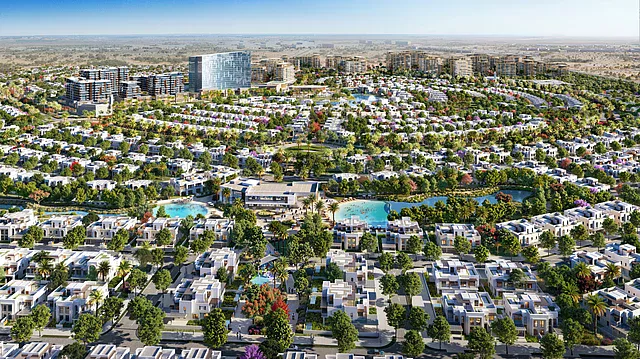
    Dubai South Properties, the real estate development arm of Dubai South, confirmed the appointment of Mohammed Abdulmohsin Al Kharafi & Sons LLC for the contract, which will cover several phases of HAYAT by Dubai South, a master-planned development spanning 10 million square feet.

    The project is located near Al Maktoum International Airport, adjacent to the Golf District, and is planned as an integrated community focused on balanced living and wellness-oriented amenities.

    HAYAT will include around 2,500 residential units, ranging from one- to five-bedroom layouts. The mix will feature townhouses, semi-detached and standalone villas, mansions, apartments and hotel apartments.

    Nabil Al Kindi, Group CEO of Dubai South, said:

    Since its launch in 2025, the project has witnessed strong demand and interest, driven by its unique positioning and wellness-inspired features. Through this development, we are focused on creating a well-balanced community that combines quality living, connectivity, and lifestyle-driven amenities, while reinforcing Dubai South’s position as a key destination for residents and investors.

    The homes are designed with a minimalist architectural style, offering privacy, flexibility and contemporary living spaces.

    The development will also include amenities such as parks, shaded walking trails, play areas, outdoor recreation spaces, fitness facilities, community pools and landscaped gardens. Plans also include lagoons, a scenic lake, a community mall and a retail boulevard with shops, cafés and essential services.

    The location offers access to major roads and economic hubs, including Al Maktoum International Airport, Sheikh Mohammed bin Zayed Road, Emirates Road, Jebel Ali Free Zone and Dubai South Free Zone.

    Construction is scheduled to begin in the second quarter of 2026, with initial phases expected to be completed by 2028.

    Dubai South said it continues to expand its residential ecosystem with facilities including parks, sports courts, retail outlets, a 50,000-square-foot hypermarket, a mosque, a petrol station, and a public bus route linking to the Expo Metro station. The area also includes a GEMS Founders School, and a 200,000-square-foot mall is under development.

    The Dh2 billion HAYAT project adds to Dubai’s expanding residential pipeline as the emirate continues to attract investor interest. Earlier in March, Futura EDGE launched Oak Yard Residences in JVC, while BEYOND Developments unveiled an 8 million sq ft masterplan at Dubai Maritime City, reflecting the sustained momentum across multiple districts.

  • DMCC Unveils 600-Metre Tower for Uptown District Phase 3

    DMCC Unveils 600-Metre Tower for Uptown District Phase 3

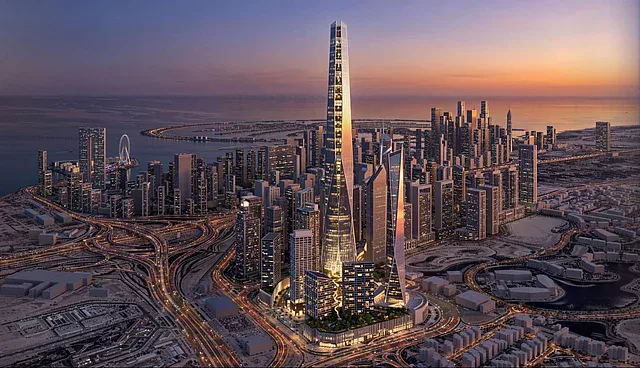
    The proposed megatall tower represents the latest expansion of DMCC’s strategic development in Dubai’s southern corridor, aligning with the emirate’s broader infrastructure transformation centered on Al Maktoum International Airport.

    Phase 1 of the Uptown District delivered the 340-metre Uptown Tower and central plaza. Phase 2, comprising two Grade A office towers and two residential towers, is under construction with completion scheduled for late 2027 and early 2028.

    Strategic positioning around future aviation hub

    Ahmed Bin Sulayem, Executive Chairman and Chief Executive Officer of DMCC, emphasized that the development responds to tangible market demand rather than speculative construction.

    “We build to meet the clear, growing requirements of a global trade community that is outgrowing its current footprint. The decision to develop the world’s largest airport in the southern corridor has broadened Dubai’s economic centre of gravity. Uptown District is the strategic anchor of this corridor.”

    The reference to structured capital allocation aligns with broader market trends as institutional investors prioritize strategic positioning over short-term gains.

    According to DMCC, approximately 50% of the tower’s space will be allocated to Grade A offices designed for multinational companies consolidating regional operations. The development will also include a luxury hotel operated by an international hospitality brand and high-end residential units.

    Smart infrastructure and connectivity

    The tower will incorporate smart-building systems and sustainability features, with direct integration to the Dubai Metro via a climate-controlled link bridge. Road infrastructure upgrades, including flyover access to Sheikh Zayed Road, are planned to support increased traffic capacity.

    DMCC stated the project targets continued demand from high-net-worth individuals relocating to Dubai, a trend reflected in recent market data showing sustained buyer interest across premium segments.

    The tower will feature a public viewing deck intended to attract visitors and serve as a vertical landmark for the district.

    Financial backing and market context

    DMCC confirmed that several major banks have expressed interest in partnering on the development, though specific financial details and timelines were not disclosed.

    Bin Sulayem described the development as part of creating “a sophisticated ecosystem where commerce and lifestyle are inextricably linked,” positioning the megatall tower as the district’s vertical anchor.

    The announcement comes as Dubai’s commercial property sector recorded Dh17.1 billion in sales during early 2026, with limited Grade A office supply in core business districts driving investors and corporates to secure prime space amid occupancy rates exceeding 95%.

    The planned expansion of Al Maktoum International Airport, set to accommodate 260 million passengers and 12 million tonnes of cargo annually, is reshaping development patterns across Dubai’s southern districts and reinforcing the strategic value of projects like Uptown District.