Tag: Abu Dhabi property

  • ADIB and DAMAC Launch Home Financing Plan with 85% Loan-to-Value

    Abu Dhabi Islamic Bank (ADIB) and UAE real estate developer DAMAC Properties have unveiled a landmark financing solution designed to lower the barriers to homeownership for individuals and families across the Emirates.

    The comprehensive plan provides DAMAC customers with financing of up to 85 percent of the property value on handover, along with subvention equivalent to finance profit charges for up to six months. The offering also waives property valuation fees and includes complimentary property takaful (Shariah-compliant insurance), significantly reducing upfront costs for buyers.

    “True leadership is about anticipating the needs of the people you serve to meet aspiration with opportunity,” said Amira Sajwani, Managing Director of DAMAC Properties. “Through our collaboration with ADIB, we are making homeownership simpler and more affordable to individuals and families. In a world of rapid change, the dream of owning a home should be a constant, so we will continue to build pathways to stability and prosperity to support families in finding a place to call their own.”

    The partnership reflects a shared vision to enhance the homeownership experience and provide flexible financing solutions that support the sustainable growth of the UAE’s real estate sector. It also underscores both parties’ commitment to expanding homeownership opportunities and supporting the long-term stability of residents.

    Amit Malhotra, Global Head of Retail at Abu Dhabi Islamic Bank, described the partnership as “a clear demonstration of ADIB’s commitment to revolutionizing the customer experience as part of its vision for 2035.” He noted that by combining strategic collaborations with leading solutions, such as the bank’s new digital onboarding journey launched in February that reduced home finance application times from days to minutes, ADIB is making its vision of becoming the world’s most innovative Islamic bank a reality.

    The initiative arrives as the UAE removes minimum property value thresholds for residency visas, further opening the market to a broader pool of investors and first-time buyers. Recent data shows that property buyers continue to show strong intent despite expectations of price corrections, with 68% of active seekers planning to purchase within six months.

    The collaboration positions both institutions at the forefront of efforts to support residential ownership in line with the advanced position the UAE real estate market has achieved. By combining high loan-to-value ratios with reduced fees and insurance coverage, the plan addresses key financial obstacles that have traditionally hindered homeownership for many residents.

  • Dubai Property Conversions Triple After Ceasefire Announcement

    Dubai Property Conversions Triple After Ceasefire Announcement

    Dubai’s real estate sector is experiencing a sharp rebound in buyer activity following the ceasefire announcement, with Sobha Realty witnessing customer conversions increase threefold compared to the period before tensions subsided.

    Francis Alfred, managing director of Sobha Realty, told Khaleej Times on April 19, 2026, that the recovery has been immediate and decisive.

    “People who were waiting on the sidelines are beginning to return. International buyers are also coming back,” Alfred said, adding that long-term investors in Dubai remain focused on the emirate’s future prospects rather than short-term geopolitical events.

    The developer, which has delivered 13 master communities in Dubai, is now expanding into Abu Dhabi with its first major project in the capital, bringing the same expertise and customer-focused approach that has defined its operations in Dubai.

    “We have gained deep insights into what customers need and how to deliver high-quality products. We are taking that expertise into Abu Dhabi,” Alfred explained, confirming that the company plans further expansion beyond its debut development in the emirate.

    Quality Over Discounts

    Sobha Realty is maintaining its focus on product quality rather than offering deep discounts to stimulate demand. Alfred emphasized that the company believes in preserving intrinsic value through disciplined pricing.

    “We believe a quality product has intrinsic value. We are not going to discount our projects in a way that reduces that value,” he stated.

    Instead, the developer may offer limited incentives such as support with registration costs while maintaining overall pricing discipline.

    The company’s financial position remains robust, supported by a large land bank, infrastructure assets, and a multi-year revenue backlog from previous sales. Construction funding is largely covered through escrow accounts and customer collections, reducing reliance on additional borrowing.

    “The land is already paid for, and most construction is funded through escrow accounts. We do not foresee any serious requirement for additional funding at this stage,” Alfred confirmed.

    Market Maturity and Resilience

    Alfred noted that the current environment is likely to widen the gap between established developers with proven track records and smaller players with weaker financial foundations. Buyers are increasingly choosing companies with strong reputations and the ability to maintain quality standards.

    “Customers know that trusted developers will deliver the same quality product without compromise,” he said.

    Comparing the current situation with the Covid-19 pandemic, Alfred highlighted that today’s challenges are regional rather than global, meaning the impact on the UAE market should be more contained. He expects the market to return quickly to its previous growth trajectory without experiencing a sharp correction or speculative rally.

    “The UAE property market is now far more mature and resilient. It is not jumping up and down because of short-term events,” Alfred concluded.

    The comments align with broader market trends, as Dubai’s property market staged a sharp recovery in recent weeks despite ongoing volatility in financial markets. The sector recorded Dh32.2 billion in rental contracts during the first quarter of 2026, reflecting sustained stability across residential segments.

  • Modon Unveils Final Phase of Tara Park on Reem Island

    Modon Unveils Final Phase of Tara Park on Reem Island

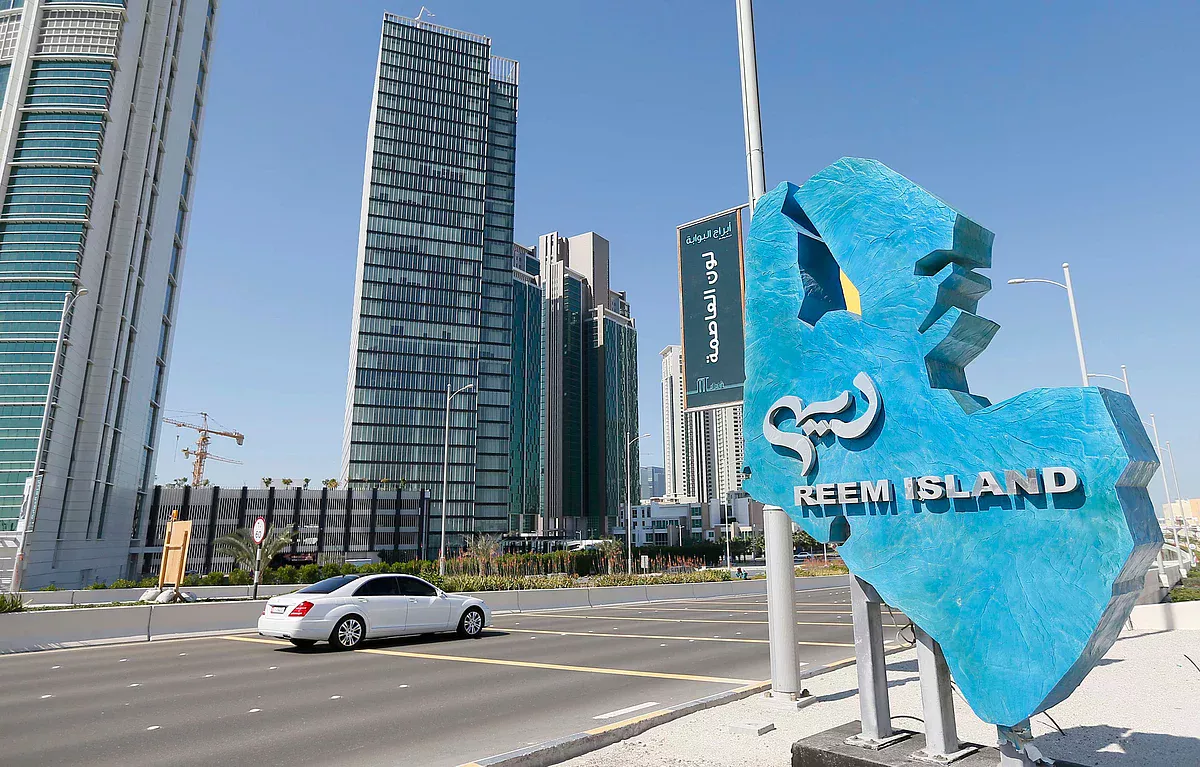
    The final phase of Tara Park marks the completion of Modon’s residential project on one of Abu Dhabi’s most connected islands. Strategically positioned near two main access bridges, the development offers direct connectivity to Abu Dhabi Global Market (ADGM), major retail destinations, and leading educational institutions.

    Modon has structured the payment plan to broaden access: buyers pay 5% in 2026, followed by 10% annually from 2027 to 2029, with the remaining 60% due on completion. The approach is designed to appeal to first-time buyers and long-term investors seeking entry into Abu Dhabi’s freehold market.

    The project comprises six residential towers connected by a shared podium housing nurseries, co-working spaces, and retail outlets. Upon completion, Tara Park will deliver 834 apartments ranging from one- to three-bedroom units, all available to buyers of any nationality.

    Wellness-Focused Design

    Residents will have access to a 527-metre running and walking track, fitness centres, yoga studios, swimming pools, and padel courts. The amenities are intended to support active lifestyles while fostering interaction within the community.

    The interconnected podium acts as a social hub, creating a self-contained environment that balances convenience with long-term liveability. The design reflects a broader shift in Abu Dhabi toward integrated residential communities that combine connectivity, comfort, and investment value.

    The launch follows strong demand for the initial phases and aligns with sustained momentum across Abu Dhabi’s property market. Abu Dhabi’s Q1 2026 property sales surged 160%, underscoring the capital’s appeal to both local and international buyers.

    Tara Park’s positioning on Reem Island reinforces its status as a central residential address in a city that continues to expand its housing infrastructure. The final phase delivery represents the culmination of a project designed for diverse demographics, including young professionals, families, and investors seeking quality residential assets in the UAE capital.

  • Abu Dhabi Property Market Records $1.16 Billion Weekly Sales

    Abu Dhabi Property Market Records $1.16 Billion Weekly Sales

    The emirate’s real estate sector maintained strong performance in early March, with a villa in Hidd Al Saadiyat selling for Dh88 million, marking the highest ready property transaction of the week, according to Abu Dhabi Real Estate Centre (Adrec) data released March 10, 2026.

    A duplex at Four Seasons Private Residences on Saadiyat Island fetched Dh68 million, representing the week’s top off-plan sale. Al Reem Island alone recorded 115 transactions valued at Dh189 million, underscoring sustained demand across multiple segments.

    The weekly figures reinforce Abu Dhabi’s growth trajectory following exceptional 2025 performance. Total transaction volumes reached approximately 22,400 deals last year, up 55% year-on-year, while aggregate sales value climbed to Dh73.2 billion.

    “Overall, Abu Dhabi’s residential market enters 2026 from a position of strength, supported by disciplined supply, strong investor confidence, robust demand drivers, and a supportive macroeconomic backdrop,” according to Cavendish Maxwell.

    Apartments dominated 2025 activity, accounting for 66.1% of transactions, while villas and townhouses recorded strong growth driven by families and high-net-worth individuals seeking larger living spaces.

    Residential stock expanded with approximately 7,400 units completed in 2025, bringing total supply to around 315,000 units. While 15,900 units are projected for 2026 completion, actual deliveries are likely to range between 6,500-9,000 units based on recent handover trends.

    Pricing momentum remained robust across both sales and rental markets. Apartment sales prices increased 15.1% year-on-year, while villa prices rose 12.2%. Rental growth showed apartment rates up 12.5% and villa rents climbing 5.5%, with elevated rental levels reinforcing sales demand as tenants increasingly view homeownership as a cost-effective long-term option.

    The market’s resilience mirrors trends across the UAE, where Dubai recorded sustained momentum despite geopolitical headwinds. Abu Dhabi’s strong fundamentals entering 2026 position the emirate for continued growth, with sales prices and rental rates expected to record further increases in the near term, though growth pace will vary across communities as new supply enters the market.

    The market is expected to remain resilient throughout 2026, supported by measured supply delivery that prevents near-term imbalances while maintaining pricing strength across prime communities.

  • Dubai Real Estate Defies Regional Tensions with $100M Deals

    Dubai Real Estate Defies Regional Tensions with $100M Deals

    The UAE property market is operating normally despite heightened geopolitical tensions, with real estate activity continuing across the country and developers maintaining scheduled project launches.

    A $100 million-plus property transaction was recorded in Dubai this week, demonstrating sustained investor appetite even as some international buyers pause purchase decisions to monitor regional developments.

    Broker Ben Crompton confirmed that transactions already underway are progressing as planned.

    Buyers who already signed MOUs are proceeding as normal, and some deals are still being negotiated. Most buyers are in a ‘wait-and-see’ mode as you can imagine.

    He noted that property prices typically decline only during periods of forced selling triggered by widespread job losses or sharp interest rate increases—conditions that have not materialized in the UAE.

    International Investors Monitor Closely

    International investors, who represent a significant share of UAE property buyers, are watching the situation more closely than long-term residents, according to market participants.

    A second broker, speaking anonymously, said a major project scheduled to launch next week is proceeding as planned.

    They are not postponing launches because of the current situation.

    The broker emphasized that Abu Dhabi’s market is anchored by families with deep roots in the emirate.

    A large proportion of residents here are families who have been in the UAE for many years. They consider this their home and they are planning long-term—with schools, jobs and their families here—so they still want to buy property.

    However, some foreign buyers from the UK, US, and Germany have become more cautious, the broker noted.

    Opportunity for Strategic Investors

    Market professionals indicated that short-term uncertainty can create opportunities for cash investors. When sellers exit quickly and reduce prices, those units tend to be acquired rapidly by investors with available liquidity.

    The broker cited examples of properties valued at Dh1.3 million being negotiated at Dh1 million for quick transactions, with investors planning to hold until market conditions stabilize.

    Real estate is a slow and stable market. It doesn’t react like the stock market where prices can suddenly fall by 10 per cent in a day. For significant price changes to happen, a large number of people would need to move in the same direction. Right now, the majority still believe in the UAE and its government, so the market remains stable.

    Developers Emphasize Continuity

    On March 6, 2026, Emaar Properties confirmed normal operations across all assets. Earlier, Aldar Properties stated that all its residential communities, retail destinations, commercial offices, hotels, schools, and development sites continue to operate without interruption.

    Aldar highlighted its strong financial position with more than Dh30 billion in available liquidity, including Dh14.2 billion in free cash and Dh16.4 billion in undrawn bank facilities.

    Developers have not adjusted launch pricing, but some are offering more flexible payment plans—such as 35-65 or 40-60 structures instead of 50-50—to reduce upfront costs and maintain investor confidence.

    Economic Fundamentals Remain Robust

    Crompton emphasized that broader economic conditions supporting the property market remain strong.

    The economic fundamentals are very strong. Capital hates uncertainty more than anything. The sooner there is long-term clarity, the sooner investors will feel comfortable committing again.

    The UAE real estate sector has been supported by strong population growth, international investment, and economic expansion. Dubai’s population has surpassed four million, driving unprecedented housing demand as the emirate’s property market recorded nearly Dh900 billion in transactions during 2025.

    Industry professionals point to continued long-term demand across key residential hubs including Reem Island, Yas Island, and Saadiyat Island, where new infrastructure and lifestyle developments are expected to support property values over time.

    The broker concluded:

    There is still strong belief in the long-term prospects of the market. Real estate in the UAE has historically moved upward over the long term, even if there are short-term fluctuations.

  • UAE to Add 390,000 New Homes by 2030

    UAE to Add 390,000 New Homes by 2030

    Dubai will account for the majority of this pipeline, with apartment-led mixed-use communities continuing to dominate new launches, while Abu Dhabi focuses more on premium villas and waterfront neighbourhoods.

    Across the broader Gulf region, residential supply is expected to increase from approximately 6.26 million units in 2025 to 7.28 million units by 2030, with Saudi Arabia and the UAE accounting for the bulk of new supply. Saudi Arabia’s residential stock is estimated to grow by 499,000 units during this period, reaching 3.45 million by 2030, driven by giga projects in Riyadh and Jeddah.

    “Dubai has led this transformation, establishing itself as a global metropolis fuelled by foreign ownership, massive infrastructure investments and ambitious strategies,” said Sameena Ahmad, Managing Director, Alpen Capital.

    According to Ahmad, the region’s real estate industry is expected to witness steady supply across residential, commercial, hospitality and retail segments over the next few years, largely supported by continued government spending and investments in world-class infrastructure.

    What This Means for Rental Prices

    A supply increase of this scale typically shifts the balance between landlords and tenants. The report stated that supply growth in the GCC is becoming more “structured” and increasingly aligned with demand rather than speculative expansion, which could reduce the risk of sharp corrections.

    However, with nearly 390,000 additional homes entering the UAE market over five years, rental growth is likely to moderate if deliveries outpace new household formation. The study highlights that population growth, expatriate inflows and urbanisation remain strong demand drivers.

    The UAE’s population has surpassed 11 million in 2025, according to Worldometer, with continued inflow of expatriates and high-net-worth individuals supporting both mid-tier and luxury segments. If those inflows remain steady, the additional supply may ease pressure without triggering a widespread rent correction. But in sub-markets where deliveries cluster heavily, tenants could gain greater negotiating power.

    Property Price Outlook

    The report from Alpen stated that supply across the GCC is entering a more disciplined phase, with greater emphasis on mixed-use developments, asset quality and long-term livability.

    “Over the coming years, we expect supply–demand dynamics across the GCC to become more balanced. Large-scale developments are being phased more strategically, with a clear emphasis on quality, mixed-use formats, and demand-led execution,” said Sharmin Karanjia, Executive Director, Alpen Capital.

    Karanjia noted that development trends are shifting towards master-planned, sustainable, and technology-enabled communities focused on long-term liveability. While certain sub-markets may experience short-term oversupply pressures, well-located and high-quality projects are likely to continue seeing strong absorption and pricing support.

    “As major development zones reach operational maturity, investors will have a broad base of high-quality assets maintaining interest from both regional and international buyers,” Sharmin added.

    Future Development Drivers

    High disposable incomes, steady population growth, expatriate inflows, and a favourable tax environment will remain key demand drivers across the region. Future development pipelines will feature mixed-use projects, enhanced asset quality, sustainability, and the integration of residential, commercial and lifestyle components.

    In the commercial segment, office supply across the GCC is estimated to expand from 33.3 million sqm in 2025 to 42.4 million sqm by 2030, with over 65 per cent of new supply delivered in Saudi Arabia and the UAE, according to the existing pipeline.

    The findings align with broader market trends, as GCC real estate markets sustain growth momentum driven by infrastructure investment and easing monetary conditions. Meanwhile, property buyers shift to value-driven approaches, prioritizing developer credibility and rental yields over speculative gains.