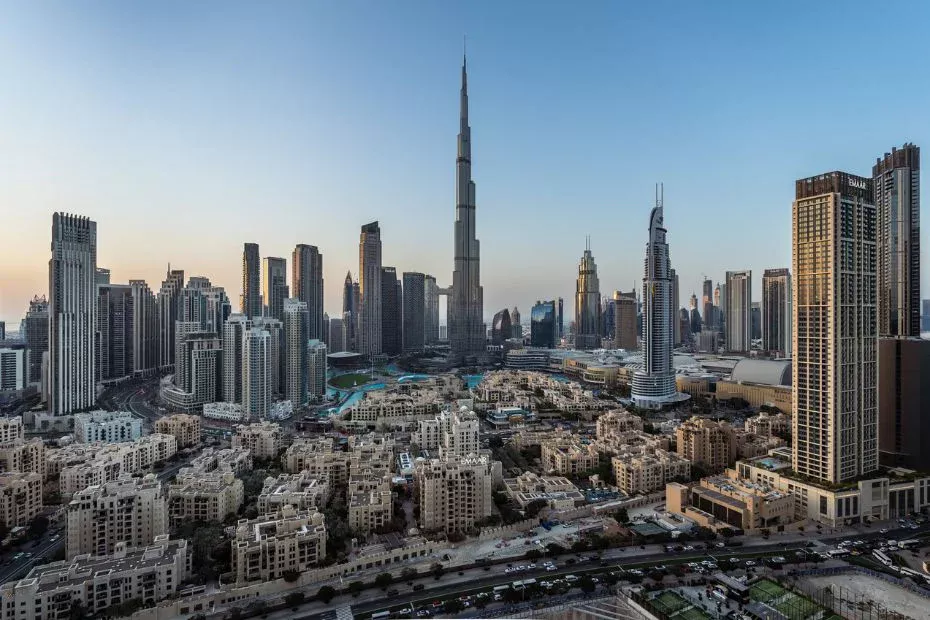
The Gulf region is undergoing one of the world’s most ambitious infrastructure investment cycles, but according to Campbell Gray, CEO of AtkinsRéalis Middle East, the defining characteristic is no longer magnitude—it’s maturity.
Over the past five years, the region has transitioned from delivering landmark projects to constructing integrated systems designed to support long-term economic transformation. Saudi Arabia’s giga projects exemplify this evolution, redefining city-making rather than simply expanding it.
“In recent years, the region has shifted from delivering individual projects to building fully integrated systems and approaches that support long-term economic transformation. National visions now provide a clear sense of direction, aligning investment, delivery models, and expected outcomes,”
Gray explains.
From Standalone Projects to Urban Ecosystems
Giga projects across Saudi Arabia and the UAE are now conceived as interconnected ecosystems, raising expectations for integration, governance, and delivery discipline. Sustainability has become a baseline requirement, and digital tools now anchor how risk, sequencing, and performance are managed.
“The key difference now is the necessity for clearly defined brief and basis of design leading to a development investment that provides a demonstrable and tangible return,”
Gray says.
This emphasis on measurable outcomes marks a departure from earlier rapid-growth phases. Governments and developers now prioritize front-end clarity, lifecycle performance, and return on investment over project completion timelines alone.
The region’s accelerated localization agenda is reshaping procurement and supply chains, creating clearer pathways for national participation. These changes signal a more mature development environment increasingly focused on measurable results rather than activity alone.
Redefining City-Making in Saudi Arabia
While Saudi Arabia’s giga projects are frequently discussed in terms of scale, Gray argues their real impact lies in how they are redefining urban planning fundamentals.
“These programmes reflect a deeper understanding that cities are dynamic systems that have evolved over decades. Planning now begins with how people will move, live, work, and interact with their environment, as well as how places will perform socially and environmentally over time,”
he notes.
This systemic approach influences mixed-use design, mobility integration, and long-term asset stewardship. Development companies are increasingly structured as long-term custodians rather than short-term delivery entities.
Digital integration has become essential, enabling thousands of decisions and interfaces to be managed with clarity and consistency. Once operational, these cities rely on real-time data to optimize energy use, transport, and public services, creating urban environments that adapt to changing needs and continue generating value long after construction completes.
Industrialized construction methods, local manufacturing investment, and performance-driven commercial frameworks are becoming standard delivery model features.
Economic Diversification Drives New Demands
Economic diversification across the Gulf is creating new asset classes, from cultural districts to innovation hubs, reshaping demand for engineering and advisory services.
“Diversification is driving a clear shift toward integrated and multidisciplinary thinking. Cultural districts, innovation hubs and creative clusters need planning, engineering, mobility, landscape, digital and ESG considerations to be shaped as a single coherent strategy rather than separate workstreams,”
Gray says.
He highlights the growing importance of upstream advisory work, noting that clients now require technical advisory expertise upfront to ensure vision can be matched in delivery around return on investment, quality, cost, and program.
Saudi Arabia’s SAR81 billion commitment to cultural infrastructure underscores this shift, with culture targeted to contribute approximately 3% to GDP. Consultants are increasingly expected to stay engaged across the full asset lifecycle, connecting policy ambition with delivery discipline.
Sustainability as Baseline Expectation
Sustainability in the Gulf is no longer a differentiator—it’s a baseline expectation. However, the definition has evolved significantly.
“Sustainability is now viewed through the lens of long-term resilience. Clients want assets that reduce emissions, manage climate risks, and maintain strong performance over many decades,”
Gray explains.
Whole-life carbon analysis, circularity, water efficiency, and extreme heat adaptation are now embedded in project briefs from the outset. Nature-based solutions are gaining traction alongside engineered resilience measures.
Importantly, performance is increasingly evaluated during operation, not just at handover, showing how deeply sustainability is now embedded in everyday decision-making.
Speed with Discipline
While the Gulf remains known for pace, Gray believes the narrative has shifted from speed at any cost to speed with discipline.
“The region has moved beyond the mentality of building fast at any cost. The prevailing approach now is to build fast while safeguarding long-term value,”
he says.
Front-end planning, scenario modeling, and closer contractor collaboration are becoming essential. A key development is much closer working relationships with contractors and clients, adopting a joint problem-solving approach.
However, challenges remain. Governments are increasingly assessing projects based on whole-life value rather than upfront cost or delivery timelines alone, though Gray notes this approach is still immature, and lowest cost often still wins, which rarely creates value for money.
Digital assurance tools are playing a crucial role in managing complexity at scale, offering real-time risk visibility while maintaining quality and resilience.
Digital Tools Reshape Decision-Making
Across the built environment, digital technology is fundamentally reshaping how decisions are made and assets are managed. Digital twins and advanced modeling enable teams to test scenarios and understand impacts well before construction begins.
AI-enabled delivery tools are enhancing predictability and productivity, while integrated data platforms allow urban systems—energy, mobility, and public services—to be managed proactively.
This shift from project-level decision-making to system-level planning is creating more resilient, efficient cities and enabling governments to allocate resources with far greater confidence.
Setting Regional Benchmarks
Gulf cities continue to draw on global best practices, particularly in transit-oriented development and low-carbon planning. However, the region is increasingly setting its own benchmarks through the pace and scale of implementation.
“The focus has shifted from iconic individual assets to integrated citywide strategies that connect land use, mobility, climate resilience, and quality of life,”
Gray notes.
Major waterfront regeneration projects, heritage districts, and large-scale public realm initiatives demonstrate how global expertise can be adapted to local ambition, similar to emerging master-planned developments across the region.
Future Focus: Systems Over Projects
Looking ahead, Gray believes the next phase of growth will center on systems that support diversified, knowledge-based economies.
Green and resilient infrastructure will be essential as populations expand and climate pressures intensify. Social infrastructure and mixed-use districts will play central roles in developing talent and strengthening quality of life.
Mass transit will play a defining role. With rapid population growth, how people move around cities will significantly impact how they work, play, and live—a fundamental consideration for regional developers. For the first time, commuter times will play a much bigger part in where and how residents spend their time.
The emphasis on logistics and industrial infrastructure will reinforce the Gulf’s role as a global trade and innovation hub, while experience-led cultural destinations emerge as critical pillars of diversification.
Across all sectors, a consistent theme is emerging: the focus will be on long-term performance, integration, and value creation rather than short-term delivery milestones, reflecting broader trends in GCC real estate market evolution.
For the Gulf’s built environment, scale remains impressive. But maturity, not magnitude, is increasingly the defining characteristic of this infrastructure cycle.