Tag: UAE stability

  • Dubai Property Market Has Nothing to Fear, Says Emaar Founder

    Dubai Property Market Has Nothing to Fear, Says Emaar Founder

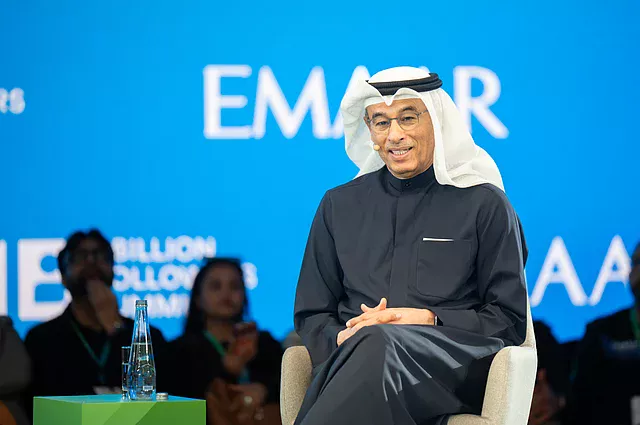
    The UAE’s real estate sector continues to demonstrate exceptional confidence amid geopolitical uncertainty, according to one of its most prominent figures. Mohamed Alabbar, CEO and founder of Emaar Properties, one of the world’s largest real estate developers, expressed absolute certainty that Dubai’s property market will weather both regional tensions and the wave of new supply expected in 2026 and 2027.

    “We are not here for the short run. We are here for a long, long time to do business,” Alabbar said in a recent interview with CNBC. He characterized the incoming supply as a natural feature of a market built on decade-long ambitions rather than short-term speculation. While acknowledging that a brief cooling-off period is possible, he dismissed concerns about structural problems ahead.

    Market Sentiment Remains Firm

    To illustrate current confidence levels, Alabbar shared a telling anecdote from his personal property search. Currently looking for a seafront apartment for his own use, he noted that after two days of viewing, not a single seller was willing to negotiate on price.

    “Nobody wants to budge. Nobody wants to give a discount. That’s a true situation.”

    The observation serves as a quiet but powerful signal of where sentiment stands on the ground, reflecting sustained demand despite external pressures.

    Structural Resilience Built on Prudent Lending

    Alabbar highlighted a fundamental characteristic that distinguishes Dubai from other global property markets: its real estate sector is not built on bank borrowing. Lending to buyers remains tightly restricted, insulating the market from credit-driven collapses seen elsewhere during financial crises.

    “Our real estate business is not built on bank borrowing. Bank borrowing is very restricted in this market,” he explained, adding that while consumer confidence may experience temporary dips, the UAE’s policy environment has a proven track record of restoring it quickly.

    This assessment aligns with recent market performance. Dubai real estate continues processing deals exceeding $100 million, with developers reporting uninterrupted operations despite some buyers adopting a cautious stance.

    Long-Term Capital Recognizes Stability

    On the broader question of geopolitical uncertainty and Dubai’s reputation as a refuge for global wealth, Alabbar expressed unwavering confidence. He argued that investors who study the trajectory of UAE policy over years and decades will consistently find the same qualities: consistency, sustainability, wisdom, and stability.

    “A country like this, with all these principles and stable leadership and the safety, it has shown that it can deliver,” he stated.

    Alabbar reserved particular admiration for the UAE’s leadership and its capacity for long-range strategic planning. While acknowledging he is not versed in military affairs, he said he was genuinely moved by the country’s demonstrated capabilities during recent tensions.

    “People with true capital understand this, they appreciate this, and they will double down on investing.”

    The sentiment echoes statements made earlier this week, when Alabbar noted that recent attacks have ultimately reinforced confidence in the country’s stability, pointing to decades of consistent policy and institutional strength.

    Market Context and Performance

    Alabbar’s confidence comes as Dubai’s property sector maintains strong fundamentals. The emirate’s real estate market recorded 874 transactions worth AED2.46 billion on March 2, 2026, demonstrating sustained investor confidence as economic fundamentals continue to outweigh short-term geopolitical sentiment.

    The debt-free structure of Dubai’s real estate market, combined with prudent lending restrictions and long-term government planning, positions the emirate to absorb new supply without the leverage-driven volatility that has characterized property cycles in other global cities. As regional tensions persist, Dubai’s market continues to attract capital seeking stability, transparency, and proven governance frameworks.

  • Alabbar: UAE Proves Safety Credentials Amid Regional Tensions

    Alabbar: UAE Proves Safety Credentials Amid Regional Tensions

    Speaking in a CNBC interview that aired on Friday, Alabbar said the UAE’s ability to intercept incoming threats has underscored its reputation as a global safe haven.

    The past days have proven that we are really a safe country.

    The developer emphasized that the UAE’s long-term policy consistency and stability have been built over decades and cannot easily be undermined.

    “If you were to look and study the trajectory of UAE policies, you will see consistency, you will see sustainability, you will see wisdom, you will see stability — all for one purpose: to create an incredible life for the people who live here,” he said. “You don’t build this over one year, two years: it took us over 40 years for the leadership to establish this.”

    Alabbar added that recent developments are unlikely to weaken investor confidence in the UAE, noting that Dubai’s property market continues to attract strong interest.

    “Success does not happen by luck,” he said. “Because of years of great policies, stability, competence and fairness that exist in this country, that really have pushed tremendous belief in this country and what the future holds.”

    Alabbar also dismissed concerns about a major correction in Dubai’s property market, despite regional tensions. “I know my business well. I know the banking system. I know the business environment,” he said. “I have no concerns.”

    He pushed back against predictions made by global ratings agency Fitch in 2025 about a 15% property price correction, calling the forecast “very unrealistic” based on his analysis of business data.

    High Interception Rate Demonstrates Defense Capability

    Alabbar’s comments come as figures released by the UAE Ministry of Defence on March 5 show that the country’s air defence systems have intercepted the vast majority of missiles and drones launched toward the UAE since the escalation began.

    According to the ministry:

    • 1,072 drones were detected, with 1,001 intercepted
    • 196 ballistic missiles were detected, with 181 intercepted
    • Eight cruise missiles were detected, with all eight intercepted

    A total of 71 drones impacted on land, while two ballistic missiles struck inside the country and 13 fell into the sea, according to the ministry’s latest update. The figures highlight the scale of the attacks but also the effectiveness of the UAE’s layered air defence systems.

    Meanwhile, the intensity of strikes across the region appears to be declining. Iranian ballistic missile launches were down 90% from the first day of fighting, while drone attacks have fallen 83%, according to reporting by The Wall Street Journal on Friday.

    Institutional Strength Reinforces Investor Confidence

    Analysts say the UAE’s response to the crisis may ultimately reinforce investor confidence. Simon Wolfe, co-founder and managing partner of Marlow Global, said the country’s institutions and communications have remained strong despite the scale of the attacks.

    “In the short term, there is a physical reality here that optimism cannot shortcut. Airports, ports and energy infrastructure will take weeks to come back online, and the disruption to trade flows and aviation connectivity is real and immediate,” Wolfe told Gulf Business this week.

    However, Wolfe said the UAE’s response demonstrates the strategic qualities that attracted global investors to the country in the first place.

    “Look at what the UAE has actually done in the face of an extraordinary assault: its institutions have held, its government has communicated with clarity, and it has called for negotiated resolution within days of being targeted,” he said. “And perhaps most importantly, the air defences have, in large part, held. This demonstrates exactly the kind of strategic maturity that made it attractive to global capital in the first place.”

    The UAE real estate sector has demonstrated operational resilience in early March 2026, with Dubai recording sustained transaction activity despite heightened regional tensions.