Tag: Savills Middle East

  • Sharjah Commercial Property Market Posts Strong Q1 2026 Performance

    Sharjah Commercial Property Market Posts Strong Q1 2026 Performance

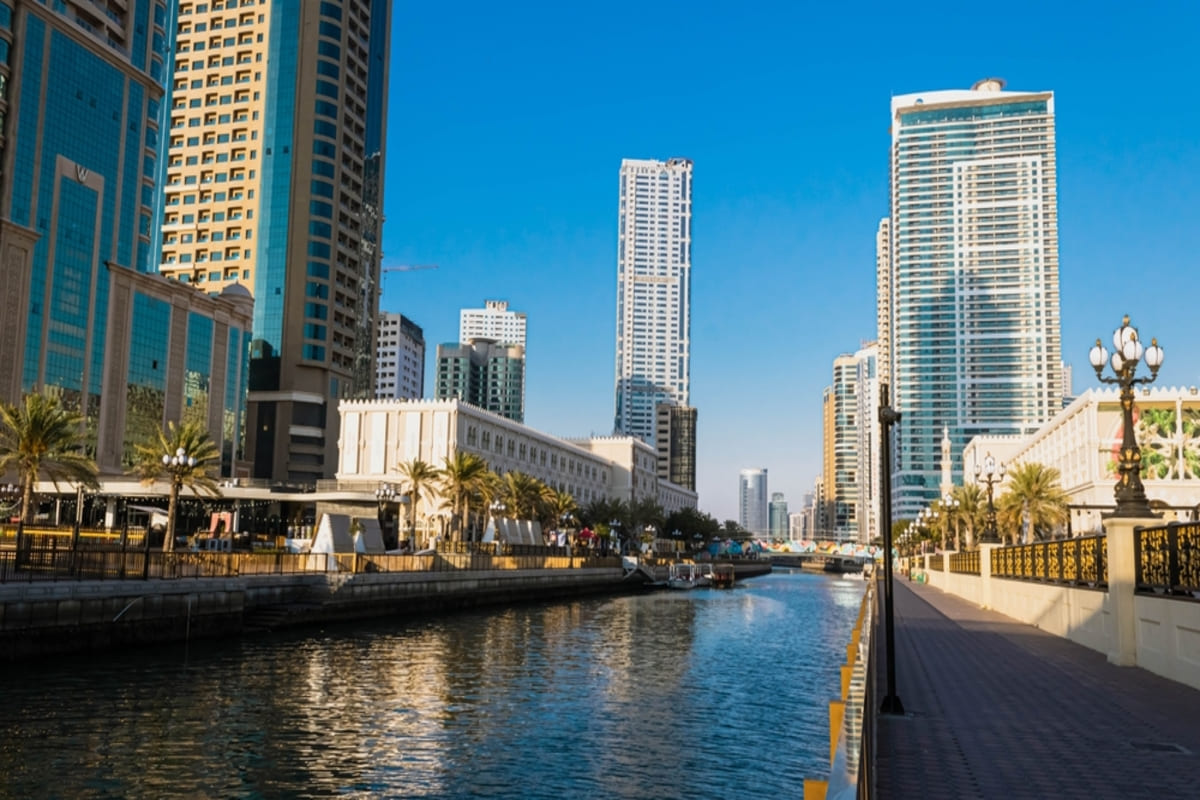
    Sharjah’s commercial real estate sector recorded strong gains during the first quarter of 2026, driven by rising demand for quality office space, sustained industrial activity, and growing investor confidence, according to global real estate advisor Savills.

    The emirate is evolving from a cost-driven alternative into a more mature, demand-led commercial market, steered by improving infrastructure, expanding logistics connectivity, and a growing supply of higher-quality developments.

    Premium Office Space Commands New Pricing Power

    Occupancy across prime Grade A office buildings has reached approximately 85 percent, with these assets now achieving rental premiums of three to four times over older Grade C stock. Prime office rents in Sharjah remain 50 to 60 percent lower than comparable Dubai locations, yet the gap is narrowing as quality improves.

    Savills forecasts prime office rental growth of between 5 to 10 percent across 2026, supported by constrained near-term Grade A supply.

    Ongoing cost pressures in Dubai have led to spillover demand into Sharjah. However, businesses are increasingly looking toward the emirate for its operational efficiency and connectivity in addition to its affordability.

    “The commercial market of Sharjah is entering a new phase of maturity defined by the quality of its offer rather than simple cost arbitrage. Occupiers across both the office and industrial sectors are making deliberate, long-term commitments to the emirate, drawn by improving specifications, strategic connectivity, and a competitive cost base,” said Shane Breen, Head of Sharjah & Northern Emirates at Savills Middle East.

    Industrial Sector Benefits from Supply Chain Shifts

    The industrial and logistics sector in Sharjah continues to benefit from broader structural shifts across global supply chains as businesses prioritize resilience and decentralized logistics networks. Demand remains concentrated in key hubs such as Al Sajaa and along the E611 corridor, driven by third-party logistics operators, distributors, and light manufacturing occupiers.

    Industrial transaction values increased by 89 percent year-on-year to AED9.2 billion, reflecting rising investor confidence and strengthening land values. Emirates Industrial City recorded the strongest annual land value growth, doubling in value, followed by Al Qasimia City at 87.5 percent and Al Sajaa at 43.8 percent.

    Meanwhile, the industrial rental market in Sharjah recorded average rental growth of 61 percent year-on-year, with Emirates Industrial City and Al Sajaa among the strongest-performing locations.

    Strategic Cost Advantage Underpins Long-Term Appeal

    Looking ahead, Savills expects the commercial property market of Sharjah to maintain positive momentum through 2026. The emirate’s 30 to 50 percent cost advantage compared to Dubai and Abu Dhabi is expected to continue supporting long-term occupier and investor appeal.

    The performance aligns with broader momentum across the UAE’s real estate sector. Dubai’s property sector demonstrated exceptional resilience in Q1 2026, while Abu Dhabi property prices jumped 6.4% during the same period, underscoring sustained investor confidence across the region.
  • UAE Property Demand Holds Firm Despite Regional Uncertainty

    UAE Property Demand Holds Firm Despite Regional Uncertainty

    The UAE’s residential property market continues to demonstrate resilience amid regional geopolitical uncertainty, with underlying demand remaining intact as buyers adopt a more cautious and selective approach rather than withdrawing entirely.

    According to Savills Middle East’s latest investor sentiment survey, conducted among investors, end users, landlords, tenants and prospective residents, nearly 45% of respondents intend to purchase property in the next 12 months, while a further 32% remain undecided. The data points to decision-making delays rather than a fundamental loss of demand.

    “The data clearly shows that demand remains intact,” said Andrew Cummings, head of residential agency at Savills Middle East. “What we are seeing is a shift in behaviour rather than a drop in interest. Buyers are taking more time, becoming more selective and focusing on fundamentals such as location, quality and long-term value.”

    After several years of strong post-pandemic growth, the residential market is now moving into what Savills describes as a more balanced and mature phase. Transaction activity remains high by historical standards, supported by population growth, capital inflows and a strong development pipeline, but momentum has moderated in recent months as buyers take a more cautious approach.

    Importantly, the slowdown is not being driven by distress selling. More than 60% of existing property owners surveyed said they plan to hold or expand their portfolios over the next six months, with only around 4% considering selling. This lack of selling pressure has helped support prices across several segments, even as transaction volumes soften.

    “The absence of widespread selling pressure reflects continued confidence among existing property owners. As a result, the market is moving towards a more balanced and sustainable phase rather than experiencing any structural correction.”

    Pricing expectations, however, have moderated. More than 80% of respondents expect prices to either remain stable or soften over the next year, contributing to longer transaction timelines and increased negotiation, particularly in the apartment segment where supply is perceived to be higher. Savills noted that this has created a gap between buyer expectations and seller pricing, resulting in slower deal-making rather than outright price declines.

    Buyer preferences are also shifting notably. Around 60% of respondents expressed a preference for ready properties, compared with about 23% favouring off-plan homes, reflecting a growing emphasis on certainty around delivery, pricing and immediate usability.

    External factors are playing an increasingly important role in shaping sentiment. Regional and geopolitical uncertainty emerged as the single biggest barrier to market entry, outweighing traditional concerns such as pricing or financing. Even so, Savills said the survey showed little evidence of knee-jerk seller reactions.

    Looking ahead, the firm expects the market to continue adjusting in the near term, with softer transaction volumes and more deliberate deal-making. While secondary apartments may face greater pressure, villas and prime residential assets are expected to remain relatively resilient, supported by the UAE’s long-term fundamentals and population growth.

    The findings align with recent market data showing sustained activity across the emirate. Dubai’s property market has demonstrated resilience with little evidence of distressed deals, while April 2026 sales reached Dh48 billion across nearly 14,000 transactions despite early signs of price moderation.

  • Dubai Population Exceeds 4 Million as Property Transactions Near Dh900 Billion

    Dubai Population Exceeds 4 Million as Property Transactions Near Dh900 Billion

    Dubai added nearly 18,000 residents in a single month by the end of August 2025, marking a demographic milestone that is directly fueling demand across rental and ownership segments, according to research from Savills Middle East.

    The sustained population growth, driven by employment expansion, business relocation, and international migration, has translated into measurable market activity. Dubai Land Department data shows property sales reached more than Dh680 billion in 2025 across over 200,000 transactions, the strongest annual performance on record.

    Total real estate transaction value, including mortgages and gifts, climbed to approximately Dh919 billion, highlighting exceptional market liquidity and depth.

    “When Dubai adds close to 18,000 residents in a single month, it has an immediate impact on market activity. We see it in enquiry levels, viewing volumes, and the pace at which well-priced homes transact,” said Alec James Smith, Head of Residential Sales and Leasing at Savills Middle East.

    New residents are entering the market across multiple price points, from mid-income professionals seeking apartments near employment hubs to high-net-worth individuals targeting prime waterfront and villa communities.

    Record Quarter Reflects Sustained Confidence

    Market momentum strengthened significantly in the second half of 2025, with the fourth quarter recording the highest quarterly sales value ever, exceeding Dh187 billion. Three consecutive record months during that period reflected steady engagement from both investors and end users rather than short-term speculative activity.

    Dubai’s prime residential segment demonstrated particularly strong performance, with nearly 6,000 transactions above Dh10 million completed during the year. Limited supply in established prime locations combined with ongoing wealth migration has helped sustain both price and rental resilience.

    Savills noted that Dubai continued to outperform many global residential markets through 2025, supported by population growth, job creation, and sustained international demand.

    Financing Conditions Improve as Rates Ease

    Financing conditions have begun to improve following recent interest rate reductions by the UAE Central Bank, which are expected to gradually ease mortgage costs. According to Savills, improving affordability typically translates into stronger buyer engagement over subsequent quarters, particularly among end users who had delayed purchasing decisions.

    Lower interest rates also enhance the relative attractiveness of property investment in Dubai, where rental yields remain competitive compared with global markets.

    Infrastructure-Led Development Will Shape Next Phase

    Rapid population growth places increasing emphasis on aligning supply with demand across locations, price ranges, and infrastructure readiness.

    “Dubai crossing the four million population mark is a clear signal of the city’s global appeal and economic momentum. The next phase of the market will be shaped by disciplined supply, infrastructure-led development, and a continued focus on quality,” said Andrew Cummings, Head of Residential Agency at Savills Middle East.

    The emirate is planning for a population of nearly six million residents by 2040, requiring continued coordination between development activity and infrastructure expansion.

    Population expansion, easing financing conditions, and strong transaction activity continue to reinforce confidence in Dubai’s residential market as it enters 2026, with demographic fundamentals providing a sustainable foundation for ongoing growth across multiple segments.