Tag: rental market

  • Dubai Metro Expansion Could Boost Demand in JVC, Meydan and DSO

    Dubai Metro Expansion Could Boost Demand in JVC, Meydan and DSO

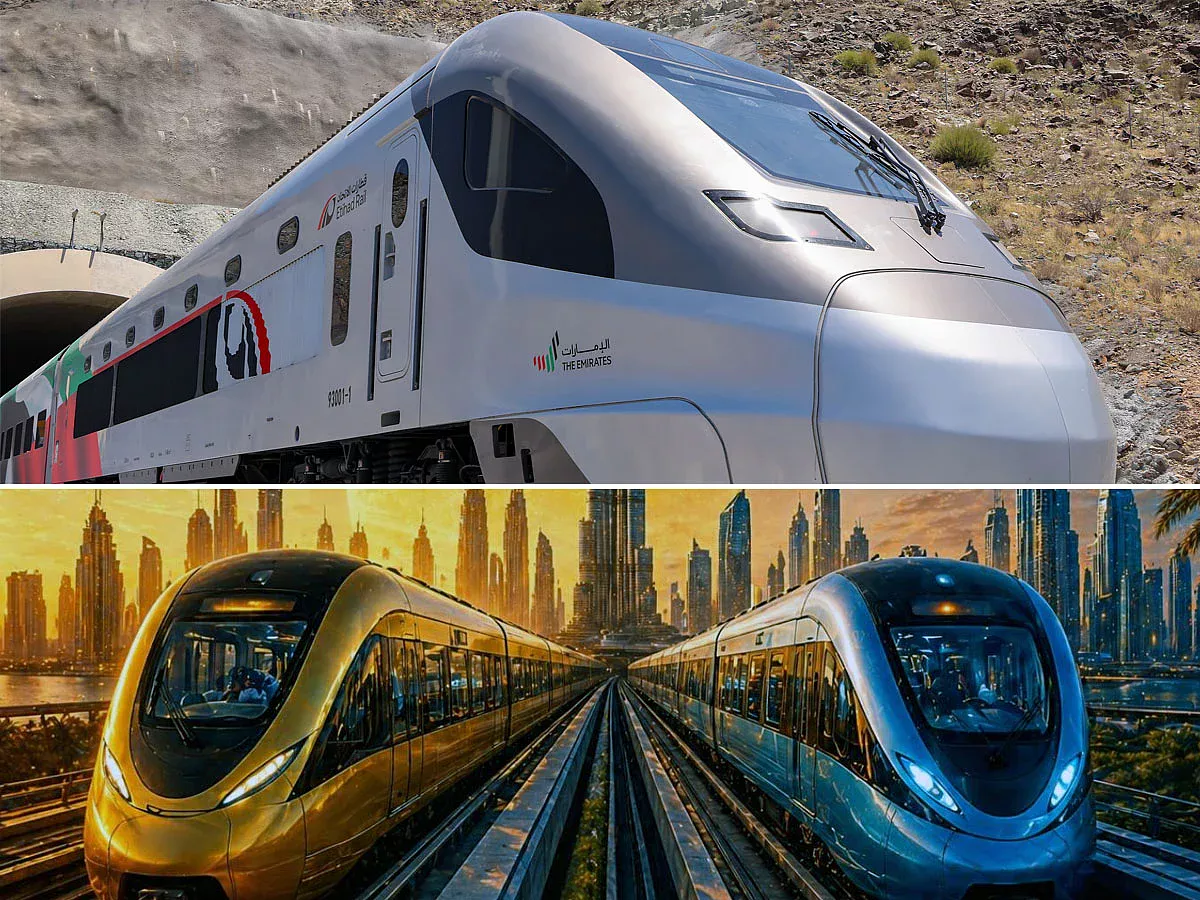
    Living farther from work could become a more practical option for Dubai residents once Etihad Rail and the Metro Blue and Gold Lines connect more communities directly to business districts and transport hubs.

    International City, Dubai Silicon Oasis, JVC, Meydan, Dubai South, Jumeirah Golf Estates, Mirdif and Al Warqa repeatedly emerge among the areas property executives expect to benefit, particularly where residents currently depend heavily on cars or buses.

    The shift could give tenants and buyers more choice beyond Downtown Dubai, Business Bay and Dubai Marina, where proximity to workplaces has historically justified paying more for housing.

    Fibha Ahmed, VP of Property Sales at Bayut, said improved transport can alter that calculation by reducing travel time between outer communities and employment centres.

    Traditionally, buyers and tenants paid a significant premium to live in central hubs like Downtown Dubai, Business Bay, or Dubai Marina to avoid long peak-hour highway commutes.

    Better rail links would not remove demand for central addresses, according to the executives, but could make lower-priced communities more viable for residents who previously considered the commute too difficult.

    International City and DSO Move Up the List

    The Blue Line, scheduled to open in 2029, puts several eastern Dubai communities in a different position.

    International City, Warsan, Dubai Silicon Oasis, Academic City, Dubai Creek Harbour, Mirdif and Al Warqa are among the areas expected to gain from direct Metro access.

    Many already have established housing, schools and employment bases but lack the rail connectivity available in more central parts of Dubai.

    Vivek Bhavsar, Director of Consulting at JLL MENA, said the effect could be clearest where the Metro is arriving for the first time.

    Areas gaining metro access for the first time will feel it most.

    International City stands out because of its lower entry prices, while Dubai Silicon Oasis combines residential demand with a large technology and employment base. Academic City has a sizeable student population, giving the wider corridor another potential source of rental demand once the line becomes operational.

    Ahmed expects high-density, mid-market communities that previously lacked rail access to see some of the strongest response, particularly where a station removes an existing obstacle for tenants.

    International City Phase 2 and Dubai Silicon Oasis also feature among the areas experts consider relatively well priced before the new connections are completed.

    JVC, Meydan and Jumeirah Golf Estates Gain Another Connection

    The planned Gold Line shifts attention towards JVC, Meydan, Mohammed Bin Rashid City, Nad Al Sheba, Al Barsha South and Jumeirah Golf Estates.

    JVC has developed into one of Dubai’s major residential communities without direct Metro access, making a future station particularly relevant to residents who currently rely on road travel.

    Mohammed Al Sari, CEO of HRE Development, said the way residents judge location is beginning to change with each expansion of the transport network.

    The market’s definition of well-located is shifting from proximity to the city centre toward proximity to the network.

    That could benefit communities where residents can still find more space or different price points while retaining practical links to Business Bay, Meydan and other employment centres.

    Jumeirah Golf Estates could become particularly important because it is expected to combine Gold Line access with Etihad Rail, while Meydan is frequently cited by developers and brokers because of its position on the planned route.

    Murad Saleh, Co-Founder and CEO of Amwaj Development, said transport can widen the range of locations residents consider without making distance irrelevant.

    Dubai’s next phase of growth will be defined less by distance and more by connectivity.

    He said transport works best when it is accompanied by good housing, amenities and wider community planning, meaning proximity to a future station alone does not guarantee stronger long-term performance.

    Dubai South Gets a Different Kind of Boost

    Etihad Rail places Dubai South, Jebel Ali and Dubai Investments Park in focus for a different reason.

    These areas combine residential development with logistics, employment and industrial activity, while Dubai South also sits close to Expo City and Al Maktoum International Airport.

    Better inter-emirate connectivity could widen the pool of people willing to live there, particularly those whose jobs involve regular travel between Dubai, Abu Dhabi and other emirates.

    Salman Ali Khan, COO and Co-Founder of 3S Real Estate Brokers, expects rents to respond before sale prices where new transport links materially improve accessibility.

    Better connectivity drives higher demand. Rents usually rise first, followed by prices.

    He puts the typical premium around stations at between 5% and 25%, while also identifying International City, Silicon Oasis, Al Warqa, Mirdif, Dubai South and selected parts of JVC and Meydan among areas still trading at a relative discount to what future connectivity could bring.

    Could Residents Move Farther Out?

    The more immediate question for tenants is whether better transport could make a larger home farther from the city centre worthwhile.

    Property executives broadly expect it to expand the choice.

    A resident working in central Dubai could consider communities such as International City, Dubai Silicon Oasis or JVC with less reliance on highway commuting, while Etihad Rail opens up another set of possibilities for people travelling between emirates.

    The transport expansion comes as Dubai completed 24,800 units in the first half of 2026, with residential rents declining 6.2 percent quarter-on-quarter as new supply eased tenant pressure. Meanwhile, residential sales hit $9.5 billion in July 2026, indicating sustained buyer interest across the emirate’s property market.

  • Abu Dhabi Residential Yields Reach 8.92% in H1 2026

    Abu Dhabi Residential Yields Reach 8.92% in H1 2026

    Abu Dhabi’s residential market maintained momentum across multiple price segments during the first half of 2026, with affordable communities delivering the highest projected rental returns while premium waterfront developments attracted wealthy buyers focused on lifestyle and long-term appreciation.

    Al Reef led the affordable apartment category with a projected return on investment of 8.92 percent, according to data released by property portal Bayut on July 28, 2026. Masdar City delivered 7.63 percent within the mid-tier segment, while Yas Island and Al Maryah Island each generated projected returns of 5.94 percent among luxury apartments.

    Villa returns followed a similar pattern. Al Reef produced a projected yield of 5.92 percent in the affordable category, narrowly ahead of Al Raha Gardens at 5.91 percent. Al Raha Beach offered 5.11 percent among luxury villas, while Saadiyat Island delivered 4.32 percent in the ultra-luxury segment, where investors prioritize exclusivity and capital appreciation over immediate income.

    “The first half demonstrated the residential market’s growing maturity. Demand across multiple price segments demonstrated the depth of market confidence,” said Haider Ali Khan, chief executive of Bayut and Dubizzle Group MENA.

    Rental Demand Strengthens Across Communities

    Abu Dhabi’s rental market remained balanced during the first six months of the year, supported by population growth and expanding employment opportunities. Saadiyat Island maintained its position as the leading ultra-luxury apartment rental destination, while Yas Island recorded strong interest within the luxury segment.

    Average advertised apartment rents increased 2.85 percent in Al Reem Island and 3.81 percent in Al Khalidiyah compared with the second half of 2025. Villa rental demand strengthened as households continued prioritizing space and family-oriented amenities.

    Shakhbout City recorded the strongest increase, with average villa rents rising 6.57 percent during the period. Khalifa City’s average villa rents increased 6.53 percent, while Al Reef posted growth of 3.76 percent. Al Raha Gardens recorded a more moderate gain of 2.37 percent in the mid-tier segment.

    Average advertised rents on Yas Island rose 4.17 percent as the waterfront community attracted tenants seeking premium lifestyle amenities.

    Buyer Interest Spans All Segments

    Saadiyat Island remained the leading destination for ultra-luxury apartments and villas, supported by its cultural attractions and appeal among buyers focused on long-term capital appreciation. Al Raha Beach retained its position among luxury apartment buyers, while Al Reem Island was the preferred choice within the mid-tier segment.

    Al Reef continued to draw value-conscious investors seeking lower entry prices and competitive rental returns. Yas Island emerged as the most popular luxury villa destination, while Al Shamkha remained prominent for investors seeking more affordable properties.

    Interest remained strong in off-plan properties. High-net-worth investors focused on Saadiyat Cultural District, Nouran Living and Manarat Living III on Saadiyat Island. Gardenia Bay, Yas Bay and Diva supported off-plan momentum on Yas Island, while Bloom Living and Reem Hills attracted mid-tier buyers.

    Market Activity Surges 112%

    The Abu Dhabi Real Estate Centre reported Dh117 billion in total real estate transactions during H1 2026, representing annual growth of 112 percent. Transaction volume increased 61.7 percent.

    Sales accounted for Dh86.1 billion across 16,838 transactions, with their value increasing 163.7 percent from a year earlier. Mortgage transactions reached Dh26.7 billion through 8,876 deals.

    Foreign direct investment in Abu Dhabi property reached Dh13.8 billion, increasing 309 percent and exceeding the amount recorded during the whole of 2025. Non-resident buyers from 116 nationalities participated, compared with 82 nationalities during H1 2025.

    Investment zones open to buyers of all nationalities attracted Dh75 billion, up 181 percent annually. Authorities approved eight additional investment zones, bringing the emirate-wide total to 50.

    Transaction Prices Rise in Key Areas

    Independent research by Knight Frank reported that average apartment transaction prices on Yas Island and Al Reem Island increased approximately 18 percent year-on-year through June 2026.

    Saadiyat Island remained Abu Dhabi’s most expensive apartment location, with average transaction values rising around 21 percent to Dh43,100 per square meter. Al Jubail Island led annual villa-price growth at approximately 40 percent, while Saadiyat remained the emirate’s most expensive villa market at Dh26,500 per square meter.

    The consultancy estimated that around 36,900 homes were under construction for delivery between 2026 and 2030. Apartments represented 66 percent of the pipeline, with 70 percent of planned apartment completions scheduled for 2026 and 2027.

    Rental Freeze Takes Effect

    The rental environment changed during the first half when Abu Dhabi temporarily reduced the permitted annual increase from 5 percent to zero. The Abu Dhabi Real Estate Centre said the temporary measure applied across residential, commercial and industrial properties and would remain in place until further notice.

    The authority said demand had exceeded supply during recent years, pushing prices for new leases 15 percent higher across Abu Dhabi and 23 percent higher within investment zones compared with a year earlier. The measure was introduced to provide greater predictability for households and businesses.

    Bayut’s H1 rent changes compare advertised rates between H1 2026 and H2 2025, including periods before the freeze was announced.

    Population Growth Supports Demand

    Abu Dhabi’s population increased 7.5 percent during 2024 to 4.14 million, representing growth of approximately 51 percent over the preceding decade. Employment among people aged at least 15 increased 9.1 percent to 2.76 million.

    The emirate added about 29,000 real estate units during 2024, taking the total to nearly 784,000. Residential properties represented approximately 466,700 units.

    The findings are based on property advertisements placed on Bayut rather than completed transactions. They reflect asking prices, projected yields and search preferences rather than final prices agreed between buyers and sellers.

    Abu Dhabi’s residential market performance contrasts with broader UAE property market trends, where Dubai recorded its first quarterly price decline since the pandemic while other emirates show varied growth patterns. The emirate’s transaction volumes significantly exceeded earlier projections, with foreign investment reaching record levels as authorities expanded designated investment zones.

  • Dubai Launches Flexi Rents Initiative for Monthly Rental Payments

    Dubai Launches Flexi Rents Initiative for Monthly Rental Payments

    The initiative focuses on introducing a flexi-rent model that broadens tenants’ options through a variety of payment plans, including monthly, quarterly and semi-annual installments. It is supported by incentives and value-added packages offered by participating entities, helping to enhance rental market stability, improve quality of life and provide housing solutions tailored to the needs of diverse segments of society.

    To support the initiative’s implementation, DLD signed cooperation agreements with Wasl Properties, Deyaar Property Management, Dubai World Real Estate, Modern Real Estate, Dubai Investment Real Estate, SBK Real Estate, Rocky Real Estate, SRG Properties, Harbor Real Estate, Driven Properties and Al Showaib Real Estate.

    The move reflects DLD’s commitment to providing more flexible rental solutions that respond to evolving market needs, further strengthening Dubai’s position as a leading global real estate destination that offers more efficient and sustainable housing models for various segments of society.

    Under the cooperation agreements, the Flexi Rent model will be applied to vacant or eligible rental units in Dubai owned or managed by the participating partners. This will be achieved by offering flexible payment options and providing rental incentives, discounts, or promotional packages for new tenants, in accordance with the partners’ approved policies and in compliance with the laws and regulations in force in the Emirate of Dubai.

    DLD will provide the regulatory and coordination framework necessary for the implementation of the initiative, including supplying partners with relevant guidelines, updates and requirements, supporting technical integration with approved systems and monitoring the initiative’s overall performance in coordination with participating entities.

    The department will also support the visibility of partners’ participation through its official channels, including the Dubai REST app, the department’s website and its various digital platforms, in accordance with approved procedures and regulations.

    Dubai Land Department affirmed that the Flexi Rent initiative is an extension of its ongoing efforts to develop innovative and adaptable real estate solutions that enhance the market’s ability to respond to changing dynamics while meeting the community’s evolving needs. The department noted that providing tenants with a range of payment options contributes to improving quality of life, strengthening the stability of the rental market, and supporting the development of a more sustainable and efficient real estate ecosystem.

    It further emphasized that collaboration with the private sector is a key pillar in accelerating the adoption of new operational models that create tangible value for customers.

    The initiative is closely aligned with the objectives of the Dubai Real Estate Strategy 2033, which aims to enhance the sector’s competitiveness and reinforce Dubai’s position as a leading global destination for investment and living through an advanced real estate ecosystem that places people and their quality of life at the heart of its priorities.

    With the launch of this initiative, DLD continues to advance its vision of building a resilient and sustainable real estate sector founded on innovation and meaningful partnerships, while delivering practical solutions that enhance quality of life and respond to evolving economic and social needs. The initiative represents a further step within the department’s integrated roadmap to develop a more future-ready and competitive real estate ecosystem, supporting the objectives of the Dubai Economic Agenda D33 and reinforcing the emirate’s position as a leading global destination for living, working and investment.

    The flexible payment structure comes as Dubai’s real estate market attracts $272 billion in projected investment over the next five years, driven by rapid population growth and foreign capital inflows. Meanwhile, neighboring Abu Dhabi froze all rent increases in early June to stabilize housing costs amid double-digit growth in some segments.