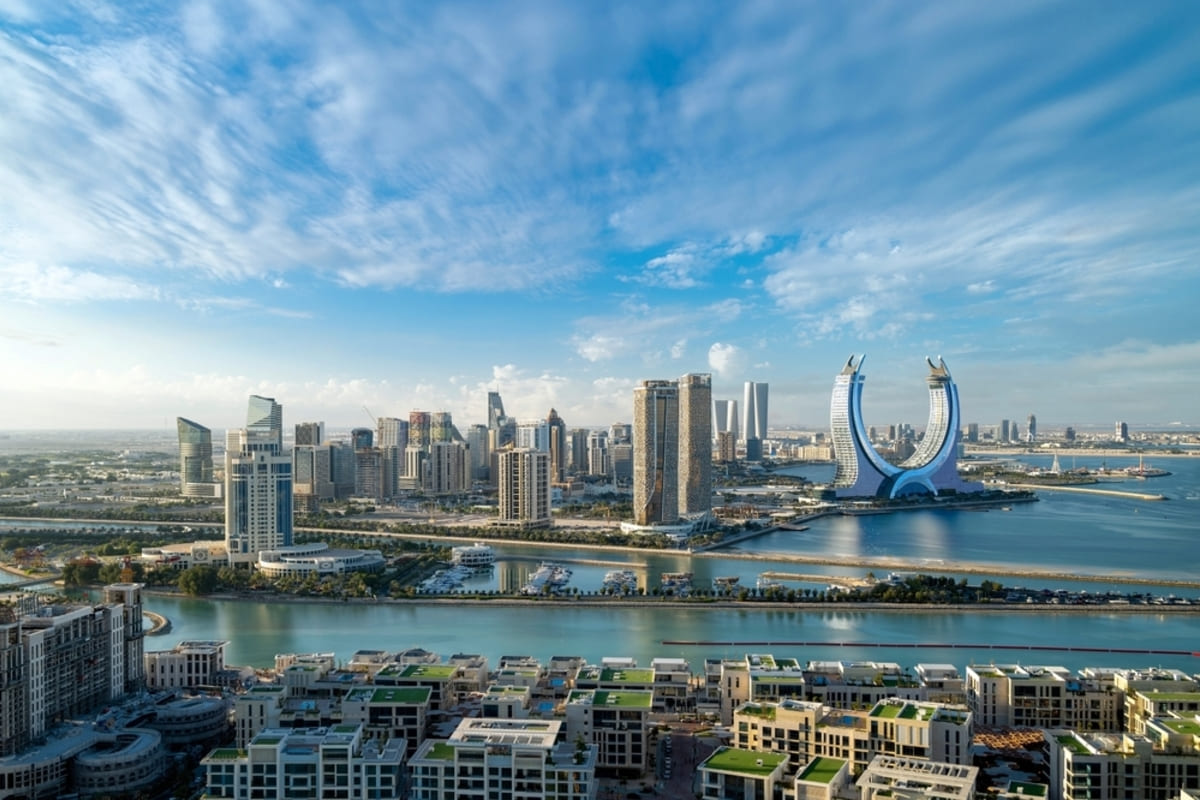
The residential real estate sector in Qatar has reached a period of relative stability, according to international strategy and consulting group ValuStrat, with the ValuStrat Price Index (VPI) registering a marginal quarterly decline of only 0.3%. Within this segment, villas have demonstrated stronger resilience than apartments, maintaining better capital value retention in high-end areas such as Al Waab and West Bay Lagoon.
However, the rental market has faced more significant downward pressure, as residential rents decreased by approximately 1.5% compared to the previous half-year. This shift is largely attributed to a substantial influx of new housing supply entering the market in developing districts like Lusail and The Pearl.
Prime Office Locations Maintain Stability
In the commercial sector, the total stock of office space across the country reached an estimated 5.6 million square meters by the conclusion of 2025, with the city of Lusail contributing the largest portion of these new completions. Despite the increase in supply, prime office locations in West Bay managed to keep occupancy rates relatively stable at around 80%.
A visible “flight to quality” trend has emerged, where corporate tenants are increasingly moving toward modern, high-tier spaces, placing secondary locations at higher risk for vacancies. Consequently, average office rental rates saw a year-on-year decline of 2% as landlords in newer districts adopted more competitive pricing strategies.
Tourism Drives Hospitality Resilience
The hospitality industry showed signs of resilience throughout the latter half of the year, bolstered by a steady rise in international visitor arrivals which reached nearly 4 million by late 2025. This increase in tourism has supported healthy performance metrics for hotels, particularly within the 4-star and 5-star categories, where Average Daily Rates and Revenue Per Available Room remained steady.
Meanwhile, the retail sector continued to expand with the addition of several new community malls. However, analysts at ValuStrat suggest that organized retail space is nearing a point of saturation, forcing landlords to offer more flexible lease terms to attract and retain retail tenants.
Market Transitions to Sustainable Growth Phase
Looking ahead to 2026, the Qatari real estate market appears to be transitioning into a more mature phase characterized by a slowing of price corrections. Demand is expected to be increasingly fueled by long-term residents and the broader economic diversification goals outlined in the Qatar National Vision 2030.
Government-led initiatives—specifically the expansion of residency rights for property owners—are projected to create a consistent floor for residential demand within freehold areas. According to ValuStrat, these factors combined suggest a market that is successfully adjusting to post-tournament economic realities while finding a new baseline for sustainable growth.
The stabilization reflects a broader regional trend, as GCC real estate markets sustain momentum through easing monetary conditions and infrastructure investment across the Gulf.