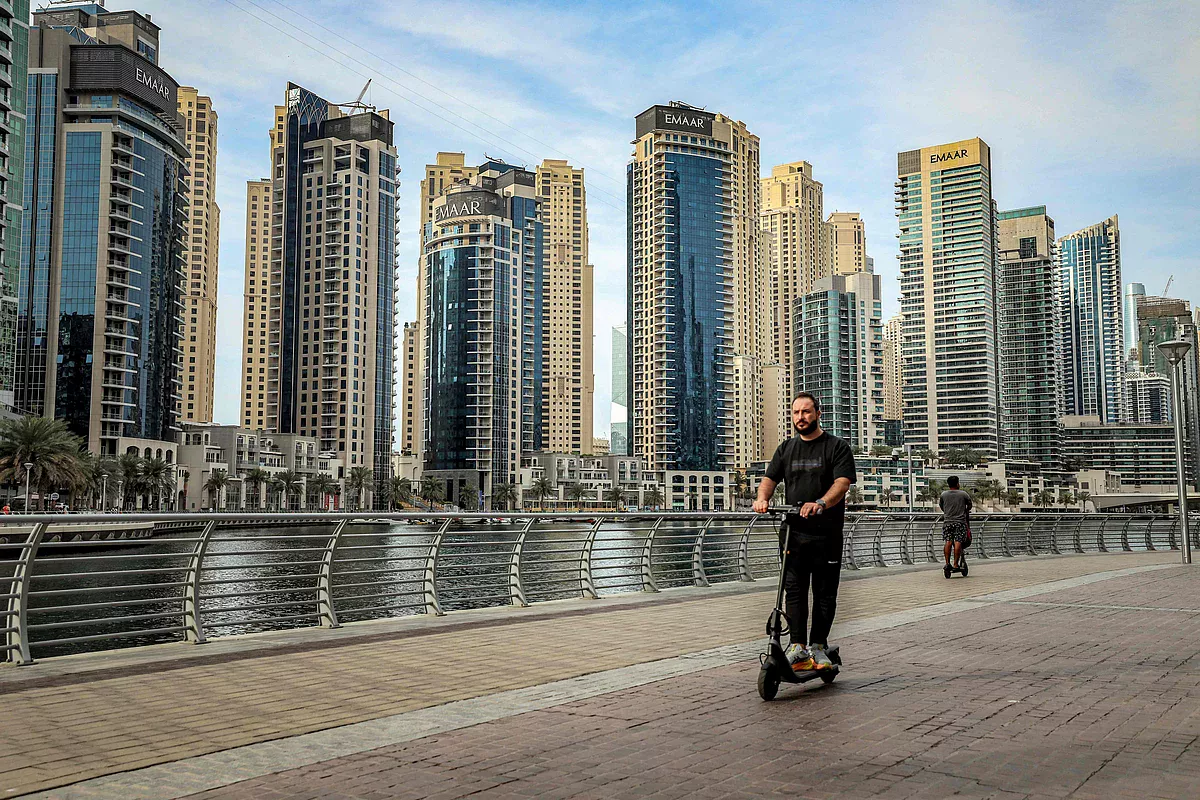
Tenants in Dubai experienced measurable relief during the second quarter of 2026, with average residential rents falling 6.2 percent from the previous three months and 2.6 percent year-on-year, according to CBRE Middle East’s UAE Real Estate Market Review released on July 29, 2026.
Home sales prices remained 1.9 percent higher year-on-year, indicating market stabilization rather than correction following several years of sustained growth.
Around 18,000 residential units were completed across Dubai during the first half of the year, adding inventory and creating more options for tenants and buyers.
Home Sales Slow from Last Year
Fewer than 37,000 residential transactions were recorded in Dubai during the second quarter, a 29 percent decline from more than 51,000 sales in the same period of 2025.
The total value of transactions reached Dh88 billion, compared with nearly Dh154 billion a year earlier.
CBRE linked the slowdown to softer demand, fewer new project launches and increased housing supply during the first six months of the year.
Office Rents Continue to Rise
Dubai’s office market continued to record strong demand, particularly for high-quality space in major commercial districts and free zones.
Average office rents increased 13 percent in the year to the end of the second quarter, while prime office rents rose 16 percent, consistent with broader trends across the UAE where office rents surged 13 percent year-on-year.
Occupancy remained at approximately 94 percent, reflecting the limited availability of Grade A offices across the city.
Demand remained concentrated in DIFC, TECOM and DMCC, where companies continued to lease space in future developments before construction was completed.
Abu Dhabi recorded similar conditions, with average office rents rising nearly 16 percent and occupancy reaching approximately 96 percent.
Demand was strongest in Abu Dhabi Global Market, supported by growth among financial services companies, hedge funds and investment firms.
While several sectors have seen a moderation in performance, the impact has been uneven, with office and industrial markets continuing to benefit from limited supply and sustained occupier demand.
Matthew Green, Head of Research at CBRE MENA
Abu Dhabi Homes Record Strong Growth
Abu Dhabi’s residential market continued to attract buyers during the second quarter, with property values rising 21.6 percent from a year earlier.
Apartment prices increased 24.4 percent, while average rents remained 3.6 percent higher year-on-year despite some moderation during the quarter.
Residential sales reached Dh32 billion, marking a 150 percent increase from the same period of 2025, while the number of transactions rose by around 80 percent, reflecting sustained momentum in the emirate’s real estate market.
Off-plan homes accounted for approximately 83 percent of transactions and 85 percent of total sales value.
Retail and Industrial Sectors Maintain Momentum
Retail properties continued to record high occupancy despite softer tourist spending, with occupancy remaining at approximately 98 percent in Dubai and 95 percent in Abu Dhabi.
Dubai retail rents increased by around 3 percent, while rates in Abu Dhabi remained largely stable.
Industrial and logistics property remained one of the strongest segments of the UAE real estate market, supported by manufacturing investment, supply chain localization and foreign direct investment.
Industrial exports reached Dh262 billion in 2025, while government programmes including Operation 300bn continued to support manufacturing and logistics activity.
CBRE expects the UAE economy to record a marginal contraction of 0.04 percent in 2026 following disruption to trade, tourism, aviation and other consumer-facing sectors.
“What remains particularly noteworthy is the speed and scale of the UAE’s policy response, from supporting business continuity and trade flows to advancing economic partnerships and diversification initiatives,” Green said.
“Although near-term conditions are likely to remain challenging, the country’s long-term growth trajectory remains supported by structural reforms, strategic investment and its position as a leading hub for trade, capital and talent.”