Tag: Middle East property

  • Qatar Property Market Records $103.53 Million in One Week

    The Ministry of Justice’s Real Estate Registration Department registered QAR353,406,706 in sale contracts between August 2 and 6, 2026, according to QNA reporting from Doha on August 13. Residential unit contracts added QAR23,813,514 during the same period, bringing combined real estate trading to QAR377.22 million.

    The department’s weekly bulletin showed that properties traded included vacant land, homes, commercial shops, a hotel and residential units, indicating activity was not limited to a single asset category during the five-day reporting period.

    Transactions were registered in Doha, Al Rayyan, Al Wakrah, Al Daayen, Umm Salal, Al Khor, Al Thakhira and Al Shamal. Sales also covered Al Kharaej, Lusail 69, The Pearl and Legtaifiya, placing established urban districts and designated investment locations within the week’s recorded activity.

    The latest total followed more than QAR400 million in sale contracts registered between July 26 and 30. Because the earlier bulletin described trading as exceeding that threshold without providing a precise combined value, an exact week-on-week percentage comparison was not available.

    Market indicators strengthen

    The weekly result arrives against a firmer property-price backdrop. Qatar Central Bank compiles its real estate index from Ministry of Justice transaction data and publishes the measure monthly. The index reached 244.56 points in May 2026, increasing 1.28 percent from April and 8.7 percent from a year earlier.

    May’s trading value totaled QAR1.73 billion across 425 transactions, representing a 31 percent annual decline. Mortgage activity moved differently, reaching QAR11 billion through 131 transactions and increasing 136 percent. Real estate loans and facilities held by banks stood at QAR185.4 billion during the month.

    Registration costs decline

    Qatar adjusted its property-registration framework in January. Ministry of Justice Decision No. 5 of 2026 reduced several charges and introduced exemptions intended to simplify services and support the investment environment.

    The fee for authenticating a special real estate power of attorney fell from QAR300 to QAR100. Charges for transferring farms or marine land declined from 1 percent to 0.25 percent of assessed value. Replacement title deeds were reduced from QAR500 to QAR100, while a title deed with a cadastral registration plan fell from QAR300 to QAR100.

    The decision also exempted specified government, charitable, housing and inheritance-related transactions. It extended registration treatment to preliminary real estate records under Qatar’s development framework and set a QAR100 fee for registering each unit after final subdivision.

    Ownership access widens

    Foreign-ownership rules provide another source of potential demand. Qatar permits non-Qataris to acquire freehold property in nine designated areas and usufruct rights, generally lasting up to 99 years, in 16 areas.

    A property worth at least QAR730,000 can qualify its owner for renewable residency without a local sponsor. Investment of at least QAR3.65 million can provide real estate residency with permanent-residency privileges, including healthcare, education and investment benefits, subject to the applicable requirements.

    The Real Estate Regulatory Authority’s sector strategy complements those ownership incentives. Its priorities include a national sector plan, stronger implementation of laws, professional licensing, off-plan sales programs and advanced digital services. The authority plans a data and analytics platform alongside an artificial intelligence-supported investment map to improve transparency and help investors assess opportunities.

    Recent weekly activity

    Qatar’s weekly property figures have varied considerably during the summer. Transactions totaled QAR383.03 million between June 21 and 25, comprising QAR317.89 million in general sale contracts and QAR65.14 million in residential units.

    Activity increased during the following period. Between June 28 and July 2, registered contracts reached QAR482,772,733 and residential unit sales totaled QAR82,522,865, producing more than QAR565 million in combined trading.

    The July 5–9 bulletin recorded an even larger total. General sale contracts reached QAR785,396,891, while residential units contributed QAR45,571,768, lifting combined activity above QAR830 million.

    The next available Ministry of Justice update combined two weeks. Transactions registered from July 12 to 23 included QAR748,483,214 in sale contracts and QAR56,995,573 in residential units, producing a total above QAR805 million.

    Contracts then exceeded QAR400 million between July 26 and 30 before reaching QAR377.22 million from August 2 to 6.

    The weekly figures measure contracts formally recorded by the Real Estate Registration Department. They provide a regular view of completed property activity across Qatar’s municipalities and residential-unit market rather than an estimate of listings, asking prices or transactions awaiting registration.

    While Dubai’s off-plan market continues to attract buyers across multiple price segments, Qatar’s property sector is reinforcing its own transaction base through systematic regulatory improvements and broader ownership access. Together, registered trading data, lower service charges, foreign-ownership pathways and regulatory digitalization are broadening the infrastructure supporting Qatar’s property market.
  • Dammam Outpaces Riyadh with 71% Home Sales Surge in Q1 2026

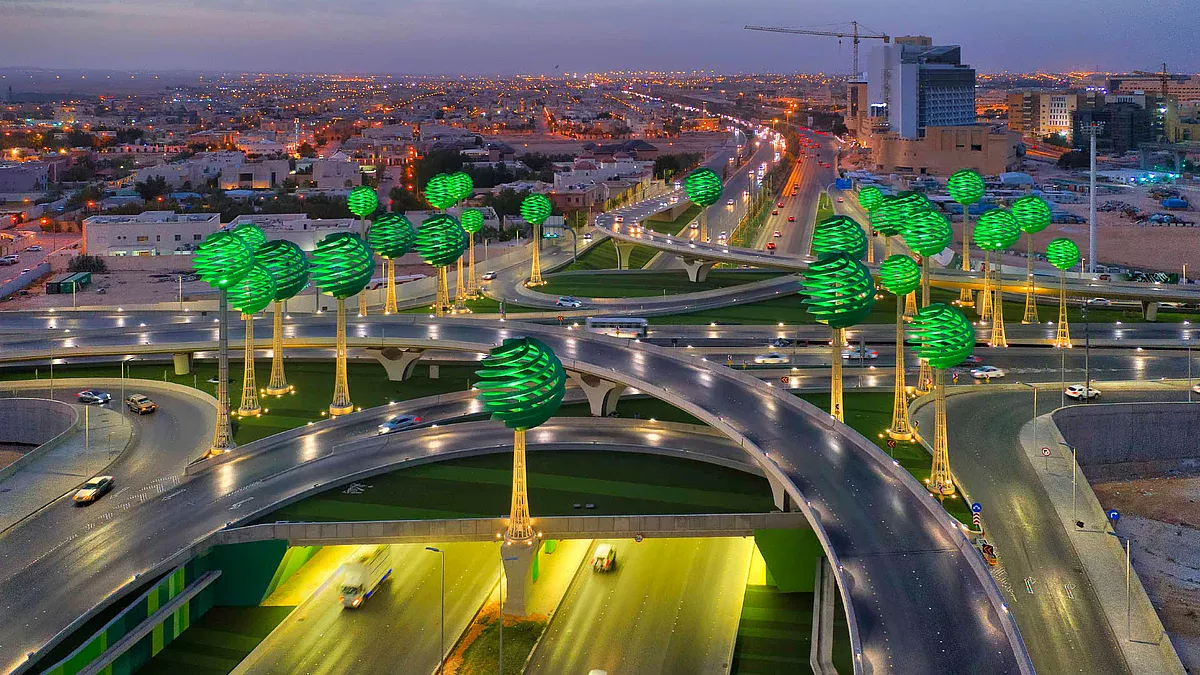
    Dammam Outpaces Riyadh with 71% Home Sales Surge in Q1 2026

    Around 2,900 homes were sold in Dammam between January and March 2026, representing a 41% increase from the final quarter of 2025, when transactions were valued at SAR2.1 billion, according to Cavendish Maxwell. Sales volumes were 25% higher than a year earlier, while the total value of transactions increased 48%.

    March was the busiest month of the quarter, with 1,265 residential sales completed despite regional tensions.

    The rise in Dammam contrasted with more measured activity in Riyadh and Jeddah, where affordability pressures, financing costs and a period that included Ramadan and Eid affected transactions.

    Riyadh Rents Decline as Supply Increases

    Tenants in Riyadh saw some relief during the first three months of the year, with apartment rents falling 2.8% compared with the previous quarter and villa rents declining 1.2%.

    The reductions were partly linked to the rent freeze introduced in September and the delivery of new residential supply in the capital. Rental costs remained higher than a year earlier, with apartment rents up nearly 6% and villa rents rising more than 5%, although quarterly declines indicated that the pace of growth had begun to ease.

    Riyadh recorded 8,800 home sales worth SAR13.4 billion during the quarter. Transaction volumes increased nearly 12% from the final three months of 2025, while sales values rose more than 4%. Activity remained considerably below the elevated levels recorded a year earlier, with sales volumes down 64% and values falling 72% compared with the first quarter of 2025.

    Home Prices Show Limited Movement

    Residential sales prices continued to rise annually across Riyadh, Jeddah and Dammam, although there was little movement from the previous quarter in most areas.

    Apartment prices in Riyadh averaged SAR6,200 per square metre, up 3.7% from a year earlier. Villa prices rose nearly 7% to SAR5,700 per square metre, with both categories broadly unchanged from the fourth quarter.

    Jeddah apartment prices increased nearly 2% annually and 1.3% during the quarter to SAR4,400 per square metre. Villa prices reached SAR5,200 per square metre, representing annual growth of 3.3% and a quarterly increase of 1%.

    Dammam apartment prices rose 4% from a year earlier, while villa rents increased 3.2% annually.

    Jeddah Transactions Decline 25%

    Residential sales in Jeddah fell 25% from the previous quarter and around 30% from a year earlier. Investors and buyers completed 5,800 transactions worth SAR7.2 billion during the first three months of 2026.

    While the potential implications of the regional geopolitical situation remain closely monitored by market participants, it is still too early to draw definitive conclusions. Saudi Arabia’s residential market remains supported by strong domestic demand, with a predominantly local buyer base providing a degree of resilience against short-term external shocks.

    Kevin Duffield, Director of Built Asset Consulting at Cavendish Maxwell, said in a statement released on July 13, 2026.

    New Supply Enters Market

    Riyadh added almost 3,000 homes during the first quarter, taking its residential inventory to around 1.94 million units. Another 31,000 units are due before the end of 2026, followed by 61,500 units through the end of 2028.

    Jeddah delivered 1,500 homes during the quarter, lifting its inventory to around 1.1 million units. A further 17,500 homes are scheduled for this year, with nearly 46,000 more expected over the following two years.

    Dammam is expected to receive 4,800 new homes during 2026, taking its inventory to 435,000 units. Deliveries are scheduled to rise to 10,600 homes in 2027, followed by another 3,500 in 2028.

    Duffield noted that development pipelines are evolving across each city, with Riyadh seeing the most new supply in the medium term, and growth in Jeddah and Dammam more modest and measured.

    Foreign Buyers Gain Access

    Saudi Arabia’s foreign property ownership law, introduced in January 2026, allows non-Saudi individuals and companies to invest in real estate within approved areas.

    Designated locations in Riyadh include Qiddiya, New Murabba and King Abdullah Financial District, while more than 55 zones in Jeddah have been opened to foreign ownership. NEOM, The Red Sea Project, Amaala, AlUla and King Abdullah Economic City are also covered by the framework.

    Separate rules apply in Makkah and Madinah, where ownership in designated zones is restricted to Muslim buyers.

    Dammam’s strong performance in Q1 2026 reflects the city’s growing appeal as affordability and supply dynamics shift across Saudi Arabia’s main urban markets. With regional real estate markets expanding rapidly, investor attention is increasingly diversifying beyond traditional capitals.

  • Ajman Real Estate Transactions Reach $288.6 Million in January 2026

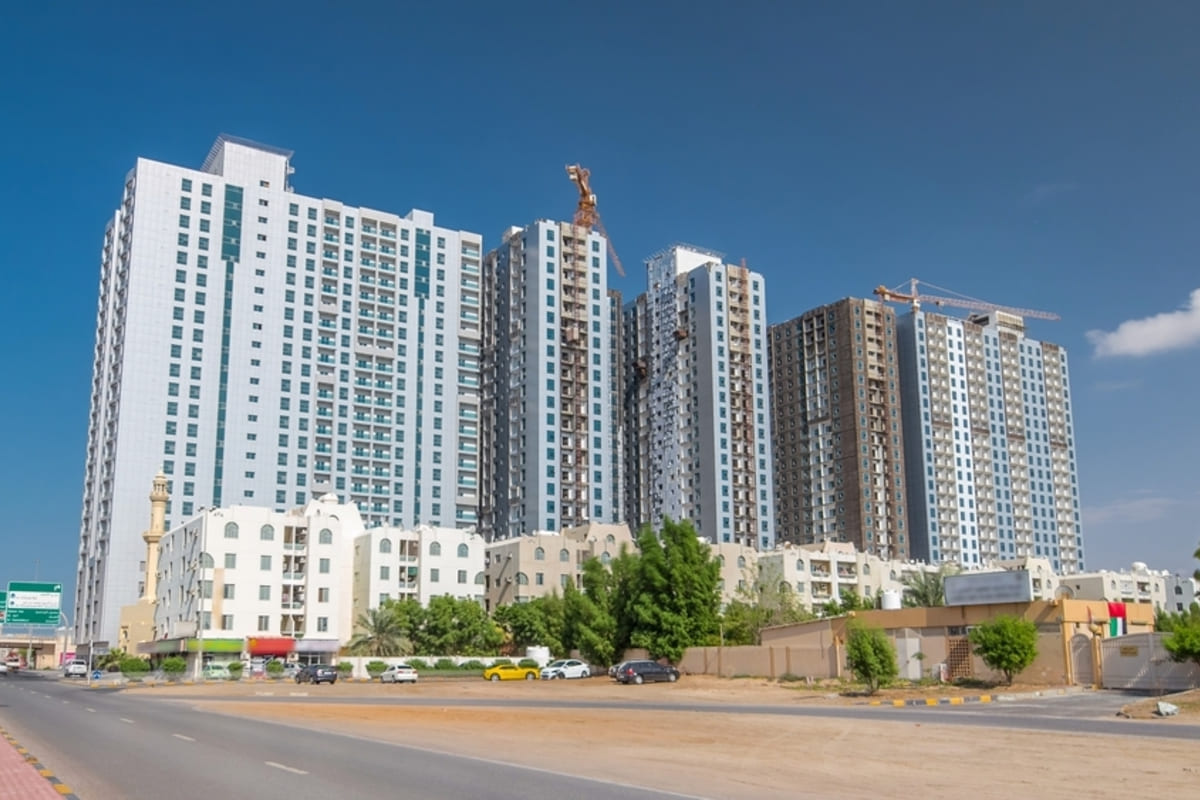
    Ajman Real Estate Transactions Reach $288.6 Million in January 2026

    The emirate’s commercial real estate sector demonstrated exceptional strength in January 2026, capturing the largest share of valuation activity at AED626.5 million, significantly outpacing residential properties which recorded a combined value of AED329 million.

    Eng. Omar bin Omair Al Muhairi, Director-General of the Ajman Department of Land and Real Estate Regulation, noted that the 242 valuation transactions spanned a diverse range of assets including commercial, residential, and industrial properties.

    “These valuation activities encompassed a variety of transaction types, such as personal valuations, those tied to court proceedings and institutional needs, and others connected to long-term Golden Residence permits for investors,” Al Muhairi stated.

    The report revealed that specific transaction categories — including personal valuations, court-related proceedings, and Golden Residence applications — accounted for 167 transactions surpassing AED303 million in value.

    Beyond property valuations, Ajman’s broader real estate market recorded highly active January performance with 1,520 transactions valued at AED2.07 billion. This surge continues the upward trajectory from December 2025, which saw a 22% year-on-year increase in transaction volumes.

    The Al Helio 2 area emerged as a standout performer, recording the highest individual sales value at AED34 million and leading as the most-traded neighborhood. Among major developments, Emirates City maintained its position as the most active project, followed by City Towers and Ajman One.

    Mortgage activity demonstrated significant strength with 174 operations totaling over AED484 million, led by the Liwara 1 area. The robust figures underscore Ajman’s growing appeal as a value-oriented investment destination, driven by flexible payment structures and residency incentives.

    The emirate’s performance aligns with broader GCC real estate market momentum, as regional property sectors benefit from easing monetary conditions and infrastructure investment. Industry observers note that Ajman continues to attract first-time homebuyers and long-term investors seeking opportunities beyond saturated markets like Dubai, where prices rose 12.1% in 2025.

    The combination of competitive pricing, investor-friendly policies including the Golden Residence program, and strong transaction volumes positions Ajman for sustained growth through 2026.