The UAE’s commercial real estate market demonstrated remarkable resilience in the first quarter of 2026, sustaining strong rental growth across office and retail sectors despite heightened geopolitical uncertainty and evolving economic conditions across the Middle East.
According to the latest Real Estate Market Dynamics report released by JLL on May 25, 2026, strong economic fundamentals, robust occupier confidence and limited availability of quality office space helped maintain momentum even as businesses adopted a more cautious approach to expansion and leasing decisions.
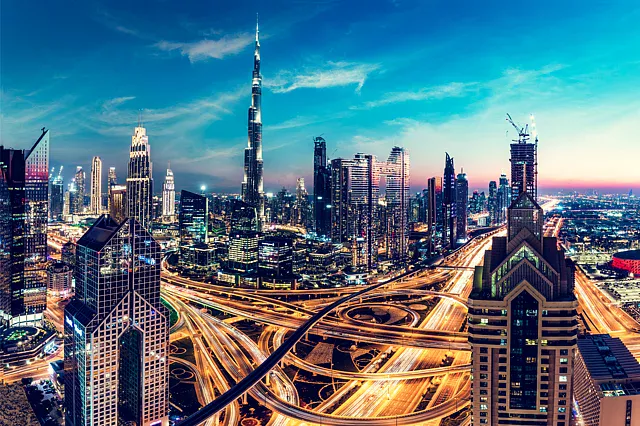
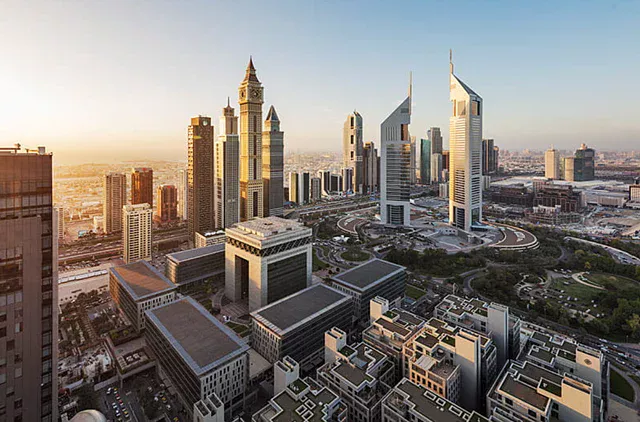
Abu Dhabi recorded prime office rent growth of 11.7% year-on-year, while Grade A and Grade B office spaces posted annual increases of 5.1% and 4.2% respectively. Dubai delivered even stronger performance, led by Grade B office space, where rents surged 23.4% year-on-year as occupiers increasingly shifted to more affordable alternatives amid limited prime inventory in core business districts such as DIFC, Downtown Dubai and Business Bay.
Grade A office rents in Dubai rose 19% annually, while prime office rents increased 17.2%.
Taimur Khan, head of Research for the Middle East and Africa at JLL, said the UAE market continued to show exceptional resilience and adaptability despite short-term regional disruptions.
“With strong underlying economic fundamentals and agile occupier and landlord strategies, the UAE’s office and retail sectors demonstrated remarkable resilience and a strong capacity for strategic adaptation. Demand remains robust, signalling the market’s inherent strength and positioning it for sustained growth as demand for prime spaces accelerates amid tightening supply.”
Industry analysts say the sharp rise in Grade B rents reflects a growing mismatch between supply and demand as businesses seek cost-effective options without compromising on location and connectivity.
Vacancy levels remained exceptionally low across both emirates. Abu Dhabi’s citywide office vacancy rate stood at just 1.4%, while prime vacancy dropped to an almost negligible 0.1%. Dubai’s citywide vacancy rate edged up slightly to 7.3% following new project deliveries, although prime vacancy remained extremely tight at 0.7%.
Dubai’s total office inventory reached 101.1 million square feet during the quarter, while Abu Dhabi’s office stock expanded to 4.18 million square metres.
The UAE’s broader economic diversification push, combined with strong growth in financial services, technology, consulting, logistics and family offices, has continued to fuel demand for commercial office space. This trend aligns with broader commercial momentum across the emirates.
Despite the rental surge, leasing activity showed signs of moderation as companies adopted a more measured approach amid regional geopolitical tensions and global economic uncertainty. Office rental contract registrations declined 6% year-on-year in Abu Dhabi and 7.7% in Dubai during the first quarter. Monthly new contracts also fell sharply in March compared to February.
However, Dubai demonstrated notable resilience, with office lease renewals rising 11.2% annually, underlining strong occupier retention and continued confidence in the emirate’s long-term growth prospects.
The report highlighted a pronounced “flight to quality” trend, with companies increasingly prioritising premium office environments, flexible leasing structures and strategically located assets amid evolving economic and geopolitical conditions.
Analysts say global supply-chain disruptions and rising construction costs are continuing to affect development timelines, although developers are increasingly mitigating these pressures through phased procurement planning, strategic sourcing and contractor negotiations.
The UAE’s retail sector also remained relatively resilient, supported by strong domestic consumption, government stimulus measures and flexible leasing arrangements introduced by landlords. Dubai’s retail inventory stood at 56 million square feet, while citywide vacancy tightened further to 4.8%, reflecting sustained occupier demand despite softer tourism flows in certain segments. Abu Dhabi maintained a stable retail vacancy rate of 8.9%.
The report noted that the UAE government’s Dh1 billion economic stimulus package, combined with landlord flexibility through turnover-rent and short-term relief models, played an important role in supporting occupancy levels and preserving retail market stability.
Retail rents remained firm across key segments. Super-regional malls in Dubai recorded annual rental growth of 12.4%, while Abu Dhabi’s prime super-regional malls maintained premium positioning with rents reaching Dh5,524 per square metre, supported by selective demand from high-quality tenants.
While leasing activity in Dubai softened, with new retail rental contracts declining 9.9% year-on-year, Abu Dhabi recorded a 3.6% increase in registrations, driven by a 16.7% rise in new contracts.
JLL said retailers are increasingly focusing on flexible and experiential concepts to capture domestic demand as consumer behaviour evolves. Community and neighbourhood retail centres are expected to remain resilient, while experiential retail, wellness-focused concepts and home-grown brands are likely to outperform amid changing consumer preferences.
Analysts believe the UAE’s strong population growth, rising tourism, expanding corporate activity and government-backed economic diversification programmes will continue to support the long-term outlook for both office and retail real estate despite short-term regional volatility. This confidence mirrors sustained investor sentiment across residential markets.