Tag: geopolitical tensions

  • Indian Investors Lead Dubai Property Market Despite Regional Tensions

    Indian Investors Lead Dubai Property Market Despite Regional Tensions

    Indian investors are once again emerging as the dominant force behind Dubai’s booming real estate market, reinforcing the emirate’s status as one of the most attractive overseas property destinations for Indian capital despite rising geopolitical tensions in the Gulf.

    According to a research note by property consultancy Anarock Group, Indian nationals account for roughly 20–22 per cent of all foreign property purchases in Dubai, making them the largest overseas investor group in the market. The scale of Indian participation reflects a combination of financial returns, geographical proximity and long-standing economic ties between India and the UAE.

    Industry estimates suggest Indian investors purchased Dh35 billion to Dh40 billion worth of residential properties annually in recent years, highlighting the scale of capital flowing into the emirate from India.

    Attractive rental yields, strong capital appreciation and the stability of the UAE dirham—which is pegged to the US dollar—continue to make Dubai one of the most compelling global property markets for Indian investors. Residential properties in Dubai typically generate annual rental yields between 6 and 9 per cent, among the highest in major global property markets such as London, New York and Singapore.

    Dubai’s property market entered the current period of geopolitical uncertainty after completing one of the strongest growth cycles in its history. According to Dubai Land Department data analysed by Anarock and other industry consultancies, total real estate transactions reached Dh917 billion ($250 billion) in 2025, the highest value ever recorded in the emirate.

    “Transaction volumes crossing 270,000 deals clearly reflect strong investor participation and deep liquidity in the market. Residential real estate has been the main growth engine, and since 2021 housing prices in Dubai have risen roughly 60–75 per cent, making it one of the strongest housing cycles globally in the post-pandemic period.”
    — Dr Prashant Thakur, Executive Director and Head of Research and Advisory at Anarock Group

    Global property consultancies have also highlighted the exceptional performance of Dubai’s housing market. According to Knight Frank, the emirate recorded more than 500 residential sales worth over $10 million in 2025, underscoring the extraordinary growth of its luxury property segment and the rising influx of wealthy global buyers.

    Indian investors have been particularly active in both luxury and mid-market segments, with demand driven by high rental yields and long-term wealth preservation strategies.

    Indian Developers Expand Footprint

    Beyond individual investors, Indian developers are also expanding their footprint in Dubai’s real estate landscape. According to Anarock, companies with Indian roots now account for around 8–10 per cent of the development pipeline in Dubai.

    Among the most prominent players is Sobha Realty, which developed the luxury Sobha Hartland community in Mohammed Bin Rashid City and continues to expand its portfolio of premium projects. Danube Properties, another developer founded by Indian entrepreneur Rizwan Sajan, has launched more than 20 residential projects in Dubai and remains a major player in the mid-market segment.

    Other Indian groups, including Shapoorji Pallonji Real Estate and Casagrand, have also begun exploring high-end residential developments in the emirate. The growing footprint of Indian developers mirrors the broader expansion of Indian capital into Dubai’s property ecosystem, reinforcing the deep economic linkages between the two economies.

    Geopolitical Tensions and Market Resilience

    The latest geopolitical tensions introduce a psychological factor that could influence investor behaviour in the near term. However, Dubai’s position as a global financial hub continues to provide strong structural support to its real estate sector.

    “The current geopolitical tensions will undoubtedly introduce a degree of caution among investors,” the Anarock report noted. “Transaction volumes may moderate in the near term as buyers assess the evolving risk environment. Yet Dubai’s position as a global financial and lifestyle hub continues to provide strong structural support to its real estate sector.”

    Another potential transmission channel is tourism—a key pillar of Dubai’s economy. The broader Middle East tourism sector is estimated to be worth around $367 billion annually, and prolonged regional instability could dampen travel sentiment across the region. Such a scenario would primarily affect short-term rental apartments, hospitality properties and retail assets located in tourist-heavy districts.

    However, Dubai’s housing demand is not solely dependent on tourism. One of the emirate’s strongest structural supports is its rapidly expanding population. Dubai’s population crossed four million residents in 2025, driven largely by expatriate inflows, according to official statistics.

    The emirate’s property market also benefits from one of the most diversified investor bases globally, with buyers from more than 150 nationalities participating in the market. This diversity reduces reliance on any single investor group, helping the market remain resilient even during periods of geopolitical volatility.
  • Dubai Real Estate Defies Regional Tensions with $100M Deals

    Dubai Real Estate Defies Regional Tensions with $100M Deals

    The UAE property market is operating normally despite heightened geopolitical tensions, with real estate activity continuing across the country and developers maintaining scheduled project launches.

    A $100 million-plus property transaction was recorded in Dubai this week, demonstrating sustained investor appetite even as some international buyers pause purchase decisions to monitor regional developments.

    Broker Ben Crompton confirmed that transactions already underway are progressing as planned.

    Buyers who already signed MOUs are proceeding as normal, and some deals are still being negotiated. Most buyers are in a ‘wait-and-see’ mode as you can imagine.

    He noted that property prices typically decline only during periods of forced selling triggered by widespread job losses or sharp interest rate increases—conditions that have not materialized in the UAE.

    International Investors Monitor Closely

    International investors, who represent a significant share of UAE property buyers, are watching the situation more closely than long-term residents, according to market participants.

    A second broker, speaking anonymously, said a major project scheduled to launch next week is proceeding as planned.

    They are not postponing launches because of the current situation.

    The broker emphasized that Abu Dhabi’s market is anchored by families with deep roots in the emirate.

    A large proportion of residents here are families who have been in the UAE for many years. They consider this their home and they are planning long-term—with schools, jobs and their families here—so they still want to buy property.

    However, some foreign buyers from the UK, US, and Germany have become more cautious, the broker noted.

    Opportunity for Strategic Investors

    Market professionals indicated that short-term uncertainty can create opportunities for cash investors. When sellers exit quickly and reduce prices, those units tend to be acquired rapidly by investors with available liquidity.

    The broker cited examples of properties valued at Dh1.3 million being negotiated at Dh1 million for quick transactions, with investors planning to hold until market conditions stabilize.

    Real estate is a slow and stable market. It doesn’t react like the stock market where prices can suddenly fall by 10 per cent in a day. For significant price changes to happen, a large number of people would need to move in the same direction. Right now, the majority still believe in the UAE and its government, so the market remains stable.

    Developers Emphasize Continuity

    On March 6, 2026, Emaar Properties confirmed normal operations across all assets. Earlier, Aldar Properties stated that all its residential communities, retail destinations, commercial offices, hotels, schools, and development sites continue to operate without interruption.

    Aldar highlighted its strong financial position with more than Dh30 billion in available liquidity, including Dh14.2 billion in free cash and Dh16.4 billion in undrawn bank facilities.

    Developers have not adjusted launch pricing, but some are offering more flexible payment plans—such as 35-65 or 40-60 structures instead of 50-50—to reduce upfront costs and maintain investor confidence.

    Economic Fundamentals Remain Robust

    Crompton emphasized that broader economic conditions supporting the property market remain strong.

    The economic fundamentals are very strong. Capital hates uncertainty more than anything. The sooner there is long-term clarity, the sooner investors will feel comfortable committing again.

    The UAE real estate sector has been supported by strong population growth, international investment, and economic expansion. Dubai’s population has surpassed four million, driving unprecedented housing demand as the emirate’s property market recorded nearly Dh900 billion in transactions during 2025.

    Industry professionals point to continued long-term demand across key residential hubs including Reem Island, Yas Island, and Saadiyat Island, where new infrastructure and lifestyle developments are expected to support property values over time.

    The broker concluded:

    There is still strong belief in the long-term prospects of the market. Real estate in the UAE has historically moved upward over the long term, even if there are short-term fluctuations.

  • Alabbar: Dubai Property Market Remains Strong Despite Regional Tensions

    Alabbar: Dubai Property Market Remains Strong Despite Regional Tensions

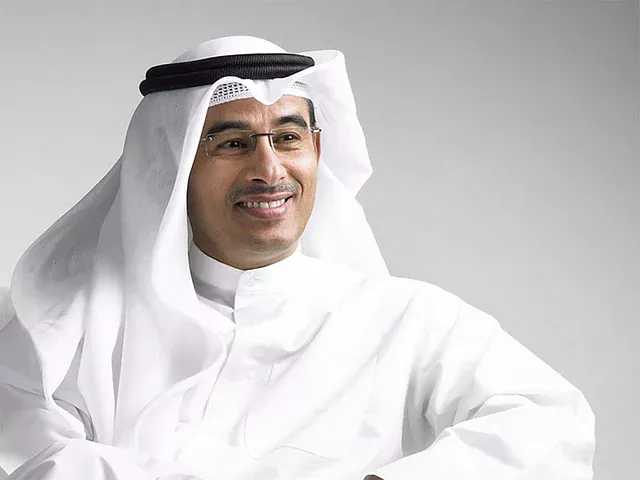
    Dubai’s real estate sector remains fundamentally strong as global capital continues to flow into the emirate, according to Mohamed Alabbar, who told CNBC that the UAE’s long-term development strategy and stable leadership have created an environment that withstands external pressures.

    “It’s the global business hub, and its success, its limelight, its reflection of what life should be and what success should be, what prosperity should be, what positive you should be is this place,” Alabbar said, adding that attempts to undermine that success will ultimately fail.

    Fundamentals Built Over Four Decades

    Alabbar acknowledged that social media speculation can amplify fears during periods of geopolitical tension but emphasized that the UAE’s track record demonstrates consistency and wisdom. “If you were to look and study the trajectory of UAE policies, you will see consistency, you will see sustainability, you will see wisdom, you will see stability,” he stated.

    According to the Emaar founder, the country’s leadership has spent more than 40 years building systems designed to deliver prosperity for residents and investors. Recent events have only reinforced confidence in the nation’s safety and infrastructure, he noted.

    “I promise you what happened will only strengthen what this country is all about.”

    Capital Flows Accelerate, Not Reverse

    Addressing concerns that capital moved to the UAE during global crises could now begin to leave, Alabbar pointed to recent market performance as evidence of sustained confidence. “If you were to look at the past two years, just look at our business, the real estate business alone, we had an increase of almost 70% in 2023, we had 40% in 2024, we have another 40% in 2025,” he said.

    The developer said sophisticated investors recognize the strength of the UAE’s fundamentals and are likely to deepen their commitments rather than pull back. Dubai’s real estate market recorded AED2.46 billion in transactions on March 2, 2026, demonstrating sustained activity levels.

    “Smart capital understands that a country like this, with all these principles and stable leadership and the safety that it has shown that it can deliver,” Alabbar said. “People with true capital understand this and they appreciate this and they will double down on investing anyway.”

    No Signs of Market Weakness

    Alabbar said current demand shows no indication of softening. He recounted his own recent experience searching for an apartment in Dubai: “Myself, I’m looking for one building, one apartment overlooking the sea that I didn’t buy in, and the past two days I’ve been looking and it seemed like nobody want to budge. Nobody want to give a discount.”

    That reflects a market where sellers remain confident and demand stays firm. While consumer confidence may soften temporarily during periods of uncertainty, the country’s policies tend to restore confidence quickly, he added.

    Correction Forecasts ‘Unrealistic’

    Some analysts have warned that Dubai’s property market could face a correction as new supply enters the market, with Fitch Ratings recently suggesting prices could decline by up to 15%. Alabbar dismissed that scenario as unlikely.

    “I know my business well. I know the banking, I know the business environment, because I operate in multi industries,” he said. “The banking system is so strict, amazing discipline. Government policies are just getting better and better. I have no concerns.”

    Asked directly whether a 15% correction was realistic, Alabbar was unequivocal: “In my opinion, the way I do, the way I look at my business and listen, I look at so much data, I think it’s very unrealistic.”

    Recent high-value transactions support his assessment. Dubai recorded a Dh422 million apartment sale at Aman Residences on March 5, 2026, marking the third most expensive apartment transaction in the emirate’s history.

    New Supply Could Stabilize Growth

    Dubai is preparing for a wave of new property supply expected in 2026 and 2027. Alabbar said additional inventory could benefit the market by preventing prices from rising too quickly and maintaining the city’s competitiveness.

    “I said this a year ago. The supply that’s coming in in 2026 and 2027 will be good for the market,” he stated. “We are not here for the short run. We are here for a long time to do business.”

    The developer said he prefers a market where property prices rise gradually—around 5% to 6% annually—rather than experiencing sharp spikes that could undermine long-term stability. “Jacking up prices too high doesn’t benefit anybody,” he said.

    Real estate costs play a significant role in inflation, contributing approximately 50% to 52% of overall price increases, Alabbar noted. Maintaining balanced growth helps both investors and residents. “We don’t also want investors and people who come here for their jobs to really feel that the city is too expensive,” he added.

    Long-Term Stability Over Short-Term Gains

    Alabbar said the goal for Dubai’s property sector should be stability rather than aggressive price increases. Developers are already generating strong returns at current price levels, and maintaining balanced growth will help sustain Dubai’s appeal as a global destination.

    “Developers are making enough money with these prices. We should not shoot too high,” he said. “I want stability. I want long term.”

    A modest adjustment driven by new supply could help ease pressure on housing costs without undermining the broader market, he concluded. Emaar recently confirmed that UAE property sales reached Dh17.2 billion in the first two months of 2026, marking a 118% increase year-on-year.