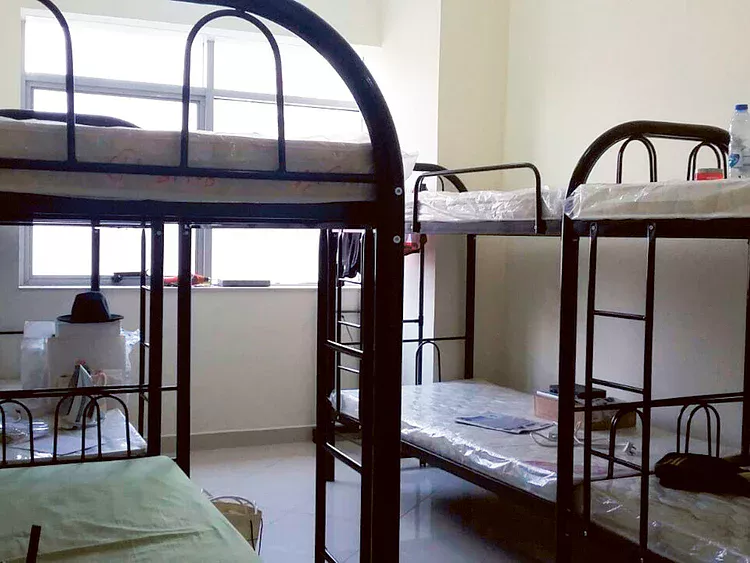
The new regulatory framework, issued by His Highness Sheikh Mohammed bin Rashid Al Maktoum, Vice-President and Prime Minister of the UAE and Ruler of Dubai, establishes comprehensive rules governing which properties can be used as shared accommodation, who can operate them, and the categories of people permitted to live in them.
The law came into force 180 days after its publication in the Official Gazette on February 27, 2026. It applies across Dubai, including special development zones and free zones, but excludes units designated for collective labour accommodation.
Under the new rules, no individual or company may designate a property for shared housing without a permit. Only property owners and licensed establishments may rent out approved units, while occupants and other parties are prohibited from subletting their accommodation or any part of it.
Shared housing is defined as accommodation in which individuals or families occupy designated spaces within a property while sharing facilities such as kitchens, dining rooms, bathrooms and outdoor areas.
Owners can rent approved properties directly to occupants or appoint licensed companies to manage and lease them. Licensed operators can also rent properties from owners for subsequent leasing to residents.
Penalties Range from Dh500 to Dh1 Million
Penalties for violations range from Dh500 to Dh500,000. If the same offence is repeated within one year, the fine can be doubled, up to a maximum of Dh1 million.
Authorities can also suspend an operator for up to six months, revoke permits and coordinate the cancellation of a company’s trade licence. Public utilities can be disconnected from non-compliant properties until violations are rectified, while authorities may refuse to register tenancy or management contracts involving offending units.
Properties that breach permit requirements may also be evacuated following a decision by an execution judge.
However, the suspension of an operator or cancellation of a permit does not automatically require residents to leave immediately. Authorities can allow occupants to remain for a specified period and provide sufficient time to find alternative accommodation.
One-Year Grace Period for Compliance
Existing owners and businesses involved in shared housing have been given one year from August 26, 2026 to comply with the new rules. The deadline may be extended once by a decision of the municipality’s director-general.
The law identifies six types of properties that can be designated for shared housing: apartments, detached houses, residential complexes, mixed-use buildings, townhouses and multi-storey buildings.
Permitted resident categories include families, women, men, female and male students, government employees and workers employed by private companies and institutions.
Shared housing can also be provided by government entities and private companies for employees and workers, and by educational institutions for students, provided the accommodation is licensed and meets approved standards.
The legislation follows Dubai’s broader housing market reforms, including the introduction of a dedicated rental index for shared housing units announced earlier this month to improve transparency and curb informal rent-setting practices. The emirate has also launched initiatives such as flexible rent structures and first-time buyer programmes to expand property access for residents across different income segments.