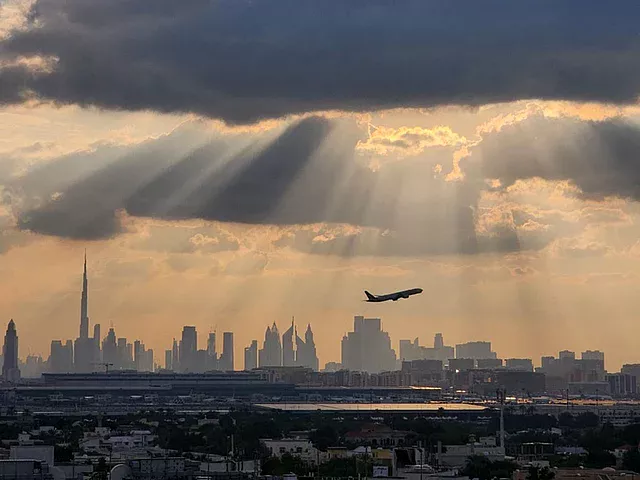
The Gulf property market is experiencing a fundamental shift in buyer behavior as 2026 unfolds. While transaction volumes remain robust, particularly in Dubai, the urgency that characterized late 2024 and much of 2025 has given way to careful, data-driven decision-making.
Developers and sales leaders report that geopolitical uncertainty has sharpened buyers’ analytical skills without dampening demand. The UAE and wider Gulf continue to be viewed as stable environments for both residence and investment, but selectivity has become the defining characteristic of today’s market.
From Speed to Strategy
The most pronounced change is the transition from rapid purchasing to comprehensive due diligence. Donna Lee-Elliott, Chief of Sales at OCTA Properties, observed that buyers are increasingly favoring prime locations, reputable developers with proven track records, and projects underpinned by strong community fundamentals.
Geopolitical headlines have not removed demand, but they have sharpened decision-making. Buyer sentiment in the first half of the year has shifted less towards hesitation and more towards disciplined selectivity.
Enquiry levels in Dubai remain resilient, reflecting continued confidence in economic stability, infrastructure development, and regulatory transparency. However, purchasing behavior now emphasizes escrow compliance, construction-linked payment plans, and delivery certainty.
Credibility and Clarity Drive Decisions
Ahmed Hashish, Head of Sales at HRE Development, identified the growing emphasis on transparency as the market’s biggest transformation. “Buyers are still active, but they are more analytical,” he explained. “They are asking deeper questions about delivery timelines, build quality, long-term community value, and operating costs.”
This scrutiny is creating market polarization. Strong projects with clear value propositions and proven track records continue to transact quickly, while projects lacking clarity face longer decision cycles and heavier negotiation.
Demand is concentrating around established communities and well-planned lifestyle developments, while properties perceived as speculative or heavily reliant on short-term price appreciation are experiencing slower absorption.
Safety and Predictability Attract Capital
Heightened global uncertainty typically pushes investors toward stable, predictable assets—a pattern clearly visible across Gulf real estate markets. Ajay Rajendran, Founder and Chairman of Meraki Group, noted that buyers are gravitating toward established communities with proven demand through occupancy and resale activity.
“When global uncertainty increases, buyers usually move toward what feels safe and predictable,” Rajendran said, adding that smaller apartments in well-connected locations and appropriately priced townhouses remain particularly active segments.
This shift reflects broader movement toward practicality, with buyers focusing on liveability, long-term comfort, and sustainable service costs rather than speculative gains.
Income Generation Over Trading
A defining trend is the growing emphasis on income generation and long-term holding strategies. Investors are increasingly assessing realistic rental yields, service charges, and tenant demand before committing funds.
Ammar Malhi, Chief Operating Officer at SmartCrowd, summarized the shift: “Buyers haven’t disappeared. They’ve just slowed down enough to think.” He noted that investors are focusing more on steady income than short-term price gains.
Rental performance across Dubai remains strong, with many communities recording double-digit increases over the past two years, reinforcing the appeal of income-producing assets. Holding periods are extending while flipping activity has moderated as investors adopt longer time horizons.
End-Users Shape Market Dynamics
A rising share of transactions is being driven by end-users rather than short-term investors, particularly in lifestyle-led developments. Xu Ma, Founder and Chairman of Tomorrow World Properties, reported that owner-occupiers account for more than 85% of transactions.
“Buyers are increasingly taking their time and prioritizing lifestyle and long-term fit over quick flips,” Ma said. Demand is strongest for larger homes, wellness-focused communities, and properties offering immediate move-in readiness.
Investors remain active but are focusing more heavily on delivery credibility, rental demand, and long-term value retention.
UAE Stability Supports Sustained Demand
The UAE’s neutral geopolitical positioning remains a major factor attracting both people and capital to the property market. Relocation activity from Europe, South Asia, and North America continues to rise, driven by the country’s stable regulatory environment, business-friendly policies, and strong infrastructure.
For many buyers, property ownership is tied to broader decisions around residency, lifestyle, and business continuity rather than purely financial returns. This combination of stability and opportunity is helping sustain demand even during periods of global volatility.
Market Outlook
Industry experts expect demand to remain resilient through the second half of 2026, though increasingly concentrated around high-quality assets. Prime residential developments, established communities, and projects with strong rental potential are likely to maintain momentum.
Speculative or undifferentiated supply may face longer decision cycles, reflecting a maturing market where buyers prioritize fundamentals and long-term value over rapid gains. Major developers reporting record results continue to benefit from this flight to quality.
The shift from urgency to analysis marks a healthy evolution in the Gulf property market, indicating growing sophistication among buyers and a more sustainable foundation for long-term growth.