Tag: Dubai Land Department

  • Dubai Brokerage Commissions Surge 31% to $3.7 Billion in 2025

    Dubai Brokerage Commissions Surge 31% to $3.7 Billion in 2025

    The emirate’s brokerage industry has evolved from a transactional service into a major economic driver, supported by stringent regulatory frameworks and a growing base of professionally licensed agents operating across residential, commercial, and investment property segments.

    Dubai Land Department figures show broker-led transactions climbed 54% to 96,440 deals in 2025, demonstrating the sector’s central role in maintaining market efficiency as property values and transaction volumes continued their upward trajectory.

    Women Drive 83% Commission Growth

    Women brokers emerged as a major force within the sector, completing 28,909 transactions—a 49% increase—and earning AED2.98 billion in commissions, reflecting 83% growth year-on-year.

    By year-end 2025, women accounted for 11,371 of the 32,294 registered brokers in Dubai, underscoring the sector’s capacity to attract diverse talent within a competitive and equitable professional environment.

    The performance demonstrates the impact of inclusive licensing frameworks and professional development initiatives aimed at expanding participation across demographic segments.

    Broker Numbers Expand 38%

    The influx of new real estate brokers rose to 13,083 in 2025, representing a 38% increase from the previous year as the profession gained appeal amid sustained market momentum and attractive commission structures.

    Registered brokerage offices reached 9,785, operating under regulatory standards designed to balance market expansion with service quality and consumer protection.

    The emirate’s property market recorded AED60.60 billion in transactions during February 2026 alone, maintaining the momentum that has driven brokerage sector growth.

    Emirati Broker Development Programme

    Dubai Land Department has prioritized national talent development through initiatives including the Dubai Real Estate Brokers Programme and the Real Estate Brokers Incubator Programme, developed in partnership with Dubai Silicon Oasis and academic institutions.

    These programs support Emirati brokers in transitioning from individual practitioners to owners of integrated brokerage firms aligned with international best practices, with participants now managing transactions worth billions of dirhams.

    The structured approach reflects broader efforts to enhance local participation in the sector while maintaining professional standards that have contributed to market resilience amid regional challenges.

    Regulatory Framework Strengthens Market

    The sector’s expansion has occurred within a regulatory environment that mandates structured licensing requirements, ensuring professionalism and market discipline as transaction values increase.

    This framework has enhanced service quality and transaction efficiency, contributing to Dubai’s position as a transparent and professionally managed real estate market attracting international capital.

    The 2025 performance builds on long-term growth trends, with strategic capital now accounting for approximately 40% of transactions as the market transitions from speculation-led dynamics to structured capital allocation.

  • Dubai Real Estate Maintains Momentum Amid Regional Uncertainty

    Dubai Real Estate Maintains Momentum Amid Regional Uncertainty

    The Dubai Land Department confirmed 874 property transactions valued at AED2.46 billion ($670 million) on March 2, reinforcing the emirate’s reputation as one of the world’s most resilient investment destinations despite periodic regional tensions.

    Market analysts note that regional escalations have historically been short-lived and strategically contained, with limited long-term economic impact. In contrast, the UAE’s framework is built on diversified industries, institutional strength, and long-term planning.

    “Regional tensions may create headlines and short-term sentiment shifts, but the UAE’s long-term economic fundamentals remain extremely solid,” said Loai Al Fakir, CEO of Provident Estate. “Investors understand that the country’s stability, governance and strategic global positioning make it one of the safest places to allocate capital.”

    Al Fakir noted that Dubai has consistently demonstrated resilience through global financial crises, regional conflicts, and the pandemic. “Each time, the market not only recovered quickly but attracted even greater international investment,” he added.

    The March 2 figures highlight continued market liquidity and sustained investor confidence. Across the sector, operations remain fully active, with holiday homes operating at high occupancy levels, hotel bookings staying strong, and property handovers, contract renewals, and secondary market activity continuing consistently across key communities.

    “Experienced investors understand that geopolitical cycles come and go, but the UAE’s economic trajectory remains consistently upward. Dubai offers a rare combination of safety, transparency, strong regulation and tax efficiency.” — Mohamad Jaafari, Operations and Primary Director at Provident Estate

    Dubai’s real estate market is driven by long-term structural factors including sustained population growth—with the emirate’s population now exceeding four million—rising global migration, strong foreign direct investment, and ambitious government development strategies.

    Industry experts note that periods of uncertainty typically follow a familiar pattern: a brief pause in investor decision-making, followed by renewed confidence and increased demand. The slowdown observed over the recent weekend was sentiment-driven rather than indicative of any structural market shift.

    The UAE plays a central role as a global hub for aviation, finance, international trade, tourism, and real estate. With advanced security systems, strong diplomatic positioning, and a globally integrated economy, the country remains insulated from prolonged instability affecting conflict zones.

    The emirate’s property market recorded nearly Dh900 billion in transactions during 2025, reinforcing its position as a leading global real estate investment destination. As international investors continue to prioritize stability and long-term economic growth, the UAE remains positioned as one of the most attractive property markets globally.

  • UAE Real Estate Shows Resilience as Dubai Records $670 Million in Transactions

    UAE Real Estate Shows Resilience as Dubai Records $670 Million in Transactions

    The UAE economy and real estate sector remain resilient amid rising regional tensions, according to a report released by Provident Estate on March 4, 2026. Recent geopolitical developments following escalation between the United States and Iran over the weekend of March 1 triggered precautionary measures across several Gulf states, including the UAE.

    While such developments naturally created short-term uncertainty among investors and market observers in Dubai, Abu Dhabi, and Ras Al Khaimah, the operational reality across the country remained stable with underlying fundamentals unchanged.

    Market Activity Rebounds Quickly

    Following a temporary sentiment-driven slowdown over the weekend, the UAE real estate market resumed momentum as the new week began. Official figures from the Dubai Land Department confirmed that 874 real estate transactions worth AED2.46 billion ($670 million) were recorded on Monday, March 2.

    These numbers highlight continued market liquidity and sustained investor confidence. Across the sector, operations remained fully active: holiday homes continued operating at high occupancy levels, hotel bookings remained strong, and property handovers, snagging services, contract renewals, and secondary market viewings proceeded consistently across key communities.

    “Dubai’s real estate market has proven time and again that it is built on strong fundamentals rather than short-term sentiment. What we are seeing now is a brief moment of caution, not a shift in investor confidence. Activity across transactions, rentals and hospitality clearly shows that the market continues to operate with resilience and stability,” said Loai Al Fakir, CEO of Provident Estate.

    The performance aligns with broader market trends documented earlier in 2026. Emaar Properties reported doubled sales in the first two months of 2026, with UAE property sales reaching Dh17.2 billion—a 118% year-on-year increase.

    Government Response Ensures Continuity

    The UAE government responded swiftly to developments, implementing enhanced security measures across air, sea, and land infrastructure to ensure operational continuity. Authorities acted immediately to safeguard infrastructure, supply chains, utilities, and public services.

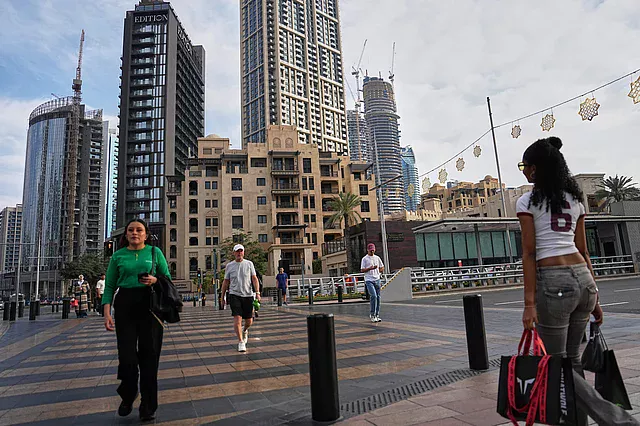
    As a result, daily life across the country continued uninterrupted. Airports remained fully operational, roads and transportation networks functioned normally, and retail and hospitality venues stayed open. Major destinations including Dubai Mall, Downtown Dubai, and other central commercial districts remained active, reinforcing the stability of the UAE’s economic environment.

    Despite heightened media attention, the difference between perception and reality on the ground proved significant. Over the 48 hours following the initial weekend tensions, no further escalation occurred, with public spaces remaining busy and daily routines continuing normally.

    Structural Strengths Underpin Market Confidence

    Real estate remains a cornerstone of the UAE’s long-term economic strategy, playing a central role in the country’s positioning as a global hub for investment, tourism, aviation, and financial services. The resilience of the market is supported by several structural strengths:

    • Strong banking liquidity
    • Advanced institutional crisis management
    • Diversified national economy
    • Long-term urban development strategies
    • Continued global investor confidence

    These foundational pillars represent permanent features of the UAE’s economic model rather than temporary advantages. The broader market context supports this assessment: Dubai’s February 2026 transactions totaled AED60.60 billion ($16.5 billion), marking an 18.14% value increase year-on-year.

    The commercial sector has shown particular strength, with commercial property sales reaching Dh17.1 billion in early 2026—an 82% year-on-year increase driven by limited Grade A office supply.

    Market Outlook Remains Positive

    Based on current developments, market expectations remain positive for continued operational stability. The absence of further escalation reinforces confidence that the situation remains contained.

    “The UAE has repeatedly demonstrated its ability to navigate regional tensions while maintaining economic continuity and investor trust. Short-term headlines may shift sentiment, but they do not alter long-term fundamentals. Operations continue. Confidence remains. The market is functioning,” the Provident Estate report concluded.

    The resilience demonstrated in early March 2026 reflects the maturation of the UAE real estate sector from speculation-driven dynamics to a more institutionalized market structure, with strategic capital now accounting for approximately 40% of transactions.

  • Dubai Real Estate Sales Surge 18% to $16.5 Billion in February 2026

    Dubai Real Estate Sales Surge 18% to $16.5 Billion in February 2026

    Dubai’s real estate sector maintained exceptional momentum through February 2026, with transaction values climbing 18.14% year-on-year despite evolving market dynamics across property segments. According to Dubai Land Department data, total sales reached 16,959 deals generating AED60.60 billion ($16.5 billion), representing a 5% increase in volume compared to February 2025.

    Off-plan properties dominated market activity, accounting for 10,526 transactions or approximately 62% of total sales, while ready properties recorded 6,437 deals representing 38% of the market.

    Apartments Drive Residential Growth

    The apartment segment emerged as the primary growth driver, with transactions rising from 11,385 sales worth AED21.7 billion in February 2025 to 12,820 deals totaling AED26.6 billion in February 2026. The villa market experienced a sharp contraction, with transactions declining from 3,966 deals valued at AED19.7 billion to just 1,563 sales worth AED6.4 billion year-on-year.

    Commercial property demonstrated exceptional performance, with transactions surging from 443 sales valued at AED1.2 billion to 717 deals totaling AED9.54 billion—a near eight-fold increase in value.

    “Hitting over AED60 billion in sales volume solidifies Dubai’s position as one of the globe’s most resilient and desirable real estate hubs. This surge is driven by a balanced blend of end-user demand and enduring investor confidence,” said Tara Khan, Sales Director of Kelt and Co Realty.

    Khan noted that the market has reached a mature phase with steady price growth, strategically managed supply, and buyer involvement across both emerging and established communities.

    Transaction Activity Concentrated in Key Districts

    By volume, Jumeirah Village Circle led with 1,146 transactions, reaffirming its status as one of Dubai’s most active residential hubs. Al Yelayiss 1 followed with 916 deals, Madinat Al Mataar recorded 828 transactions, while Dubai Land Residence Complex registered 750 sales and Business Bay closed the top five with 733 deals.

    In value terms, Al Yelayiss 1 dominated with AED5.38 billion in sales, followed by Al Yelayiss 5 at AED2.41 billion and Me’Aisem Second at AED2.27 billion. Business Bay generated AED2.21 billion, while Palm Jumeirah reached AED1.89 billion, driven by continued demand for ultra-prime waterfront properties.

    Ultra-Luxury Transactions Define Upper Tier

    Among apartments, The Alba Residences by Omniyat topped the list with a AED225.97 million sale, followed by Peninsula Dubai Residences – Tower 2 at AED210 million. Solara Tower Dubai recorded a transaction worth AED113.66 million, while Passo by Beyond achieved AED98 million and Como Residences closed at AED63.5 million.

    In the villa segment, EOME at Palm Jumeirah led with a sale valued at AED115 million. Zaya Zuha Island at The World Islands featured multiple transactions at AED68.58 million, while Amali Island at The World Islands recorded a sale of AED68.4 million.

    The February performance follows Dubai’s landmark 2025, when the emirate’s population exceeded four million residents as property transactions approached Dh900 billion. The market has transitioned toward structured capital allocation, with strategic capital now accounting for approximately 40% of transactions.

    Market fundamentals remain supported by expanding business activity and tight inventory, particularly in the office sector where limited Grade A supply continues to drive investment activity across commercial segments.

  • Dubai Real Estate Shifts from Speculation to Structured Capital Allocation

    Dubai Real Estate Shifts from Speculation to Structured Capital Allocation

    Strategic capital now drives approximately 40 percent of Dubai’s real estate market, according to a new report by VVS Estate, marking a fundamental shift from the momentum-based trading that characterized the 2014 cycle. This evolution reflects deeper regulatory oversight, improved transparency, and increasingly disciplined capital participation.

    “While property cycles are often described in terms of volatility and momentum, Dubai’s current evolution is structural in nature, shaped by regulatory depth, improved transparency and increasingly disciplined capital participation,” said Valentina Rusu, Founder of VVS Estate.

    High-Value Transactions Signal Long-Term Investment Behavior

    The proportion of residential transactions priced above Dh5 million has risen to 9 percent, reflecting sustained appetite for higher-value residential assets, according to Savills Middle East’s Dubai Residential Market Report 2025. Growth at the top end of the market typically indicates strategic capital deployment rather than short-term speculative activity.

    Off-plan transactions, widely viewed as a proxy for strategic capital allocation, account for over 60 percent of total residential transaction value, equivalent to approximately Dh223 billion, according to JLL data. Taken together with Savills’ pricing analysis, the figures point to a market increasingly shaped by deliberate allocation decisions.

    Property Finder insights show that premium and branded residences now represent a growing share of overall transactions. With a higher proportion of deals occurring above Dh2,500 per square foot, citywide averages have naturally moved higher.

    “This is not inflation. It reflects a segmentation shift. Comparing today’s market directly with 2014 without adjusting for product mix oversimplifies the analysis,” Rusu explained.

    Prices Surpass 2014 Peak Amid Structural Improvements

    Dubai reached its previous market peak in September 2014. A decade later, prices have not only recovered but surpassed those levels. According to the Dynamic Price Index published by Property Monitor, average apartment prices reached approximately Dh1,484 per square foot in early 2025, more than 20 percent above the 2014 high, before exceeding Dh1,600 per square foot by mid-2025.

    However, VVS Estate emphasizes that price recovery alone does not define market quality. “In 2014, growth was largely momentum-driven,” Rusu said. “Today, performance is supported by regulatory reinforcement, escrow discipline, standardized registration and improved execution transparency. The difference is structural.”

    Regulatory Frameworks Reduce Execution Risk

    One of the most consequential changes since the previous cycle has been the strengthening of regulatory frameworks under the oversight of the Dubai Land Department. Contract registration now operates within defined timelines through centralized systems, while escrow accounts follow milestone-based release mechanisms aligned with construction progress.

    “This regulatory depth has materially reshaped Dubai’s risk profile and increased its appeal to institutional and long-horizon capital,” Rusu noted.

    Investor behavior increasingly reflects disciplined capital allocation, with buyers focusing on net yields after service charges, resale comparables, supply-pipeline concentration, and developer delivery consistency. “Speculative markets depend on entry enthusiasm,” Rusu said. “Structured markets depend on exit depth.”

    The most significant change underway is behavioral rather than price-driven. Participation is shifting from excitement-led entry to allocation-driven decision-making, where capital is deployed strategically rather than reactively. Investors are increasingly viewing Dubai as a structured capital environment, defined by regulatory clarity, liquidity depth, and global positioning.

    The emirate’s property market continues to demonstrate strong fundamentals, with transactions nearing Dh900 billion as the population exceeded four million residents. Across the UAE, real estate growth remains robust, supported by infrastructure investment and economic diversification.

  • Dubai Rental Market Stabilizes as Supply Eases Price Growth

    Dubai Rental Market Stabilizes as Supply Eases Price Growth

    Dubai’s rental sector is experiencing a significant market recalibration according to latest data from the Dubai Land Department and Allsopp & Allsopp, with new supply beginning to ease the price pressure that characterized recent years. In January 2026, rental transaction volumes jumped 48% alongside a modest 5% rise in total rental value, indicating that rents are no longer accelerating at the pace witnessed in previous periods.

    Year-on-year figures reveal further market rebalancing, with renewals declining 15% in volume and 9% in value, while new rental contracts fell 3% in volume and 4% in value. The average lettings price across apartments, villas, and townhouses dropped 25% year-on-year, demonstrating that pricing pressure is easing across key segments.

    Lewis Allsopp, Chairman of Allsopp & Allsopp, noted that after several years of consistent growth, the market is moving into a phase of healthy stabilization as more supply, particularly in the apartment sector, enters circulation. This development follows record-breaking rental contract values recorded throughout 2025.

    Supply Dynamics Reshape Market Balance

    Supply is playing a central role in this transition. In the sales market, nearly 80% of January’s off-plan transactions were apartments, with off-plan properties accounting for 78% of total sales value. As apartment inventory increases significantly compared to villas and townhouses, the expanded pipeline is expected to place further downward pressure on apartment rents.

    Apartments have already recorded an 11% year-on-year decline in rental volume and 5% in value, marking the segment where the most significant price adjustment is anticipated. In contrast, villas and townhouses remain more supply-constrained, with a 10% dip in rental volume year-on-year and just over 1% in value, though prices remain competitive for tenants.

    Robust Tenant Activity Persists

    Despite stabilizing prices, demand remains robust across Dubai’s rental market. Month-on-month, Allsopp & Allsopp reported a 70% increase in listings, 50% growth in registrations, and a 53% rise in viewings compared to December 2025. This demonstrates continued tenant activity, though January typically experiences heightened engagement due to seasonal resident inflows at year start.

    The data points toward a maturing rental market where strong demand is balanced by growing supply, creating conditions that favor sustainability over speculation. This trend aligns with broader population growth dynamics as Dubai’s residential base expands beyond four million residents.

    Market Outlook and Implications

    Industry analysts expect rental prices to continue stabilizing throughout 2026 as additional residential projects reach completion. The current market correction represents a healthy adjustment after years of rapid appreciation, potentially improving affordability for residents while maintaining Dubai’s attractiveness as a global real estate destination.

    The stabilization phase may also encourage long-term renters to transition toward home ownership, particularly as developers offer competitive pricing and flexible payment structures. This dynamic could further reshape Dubai’s residential landscape in the months ahead, balancing rental and ownership markets as the emirate continues its rapid urban expansion.

  • Dubai Population Exceeds 4 Million as Property Transactions Near Dh900 Billion

    Dubai Population Exceeds 4 Million as Property Transactions Near Dh900 Billion

    Dubai added nearly 18,000 residents in a single month by the end of August 2025, marking a demographic milestone that is directly fueling demand across rental and ownership segments, according to research from Savills Middle East.

    The sustained population growth, driven by employment expansion, business relocation, and international migration, has translated into measurable market activity. Dubai Land Department data shows property sales reached more than Dh680 billion in 2025 across over 200,000 transactions, the strongest annual performance on record.

    Total real estate transaction value, including mortgages and gifts, climbed to approximately Dh919 billion, highlighting exceptional market liquidity and depth.

    “When Dubai adds close to 18,000 residents in a single month, it has an immediate impact on market activity. We see it in enquiry levels, viewing volumes, and the pace at which well-priced homes transact,” said Alec James Smith, Head of Residential Sales and Leasing at Savills Middle East.

    New residents are entering the market across multiple price points, from mid-income professionals seeking apartments near employment hubs to high-net-worth individuals targeting prime waterfront and villa communities.

    Record Quarter Reflects Sustained Confidence

    Market momentum strengthened significantly in the second half of 2025, with the fourth quarter recording the highest quarterly sales value ever, exceeding Dh187 billion. Three consecutive record months during that period reflected steady engagement from both investors and end users rather than short-term speculative activity.

    Dubai’s prime residential segment demonstrated particularly strong performance, with nearly 6,000 transactions above Dh10 million completed during the year. Limited supply in established prime locations combined with ongoing wealth migration has helped sustain both price and rental resilience.

    Savills noted that Dubai continued to outperform many global residential markets through 2025, supported by population growth, job creation, and sustained international demand.

    Financing Conditions Improve as Rates Ease

    Financing conditions have begun to improve following recent interest rate reductions by the UAE Central Bank, which are expected to gradually ease mortgage costs. According to Savills, improving affordability typically translates into stronger buyer engagement over subsequent quarters, particularly among end users who had delayed purchasing decisions.

    Lower interest rates also enhance the relative attractiveness of property investment in Dubai, where rental yields remain competitive compared with global markets.

    Infrastructure-Led Development Will Shape Next Phase

    Rapid population growth places increasing emphasis on aligning supply with demand across locations, price ranges, and infrastructure readiness.

    “Dubai crossing the four million population mark is a clear signal of the city’s global appeal and economic momentum. The next phase of the market will be shaped by disciplined supply, infrastructure-led development, and a continued focus on quality,” said Andrew Cummings, Head of Residential Agency at Savills Middle East.

    The emirate is planning for a population of nearly six million residents by 2040, requiring continued coordination between development activity and infrastructure expansion.

    Population expansion, easing financing conditions, and strong transaction activity continue to reinforce confidence in Dubai’s residential market as it enters 2026, with demographic fundamentals providing a sustainable foundation for ongoing growth across multiple segments.