Tag: Dubai Land Department

  • Dubai Real Estate Shifts from Speculation to Structured Capital Allocation

    Dubai Real Estate Shifts from Speculation to Structured Capital Allocation

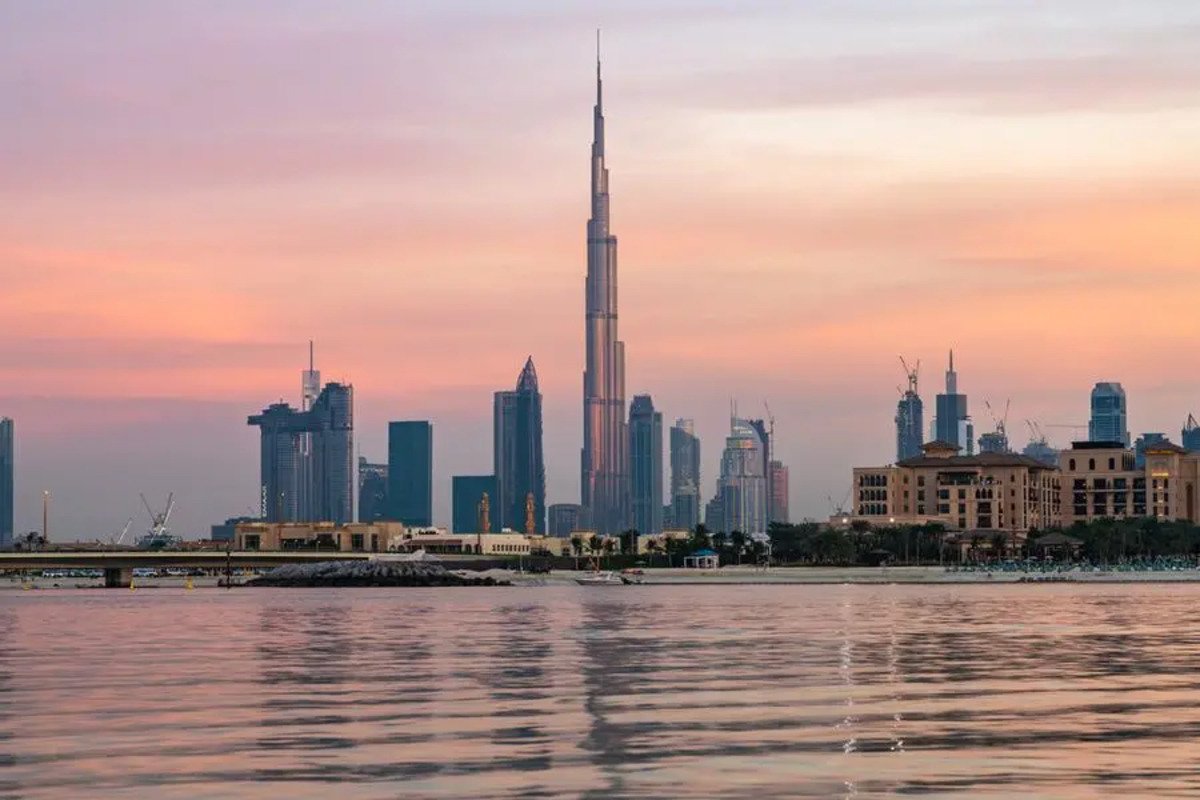
    Strategic capital now drives approximately 40 percent of Dubai’s real estate market, according to a new report by VVS Estate, marking a fundamental shift from the momentum-based trading that characterized the 2014 cycle. This evolution reflects deeper regulatory oversight, improved transparency, and increasingly disciplined capital participation.

    “While property cycles are often described in terms of volatility and momentum, Dubai’s current evolution is structural in nature, shaped by regulatory depth, improved transparency and increasingly disciplined capital participation,” said Valentina Rusu, Founder of VVS Estate.

    High-Value Transactions Signal Long-Term Investment Behavior

    The proportion of residential transactions priced above Dh5 million has risen to 9 percent, reflecting sustained appetite for higher-value residential assets, according to Savills Middle East’s Dubai Residential Market Report 2025. Growth at the top end of the market typically indicates strategic capital deployment rather than short-term speculative activity.

    Off-plan transactions, widely viewed as a proxy for strategic capital allocation, account for over 60 percent of total residential transaction value, equivalent to approximately Dh223 billion, according to JLL data. Taken together with Savills’ pricing analysis, the figures point to a market increasingly shaped by deliberate allocation decisions.

    Property Finder insights show that premium and branded residences now represent a growing share of overall transactions. With a higher proportion of deals occurring above Dh2,500 per square foot, citywide averages have naturally moved higher.

    “This is not inflation. It reflects a segmentation shift. Comparing today’s market directly with 2014 without adjusting for product mix oversimplifies the analysis,” Rusu explained.

    Prices Surpass 2014 Peak Amid Structural Improvements

    Dubai reached its previous market peak in September 2014. A decade later, prices have not only recovered but surpassed those levels. According to the Dynamic Price Index published by Property Monitor, average apartment prices reached approximately Dh1,484 per square foot in early 2025, more than 20 percent above the 2014 high, before exceeding Dh1,600 per square foot by mid-2025.

    However, VVS Estate emphasizes that price recovery alone does not define market quality. “In 2014, growth was largely momentum-driven,” Rusu said. “Today, performance is supported by regulatory reinforcement, escrow discipline, standardized registration and improved execution transparency. The difference is structural.”

    Regulatory Frameworks Reduce Execution Risk

    One of the most consequential changes since the previous cycle has been the strengthening of regulatory frameworks under the oversight of the Dubai Land Department. Contract registration now operates within defined timelines through centralized systems, while escrow accounts follow milestone-based release mechanisms aligned with construction progress.

    “This regulatory depth has materially reshaped Dubai’s risk profile and increased its appeal to institutional and long-horizon capital,” Rusu noted.

    Investor behavior increasingly reflects disciplined capital allocation, with buyers focusing on net yields after service charges, resale comparables, supply-pipeline concentration, and developer delivery consistency. “Speculative markets depend on entry enthusiasm,” Rusu said. “Structured markets depend on exit depth.”

    The most significant change underway is behavioral rather than price-driven. Participation is shifting from excitement-led entry to allocation-driven decision-making, where capital is deployed strategically rather than reactively. Investors are increasingly viewing Dubai as a structured capital environment, defined by regulatory clarity, liquidity depth, and global positioning.

    The emirate’s property market continues to demonstrate strong fundamentals, with transactions nearing Dh900 billion as the population exceeded four million residents. Across the UAE, real estate growth remains robust, supported by infrastructure investment and economic diversification.
  • Dubai Rental Market Stabilizes as Supply Eases Price Growth

    Dubai Rental Market Stabilizes as Supply Eases Price Growth

    Dubai’s rental sector is experiencing a significant market recalibration according to latest data from the Dubai Land Department and Allsopp & Allsopp, with new supply beginning to ease the price pressure that characterized recent years. In January 2026, rental transaction volumes jumped 48% alongside a modest 5% rise in total rental value, indicating that rents are no longer accelerating at the pace witnessed in previous periods.

    Year-on-year figures reveal further market rebalancing, with renewals declining 15% in volume and 9% in value, while new rental contracts fell 3% in volume and 4% in value. The average lettings price across apartments, villas, and townhouses dropped 25% year-on-year, demonstrating that pricing pressure is easing across key segments.

    Lewis Allsopp, Chairman of Allsopp & Allsopp, noted that after several years of consistent growth, the market is moving into a phase of healthy stabilization as more supply, particularly in the apartment sector, enters circulation. This development follows record-breaking rental contract values recorded throughout 2025.

    Supply Dynamics Reshape Market Balance

    Supply is playing a central role in this transition. In the sales market, nearly 80% of January’s off-plan transactions were apartments, with off-plan properties accounting for 78% of total sales value. As apartment inventory increases significantly compared to villas and townhouses, the expanded pipeline is expected to place further downward pressure on apartment rents.

    Apartments have already recorded an 11% year-on-year decline in rental volume and 5% in value, marking the segment where the most significant price adjustment is anticipated. In contrast, villas and townhouses remain more supply-constrained, with a 10% dip in rental volume year-on-year and just over 1% in value, though prices remain competitive for tenants.

    Robust Tenant Activity Persists

    Despite stabilizing prices, demand remains robust across Dubai’s rental market. Month-on-month, Allsopp & Allsopp reported a 70% increase in listings, 50% growth in registrations, and a 53% rise in viewings compared to December 2025. This demonstrates continued tenant activity, though January typically experiences heightened engagement due to seasonal resident inflows at year start.

    The data points toward a maturing rental market where strong demand is balanced by growing supply, creating conditions that favor sustainability over speculation. This trend aligns with broader population growth dynamics as Dubai’s residential base expands beyond four million residents.

    Market Outlook and Implications

    Industry analysts expect rental prices to continue stabilizing throughout 2026 as additional residential projects reach completion. The current market correction represents a healthy adjustment after years of rapid appreciation, potentially improving affordability for residents while maintaining Dubai’s attractiveness as a global real estate destination.

    The stabilization phase may also encourage long-term renters to transition toward home ownership, particularly as developers offer competitive pricing and flexible payment structures. This dynamic could further reshape Dubai’s residential landscape in the months ahead, balancing rental and ownership markets as the emirate continues its rapid urban expansion.

  • Dubai Population Exceeds 4 Million as Property Transactions Near Dh900 Billion

    Dubai Population Exceeds 4 Million as Property Transactions Near Dh900 Billion

    Dubai added nearly 18,000 residents in a single month by the end of August 2025, marking a demographic milestone that is directly fueling demand across rental and ownership segments, according to research from Savills Middle East.

    The sustained population growth, driven by employment expansion, business relocation, and international migration, has translated into measurable market activity. Dubai Land Department data shows property sales reached more than Dh680 billion in 2025 across over 200,000 transactions, the strongest annual performance on record.

    Total real estate transaction value, including mortgages and gifts, climbed to approximately Dh919 billion, highlighting exceptional market liquidity and depth.

    “When Dubai adds close to 18,000 residents in a single month, it has an immediate impact on market activity. We see it in enquiry levels, viewing volumes, and the pace at which well-priced homes transact,” said Alec James Smith, Head of Residential Sales and Leasing at Savills Middle East.

    New residents are entering the market across multiple price points, from mid-income professionals seeking apartments near employment hubs to high-net-worth individuals targeting prime waterfront and villa communities.

    Record Quarter Reflects Sustained Confidence

    Market momentum strengthened significantly in the second half of 2025, with the fourth quarter recording the highest quarterly sales value ever, exceeding Dh187 billion. Three consecutive record months during that period reflected steady engagement from both investors and end users rather than short-term speculative activity.

    Dubai’s prime residential segment demonstrated particularly strong performance, with nearly 6,000 transactions above Dh10 million completed during the year. Limited supply in established prime locations combined with ongoing wealth migration has helped sustain both price and rental resilience.

    Savills noted that Dubai continued to outperform many global residential markets through 2025, supported by population growth, job creation, and sustained international demand.

    Financing Conditions Improve as Rates Ease

    Financing conditions have begun to improve following recent interest rate reductions by the UAE Central Bank, which are expected to gradually ease mortgage costs. According to Savills, improving affordability typically translates into stronger buyer engagement over subsequent quarters, particularly among end users who had delayed purchasing decisions.

    Lower interest rates also enhance the relative attractiveness of property investment in Dubai, where rental yields remain competitive compared with global markets.

    Infrastructure-Led Development Will Shape Next Phase

    Rapid population growth places increasing emphasis on aligning supply with demand across locations, price ranges, and infrastructure readiness.

    “Dubai crossing the four million population mark is a clear signal of the city’s global appeal and economic momentum. The next phase of the market will be shaped by disciplined supply, infrastructure-led development, and a continued focus on quality,” said Andrew Cummings, Head of Residential Agency at Savills Middle East.

    The emirate is planning for a population of nearly six million residents by 2040, requiring continued coordination between development activity and infrastructure expansion.

    Population expansion, easing financing conditions, and strong transaction activity continue to reinforce confidence in Dubai’s residential market as it enters 2026, with demographic fundamentals providing a sustainable foundation for ongoing growth across multiple segments.