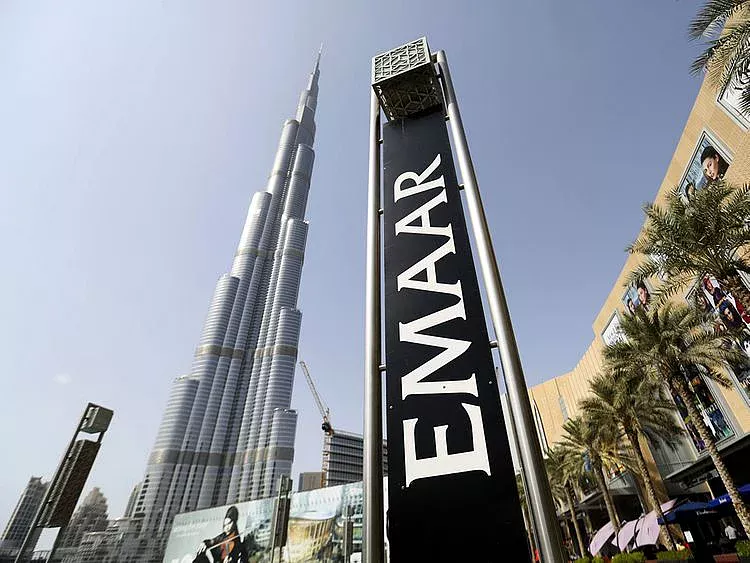
Tag: Dubai developer

  • Emaar Books Dh26.6 Billion in H1 Property Sales

    Emaar Books Dh26.6 Billion in H1 Property Sales

    The Dubai-listed developer reported EBITDA of Dh12.9 billion for the six months ended June 30, up 24 percent year-on-year, while net profit before tax increased 23 percent to Dh12.8 billion compared with the same period in 2025.

    The Dh164.9 billion property sales backlog was 13 percent higher year-on-year and reflects sales that are expected to be recognised as projects progress and units are delivered, positioning Emaar with multi-year revenue visibility.

    UAE Development Business Drives Performance

    Emaar’s UAE build-to-sell business, led by Emaar Development, recorded Dh22.4 billion in property sales during the first half, underscoring sustained demand across Dubai’s residential property market.

    Emaar Development generated revenue of Dh13.3 billion, up 34 percent year-on-year, while net profit before tax increased 41 percent to Dh7.8 billion.

    Including other UAE development operations such as Dubai Creek Harbour, consolidated revenue from the group’s UAE property development business reached Dh17.7 billion, an increase of 30 percent.

    The UAE development revenue backlog stood at Dh135.7 billion at the end of June, up 6 percent from the same period in 2025, reflecting strong pre-sales across the developer’s project portfolio.

    Emaar launched 11 projects during the first half across Emaar South, Dubai Hills Estate, The Heights Country Club, The Oasis, Rashid Yachts & Marina and Expo Living. The company also announced a new Dh200 billion masterplan during the period, adding to its longer-term development pipeline.

    Our first half results reflect the discipline, consistency, and long-term approach that define Emaar. Dubai never stands still, and neither do we. Every phase of the city’s growth creates new opportunities to raise expectations and redefine experiences. Emaar’s role is to continue building destinations that reflect Dubai’s ambition while maintaining the quality, innovation, and operational excellence that have shaped our business from the beginning.

    Mohamed Alabbar, founder of Emaar

    Large Development Land Bank Supports Pipeline

    The group held approximately 590 million square feet of mixed-use development land, including about 316 million square feet in the UAE, providing a substantial platform for future project launches.

    Its international development operations recorded Dh4.2 billion in property sales during the first half, with revenue reaching Dh1.1 billion, up 8 percent year-on-year.

    International operations accounted for about 4.6 percent of Emaar’s total revenue during the period, with Egypt and India among its key markets.

    Malls Maintain 98 Percent Occupancy

    Emaar’s shopping malls, retail and commercial leasing business generated Dh3.5 billion in revenue during the first half, an increase of 9 percent year-on-year.

    EBITDA from the segment rose 10 percent to Dh3.1 billion, while average occupancy across the portfolio remained at about 98 percent at the end of June.

    The company said leasing income remained supported by a predominantly base-rent structure despite a moderation in tenant sales.

    Emaar’s hospitality, leisure and entertainment business generated Dh1.6 billion in revenue during the period, while its UAE hotels recorded average occupancy of 60 percent.

    The group said softer international tourism flows affected the hospitality portfolio, with local and domestic demand providing some support.

    Recurring Revenue Portfolio Stable

    Recurring revenue from Emaar’s malls, hospitality, leisure, entertainment and commercial leasing assets stood at Dh5.1 billion, broadly unchanged from the first half of 2025.

    EBITDA from the recurring revenue portfolio was Dh4 billion and accounted for about 31 percent of total group EBITDA, providing a stable earnings base alongside the developer’s project sales.

    The results underscore Emaar’s position as Dubai’s largest developer by sales value, with performance aligning with broader market trends that saw the emirate complete 24,800 residential units during the first half of 2026 and record Dh221.4 billion in transaction values across 79,300 deals.
  • Binghatti H1 Profit Jumps 64% to Dh3 Billion on Dubai Demand

    Binghatti H1 Profit Jumps 64% to Dh3 Billion on Dubai Demand

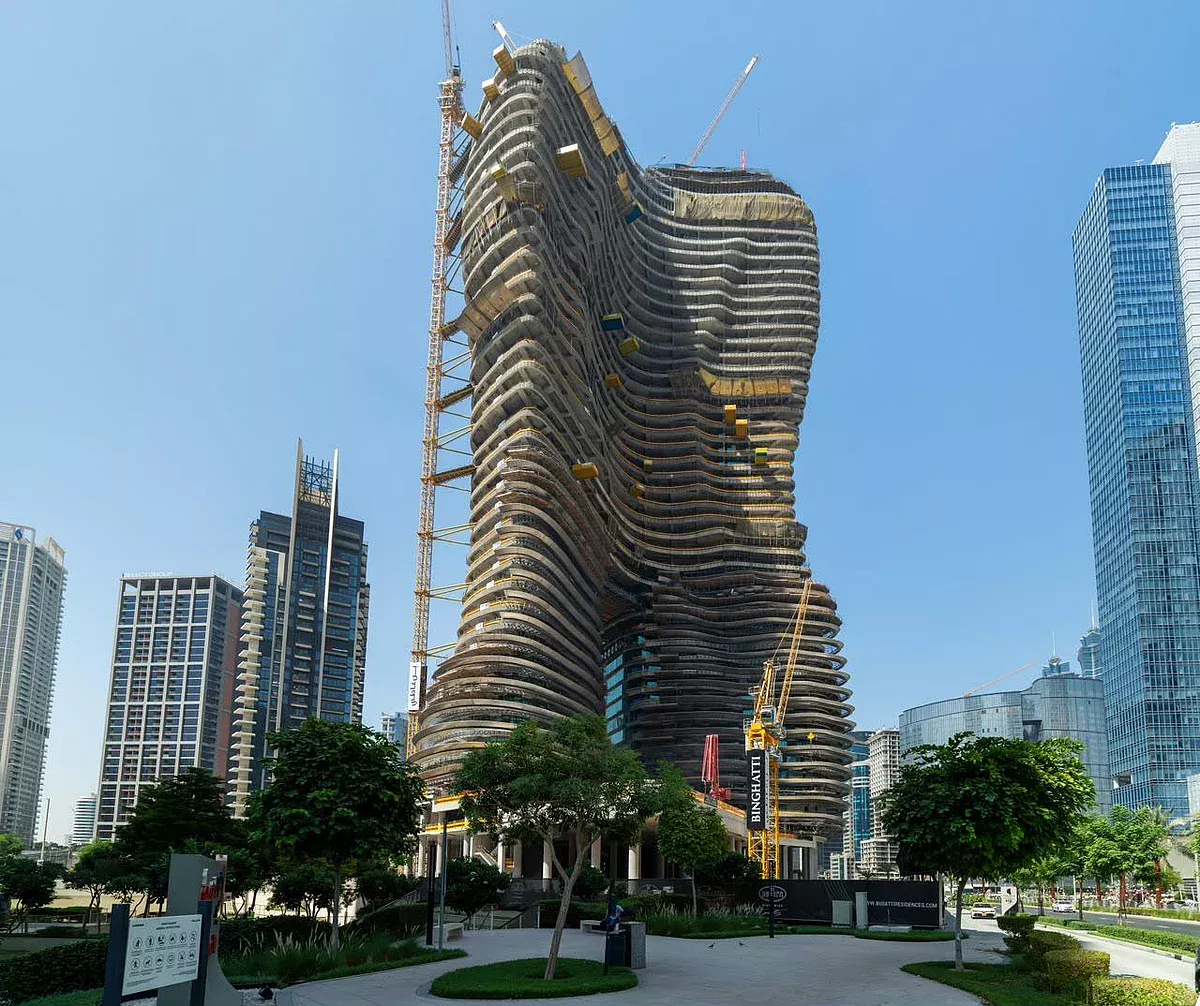
    Binghatti Holding posted robust financial results for the first half of 2026, with revenue climbing 50 percent year-on-year to Dh9.5 billion during the six months ended June 30, the Dubai-based developer announced on July 27, 2026.

    Gross profit rose 66 percent to Dh4.3 billion, while earnings before interest, taxes, depreciation and amortisation (EBITDA) increased 75 percent to Dh3.8 billion, reflecting continued growth across the business.

    The developer launched eight projects during the first half, including Mercedes-Benz Places | Binghatti City, the company’s first master-planned community, and Tilal Binghatti, its first villa development. The company delivered around 1,700 residential units during the period.

    “The first half of 2026 combined strong financial performance with important strategic progress across our platform. We expanded into new development segments while maintaining delivery discipline across our portfolio,” said Muhammad Binghatti, Chairman of Binghatti Holding.

    Binghatti’s development backlog reached Dh44.2 billion, while revenue backlog stood at Dh17.3 billion at the end of June, providing strong visibility for future earnings. The company also maintained liquidity of around Dh10 billion.

    During the period, Binghatti completed a $500 million sukuk maturing in 2031, which was 4.3 times oversubscribed, reflecting strong demand from regional and international investors. Moody’s reaffirmed the company’s Ba3 corporate credit rating.

    Chief Financial Officer Shehzad Janab said the results highlighted the resilience of Binghatti’s business model despite heightened regional volatility, with improving profit margins and the sizeable revenue backlog providing strong visibility over future earnings.

    The performance comes as Dubai’s off-plan property market continues to attract strong investor interest, with the emirate recording 87,800 real estate transactions worth Dh291.7 billion in the first half of 2026.

    Looking ahead, Binghatti said Dubai’s residential market continues to benefit from population growth, long-term residency initiatives and economic diversification, with demand increasingly driven by end-users and long-term residents rather than speculative investors.

    The developer’s results align with broader market trends showing strength across all price segments in Dubai’s residential sector as the market transitions toward more sustainable, end-user-focused growth in 2026.

  • Dubai Property Market Has Nothing to Fear, Says Emaar Founder

    Dubai Property Market Has Nothing to Fear, Says Emaar Founder

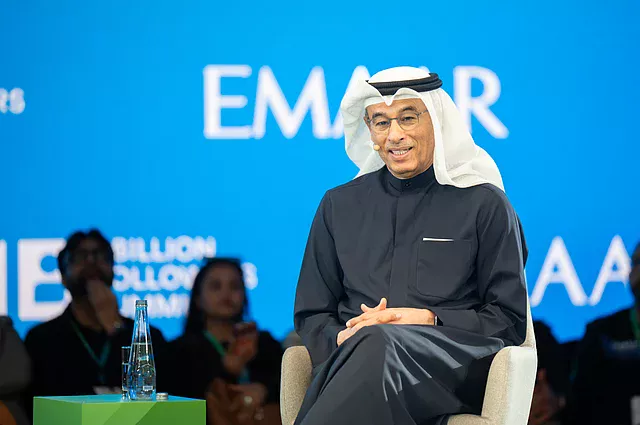
    The UAE’s real estate sector continues to demonstrate exceptional confidence amid geopolitical uncertainty, according to one of its most prominent figures. Mohamed Alabbar, CEO and founder of Emaar Properties, one of the world’s largest real estate developers, expressed absolute certainty that Dubai’s property market will weather both regional tensions and the wave of new supply expected in 2026 and 2027.

    “We are not here for the short run. We are here for a long, long time to do business,” Alabbar said in a recent interview with CNBC. He characterized the incoming supply as a natural feature of a market built on decade-long ambitions rather than short-term speculation. While acknowledging that a brief cooling-off period is possible, he dismissed concerns about structural problems ahead.

    Market Sentiment Remains Firm

    To illustrate current confidence levels, Alabbar shared a telling anecdote from his personal property search. Currently looking for a seafront apartment for his own use, he noted that after two days of viewing, not a single seller was willing to negotiate on price.

    “Nobody wants to budge. Nobody wants to give a discount. That’s a true situation.”

    The observation serves as a quiet but powerful signal of where sentiment stands on the ground, reflecting sustained demand despite external pressures.

    Structural Resilience Built on Prudent Lending

    Alabbar highlighted a fundamental characteristic that distinguishes Dubai from other global property markets: its real estate sector is not built on bank borrowing. Lending to buyers remains tightly restricted, insulating the market from credit-driven collapses seen elsewhere during financial crises.

    “Our real estate business is not built on bank borrowing. Bank borrowing is very restricted in this market,” he explained, adding that while consumer confidence may experience temporary dips, the UAE’s policy environment has a proven track record of restoring it quickly.

    This assessment aligns with recent market performance. Dubai real estate continues processing deals exceeding $100 million, with developers reporting uninterrupted operations despite some buyers adopting a cautious stance.

    Long-Term Capital Recognizes Stability

    On the broader question of geopolitical uncertainty and Dubai’s reputation as a refuge for global wealth, Alabbar expressed unwavering confidence. He argued that investors who study the trajectory of UAE policy over years and decades will consistently find the same qualities: consistency, sustainability, wisdom, and stability.

    “A country like this, with all these principles and stable leadership and the safety, it has shown that it can deliver,” he stated.

    Alabbar reserved particular admiration for the UAE’s leadership and its capacity for long-range strategic planning. While acknowledging he is not versed in military affairs, he said he was genuinely moved by the country’s demonstrated capabilities during recent tensions.

    “People with true capital understand this, they appreciate this, and they will double down on investing.”

    The sentiment echoes statements made earlier this week, when Alabbar noted that recent attacks have ultimately reinforced confidence in the country’s stability, pointing to decades of consistent policy and institutional strength.

    Market Context and Performance

    Alabbar’s confidence comes as Dubai’s property sector maintains strong fundamentals. The emirate’s real estate market recorded 874 transactions worth AED2.46 billion on March 2, 2026, demonstrating sustained investor confidence as economic fundamentals continue to outweigh short-term geopolitical sentiment.

    The debt-free structure of Dubai’s real estate market, combined with prudent lending restrictions and long-term government planning, positions the emirate to absorb new supply without the leverage-driven volatility that has characterized property cycles in other global cities. As regional tensions persist, Dubai’s market continues to attract capital seeking stability, transparency, and proven governance frameworks.