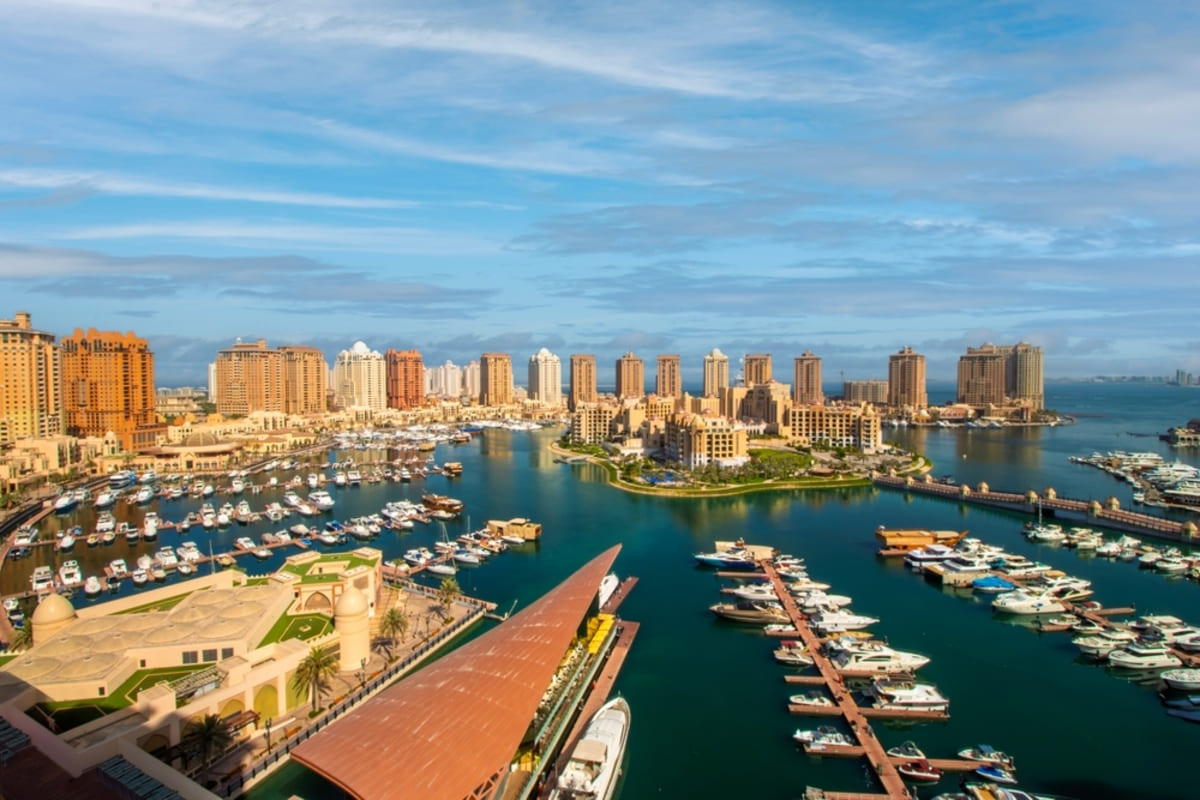
Tag: Doha property

  • Qatar Real Estate Trading Reaches $90.47 Million in One Week

    Qatar Real Estate Trading Reaches $90.47 Million in One Week

    The Ministry of Justice’s Real Estate Registration Department registered QAR304.24 million in sale contracts and QAR26.29 million in residential unit sales during the five-day period, bringing combined real estate trading to over QAR330 million, according to the weekly bulletin issued on August 20, 2026.

    Properties traded included vacant land, residences, residential buildings, commercial shops and residential units across eight municipalities: Al Rayyan, Doha, Al Wakrah, Umm Salal, Al Daayen, Al Khor, Al Thakhira and Al Shihaniya, with transactions also recorded in Lusail 69, The Pearl, Al Kharaej, Ghar Thuaileb and Umm Al Amad.

    Weekly Activity Follows Strong Monthly Performance

    The latest figures continue a pattern of robust trading established in recent weeks. Between August 2 and 6, the department registered QAR353.4 million in transactions, while July 2026 produced a monthly total of QAR1.85 billion across 485 real estate deals.

    Data from the Ministry of Justice’s real estate analytical bulletin showed that Doha, Al Rayyan and Al Dhaayen led monthly activity in terms of financial value. Doha municipality recorded QAR763.84 million, Al Rayyan registered QAR461.43 million, and Al Dhaayen reached QAR230.30 million during July.

    Al Wakrah transactions totalled QAR171.14 million, Umm Salal reached QAR126.14 million, Al Khor and Al Dhakira registered QAR71.61 million, Al Shamal recorded QAR33.83 million, and Al Shahaniyah registered QAR1.1 million.

    Market Distribution and Pricing Trends

    The traded area index for July revealed that Al Rayyan accounted for 27 percent of total traded real estate areas, followed by Doha at 24 percent and Al Wakrah at 17 percent. Al Dhaayen represented 12 percent, Umm Salal 10 percent, Al Khor and Al Dhakira 6 percent, and Al Shamal 3 percent.

    In terms of transaction count, Doha led with 28 percent of all sales, followed by Al Rayyan at 20 percent, Al Dhaayen at 18 percent, Al Wakrah at 15 percent, Umm Salal at 9 percent, Al Khor and Al Dhakira at 6 percent, and Al Shamal at 4 percent.

    Average per-square-foot prices in July ranged from QAR447 to QAR929 in Doha, QAR243 to QAR486 in Al Wakrah, QAR347 to QAR462 in Al Rayyan, QAR336 to QAR423 in Umm Salal, QAR340 to QAR642 in Al Dhaayen, QAR240 to QAR384 in Al Khor and Al Dhakira, QAR260 to QAR464 in Al Shamal, and QAR169 in Al Shahaniyah.

    The highest-value properties sold in July were concentrated in Doha, which accounted for six of the top ten sales, while Al Rayyan recorded three and Al Wakrah one. Mortgage transactions during the month totalled 212 deals with a combined value of QAR4.97 billion.

    Qatar’s consistent weekly performance mirrors broader regional trends, with Dubai recording $9.5 billion in July sales and Abu Dhabi doubling transactions to $31.86 billion in the first half of 2026, underscoring sustained Gulf property market momentum despite varied regulatory and economic environments across the region.

  • Qatar Property Market Records $103.53 Million in One Week

    The Ministry of Justice’s Real Estate Registration Department registered QAR353,406,706 in sale contracts between August 2 and 6, 2026, according to QNA reporting from Doha on August 13. Residential unit contracts added QAR23,813,514 during the same period, bringing combined real estate trading to QAR377.22 million.

    The department’s weekly bulletin showed that properties traded included vacant land, homes, commercial shops, a hotel and residential units, indicating activity was not limited to a single asset category during the five-day reporting period.

    Transactions were registered in Doha, Al Rayyan, Al Wakrah, Al Daayen, Umm Salal, Al Khor, Al Thakhira and Al Shamal. Sales also covered Al Kharaej, Lusail 69, The Pearl and Legtaifiya, placing established urban districts and designated investment locations within the week’s recorded activity.

    The latest total followed more than QAR400 million in sale contracts registered between July 26 and 30. Because the earlier bulletin described trading as exceeding that threshold without providing a precise combined value, an exact week-on-week percentage comparison was not available.

    Market indicators strengthen

    The weekly result arrives against a firmer property-price backdrop. Qatar Central Bank compiles its real estate index from Ministry of Justice transaction data and publishes the measure monthly. The index reached 244.56 points in May 2026, increasing 1.28 percent from April and 8.7 percent from a year earlier.

    May’s trading value totaled QAR1.73 billion across 425 transactions, representing a 31 percent annual decline. Mortgage activity moved differently, reaching QAR11 billion through 131 transactions and increasing 136 percent. Real estate loans and facilities held by banks stood at QAR185.4 billion during the month.

    Registration costs decline

    Qatar adjusted its property-registration framework in January. Ministry of Justice Decision No. 5 of 2026 reduced several charges and introduced exemptions intended to simplify services and support the investment environment.

    The fee for authenticating a special real estate power of attorney fell from QAR300 to QAR100. Charges for transferring farms or marine land declined from 1 percent to 0.25 percent of assessed value. Replacement title deeds were reduced from QAR500 to QAR100, while a title deed with a cadastral registration plan fell from QAR300 to QAR100.

    The decision also exempted specified government, charitable, housing and inheritance-related transactions. It extended registration treatment to preliminary real estate records under Qatar’s development framework and set a QAR100 fee for registering each unit after final subdivision.

    Ownership access widens

    Foreign-ownership rules provide another source of potential demand. Qatar permits non-Qataris to acquire freehold property in nine designated areas and usufruct rights, generally lasting up to 99 years, in 16 areas.

    A property worth at least QAR730,000 can qualify its owner for renewable residency without a local sponsor. Investment of at least QAR3.65 million can provide real estate residency with permanent-residency privileges, including healthcare, education and investment benefits, subject to the applicable requirements.

    The Real Estate Regulatory Authority’s sector strategy complements those ownership incentives. Its priorities include a national sector plan, stronger implementation of laws, professional licensing, off-plan sales programs and advanced digital services. The authority plans a data and analytics platform alongside an artificial intelligence-supported investment map to improve transparency and help investors assess opportunities.

    Recent weekly activity

    Qatar’s weekly property figures have varied considerably during the summer. Transactions totaled QAR383.03 million between June 21 and 25, comprising QAR317.89 million in general sale contracts and QAR65.14 million in residential units.

    Activity increased during the following period. Between June 28 and July 2, registered contracts reached QAR482,772,733 and residential unit sales totaled QAR82,522,865, producing more than QAR565 million in combined trading.

    The July 5–9 bulletin recorded an even larger total. General sale contracts reached QAR785,396,891, while residential units contributed QAR45,571,768, lifting combined activity above QAR830 million.

    The next available Ministry of Justice update combined two weeks. Transactions registered from July 12 to 23 included QAR748,483,214 in sale contracts and QAR56,995,573 in residential units, producing a total above QAR805 million.

    Contracts then exceeded QAR400 million between July 26 and 30 before reaching QAR377.22 million from August 2 to 6.

    The weekly figures measure contracts formally recorded by the Real Estate Registration Department. They provide a regular view of completed property activity across Qatar’s municipalities and residential-unit market rather than an estimate of listings, asking prices or transactions awaiting registration.

    While Dubai’s off-plan market continues to attract buyers across multiple price segments, Qatar’s property sector is reinforcing its own transaction base through systematic regulatory improvements and broader ownership access. Together, registered trading data, lower service charges, foreign-ownership pathways and regulatory digitalization are broadening the infrastructure supporting Qatar’s property market.